
As Beyond Frame continues moving toward Fall Festival, our focus is shifting from expanding the experience to refining the interactions we already have.
Over the past few weeks, we have been developing two different painting experiences, each with its own atmosphere and interaction possibilities.
This week, discussions with our client and instructors helped us identify an important priority:
A few clear, satisfying interactions may be more meaningful than many interactions visitors barely notice.
Rather than expecting visitors to discover every feature, we want them to feel curious, playful, and capable of influencing the world of the painting.
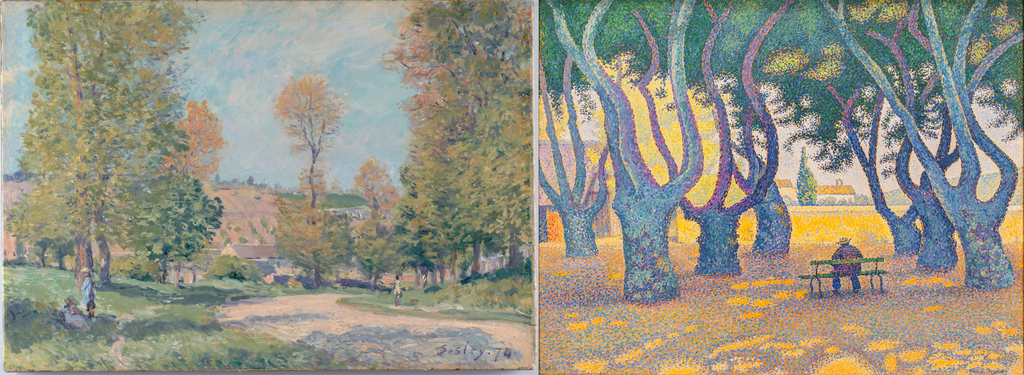
Refining the First Painting
Our first painting is approaching a more polished state.
Its strongest interaction continues to be the ability to move through the painting’s depth, appearing behind trees and other foreground elements.
However, we are still refining the visual details that make this illusion convincing.
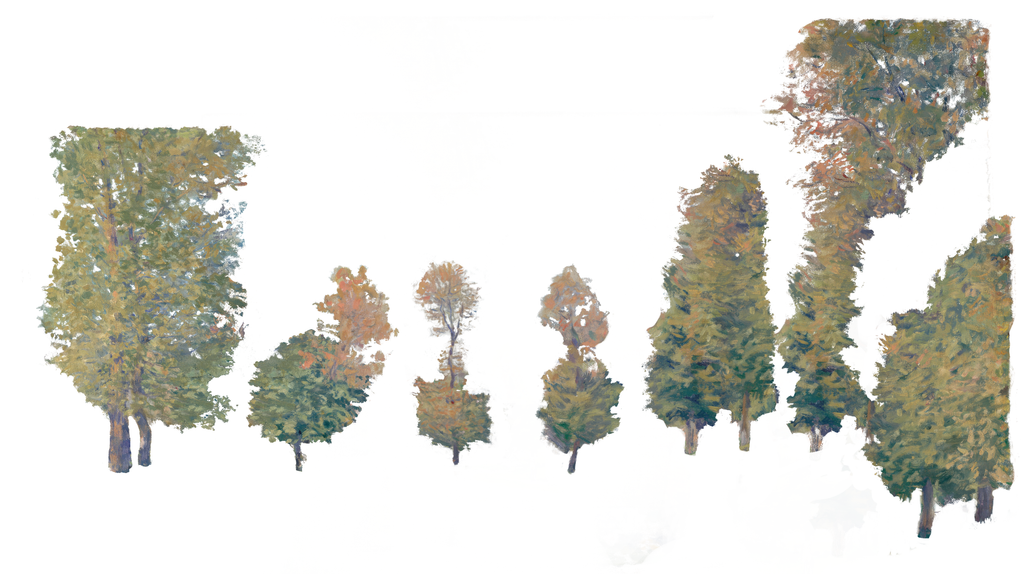
For example, depth masks need to behave consistently across connected objects. A visitor should not appear behind a tree trunk while incorrectly appearing in front of the surrounding ground.
We are also improving body segmentation and the edges of painting elements to make the visitor feel more naturally integrated into the artwork.
Another focus is the responsiveness of environmental interactions.
The sound and visual response of walking through leaves has been particularly satisfying, but it needs to react more quickly to repeated steps and movement.
These improvements may seem small individually, but together they help reinforce the feeling that the painting is responding directly to the visitor’s presence.
Making the Second Painting More Expressive
Our second painting introduces a different interaction vocabulary.
Instead of relying primarily on depth and hiding, we are exploring how wind, movement, and environmental changes can create a more playful experience.
One of the main interactions involves the hat worn by a seated figure.
Our current design is evolving into a more readable sequence:
Wind begins → the hat starts moving → wind grows stronger → the hat blows away → the seated figure reacts.
Rather than having the hat immediately fly into a tree, we are exploring movement closer to the ground or toward a lower branch, where visitors can more easily follow it.
We have also prepared a version of the seated figure without his hat, allowing us to create a clearer visual response once the interaction occurs.
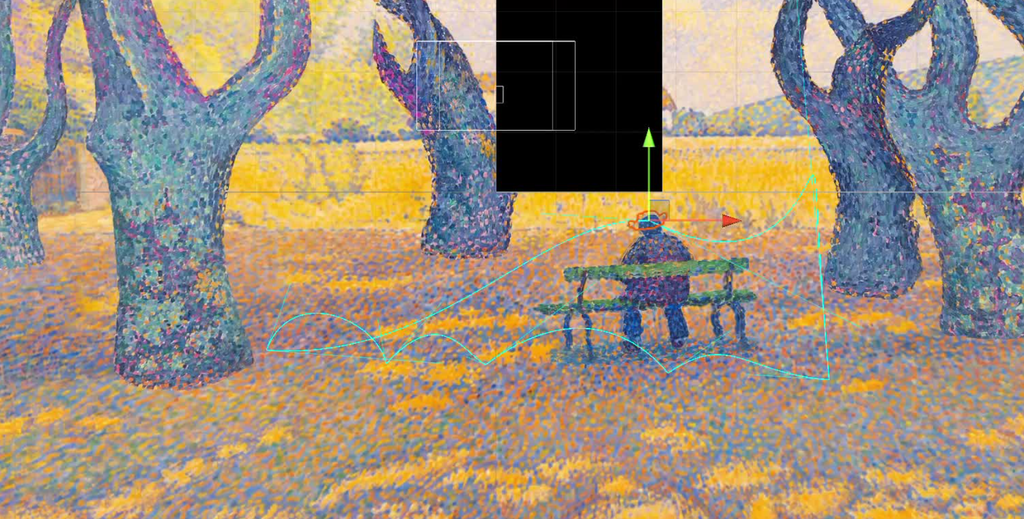
We are also refining the light and particle effects around the visitor’s feet.
The goal is to make these effects feel naturally connected to walking while remaining visually consistent with the painting’s pointillist style.
Giving Visitors More Agency
Another important discussion this week concerned interactions that change the entire environment.
We have been exploring transitions between day and night, but this raised an important question:
Should the environment change automatically, or should the visitor cause that change?
We are increasingly interested in connecting major environmental transitions to visitor actions.
If a visitor can trigger a change in lighting or atmosphere, the experience may feel more personal than simply watching a predetermined sequence.
At the same time, we need to consider how these transitions affect the final photograph.
For example, the environment may need enough time to return to an appropriate state before the capture moment.
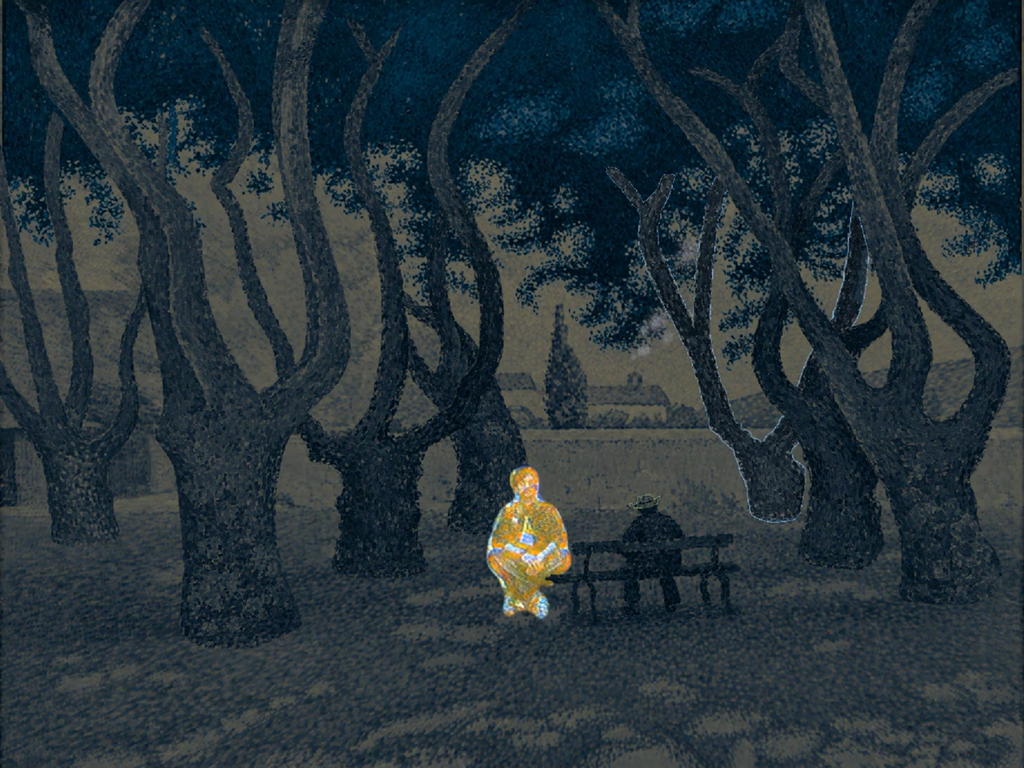
This also connects to our ongoing sound and lighting development.
Interactive responses should remain consistent with the current environment. Footstep effects, lighting colors, and sounds should adapt to changes in atmosphere rather than remaining identical throughout the experience.
Balancing Discovery and Clarity
One challenge we continue to face is helping visitors understand that their movements can affect the painting without revealing every interaction in advance.
Our instructors suggested that even one simple action at the beginning could help establish this relationship.
For example, asking visitors to raise or wave a hand when they are ready could demonstrate that their body movements matter.
From there, the remaining interactions could be discovered through exploration.
We are also reconsidering how many interactions each painting actually needs.
Instead of having five or six subtle responses that visitors might miss, we may achieve a stronger experience with two to four interactions that are clearer, more responsive, and more surprising.
The goal is not necessarily for visitors to find everything.
It is for them to become curious about what else the painting might do.
For our upcoming playtest, we also want to distinguish between interactions that are easy to understand and those that are genuinely engaging. Understanding this difference will help us refine the quality of each painting experience.
Focusing on Quality
As we approach the final stage of the semester, we have also made an important scope decision.
Our priority is to complete two strong, polished painting experiences before expanding to a third.
The first painting is already approaching a strong level of polish, while the second still needs additional work on interaction clarity, visual integration, and responsiveness.
A third painting remains a possibility if time allows, but we do not want to sacrifice the quality of the existing experiences simply t
o increase the number of artworks.
We have also begun discussing opportunities to introduce Beyond Frame to museums and galleries. Our client, Stephen, plans to begin reaching out to gallery contacts, while we continue improving the installation and preparing for Fall Festival.
Looking Ahead
This week reinforced that designing interactions is not simply about deciding what an artwork can do.
It is also about how visitors recognize those possibilities, what motivates them to experiment, and how the artwork responds to their actions.
A falling leaf, a moving hat, or a change in lighting can all become meaningful moments when visitors understand that they caused something to happen.
As we prepare to test both paintings, our goal is to find the right balance between subtlety, clarity, and surprise.
We want every interaction to make visitors feel that their presence matters inside the painting.