With Halves approaching, this week was all about bringing the different parts of Beyond Frame together into a complete, playable experience.
Over the past several weeks, we have developed individual systems for body tracking, painting segmentation, environmental interaction, image capture, and printing. Now, our priority is making sure these components work together reliably in the actual installation space.
Instead of expanding the experience with more features, we decided to focus on completing and refining our first painting.
Our goal was simple:
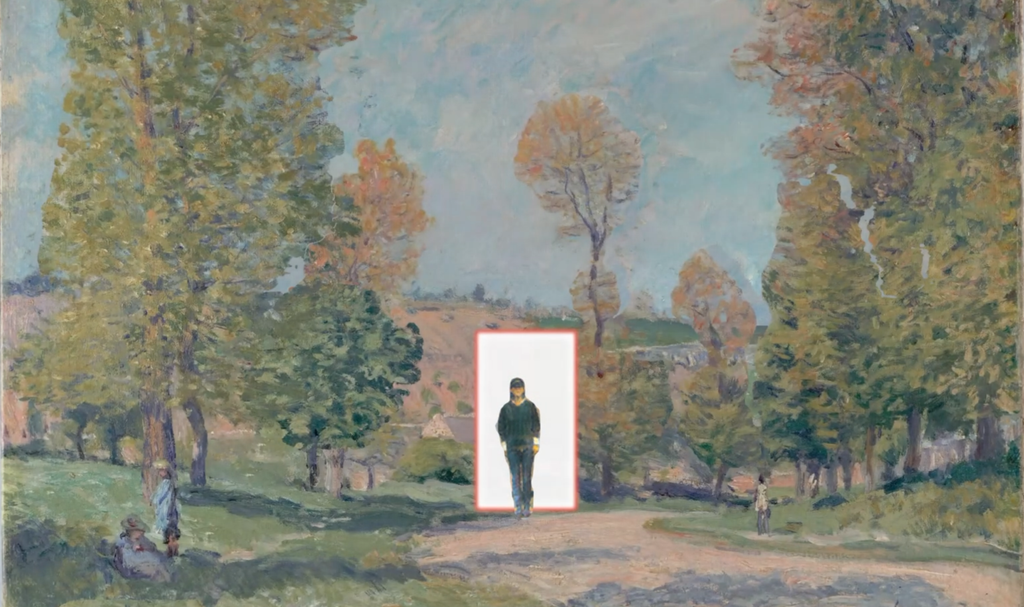
Enter the frame → appear inside the painting → explore and interact → capture a moment → receive a print → exit.
Focusing on the First Painting
One of the most important decisions this week was to concentrate on polishing the first painting instead of trying to bring the second painting to the same level before Halves.
The second painting already has its basic structure, but still requires additional element separation and interaction development.
Meanwhile, the first painting has enough functionality for us to begin evaluating the complete visitor experience.
We continued improving several existing interactions, including trees responding to visitor movement, falling leaves, and the ability to move behind painting elements.
We also refined the appearance of the falling leaves, making their textures and edges blend more naturally with the original artwork.
Rather than treating these as isolated demonstrations, we want each interaction to feel like a natural response from the painting itself.
Guiding Without UI
As our prototype became more complete, one challenge remained particularly important:
How do visitors know what they can interact with?
Our previous playtests revealed that visitors do not necessarily discover interactions on their own, even when those interactions are technically working.
Because Beyond Frame is intended to feel like entering an artwork rather than playing a conventional game, we want to avoid obvious interface elements.
Instead, we are exploring environmental cues.
For example, we have been testing a subtle glow around interactive trees. The glow becomes more noticeable when visitors approach, suggesting that something in the painting might respond to them.
We also continued refining how trees react when approached or touched, including how the interaction stops and resets.
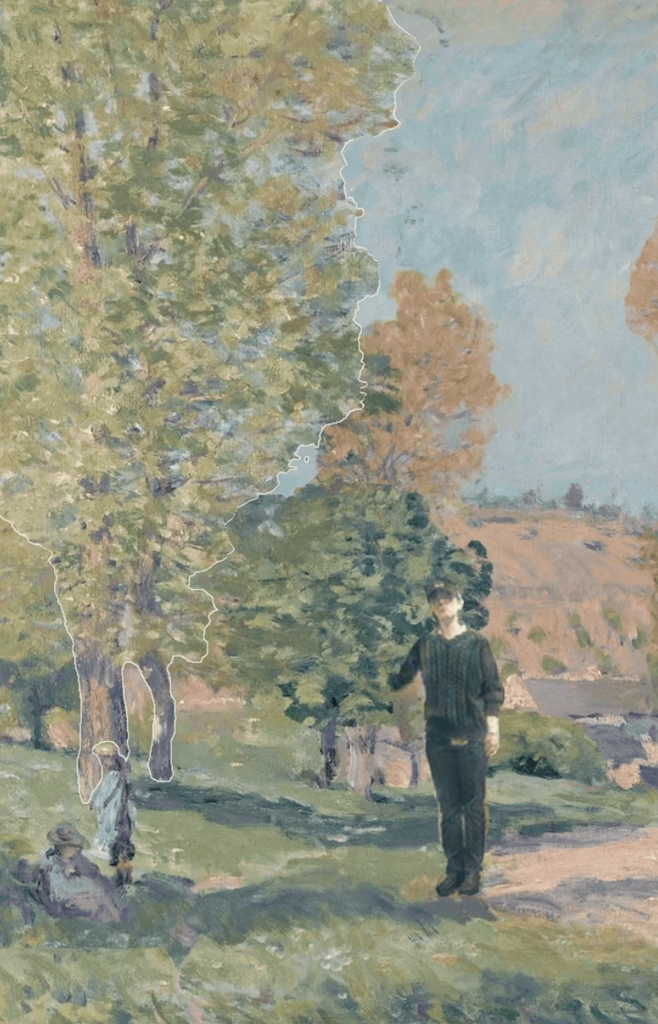
However, our instructor walkthrough showed that these cues are not yet entirely successful. Although the instructors could see the tree highlight, they were not convinced that a new visitor would understand what action was expected.
This raises an important distinction:
Noticing that something is interactive is different from understanding how to interact with it.
For the upcoming playtest, we also considered preparing a simple optional visual instruction card showing a few possible actions, such as interacting with trees, moving clouds, and hiding behind painting elements.
This would allow us to compare visitors who explore independently with those who receive a little guidance.
Building the Soundscape
Sound was another major focus this week.
Our first painting needs a complete environmental soundscape that can support both the atmosphere and the interactions.
We have been working with several types of sound, including:
- Background ambience
- Tree and proximity sounds
- Interaction response sounds
- Footsteps
- Seamless ambient loops
One challenge is finding the right balance between environmental atmosphere and interactive feedback.
During the instructor walkthrough, some environmental sounds felt too strong, creating an impression closer to a storm than the quiet landscape we wanted to communicate.
This helped us recognize that sound should reinforce the painting’s atmosphere rather than compete with it.
For now, our priority is to complete a convincing soundscape for the first painting. More advanced multi-channel audio and Unity-controlled spatial sound remain goals for the second half of the semester.
Refining the Installation
As we continued testing in our project room, several practical issues became more visible.
Our physical frame still needs additional work to ensure that visitors can move through it safely. We identified potential tripping hazards around its base and began considering changes to the structure.
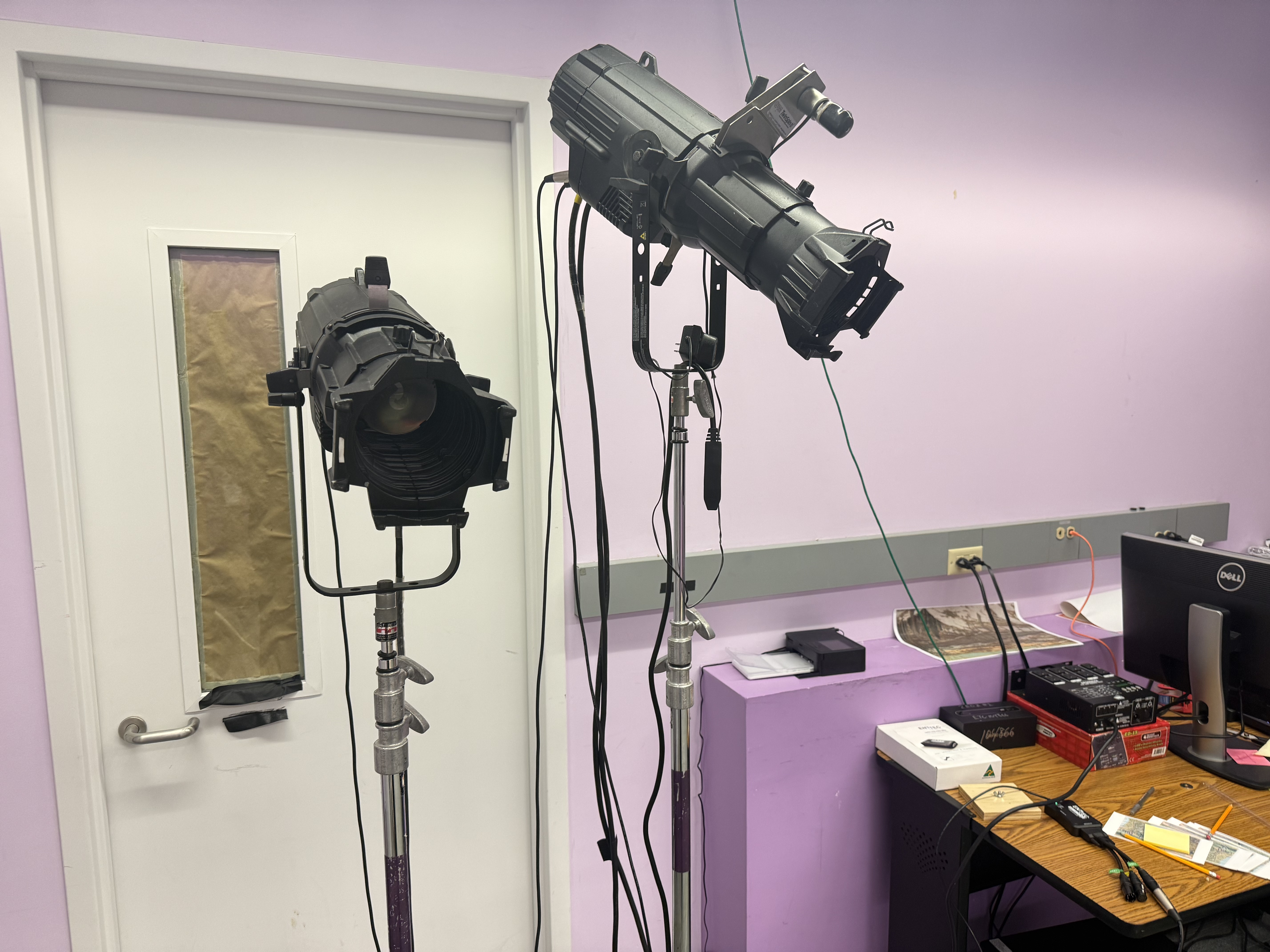
We also reviewed cable management, power distribution, and the placement of lighting equipment.
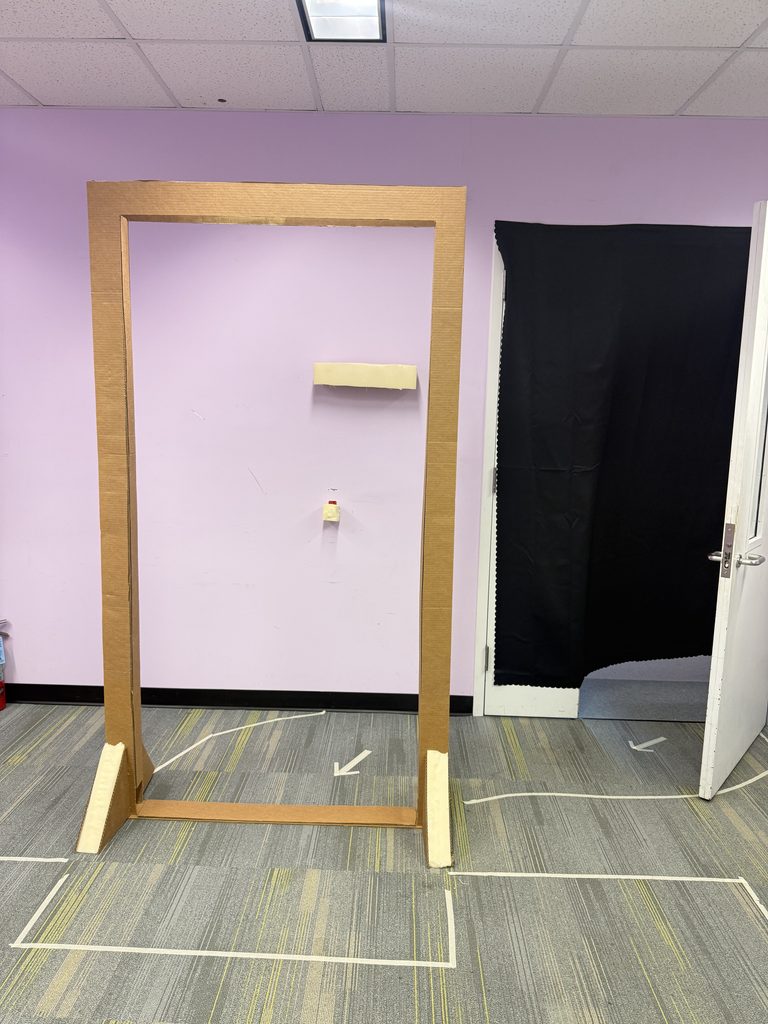
Lighting presents another interesting challenge.
The camera requires enough light to detect visitors reliably, but the lighting also needs to support the atmosphere of the painting.
During testing, we noticed that the visitor’s face could appear too bright compared with the artwork, making the visual integration less convincing.
Body segmentation also showed some tearing and edge artifacts.
These issues reminded us that the digital image, physical lighting, and camera setup cannot be designed independently.
We have begun investigating available lighting equipment through ETC and the School of Drama. Eventually, we hope to connect lighting control to Unity through DMX, allowing the physical environment to respond directly to the artwork.
For Halves, however, reliable basic lighting remains the immediate priority.
Preparing for Faculty Playtesting
In addition to the Halves presentation, we prepared for a faculty playthrough in our installation space.
This required more than simply getting the software to run.
We divided responsibilities for welcoming visitors, explaining the experience when necessary, recording observations, capturing photos and videos, and resetting the system between participants.
We also discussed using a simple feedback board with stickers or visual indicators rather than requiring faculty to complete a long survey.
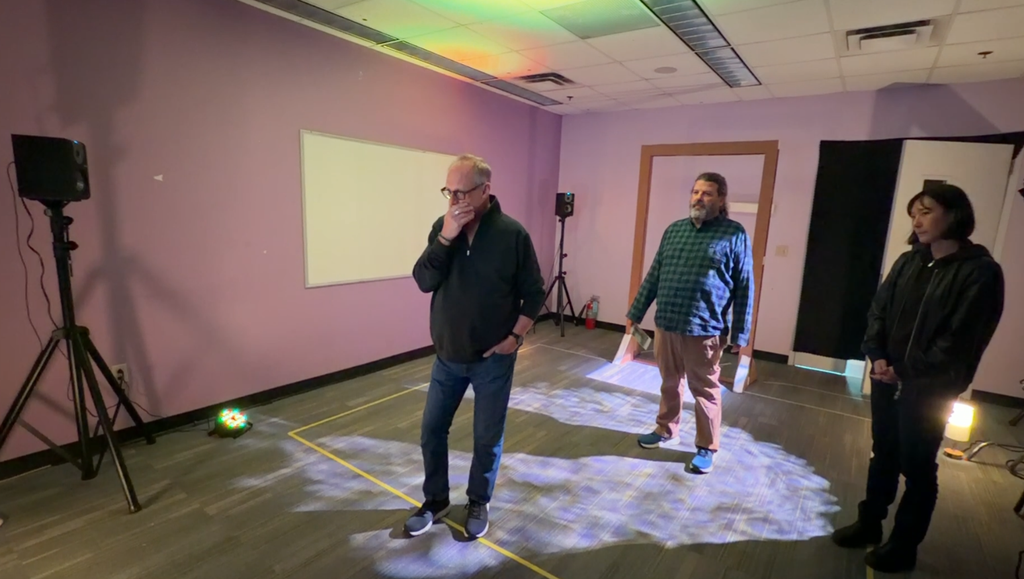
One important point from our instructors was that feedback should address specific moments within the experience.
A visitor might enjoy moving through the painting but feel confused by the entrance. They might appreciate the visual effects while finding a particular sound distracting.
Understanding these differences will help us identify what needs improvement instead of treating the experience as simply successful or unsuccessful.
Looking Beyond Halves
While this week’s priority was completing the first painting, we also began preparing for the next phase of development.
The second painting will require additional artwork processing and new interactions, while our lighting and audio systems will eventually need more sophisticated control.
We are also preparing for upcoming expert playtests, where we hope to receive more specialized feedback on interaction and immersive experience design.
But before expanding further, we need to understand how well the current installation works for someone encountering Beyond Frame for the first time.
What We Learned This Week
This week reinforced an important lesson about interactive experiences:
Making individual features work is not the same as making the entire experience work.
A tracking system can be accurate, an animation can look beautiful, and an interaction can respond correctly—but none of these automatically means that a visitor will understand or enjoy the experience.
The transitions between these systems, the clarity of the interactions, the physical environment, and even the smallest sound or lighting decisions all shape how the experience feels.
As we prepare to gather more feedback from faculty, our focus is shifting from demonstrating what Beyond Frame can do to understanding how visitors actually experience it.
And that is the next step toward making the painting feel like a world they can truly enter.