Second week!
The story of this week is really all about prototyping. So, let’s talk about what we’re looking at for this little game project.

The first thing that we want to learn and prototype for is rather simple relative to some of the more ‘game design-y’ goals of prototypes we have planned later down the timeline: we want to figure out how developing for the Space Bridge works, both on a technical level (i.e., how do we interface with the inputs and screens) and on a design level (i.e., we want to get experience designing a traditional game for the asymmetric 3 player co-op layout). The broad goal is mainly just to get our hands dirty and start getting familiar with the platform.
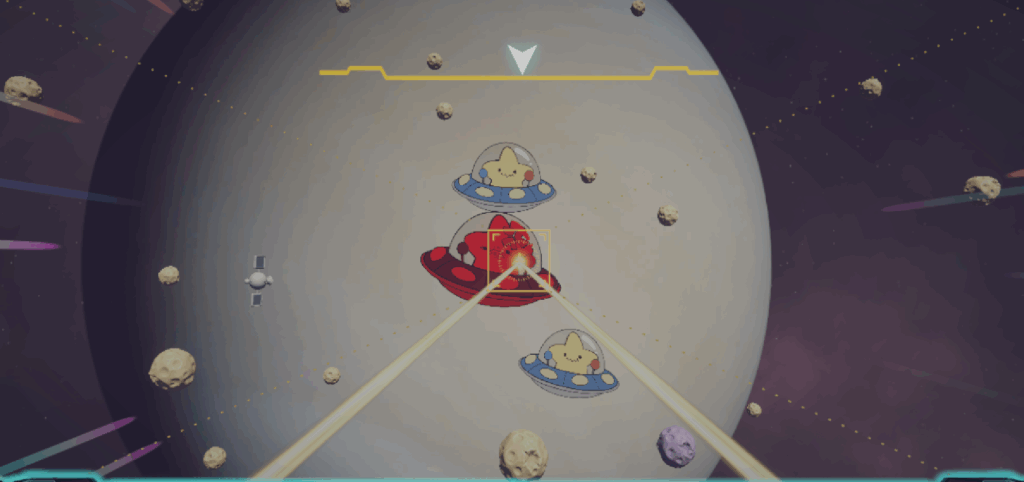
We don’t want everything we do to be tied to the space-theming of the physical platform itself, but we figured that we may as well make our little introductory prototype a cooperative spaceship flying game where each station is played by a different player, each with a different task!
The roles of the players are the Navigator, who uses the joystick and buttons to guide the ship and blow-up obstacles along the flight path; the Captain, who has access to both a view to the outside on their top screen and UI information about the goals and status of the ship on the touchscreen; and the Engineer, who is able to manage the power of the ship and decide which systems should go down for repairs and when.
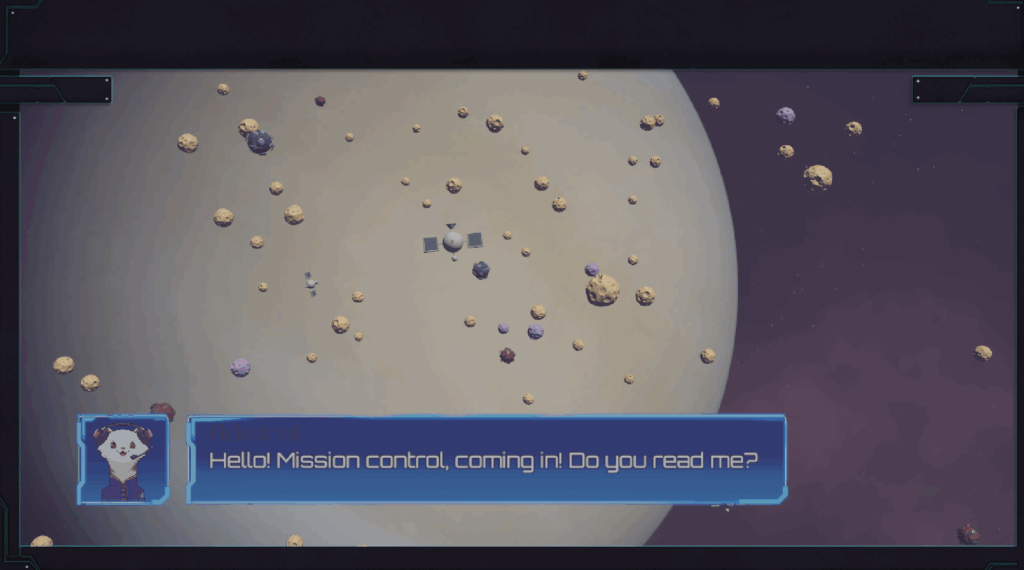
Within a week, this experience is by no means ‘done’ (but what does ‘done’ even really mean?). There are elements of the design which aren’t fully implemented yet (e.g., the Captain doesn’t have access to full information of the ship yet). However, we have learned some interesting things.
First, on a technical level, we have refined the software layer between the Phidget inputs and the game logic. There were some errors that actually using the code revealed, as practical tests tend to reveal.
Secondly, we immediately ran right up against perhaps an apparent challenge, which is: how do you make the experience of each player feel balanced in terms of fun, even when their actual gameplay is drastically different? The station with a joystick does lend itself to far more engaging typical ‘game’ interactions, while the station with only three buttons and a trackball requires some more creative interaction solutions.
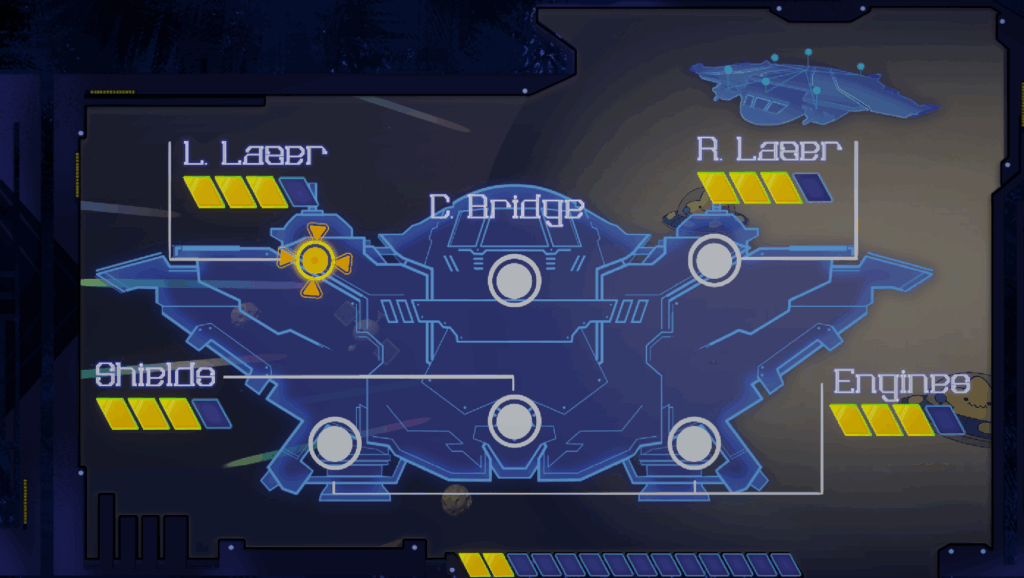
While this prototype hasn’t solved this design question fully (is there really a final answer to such a design question?), it has illuminated some of the challenges to our team and let us experiment with ways in which we can give each station ‘something to do’. Our final tasks aren’t completely balanced; if we were to take this prototype further, playtesting would be very necessary to help hone each experience, both individually and as a cohesive whole. Particularly, the Captain’s role as purely an information manager posed the most difficulty in terms of ‘finding the fun’. If we get the opportunity to run more in-depth playtests of this particular experience, our team will likely prioritize the experience of the player playing the Captain.
That’s roughly where we’re at now. See you at Quarters!
Over and out,
The Intergalactic Buttoneers