Quick Links
Week 15
This week was centered around our final presentations and faculty walkarounds. We were able to encapsulate all of the work we’d done over the semester, as well as inject a little bit of fun into our presentation using Dawn.
Our presentation can be found here: https://stream.etc.cmu.edu/projects/2025-semester-3/finals/. We were the first presentation that day.
This week was also focused on writing up documentation for next semester’s team, as well as cleaning up our project room and the fab room.


Some closing thoughts: we had a tall task this semester with designing both a platform and an experience this semester. Despite the obstacles in our way, our team is proud of the what we have made and we fully believe that we have created a platform that can create joyful, engaging, socially interactive, iterative and meaningful experiences.
We would like to thank Shirley Saldamarco and Drew Davidson for being our faculty advisors and constantly championing our needs and being some of our biggest supporters.
We would like to thank Christine Barnes, Dave Purta, Brenda Harger, and our faculty consultant Ruth Comley for providing help in further refining our design and iterating upon the work we were doing.
We would like to thank John Balash, Anthony Palyszeski, and all of ETC Outreach, Extension, and Engagement for being wonderful clients to work with and providing us the resources needed for playtesting and provoking future thinking.
We would like to thank Chris Watts, Marquise Wheeler, and the Boys and Girls Club of Western Pennsylvania for allowing us to codesign with them and providing the space and guests needed for our final playtest.
All of us here at the Little Owl Construction Co. wish future teams the best as they embark on developing for this platform.
Week 14
This week we had two major events, the first was our big playtest with the Estelle S. Campbell Boys and Girls Club on Wednesday, December 3rd. To prepare for that we had to get a lot of work done.
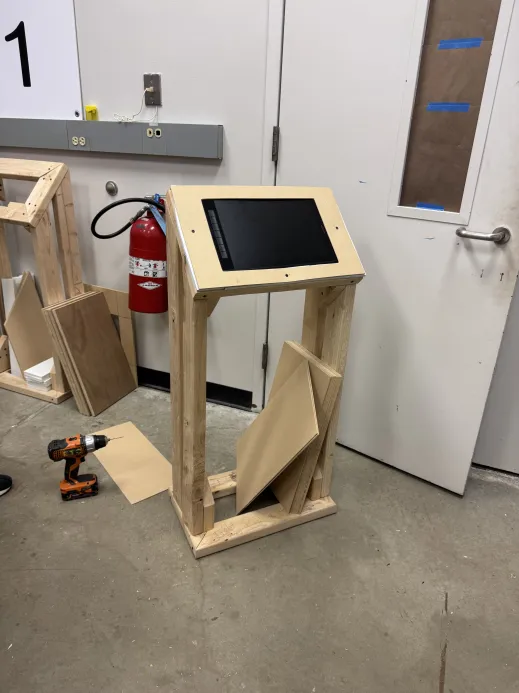
Ean and Jasmin worked on final touches for the podiums and stage which involved placing trim on the corners and edges of the podium and stage and Melanie applying more paint details to them, as well as Ean working on cable management and tablet installation for each podium.
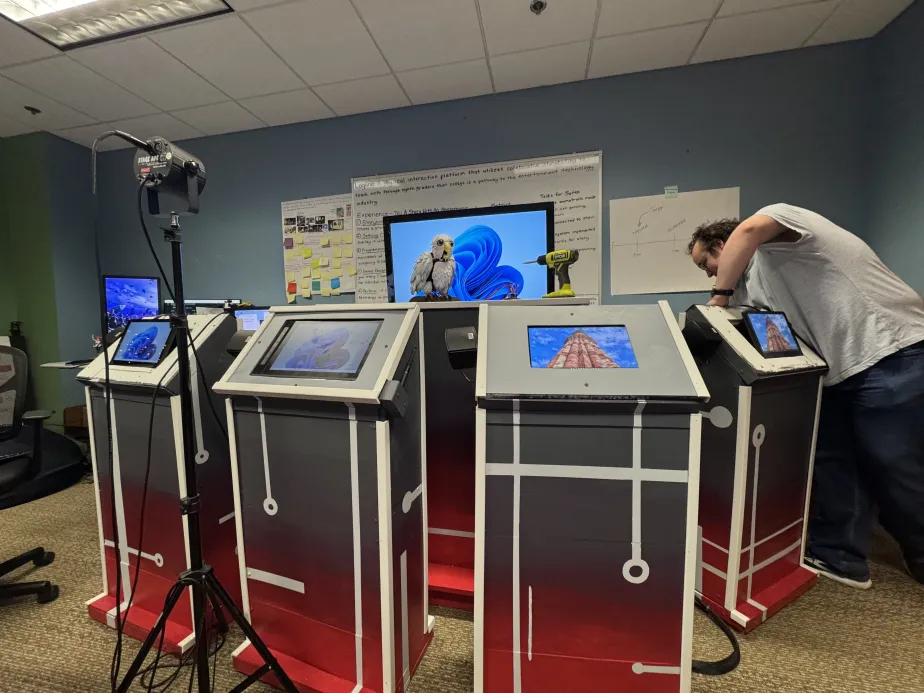
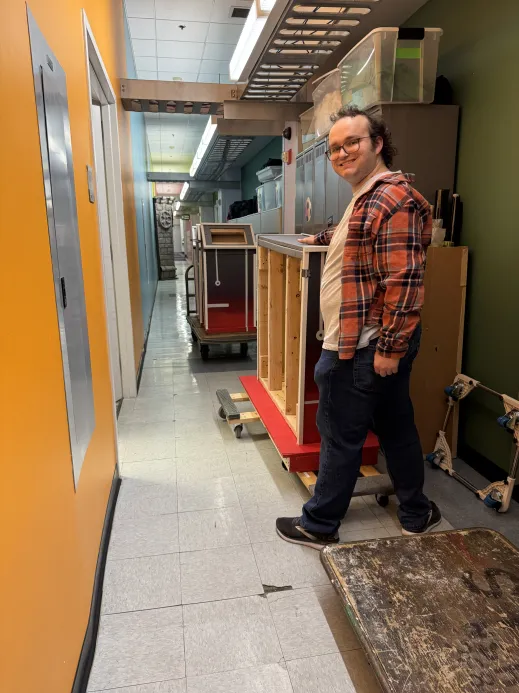
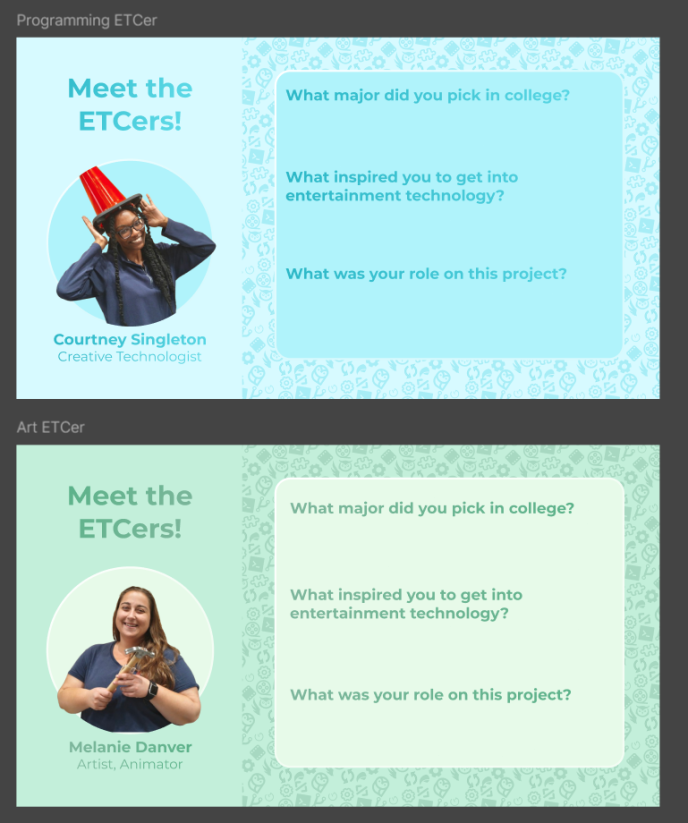
While this was going on, Devika was at work creating tutorial UI elements for each station and editing the intro video. She also started creating short bios about each member of the team to be implemented as screensavers for if a station was finished early. Devika also ran into an issue with the lights where the sliders can’t interact with Ruth’s show control if the system is networked, so she began work on switching to UI button inputs to fix the issue.
Courtney got the network communication between the computers set up and tested, running through the entire experience and making sure everything worked for the final show. She also implemented the intro video and UI tutorials that Devika created and helped with troubleshooting the lighting station.
Then the day of the playtest arrived. Melanie dropped Ean off at the U-Haul to pick up a cargo van for transport, we got loaded up and made our way to the Boys and Girls Club. We got set up in around an hour and a half and because we got set up early, we had time to playtest with two groups. The first was a rambunctious group of middle school boys who had a fun time creating their own story and then designing their own performance. The second group was made up of quieter elementary school students, but who also had fun playing around with our experience. This playtest ended up being incredibly successful for us and we had a great time there.
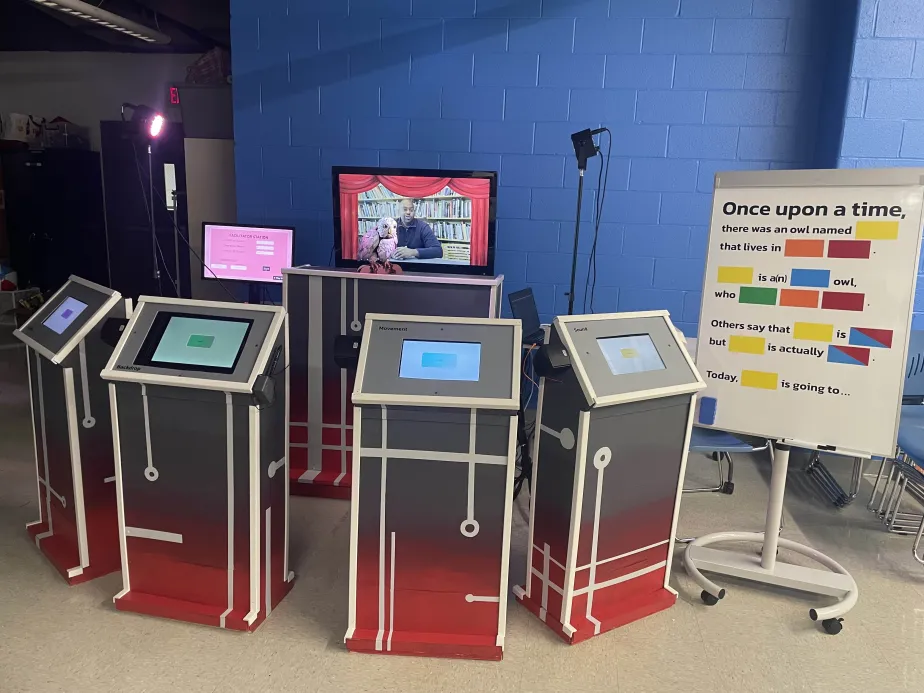


The back half of the week was then spent preparing our project room for the ETC 2025 Fall Festival, where alumni, friends, and family come to the ETC to playtest everything that’ s being worked on. Folks loved going through our experience and had a lot of fun that night.


Week 13
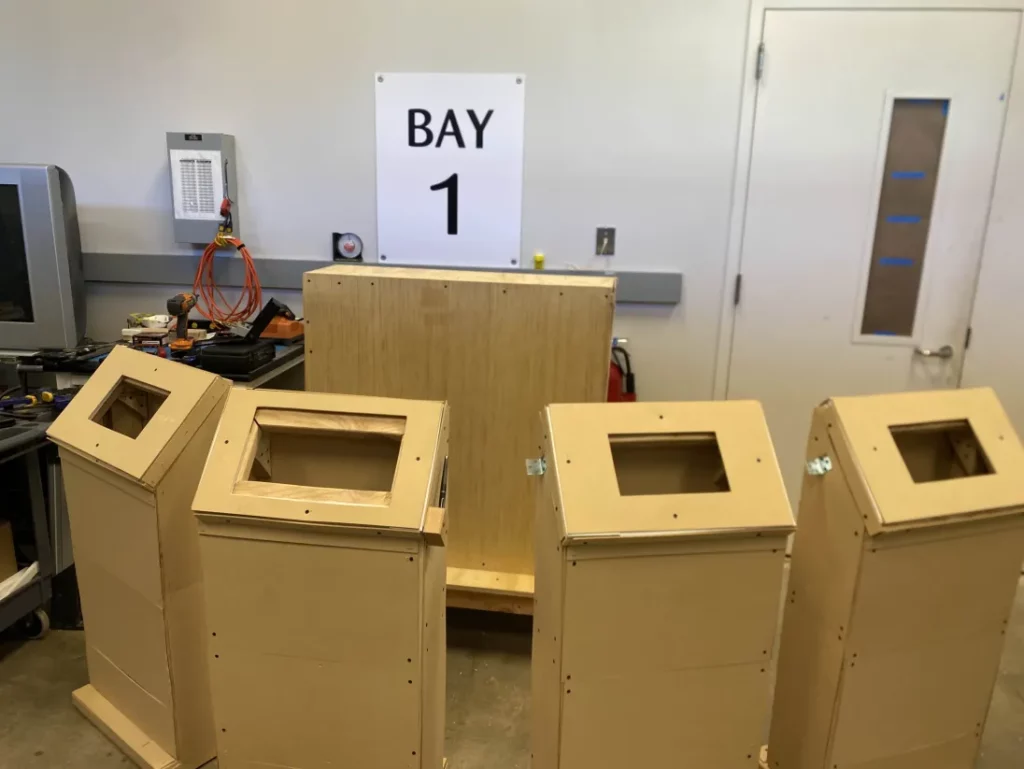
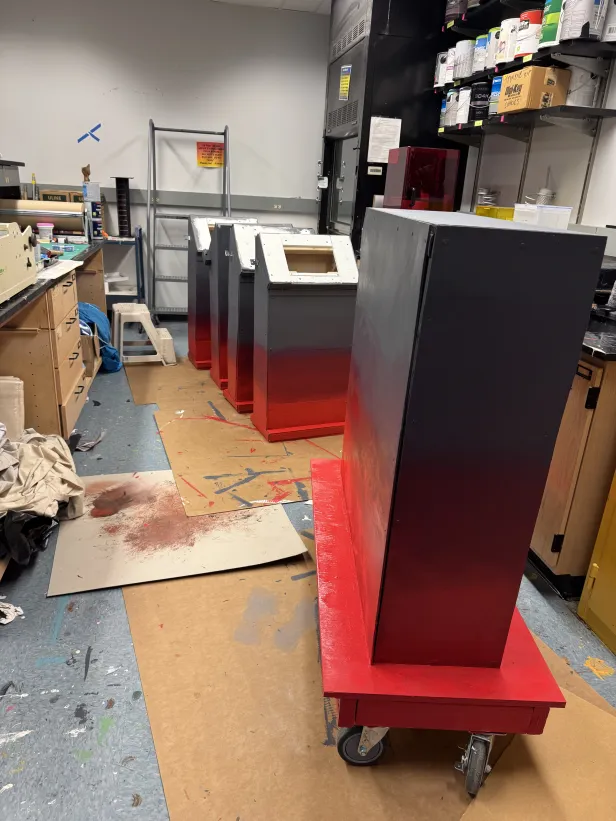
Despite Thanksgiving being this week, there was a lot of work to be done. For the set, Jasmin and Ean finished installing panels onto the podium and stage in preparation for painting. Jasmin and Melanie later on in the week had an 8 hour painting session where they were able to get the paint job completed for the entire set. Ean also worked on implementing the sound system for the set, which was comprised of an external surround sound chip being routed to two car amplifiers so that way each station could have its own unique audio.


Ean also worked on creating all the sound effects and ambient tracks for the sound station. This consisted of 70 sound effects that were no longer than 0.5 seconds and 7 ambient tracks that were no longer than 20 seconds. Some of which can be heard below.
Melanie wrapped up cosmetic modifications for Dawn which included painting the eyes and covering everything in clear sealant. We also received our new magnetic white board in the mail, and Melanie got the story prompt placed on the white board in vinyl and finished placing the vinyl words on the smaller whiteboard pieces.


Devika worked on getting our Lighting station connected with Ruth’s show control system and was able to have the DMX lights be adjusted using sliders in our software. She also worked on getting the intro video footage edited.
Courtney was at work fixing UI bugs with the programming station in order to have the control blocks for the animatronic movement be moved around easily, as well as tidying up how the layout and formatting of the blocks were handled. She also fixed the UI sidebar and added a bottom tool bar for the art station and ensured that the sound effects used in the experience could switch between the sound station and the main stage for the final performance.
Week 12
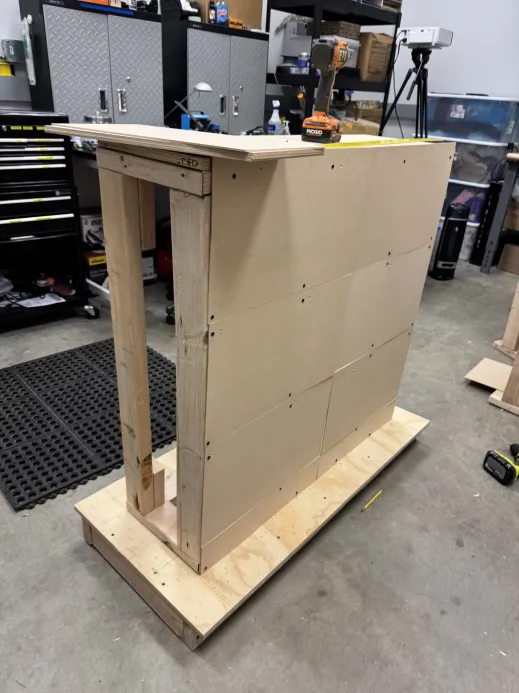
During this week, Devika, Courtney, and Jasmin were at the IAAPA (International Association of Amusement Parks and Attractions) Expo, so Melanie and Ean spent most of the week cutting and assembling the paneling for the podiums. The two also continued work on the story station, with Ean gluing magnets to the backs of the cut white-board pieces and Melanie applied base colors and lettering to the white-board pieces using a Cricut vinyl cutter.
In addition, Melanie worked on creating feathers for the animatronic out of foam sheets and painting them white and gray to better reflect the lights we were using. By the end of the week, most of the animatronic’s cosmetics were completed transforming Maxwell the Parrot into Dawn the Owl. The new additions’ didn’t impede Dawn’s movement which was a great success.
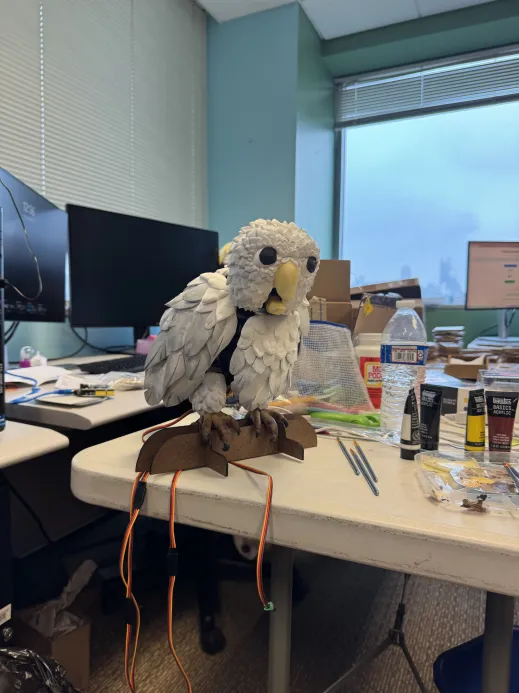
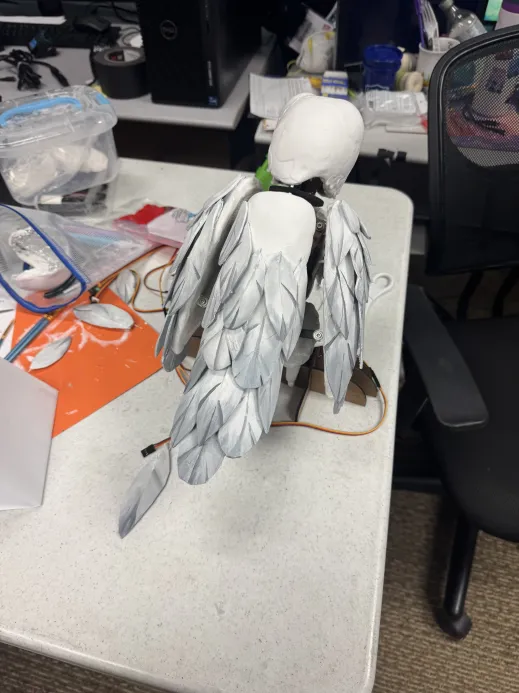
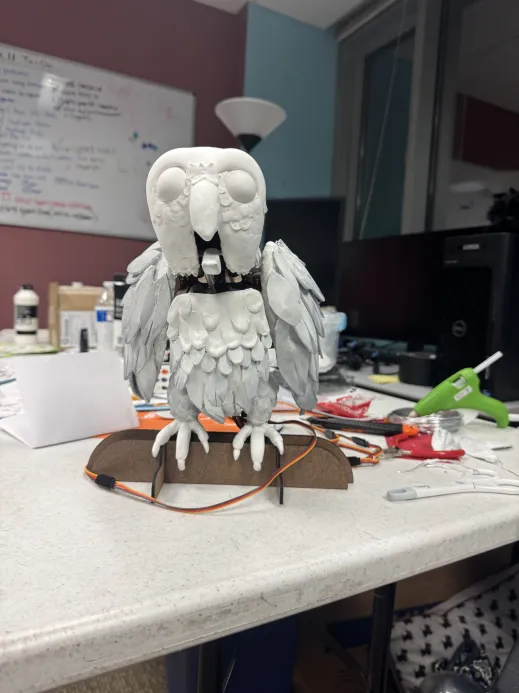
Courtney was also got some work done while at IAPPA, mainly implementing draft sound station UI and adding the final UI assets for the programming and art stations. She also worked on improving the flow between our intro video, the first set of stations, and then the last set of stations.
Devika returned in the middle of the week to help prepare things, working with Ruth and Dave Purta, one of the members of the ETC’s IT department, to acquire new lights and set them up using Ruth’s show control system.
The rest of the team, after having a great time at IAPPA, returned back to the ETC in time for our Softs presentation, where various faculty and staff members walked around the ETC to view the various second-year projects. The feedback that they provided during these walkarounds provided us with good insights into how to improve our work for both our final deliverable, as well as for our final presentation.


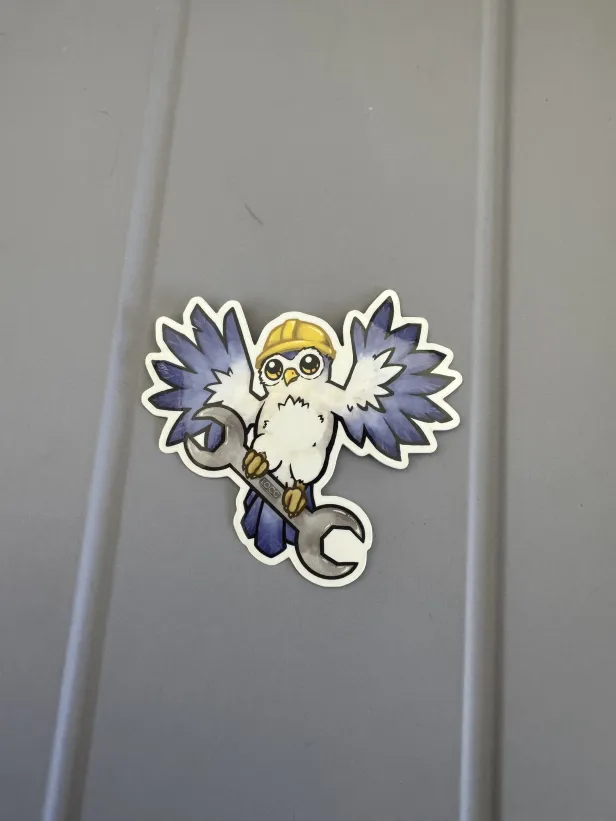
This week we also received our hard-hats and stickers to customize them.
Week 11
Early on in the week, we recorded video footage with the ETC Director, Derek Ham, to create an intro video to our experience.
Set work continued this week with Jasmin and Ean assembling the frames for the podiums. Jasmin also acquired small DMX lights that we intended to use for our lighting station, however these lights were mislabeled and instead of being Red, Green, and Blue lights, they were only white lights.


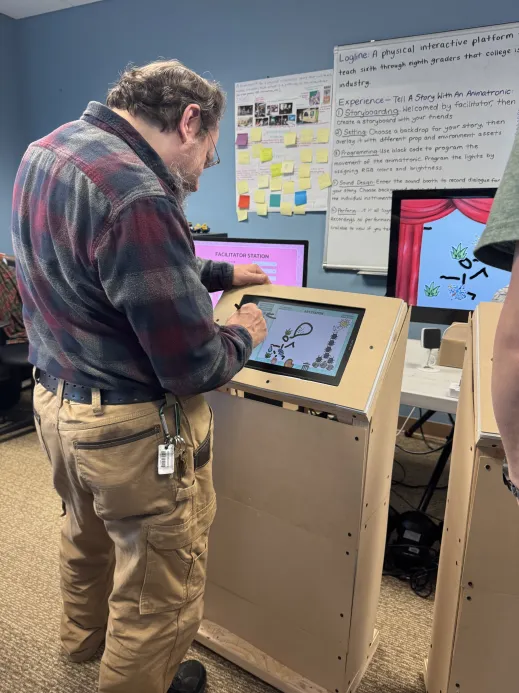
Courtney began testing the full setup with the animatronic, facilitation monitor, TV backdrop for the stage, and the four interactable tablets and discovered that in order to use all of these displays, we would have to network two computers together for everything to work.
Devika spoke to Ruth Comley, an ETC faculty member who specializes in experience design, about integrating her show control system into our project for our lights. Devika also designed new UI for the lighting station before heading out to Toronto Metropolitan University’s Thrill Design Competition.
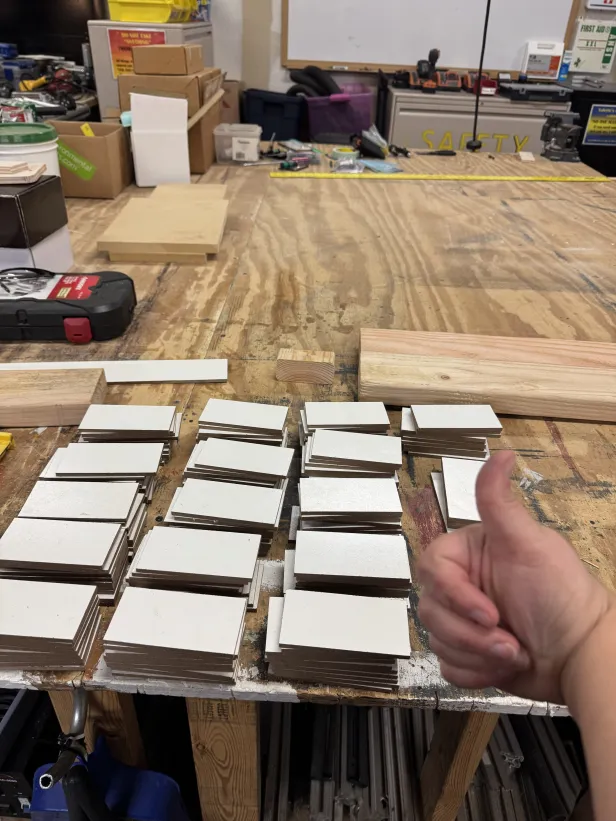
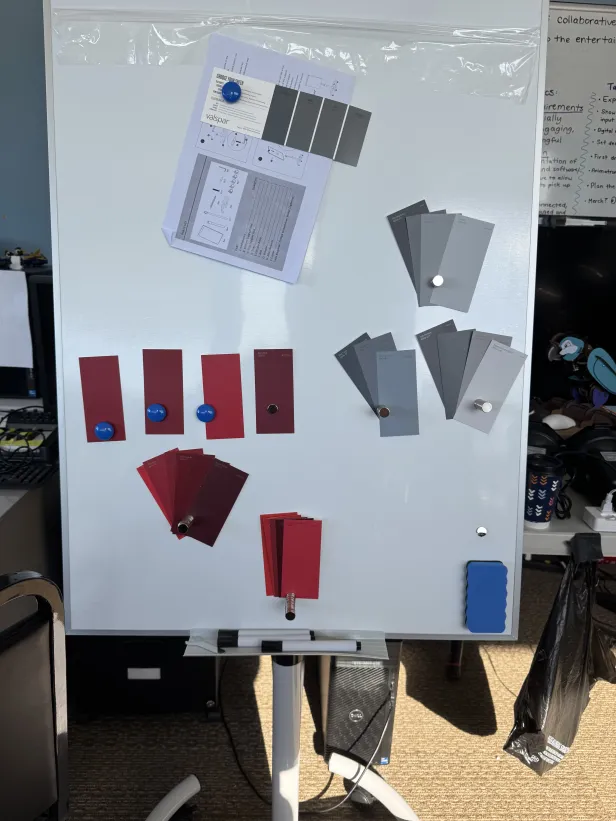
Melanie began creating more modifications for the animatronic, including placing a basecoat of foam over the head, body, back, wings, and feet. Melanie and Ean also began work on creating the final version of the story station, which included cutting a sheet of whiteboard into 2in. x 4in. pieces to have each word placed on it. We also received our portable magnetic whiteboard that would have the story prompt placed on it, however it arrived damaged and we had to send it back in for a replacement. In addition, specific paint colors for the set were decided upon from various gray and red paint swatches.
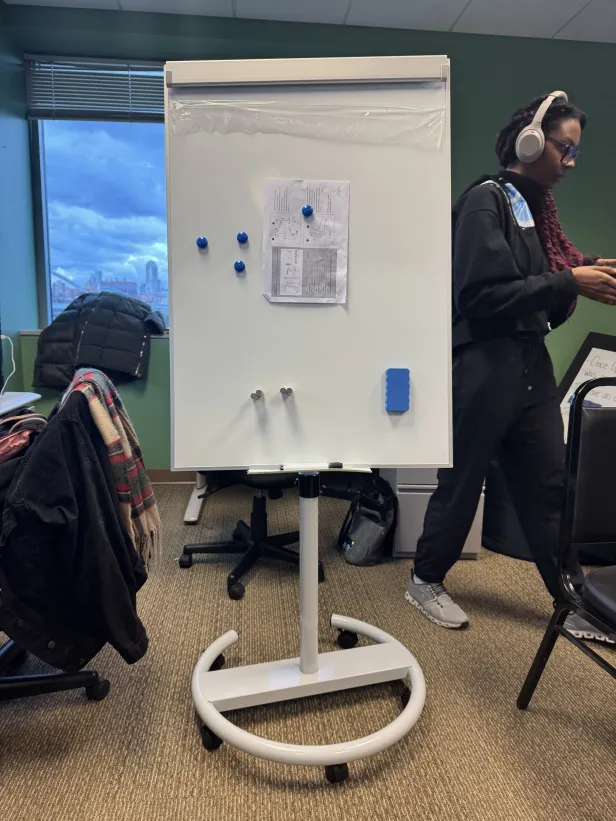
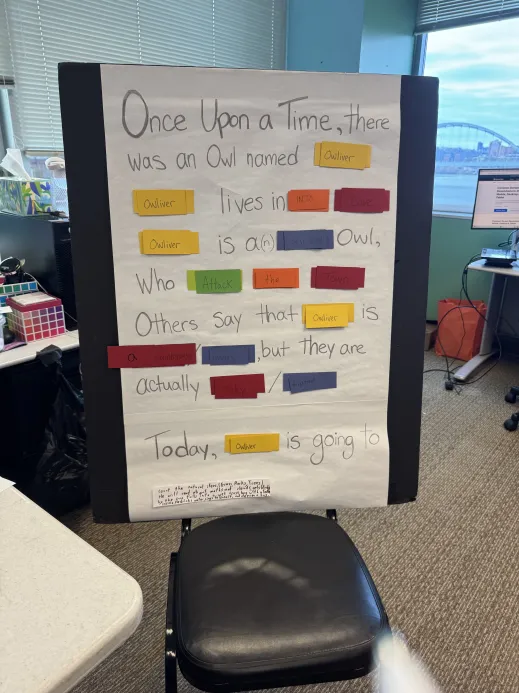
This week culminated with three groups of middle schoolers stopping by the ETC for a tour who also play-tested our experience. We tried out our new story prompt, and it went over really well, and the students had a lot of fun with the experience. One particular group of students wrote an ending that included all of the available drag and drop assets we had at the time.
Week 10
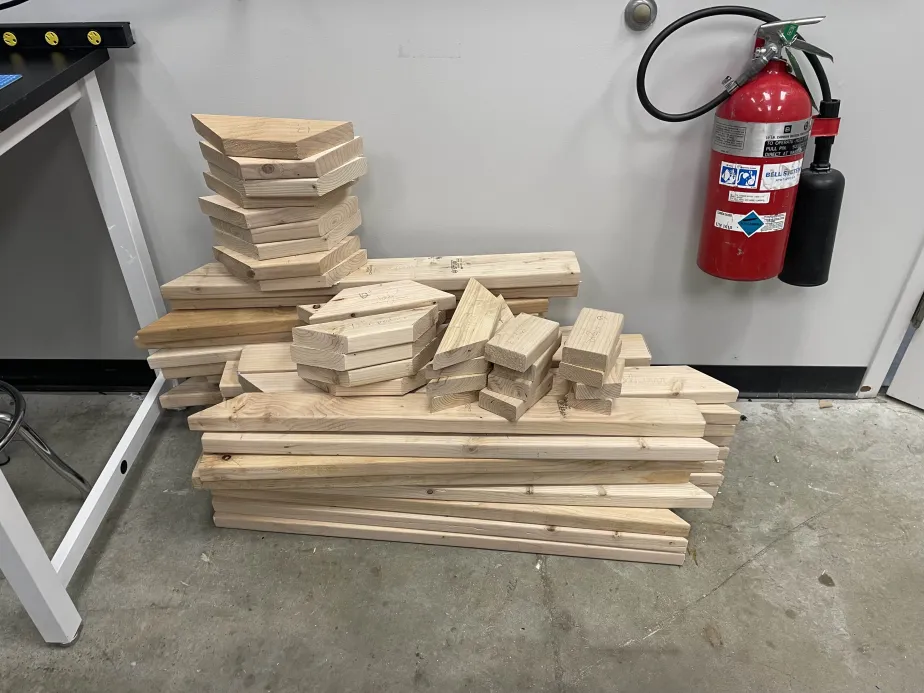
This week marked the start of our set construction. Jasmin and Ean cut 8 foot, 2 inch by 4 inch boards for the stage and podiums and proceeded to assemble the frame for the stage.

Melanie and Devika worked with Courtney on implementing improvements for the programming and art stations. For programming, it was making sure that the blocks used for animatronic movement were kept to the same size and that there wouldn’t be issues linking them to a grid, as well as improving the flow between the programming station to the sound station. For art, it was working on improving and iterating and how art station tools were designed and used.
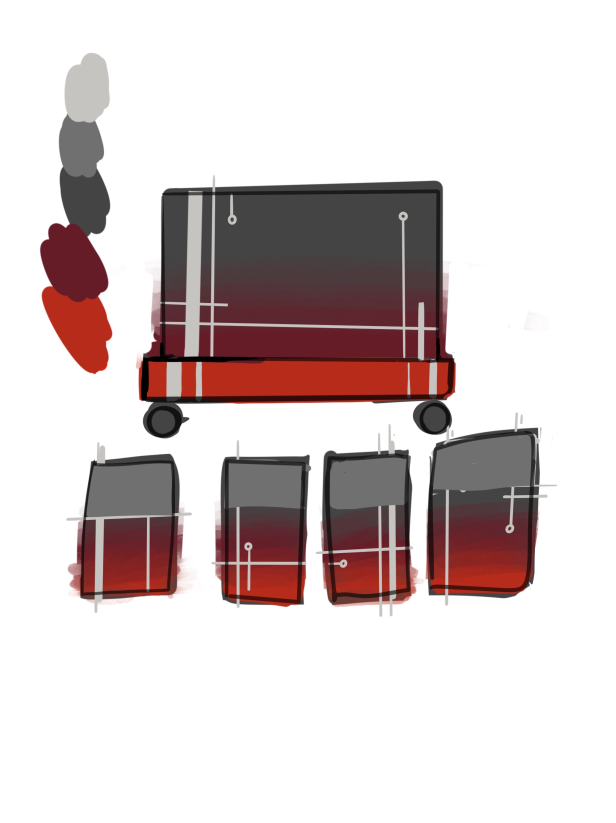
Melanie also began planning modifications for the animatronic, namely preassembling some parts of the base kit and modifying the wings and beak to look more owl like, as well as creating foil overlays for everything. Melanie also created the paint layout for the podiums and stage to look like the old Entertainment Technology Center logo, to better tie the set to the ETC.

We also met with Brenda Harger, an ETC faculty member specializing in Improv, to help with our story prompt. She recommended making the prompt less about designing a story and more about the CROW concepts; those being character or who they are, relationship or what ties do they have to others or the environment, objective or what is their goal, and where or the location of the story. This would allow guests to be more easily introduced into basic story concepts.
Week 9
Week 9 revolved around two things, the first being acquiring our building materials for set construction. We had intended to begin work on constructing the set this week, but we were delayed due to budget concerns.
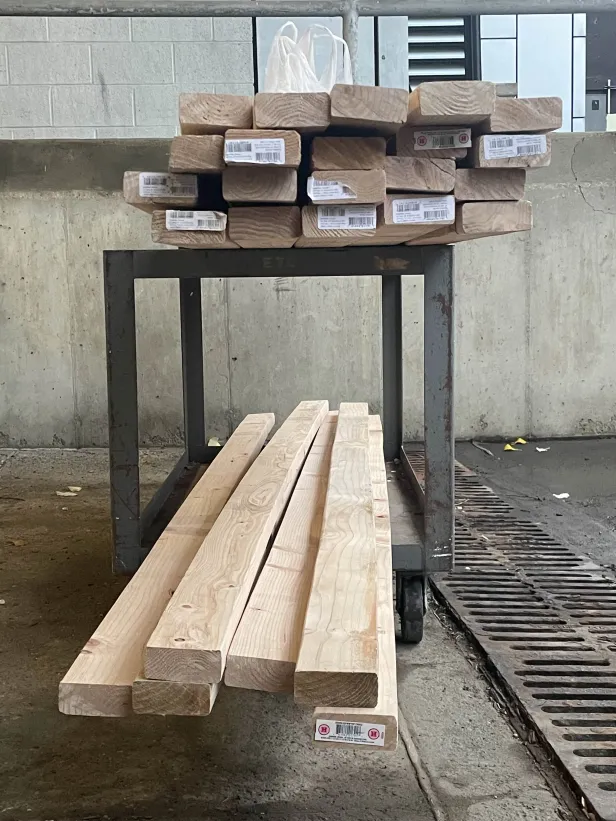
Jasmin was hard at work resolving these budget issues and fortunately, she was able to get them resolved and got an order placed in for wood to build up the structure of our set, which we picked up on Thursday.
In addition, Saturday of Week 9 was also when Playtest Day was, a gathering of people from the area who come to playtest students’ projects at the ETC. The bulk of this week was spent preparing for Playtest Day, with Courtney working to have the hardware ready by playtest day, including having multiple touchscreens work with each other simultaneously.


Playtest Day went really well for us. We got a lot of good insight in how to refine our scope for the rest of the semester, especially with how facilitators can help guide the experience along.
Apart from that, Ean updated the music used for the sound station, the updated versions of boredom, sadness, and fear can be found below.
In addition, Ean also figured out how to route audio to specific speakers so only certain sound effects will come out of each station.
Melanie continued work on drawing backgrounds.

Devika completed the experience journey map and cleaned up art and programming wireframes based on Courtney’s recommendation.

Jasmin also continued work on modeling new parts for our animatronic.
Week 8
Week 8 featured our largest playtesting event yet when we went to Belle-Vernon Area Middle School and conducted a playtest with three of Chelsea McIntyre’s classes. We play tested with eleven sets of 8th-graders which went incredible well and gave us invaluable feedback on how to improve our experience as well as pain points they experienced.

In addition, this week marked the approval for our updated budget, meaning we could put our initial order in for materials.
Beyond that, Ean began creating UI sounds for each station, a few of which are below.
Devika drafted a proper experience design doc.

Melanie began work on making more assets for the art station, including drag and drop assets and colorable backgrounds. She also met with Christine Barnes on how to design cosmetic modifications to our animatronic that were lightweight and easy to make.


Courtney was hard at work on resolving bugs with the communication between separate devices, updating the UI, implementing the drag and drop assets for the background, adding a way to reset the animatronic’s animations, and setting up scene management to go between different story beats.
Jasmin worked on resolving issues regarding our budget approval, as well as creating 3D models for adding to our animatronic.
In other news, some of our team also attended LightBox Expo, the convention that focuses on artists in the entertainment industry and were able to make a lot of connections there. Good for them!
Week 7
Week 7 started off on Monday with our Halves Presentation, where we present our current progress to the faculty and what we’ll be working on for the rest of the semester. The faculty had a lot of good insight on how to revise our set and how to achieve our goals for the semester. (Our presentation is from 0:01-19:20)
Apart from that, a lot of work was done to prepare for the construction of the set. Jasmin worked on designing our stage and drafting and submitting the bill of materials required for approval.
Courtney was able to get the virtual controller for Maxwell working and started preparing the art station. This included basic UI implementation, including drag and drop assets as well as a free drawing mode, and testing touch input with multiple screens using the Beetronic tablets we have. All of this was complemented by numerous testing and bug fixes to make sure everything meshed well.
Devika updated some UI elements for final implementation, began working on the UI screen for the facilitators, as well as used the ETC’s board game room for design inspiration on how to connect stories.


Melanie began work on the drag and drop assets that would be used in our art station.

In summary, this ended up being a very busy week for us.
Week 6
Our week started off with another site visit, this time to Junior Achievement’s BizTown in Bridgeville, Pennsylvania. BizTown was one of the main inspirations behind the project, and it was wonderful to see how they handled large scale interactive experiences with our demographic.


We also attended another Playtest Night at Hunt Library. This time around we were able to show off the animatronic and Ean updated our sound board from being placed in a pitch deck, to linking a MIDI Keyboard to a Digital Audio Workspace to act as a makeshift sound board. Unfortunately during Playtest Night, Maxwell was very uncooperative and didn’t want to perform, so we had to fall back on our paper prototype version.

Courtney discovered that this issue was caused by the Bottango software crashing after 3 API calls to trigger the servos. Thankfully she was able to reach out to Bottango and they recommended to switch to using a virtual controller that could trick the software into thinking a physical one was being used for live puppeteering.
Devika worked on finalizing the overall user experience flow as well as creating the first passes for the final programming UI elements.



Melanie spent most of the week creating storyboards for our halves presentation. coming up with the cosmetic changes for the animatronic, and creating an experience design document for reference.


Melanie and Devika also worked together to come up with the concepts for our background, which involved creating coloring book-like pages that could be filled with color and have premade sticker-like assets dropped on top to add set dressing.


Jasmin focused on getting the slides for our halves presentation prepped and ready as well as finalizing our set design and began preparing the list of materials for it.
Week 5
This week was a busy one for us and we had two site visits planned for the week.
Our first stop on Tuesday was our tour of CodeJoy, a local company that teaches kids programming using robotics through an online web show. Since our project was in a similar vein, CodeJoy’s design philosophies for how they ran their shows helped influence our design.


We were also able to visit the Estelle S. Campbell Boys & Girls Club in Lawrenceville, PA to get a sense of the space we would be working in for our final playtest, which was incredibly helpful.


In terms of work, Courtney finalized the API control for the animatronic as well as began prototyping the background drawing feature for the set.
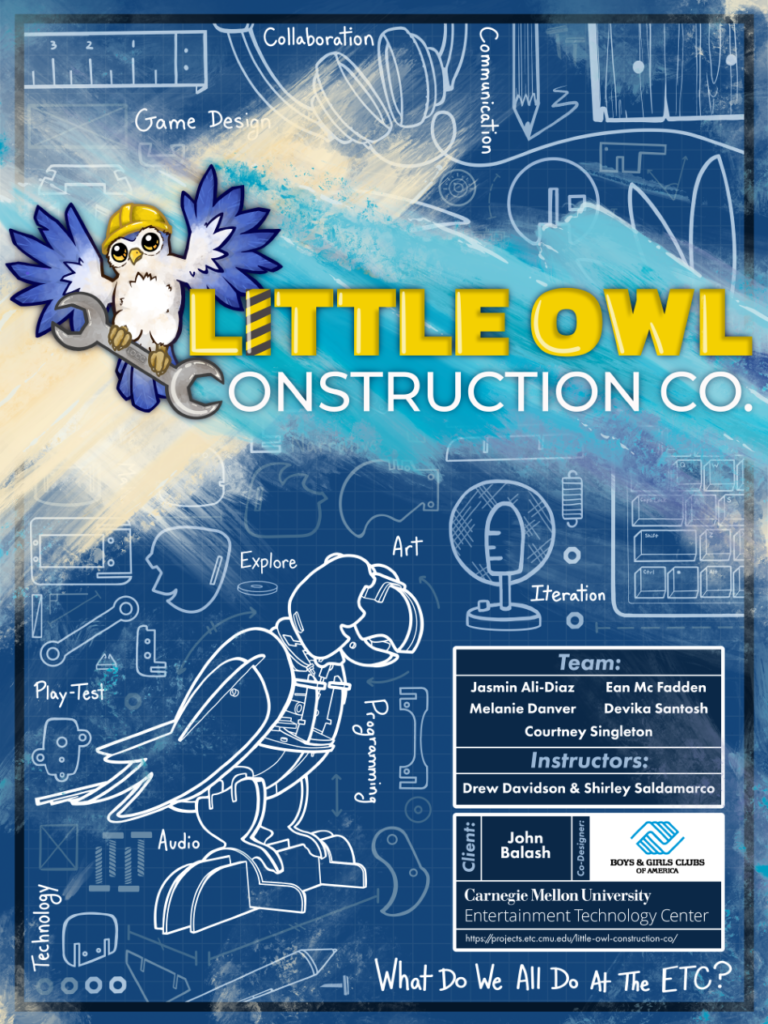
Melanie finalized the designs for our half-sheet and poster, as well as sketching out a new concept the stage for animatronic.

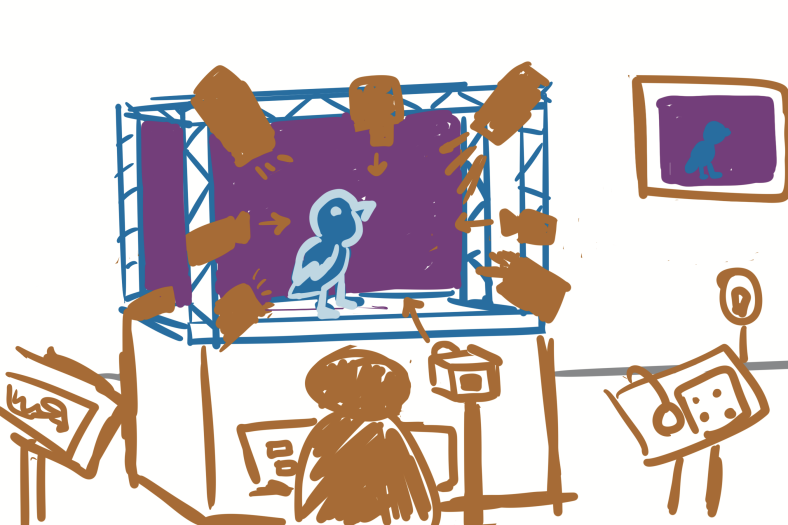
Jasmin further elaborated on the concept and worked on designing the CAD for our set and determining its materials, as well as finalizing our website design.


Devika edited our team photos and designed more UI elements to use for the experience.


Ean composed several demo tracks to invoke certain emotions when they’re played, as a way for those using the platform to immediately strike a certain emotion. Below are ones designed to evoke boredom/anticipation, sadness, and fear.
Week 4
We had an exciting development this week as both of the animatronic kits that we ordered arrived. The kit in question was Bottango’s Maxwell; a parrot themed animatronic with wing, neck, and mouth movement that would serve as the base for our own animatronic. Jasmin assembled it over two days and began planning how to modify it.

Beyond that, we also began preparing paper prototypes for Carnegie Mellon’s Playtest Night at Hunt Library. Our goal was to run the ideas we had for each station: story, programming, art, lighting, and sound design by our peers and non-ETC students to see if our plans for each idea could work.

To that end, Courtney designed our story station by creating a large poster with a basic story prompt that you could place parts of speech in to design your own story.

Devika created paper representations of the block programming for the animatronic and worked to assemble them with Melanie.

Melanie also designed our prototype animatronic, which had the joints to mimic the movement of the real thing.

For lights, we set up three stage lights with gels; one red, one green, and one blue, to roughly mimic how our lighting would work.

For sound, Ean gathered stock music from YouTube’s audio library, as well as various ambient noise and sound effects from Soundsnap and placed them into a slide-deck to make a pseudo-soundboard where guests could pick their own music, ambient noise, and sound effects for their scenes.

We brought our setup to Playtest night and it ended up going very well. Our playtesters had a lot of fun while going through our experience and provided incredibly useful feedback for how to improve our stations. What was especially helpful was that the non-ETC students were able to be exposed and have a general idea of the work we do here, which is one of our primary goals for the project.


Not content to rest on our laurels, we also did further playtesting with our fellow ETC members who continued the trend of having fun with the experience while providing crucial feedback for how to improve our experience.


Once we wrapped up our paper prototype playtests, it was time to start building out the experience. Courtney began delving into the Bottango documentation and implementing API Control to have our animatronic operate outside of the Bottango software, while Devika began transferring our UI elements into Unity to build them out.


Week 3
This week was spent preparing for our Quarter Presentations, where the various ETC faculty and staff tour the project rooms and see what the students are working on. In lieu of a slide deck, our team decided to design our presentation using our whiteboards and the concept art Devika designed for our experience layout.


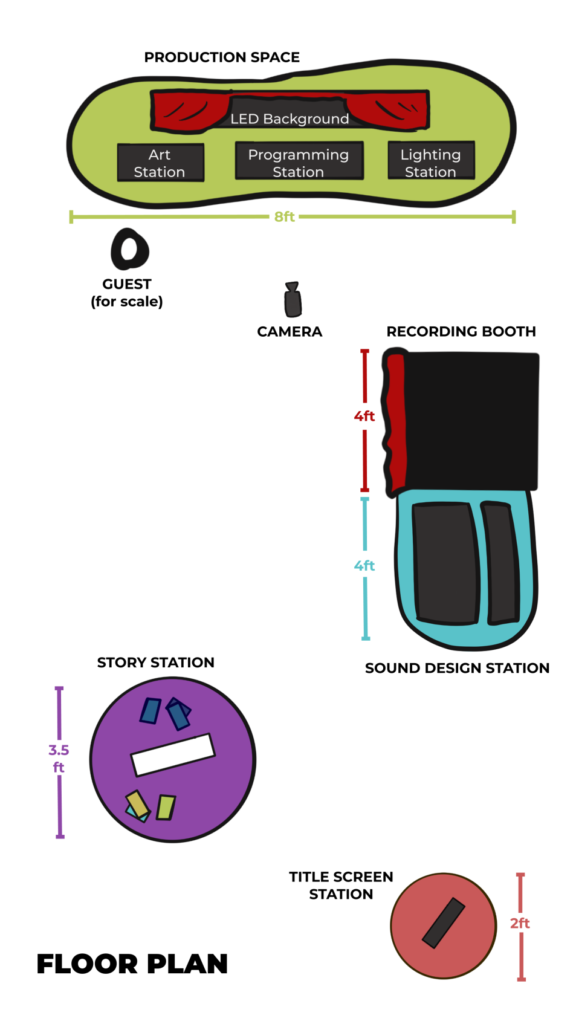
We received a lot of interesting insights and feedback from everyone involved that helped us greatly iterate on our current design, and provide inspiration for the paper prototypes we would design.
Later on after our Quarter’s Presentation on Wednesday, we set out to Lowe’s to take our team photo. We had a lot of fun figuring out what we would use for our team photo and taking individual shots with them.
This week also marked our first draft for our half-sheet, which you can see below. Melanie and the rest of our team really wanted our branding to give off a friendly, more casual vibe while also showing off the team’s interest with the project, while Devika provided our project’s description for the back of the half-sheet.


Week 2
During the week we finalized our concept for the project: a multi-station experience where sixth-eight graders go through abstracted roles from the ETC to tell a story with an animatronic. The students would design a rough outline for the story, design backdrops, use block programming to move the animatronic, record dialogue, select music and sound effects, and bring it all together in their own performance. These performances could then be recorded and shown off at the ETC, encouraging the kids at the Boys & Girls Club to come and visit the ETC. Based on this, we got our rough budget, tech list, and software list planned out.
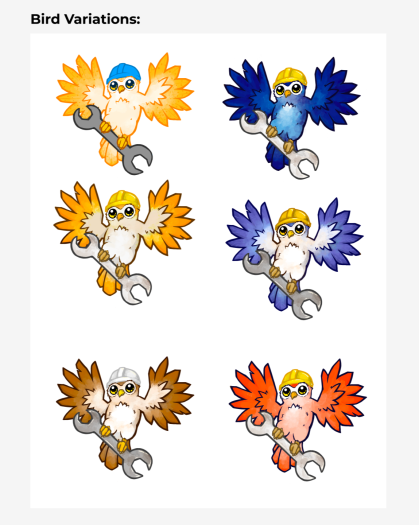
Melanie and Devika also began designing concepts for our logo, poster, and half-sheet, going through several iterations before landing on the current owl design. They also focused on selecting color schemes and font styles to unify the aesthetic of our internal branding.



We also had the opportunity to meet with our design partners, the Boys & Girls Club of Western Pennsylvania to gather their thoughts on our work. They were really excited to hear about our project and provided numerous ideas for how our design could be implemented in their locations and we further refined our proficiency targets to be introducing entertainment technology concepts to the students, rather than having them be complete masters by the end of our experience.
That’s not to say everything was business all the time, we still managed to slip in time for some team bonding for a late lunch at Wendy’s.

Week 1
Starting the week out, we met with our client, John Balash and learned our goal for the project: to distill the Entertainment Technology Center to it’s simplest form, design an experience around that core, and bring it to the Boys & Girls Clubs of Western Pennsylvania. We also received our guiding values for the project: joyful, socially interactive, actively engaging, meaningful, and iterative.
From there we quickly got to work brainstorming and defining the core of what we do here at the ETC, which is to tell stories using unique technology, collaboration, and iteration. We ran through several ideas before settling on having our core demographic, sixth to eighth graders, use an animatronic to collaboratively tell a story.

Our playtesting activity with our peers on August 29th also helped us define what other students believed were core aspects of the ETC.

Unfortunately, it wasn’t smooth sailing for all of us, this first week really took a lot out of us.

Never the less, we were all excited as we began our first steps on this project.