Week 11 began in the aftermath of playtest day. Monday was spent sorting through the feedback to find what would best serve the experience we want to make.
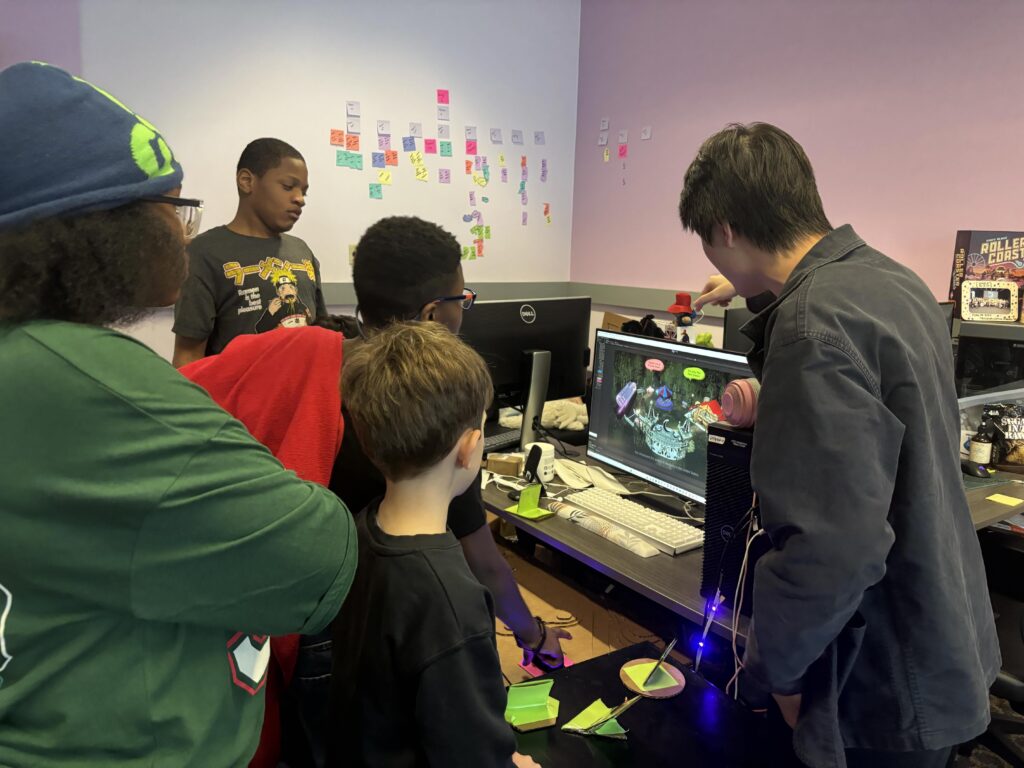
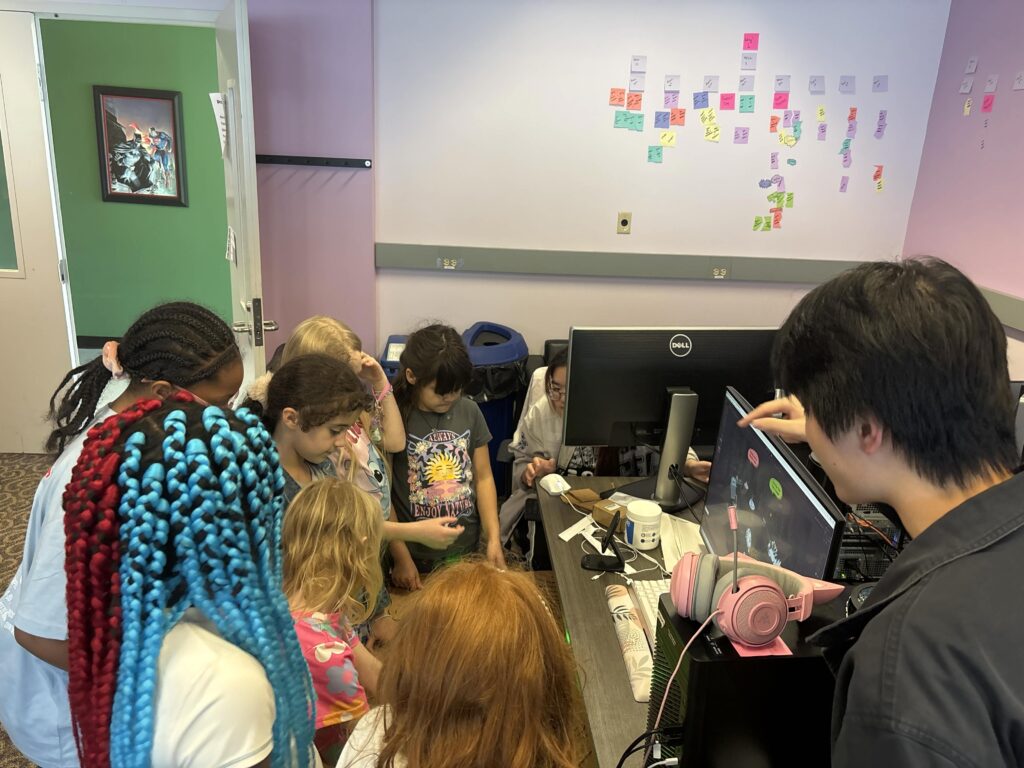
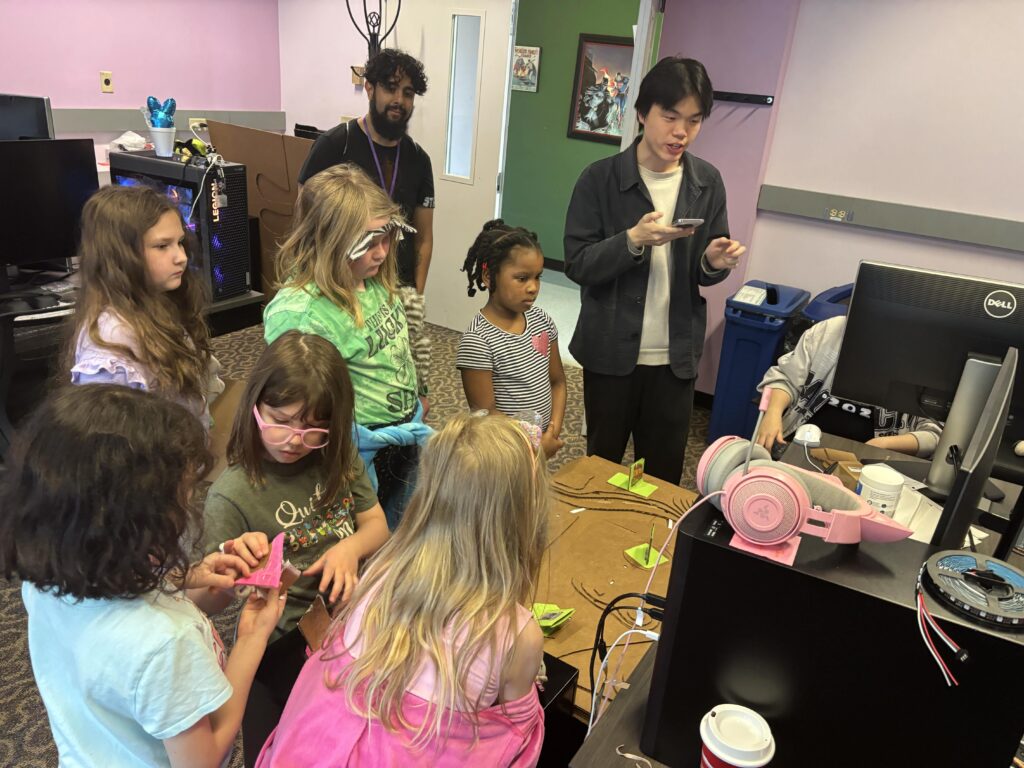
Tuesday brought another playtest with our target audience: a school group from East Liberty that will likely be around to experience the final exhibit at the Heinz History Center next summer. It was extremely valuable to get to test with some younger children than those we have tested with before.
The Good
- Guests were able to understand how they could interact with the project once they approached it.
- The physicality of the project was quite enjoyed.
- Quite possibly the most impactful moment was when the LEDs lit up or changed color.
- Every guest walked away with more knowledge of the theme parks of the past,
The Bad
- For most guests, focus remained entirely on the physical board, and it was difficult to get them to look up to the projected image.
- Guests were still hesitant to approach and play with the pieces laid out on the board.
- The project needs sound effects and voice over to make guests engage with the screen more.
- One of the younger children decided to lick one of the pieces. This is a biohazard.
Action Items
- In order to lead the guest’s eyes to the projected images, the team will integrate LED lights that run from the board to the screen.
- We will make the pieces look more robust and inviting.
- Cayla will work on getting sound effects and voice over.
On Wednesday, the team was lucky enough to meet with Norm Schwab, one of the founders of Lightswitch, for feedback. While we were too engrossed to get photos, Norm’s suggestions made us consider a new material for props: a translucent filament that light can be shone through.
in the wake of many playtests, the team decided it was time to move on from our cardboard prototype.
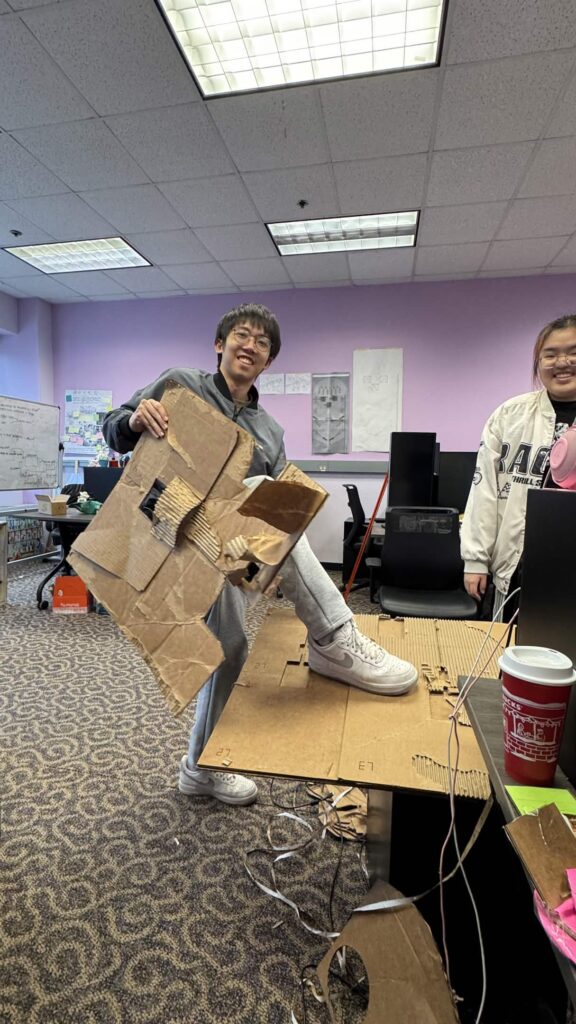
The design of the cardboard table did not allow for easy access to the RFID readers, thus did not allow us to take out individual readers and debug as needed. In addition, cable management came across as messy and cables left the table toward players, which was not conducive to a professional looking project.
Jimmy redesigned the table with these factors in mind. The new table will be designed to be taken apart to allow for easy access to the technology in the case that it needs to be fixed or replaced.
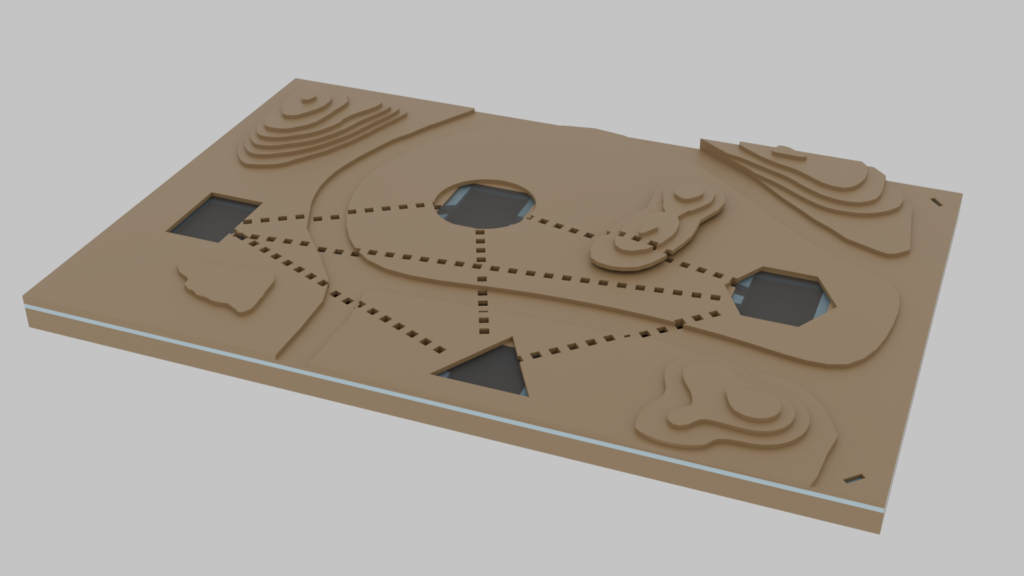
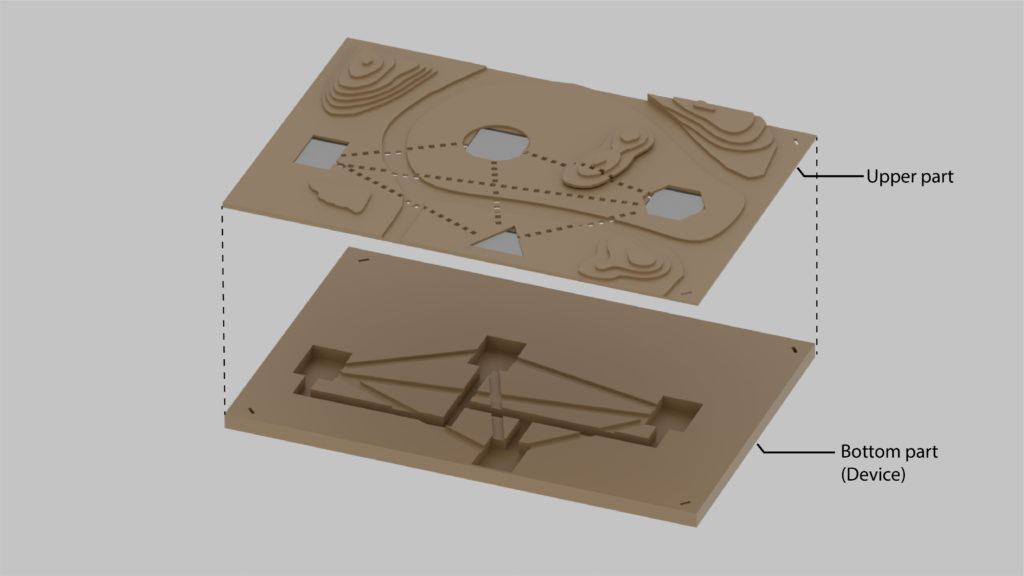
Now that the team is able to access the RFID readers again, Yifan set to work getting to the bottom of our RFID issues. The Phidget readers are now up and functional.
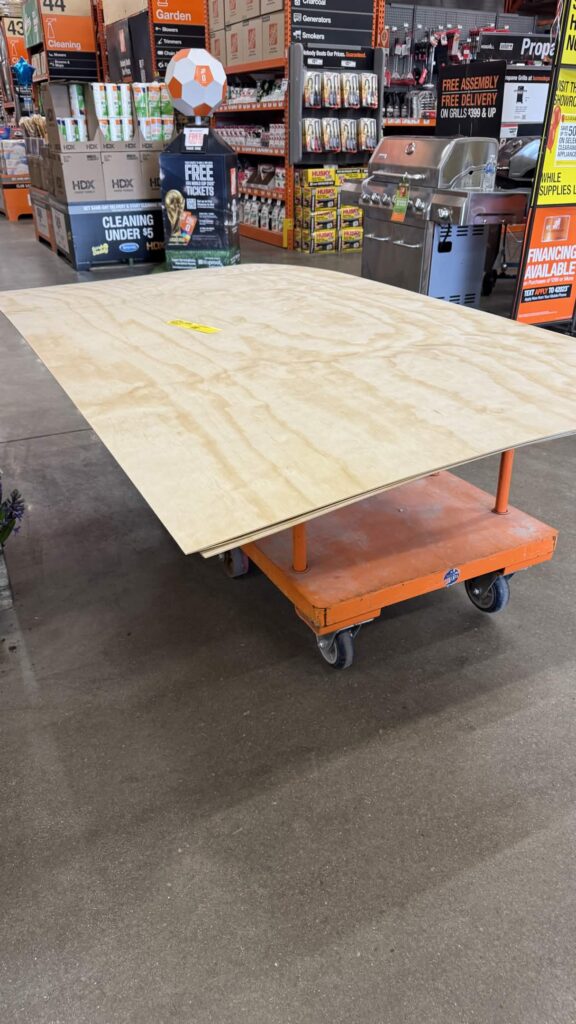
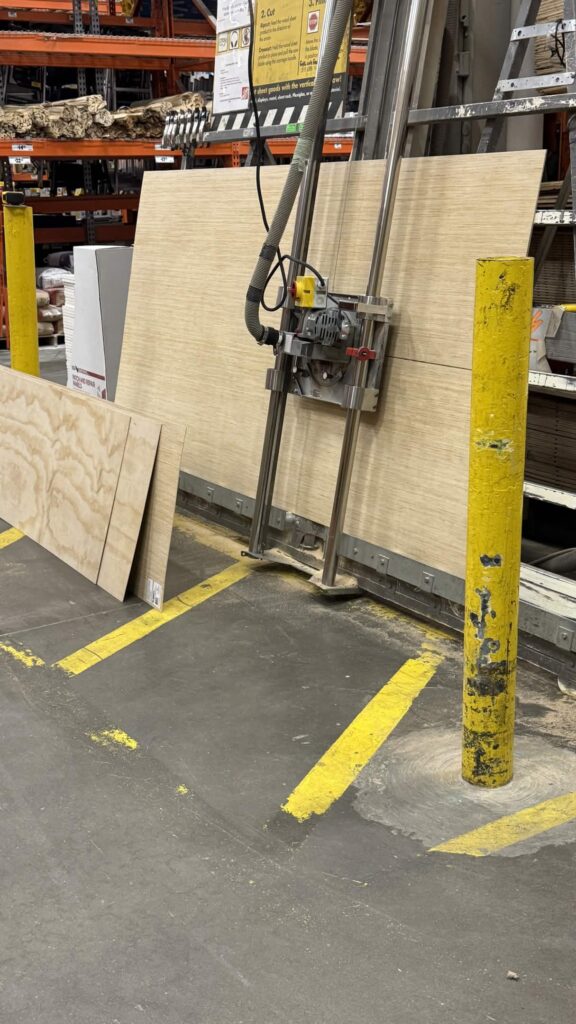
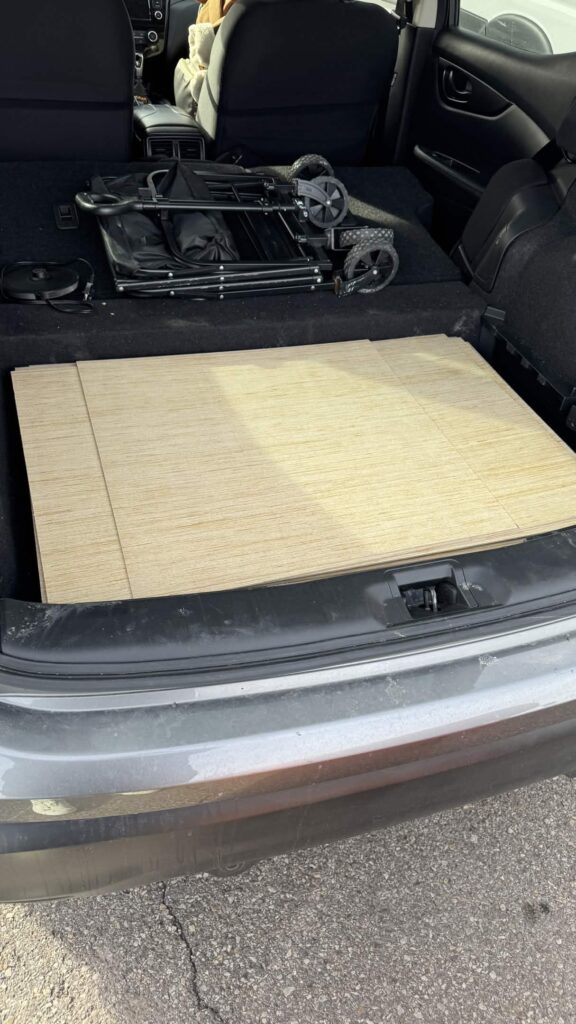
Meanwhile, Cayla took a visit to the Home Depot to pick up the team’s order of wood and get it cut down to size.
Next week will be a short week due to Carnegie Mellon’s Spring Carnival, and the team plans to keep working hard on physical fabrication in the short time we have.