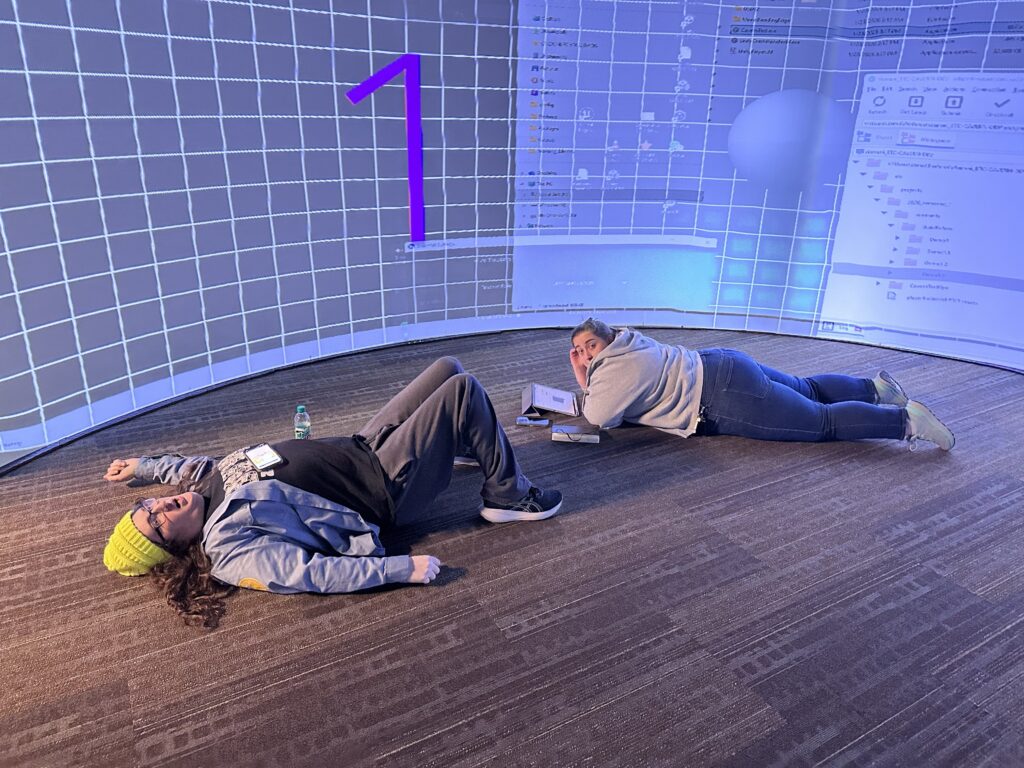
Focus of the week:
- Created experience sheets and storyboard drafts
- Transformational design workshop
- Arduino–Unity connection
- Art direction moodboard
- Poster/logo sketches
- Planned hardware needs and prototyped physical props
- Discussed pruning, fertilizing, and sunlight as metaphors for care
- Prepared for Quarters and upcoming design validation
This week focused on clarifying our direction and translating our ideas into clearer, shareable artifacts across design, programming, art, and hardware.
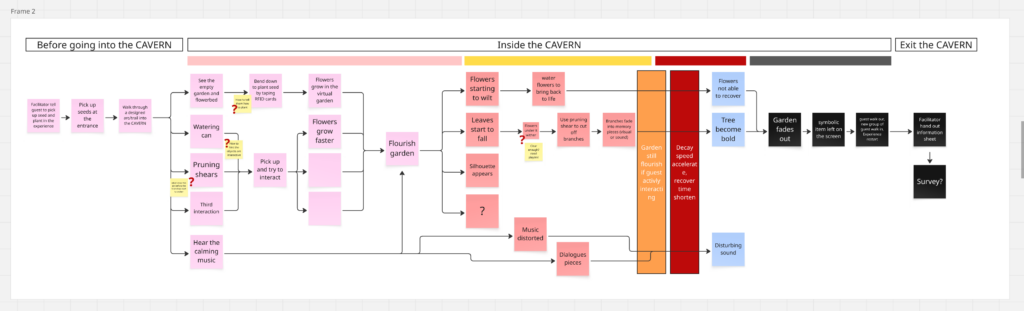
On the design side, we created an experience sheet that breaks the installation into different phases, helping us articulate how the experience evolves over time. We also produced an initial storyboard draft to visualize key moments in the experience and use it as a communication tool for gathering feedback. In addition, our entire team attended a transformational design workshop. Through this workshop, we clarified the transformational direction we are aiming for and refined our target audience. We are currently focusing on adults who are misinformed about dementia, as well as adults who have personal experience with the disease through loved ones or caregiving.
From a programming perspective, we worked on strengthening our technical foundation. We created an Arduino-to-Unity connection script to support future physical interactions, researched shader techniques for visual effects, and continued improving the watering particle effect to make the interaction feel more responsive and emotionally expressive.
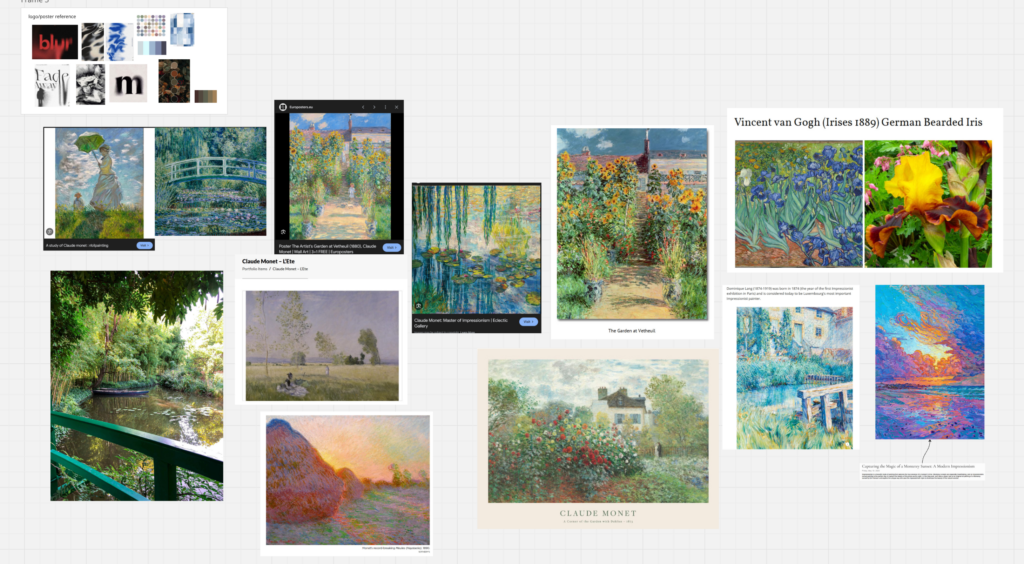
In art and visual development, we created a mood board to align on art direction and overall tone. We also began sketching concepts for the project poster and logo, exploring visual identities that match the emotional weight and metaphor of the experience.
On the hardware side, we discussed our needs with ETC staff and started planning for physical components of the installation. This included conversations around 3D printing props, sourcing wood for building the flowerbeds, and creating an early physical model of the watering can to test scale and ergonomics.
In addition to our other work this week, we continued refining our interaction design. We explored several potential interaction ideas, such as pruning the tree, using fertilizer to nourish the flowers, or casting sunlight onto the plants during darker moments of the experience. Rather than fully developing these ideas, we chose to keep them at a conceptual level for now. We want to gather feedback from faculty before committing to any final interaction designs. Quarters is scheduled for next week, during which faculty members rotate through each project to learn about our current direction and offer feedback. We plan to use this opportunity to validate our ideas, identify potential gaps, and decide which interactions are most meaningful to develop moving forward.