Focus of the week:
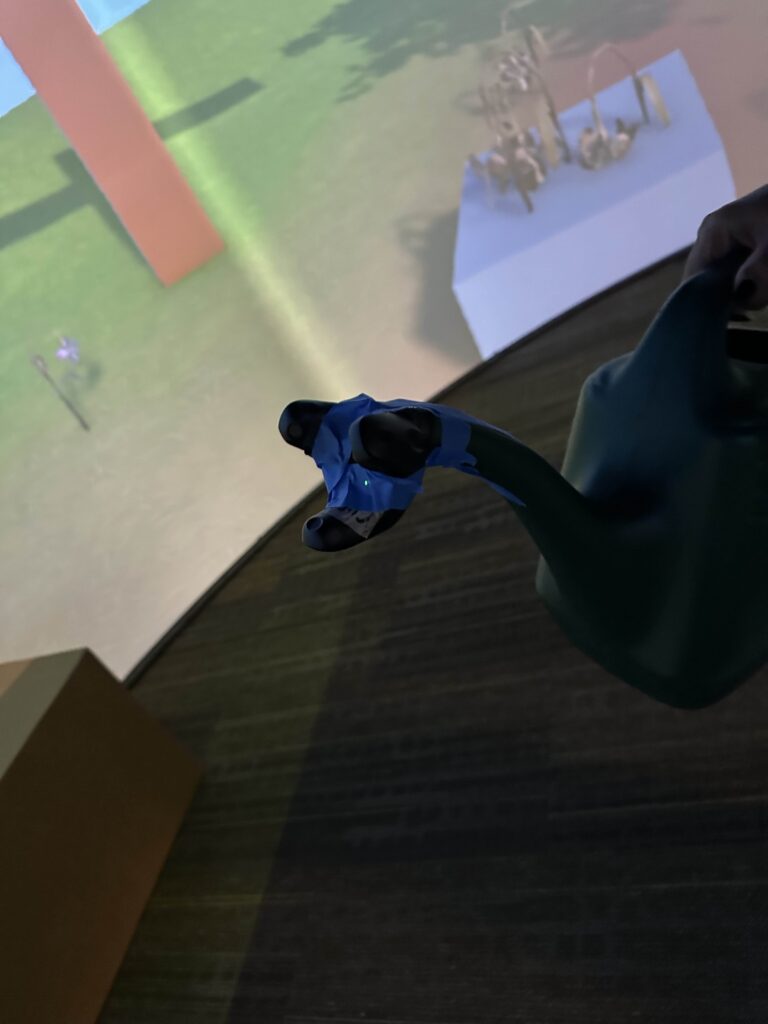
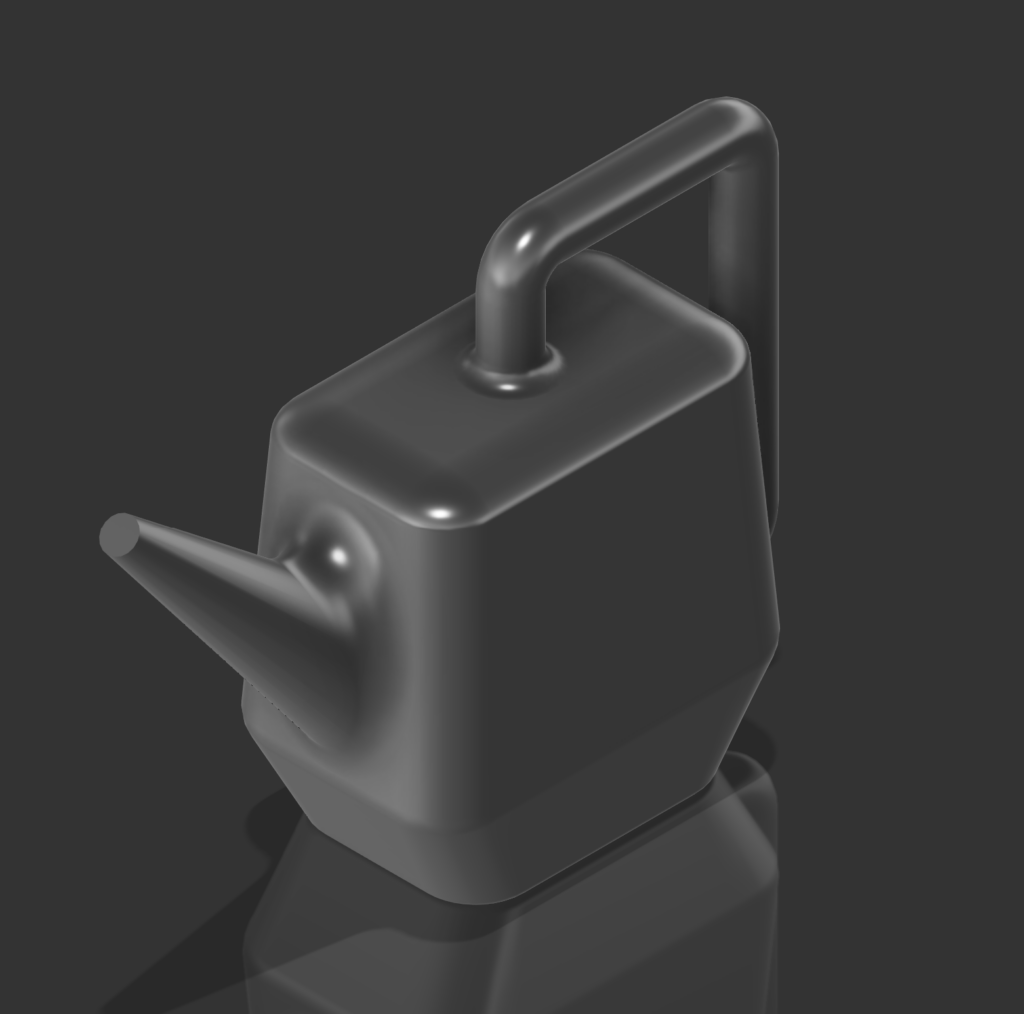
- Prototyped a Vive tracker watering can and created a 3D model
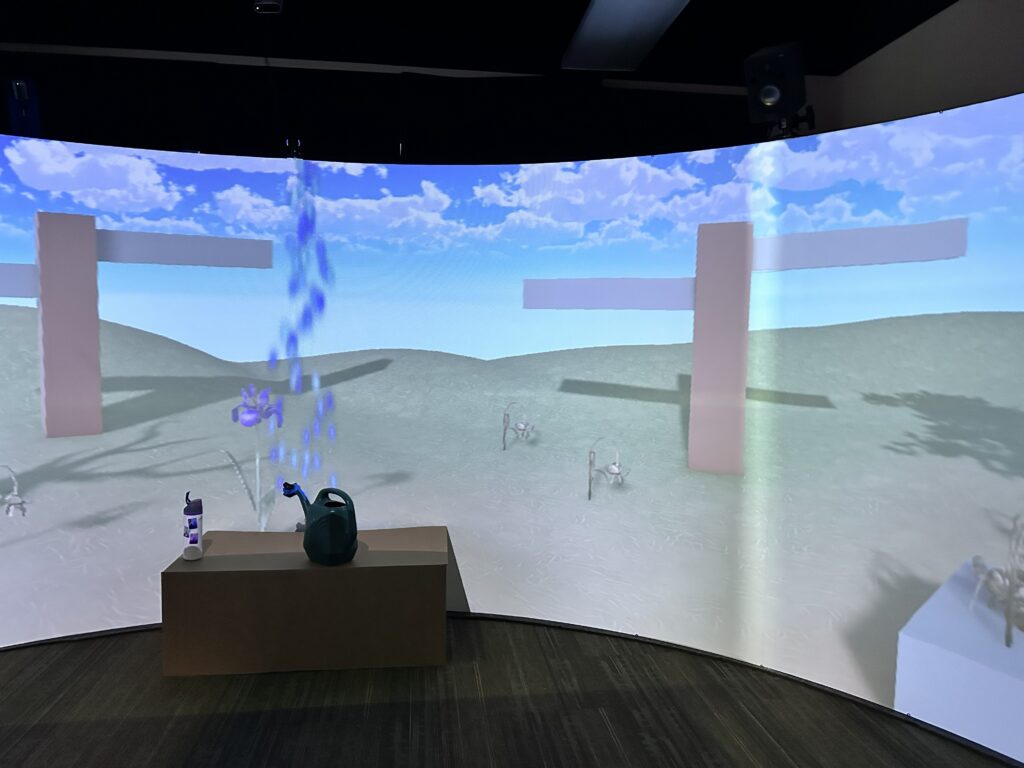
- Locked art direction with an impressionist style
- Designed a pilot survey on public perceptions of dementia and caregiving
- Implemented impressionist shaders and pruning particle effects
- Defined chapter-level experience goals and drafted poetic opening dialogue
Week 3 started a little unexpectedly. Monday was off due to the biiiiig snowstorm in Pittsburgh ❄️. Despite the weather, the team made strong progress across hardware, art, research, programming, and narrative design.
On the hardware side, we built a physical prototype by mounting a Vive tracker onto an actual watering can to test how the interaction feels in hand. This helped us evaluate weight, balance, and ergonomics early on. In parallel, we created a 3D model of the watering can in preparation for future 3D printing and iteration.
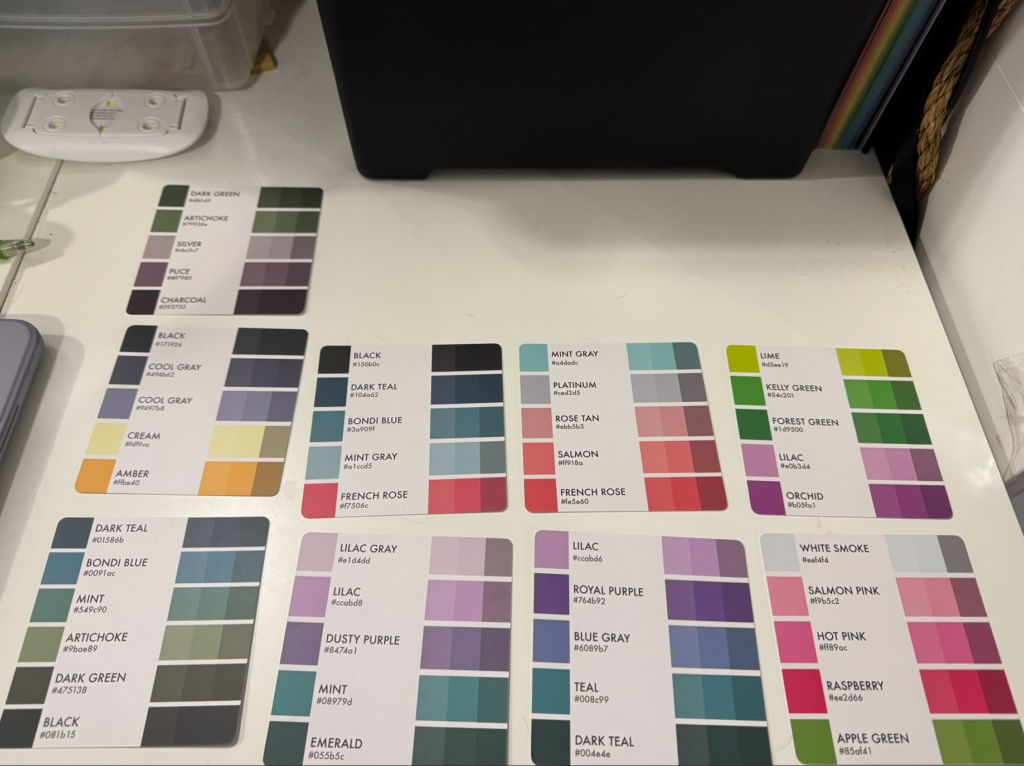
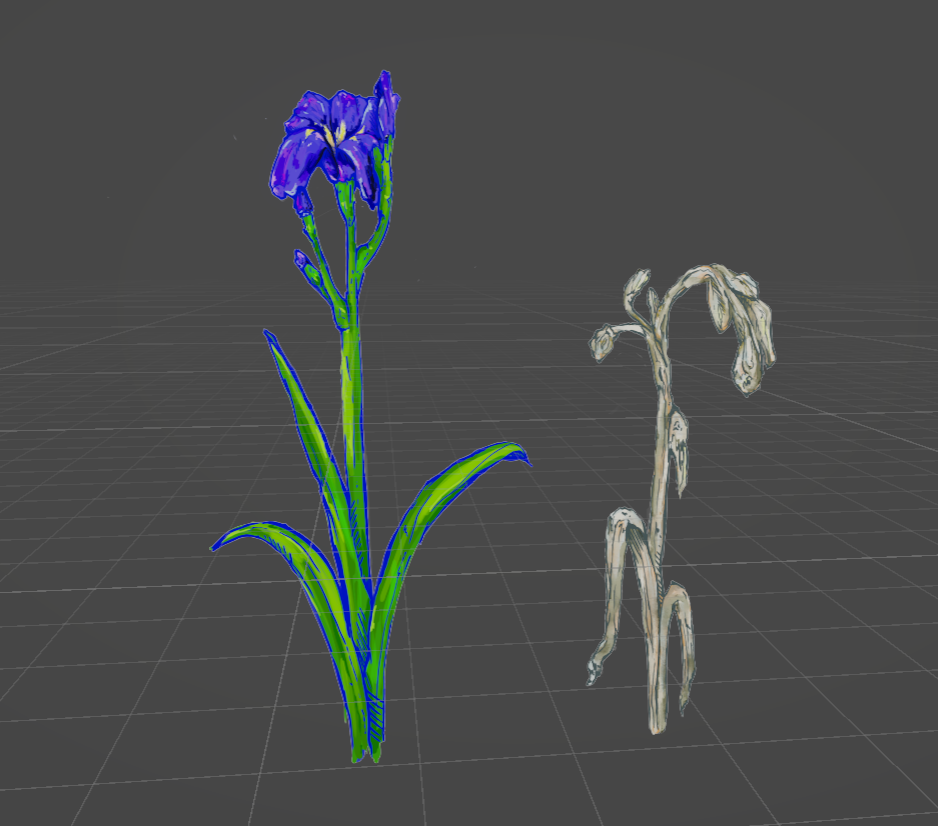
Art-wise, we finalized our color palette and visual style, settling on an impressionism direction. To explore this style in practice, we created a flower model with an oil-painting texture, which helped us better understand how this aesthetic translates into a 3D, immersive environment.
From a research perspective, we decided to create a pilot survey focused on public perceptions of dementia and dementia caregiving. The survey aims to understand people’s general impressions of individuals living with dementia, their familiarity with and attitudes toward caregivers, and how well they understand caregivers’ responsibilities and challenges. Through this study, we also hope to identify common misunderstandings or assumptions surrounding dementia caregiving, which can inform both our design decisions and our transformational goals.
On the programming side, the team continued researching impressionist-style visual effects and shaders. We successfully implemented a dissipating particle effect that activates when a guest stands near a wilted tree branch for pruning. In addition, we worked on debugging and combining the impressionist effect with a color saturation system, allowing the environment to visually respond to the state of the garden.
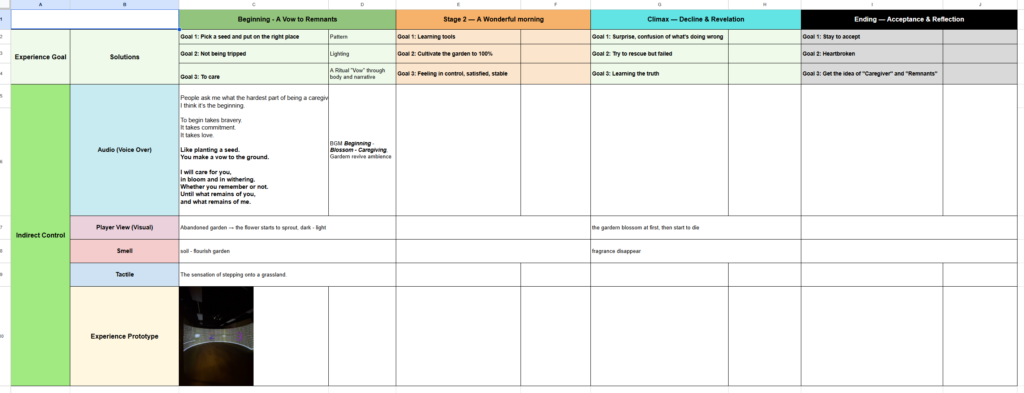
For narrative design, we focused on strengthening the emotional structure of the experience. We finished defining experience goals for each chapter, built a beat-by-beat flow for the beginning chapter across interaction, visuals, sound, smell, and tactile elements, and drafted a poetic dialogue for the opening moment. This dialogue frames the act of choosing a seed as a vow, a conscious choice to begin caring.
In preparation for Quarters, we also created a storyboard that presents the full guest experience from start to finish. This storyboard communicates not only the overall emotional arc, but also the four key interactions we are currently proposing for the space: watering flowers, pruning tree branches, interacting with the flower boxes through distance sensing, and the appearance of weeds.
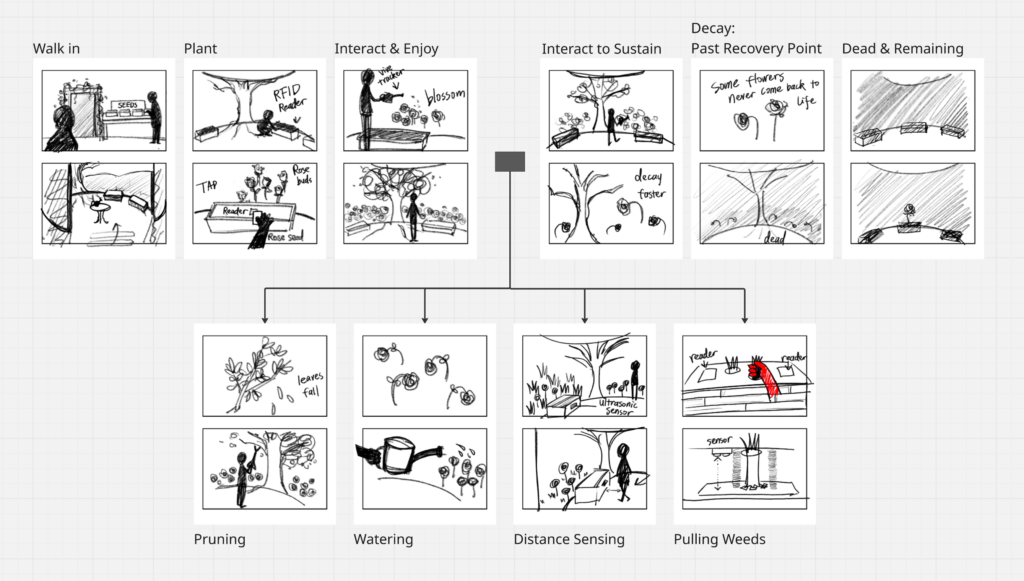
One of the interactions explored in the storyboard involves detecting when guests move away from the flower boxes for an extended period of time. When this happens, weeds begin to grow on the screen, representing the idea that dementia patients require constant care and attention. We are currently debating how best to implement this interaction. One option is to use an ultrasonic distance sensor to detect absence, but this approach risks being too abstract for guests to notice or understand. Another option is to build physical weeds inside the flower boxes that guests can pull out themselves. While this version may be more intuitive, it introduces other concerns: we would need to ensure the physical installation is extremely durable, and the action of bending down and pulling weeds may feel overly physical and potentially disrupt the emotional metaphor of the experience.
At this stage, we are intentionally keeping both options open and plan to use faculty feedback during Quarters to help us determine which approach best supports the experience goals and metaphor without overwhelming the audience.