Focus of the week:
- Quarters
- Polished Project Introduction
- Polished User Journey
- Phipps Garden Visit
After several weeks of exploration, brainstorming, and prototyping, we began landing on more concrete design decisions. This week included our Quarters walkaround, where faculty rotated through projects to learn about our current direction and provide feedback.
Preparing for Quarters pushed us to clarify our thinking. We refined our interaction choices, tightened our emotional arc, and articulated our transformational goals more clearly. Below is the script we used to introduce our project during the walkaround, followed by a complete user journey that outlines the current version of the experience from beginning to end.
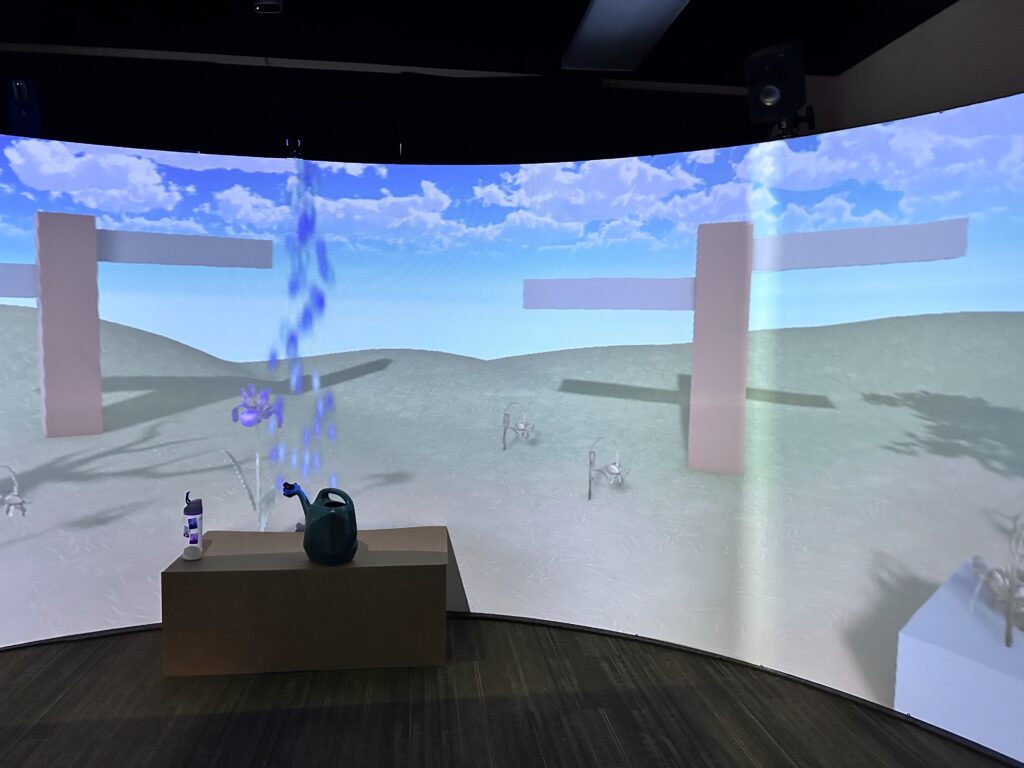
Project Introduction
This project is an immersive interactive installation inspired by the experiences of dementia caregivers. Instead of directly portraying the disease, we use the metaphor of caring for a garden to represent caring for a person with dementia.
As you interact with the space, the garden responds to your attention and care. But over time, it continues to decline, no matter what you do. There is no way to “win” this experience. That inevitability is intentional, and reflects the emotional reality of dementia caregiving: the effort is constant, the responsibility is heavy, and progress is not guaranteed.
Through this experience, we aim to build understanding of how demanding caregiving can be, while also raising awareness of dementia, encouraging earlier recognition of warning signs and earlier intervention to help slow its progression.
User Journey
The experience begins outside the CAVERN, where we have a table of seed packets. Each seed represents a different flower and is embedded with an RFID tag. Guests are invited to choose a seed before entering the space. This choice allows guest to make a more customized experience.
When guests enter the CAVERN, they see an empty garden environment and a large tree at the center of the space. Within the physical space, we will build three to four flowerbeds to make the space more immersive.
To plant their seed, guests tap their chosen seed packet to one of the flowerbeds. This action triggers the appearance of their selected flower within the projected garden. From here, guests use a watering can equipped with a Vive tracker to care for the plant. Watering allows the flower to grow from a bud into full bloom. Guest can now enjoy a peaceful enjoyable garden environment with calming music.
After this initial period of growth, subtle disruptions begin to appear. Flowers start to wilt, leaves fall, and branches become bold. Guests are still able to respond by watering the flowers to help them recover or by cutting away overgrown branches. When branches are cut, they dissolve into particle effects and trigger fragmented dialogue related to memory loss.
This interaction is grounded in our research on dementia caregiving. In many real cases, attempting to force a patient to remember can increase agitation. The act of cutting branches and allowing them to fade represents moments where letting go is a form of care.
As the experience progresses, the system gradually accelerates decay. Flowers wilt more quickly, recovery becomes increasingly difficult, and the overall color saturation of the environment fades. Guests can continue interacting, but their efforts are no longer enough to sustain the garden.
Eventually, the garden fully declines. There is no success state or way to “win” the experience, which mirrors the emotional reality of dementia caregiving: sustained effort without guaranteed improvement.
When the garden fully dies, it will eventually fade away entirely, leaving only one symbolic flower that guest originally chose. This final moment is designed to affirm that although loss is inevitable, the act of care still holds meaning. Hopefully by this moment, through the interactions, narrative arc, and visuals, guests will realize there is a deeper meaning behind this garden.
As guests exit the space, the facilitator will provide pamphlets that explicitly connects the metaphorical experience to real-world dementia caregiving. It will also include information and research pertaining to early warning signs and the importance of early intervention.
Blockers
We still have some undecided options for the third interaction:
Option A (distance-based):
Based on the idea that patients need caregivers to stay nearby to feel safe. We use a distance sensor to detect how far the audience is from the flower box. If they move too far away, weeds start growing on the screen as a subtle reminder to come back.
Option B (physical action):
A more physical approach — a spring-pulling mechanism inside the flower box so the audience can actually pull out weeds, which are mirrored on the screen.
Our concerns:
Will Option B feel unintentionally violent?
Will Option A be too subtle and end up confusing?
Feedbacks from Faculty
- Balance guest pre-knowledge and discovery
- Consider A/B testing different levels of narrative context
- Balance installation robustness and physical force
- Introduce moments of joy to balance the emotional tone
- Design the experience to be portable beyond the CAVERN
- Take full advantage of the CAVERN’s large walkable space
During the Quarters walkaround, faculty offered several insights that challenged us to refine both our design approach and experience goals. One major discussion focused on how much prior knowledge guests should have before entering the experience. Faculty encouraged us to carefully balance providing hints about the topic without revealing the story too directly, so that the experience does not feel overly explanatory or preachy. To explore this question, we are considering an A/B playtesting approach: one group of participants would receive more contextual information beforehand, while another group would enter the experience with little to no prior explanation. By comparing pre- and post-experience survey results, we hope to better understand how different levels of context influence guest interpretation and emotional response.
For interaction design, faculty reminded us that any physical installations must be extremely durable for repeated public use. As a result, it may be safer to prioritize interactions that rely less on strong physical actions. Another important piece of feedback concerned the emotional tone of the narrative. Several faculty members felt that the current story arc may be overly negative, since the garden ultimately dies regardless of player effort. They suggested that while caregiving can be difficult, it also contains meaningful and joyful moments. In response, our team began exploring ways to introduce moments of relief or beauty into the experience, such as butterflies appearing in the garden or a gentle rain that waters the plants so the caregiver can briefly rest.
Finally, faculty encouraged us to consider the future portability of the experience, since our long-term goal is to present the installation outside of ETC. At the same time, they reminded us to fully leverage the strengths of the CAVERN while we are developing here. Because the space allows guests to physically move around, our interaction design should encourage movement throughout the environment, something that aligns well with our current vision of guests walking between different garden areas to care for the space.
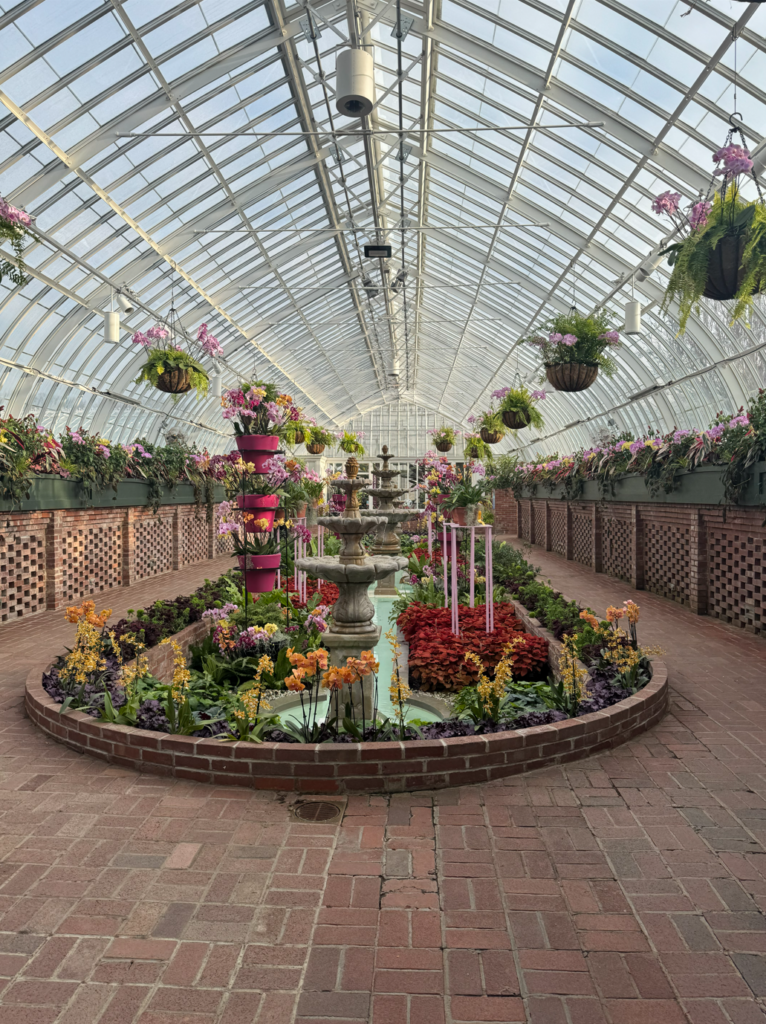
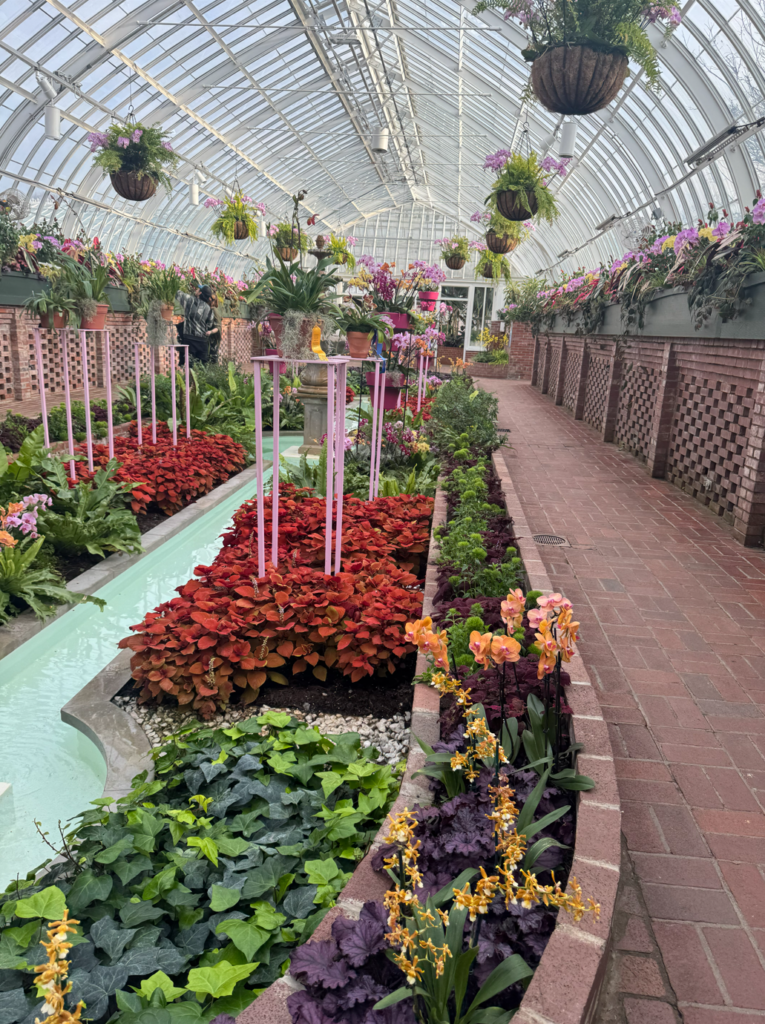
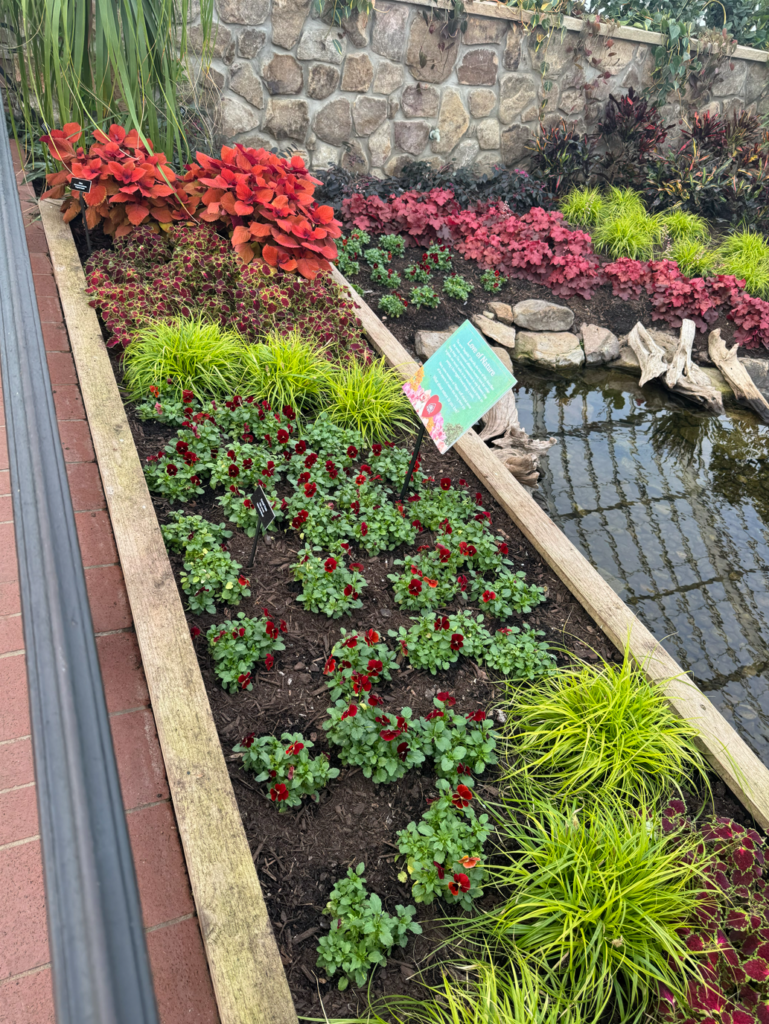
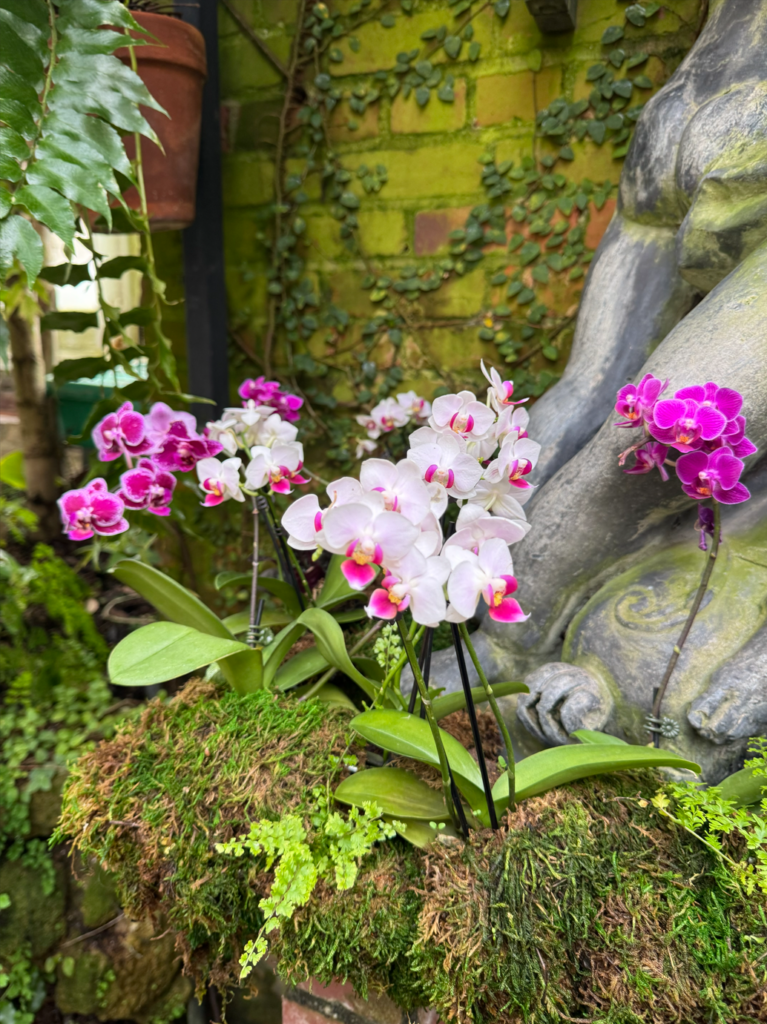
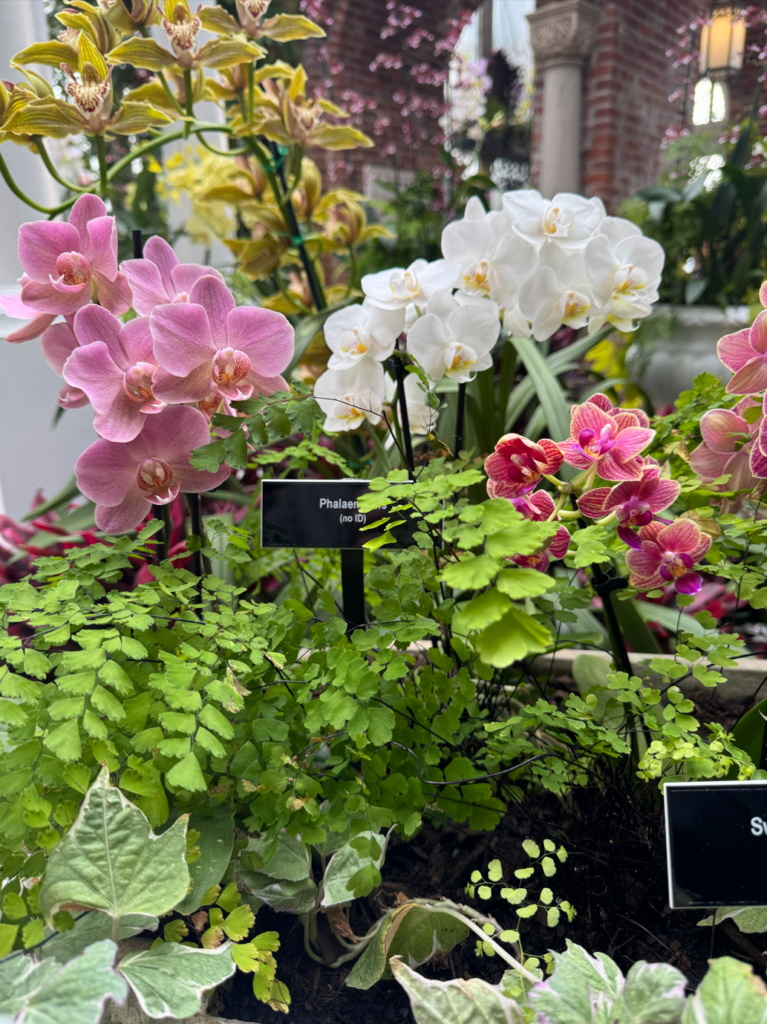
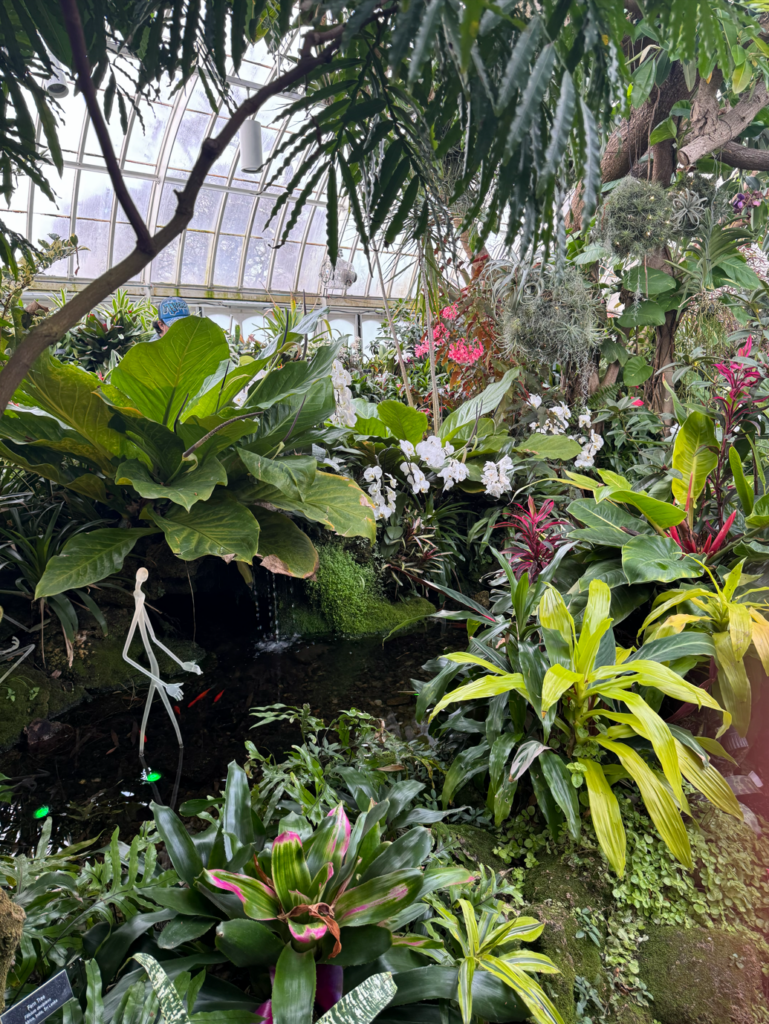
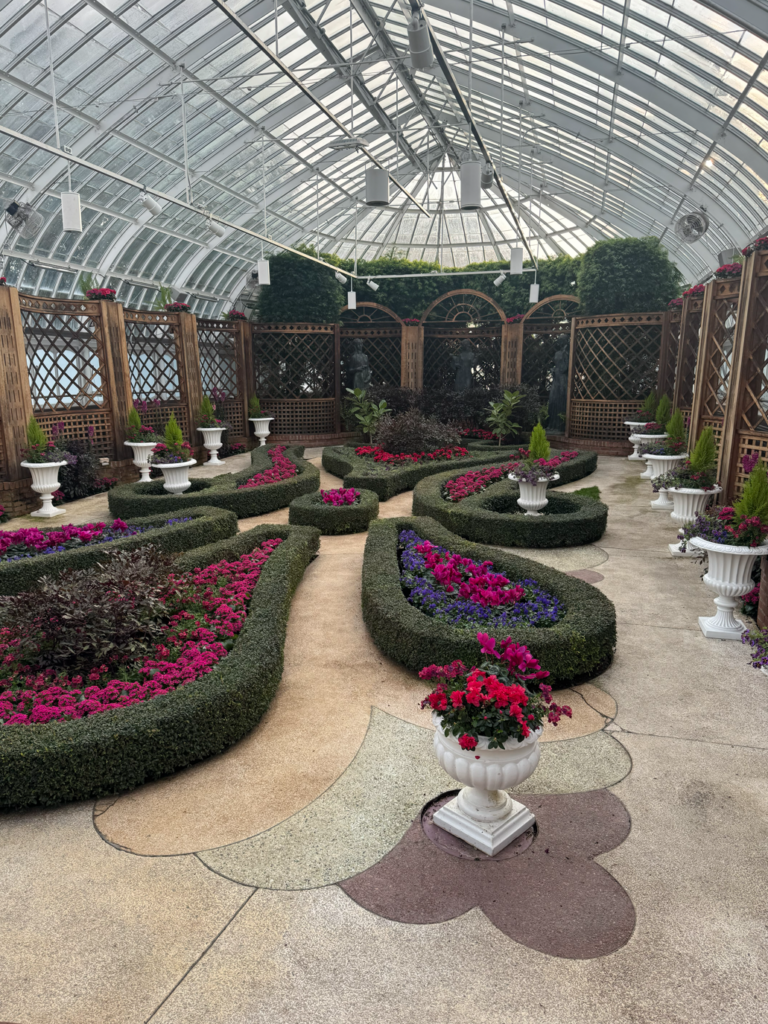
We also visited the Phipps Conservatory and Botanical Gardens to observe how real gardens are designed and maintained, learn what the gardening experience feels like, and gather inspiration for creating a visually beautiful environment.