Focus of the week:
- Halves Presentation
- Project Consultant Feedback
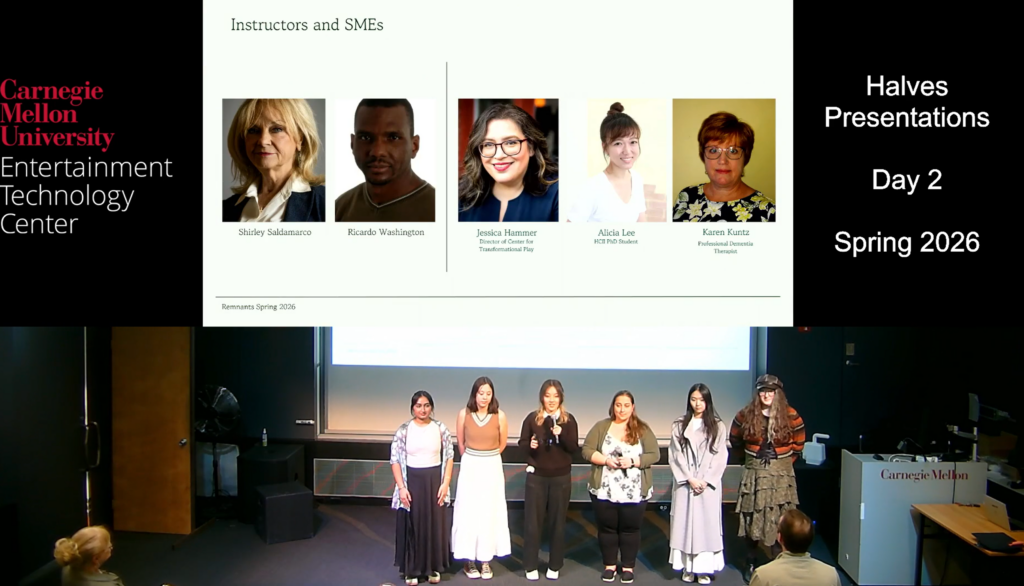
This week, we presented our project at Halves and received a wide range of valuable feedback from faculty. Overall, the response to our concept was positive. Many appreciated the clarity of our idea and the strength of the garden metaphor as a way to represent caregiving. The visual direction and use of impressionist style were also well received, with some faculty noting that the aesthetic direction feels compelling and appropriate for the emotional tone we are aiming for.
At the same time, the feedback highlighted several important areas for improvement. One key concern was the balance between interaction and narrative. Faculty pointed out that the experience currently leans heavily on interaction, sometimes at the cost of clearly communicating the emotional journey and caregiving message. There were also questions about how players will understand that they are not “failing” when the garden declines, and how we can better frame the experience so it does not feel confusing or overly negative. Additionally, some feedback suggested that we should further clarify our intended emotional arc and ensure that our design decisions consistently support that goal.
Another major theme in the feedback was the need to carefully consider physical interactions and overall experience design. Faculty raised concerns about the potential risk of overly physical or chaotic interactions, which could distract from the emotional impact we are trying to create. They also encouraged us to think more deeply about pacing, clarity, and how to guide players through the experience without overwhelming them. Moving forward, this feedback will help us refine the balance between interaction, narrative, and emotion, ensuring that the experience remains both meaningful and cohesive.
After Halves, we met with our project consultant and received focused feedback that helped us think more strategically about both design and implementation. One key takeaway was that our visual direction is already strong, and we should not feel constrained by the limitations of the CAVERN, especially since we plan to bring the experience to other spaces in the future. At the same time, we were encouraged to treat this project as an opportunity to document best practices for building physical installations in the CAVERN, particularly around making interactions safe, durable, and repeatable for public use.
Another major area of feedback centered on experience clarity and emotional balance. Questions were raised about what guests are actually focusing on during the experience, suggesting that some visual cues may not be as noticeable as intended. Additionally, while the ending conveys a strong sense of loss, the overall experience may benefit from incorporating moments of hope and relief earlier on, rather than relying solely on the pamphlet to communicate that message. We were also encouraged to rethink how we guide players through the space—both in terms of encouraging movement within the CAVERN and in deciding how much information to provide. Less explicit guidance may lead to a more impactful final reveal, but it requires careful balance to avoid confusion.
Finally, the feedback highlighted the importance of testing and iteration. Sensory elements like fans and scent machines may not work for all users and should be validated through testing rather than assumed as necessary features. We were also reminded to consider a wider audience, including older participants who may have personal experience with dementia, and to ensure that the experience is accessible, respectful, and meaningful to them.
After all that, we headed into spring break. It was a nice chance for the team to take a break, recharge, and step away from the project for a bit before jumping back in.