Focus of the week:
- Added RFID script
- Game manager system
- Bluetooth connection between hardware and computer
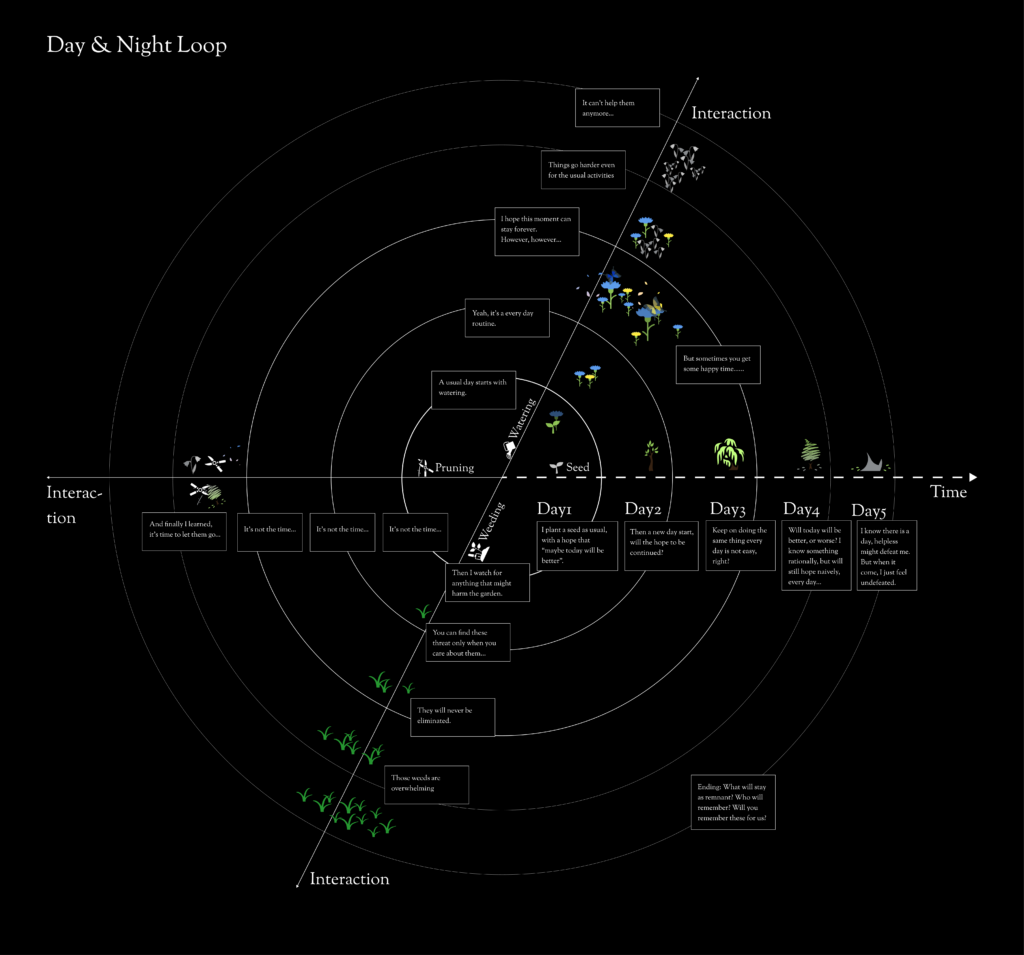
- Explored day–night cycle to represent time progression
- Continued art production
- Information Pamphlet
- Reached out to caregiving network
This week, we focused on continuing to build out the experience across programming, narrative, art, and outreach.
On the programming side, we made steady progress in expanding the system. We added new flowers with different RFID scripts, allowing for more variation in planting interactions. We also began building an overall game manager system to control the timing of events and interactions, making it easier to iterate on pacing. In addition, we worked on establishing a Bluetooth connection between the hardware and the computer to support more flexible and wireless interactions.
For narrative design, we explored new ways to better communicate the progression of time within the experience, so it doesn’t feel static as players move through it. We initially considered using seasonal changes, but this approach would significantly increase the art workload and fall out of scope. Instead, we shifted toward exploring a day–night cycle, potentially structured over 3–5 in-experience “days.” This approach would allow interactions to evolve or respond differently over time, reinforcing the idea that no two days are the same in dementia caregiving. This direction is still under discussion and will continue to be refined.
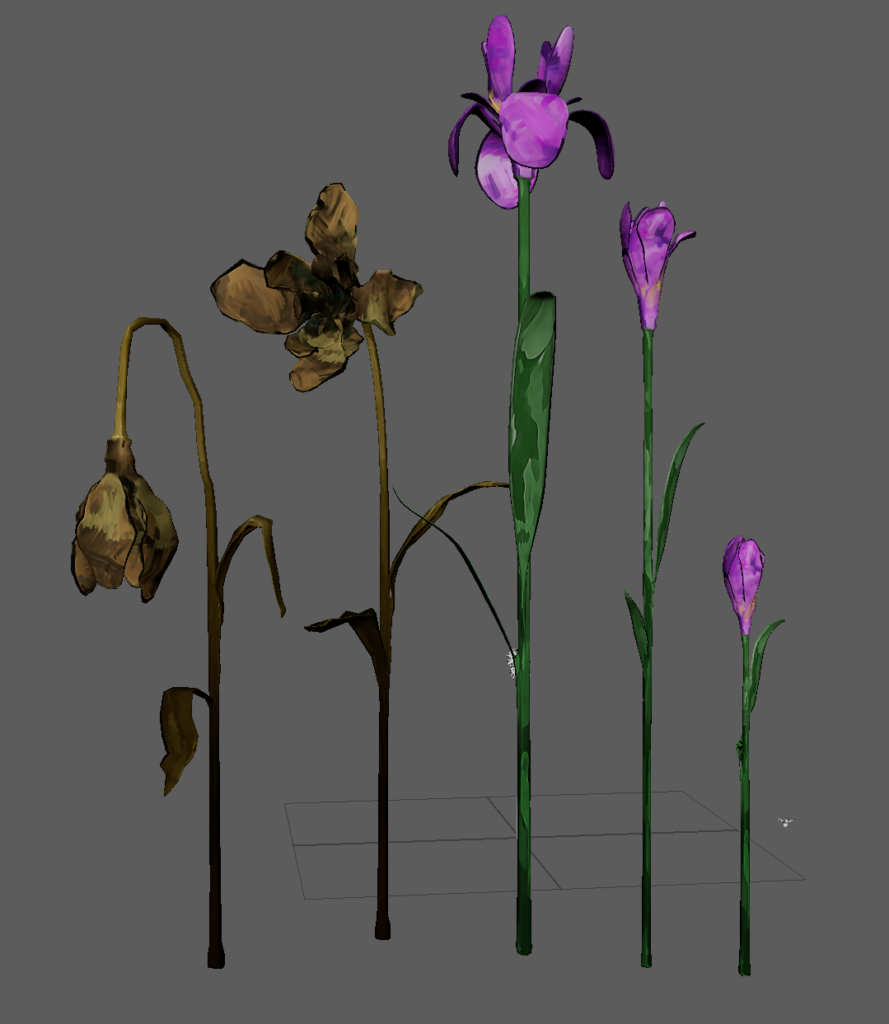
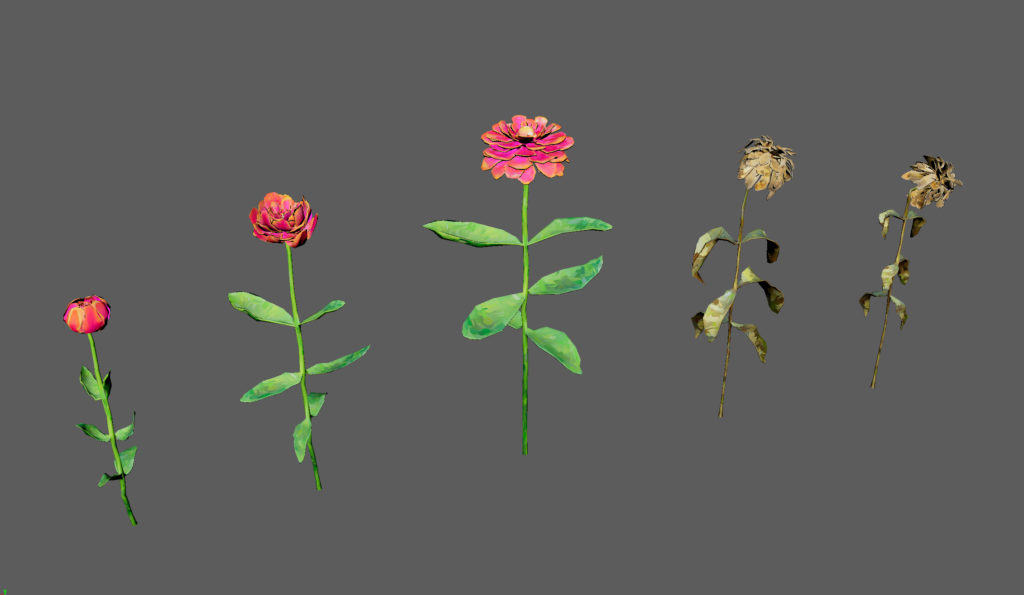
On the art side, asset production continued steadily. The iris flower model is complete, including its full growth-to-wilt animation. The zinnia model has also been finished, and the hyacinth is currently in progress. Additional models such as lavender bushes, rose bushes, large leaf plants, and flower boxes have been developed. A tree model is still needed, along with additional background plants and environmental elements to enrich the space.
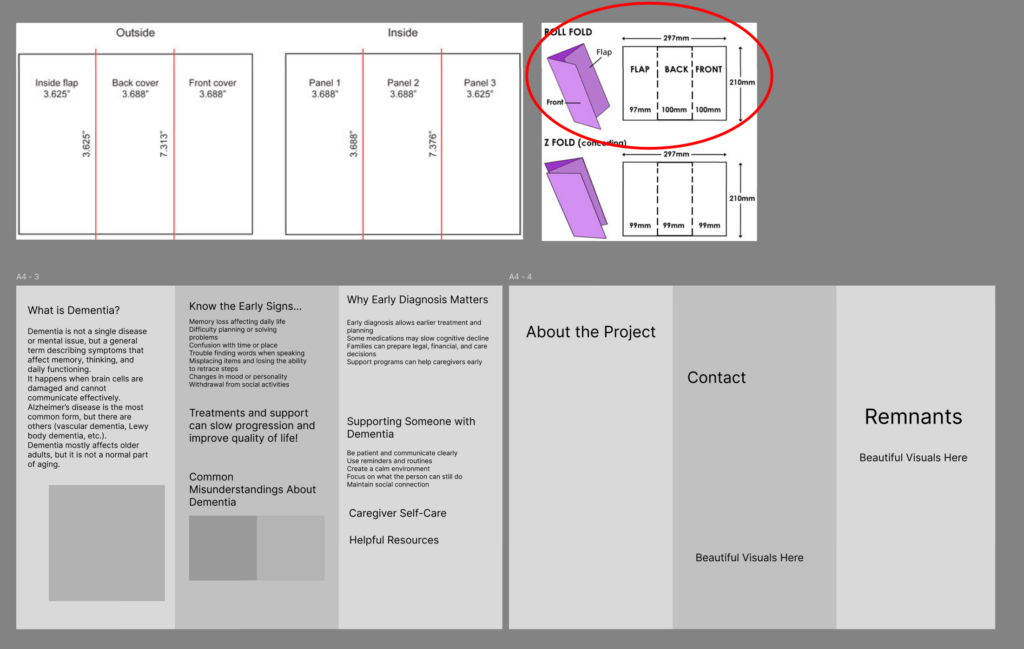
We also created the first draft of our experience pamphlet this week. The goal of the pamphlet is to reveal the deeper meaning behind the experience while providing accessible information about dementia and caregiving. It includes topics such as common misconceptions, early signs and recognition, insights into the caregiving process, and relevant resources for further support.
Finally, we began outreach efforts to connect with the caregiving community. We reached out to Seniors Blue Book and invited them to experience our installation. Through this connection, we hope to gain further insights from professionals in the caregiving field and potentially build relationships that can support both our research and design moving forward.
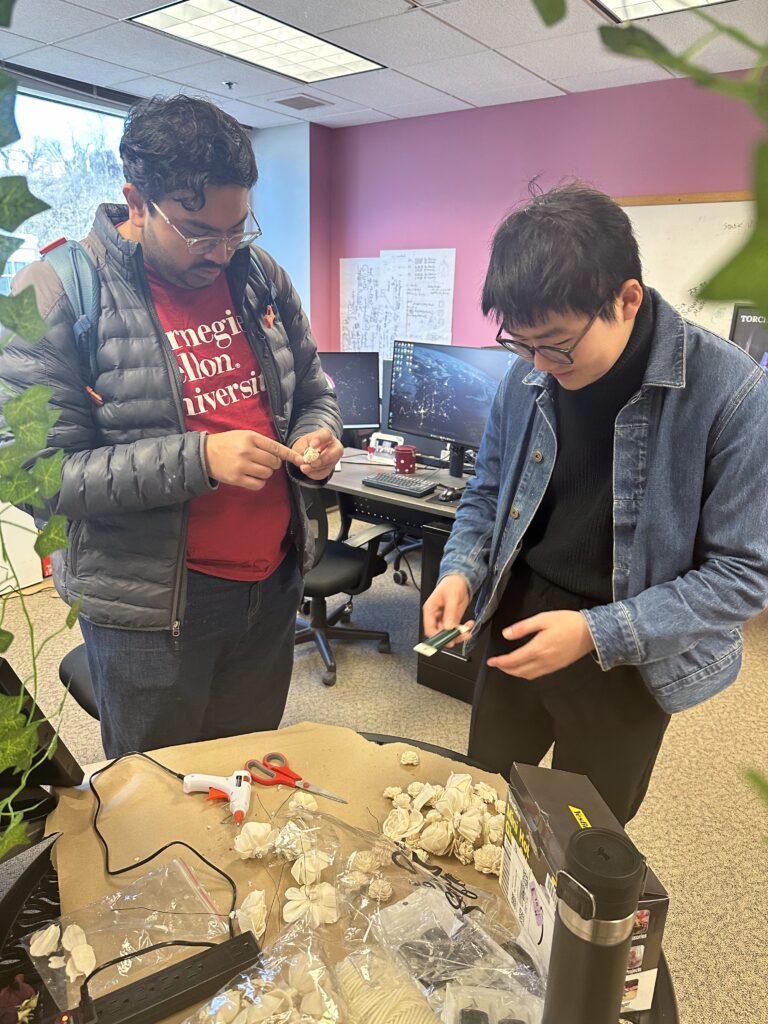
We also got help with gluing the flowers. Thanks to Rushil and Aaron! 😀
On Friday, we invited a student to playtest our experience. Through this session, we identified several important design issues. At its current stage, the experience lacks sufficient narrative framing, which caused the playtester to feel confused and somewhat lost when entering the environment. Additionally, we realized that the timing of the experience is not yet well-defined. As a result, the overall duration felt too long, and the playtester began to lose engagement midway through and wanted to leave early.
Identifying these issues was valuable, as it gave us a clearer direction for improvement. Moving forward, we plan to focus on iterating the user journey, especially strengthening narrative guidance and refining pacing, to create a more engaging and coherent experience in the coming week.