

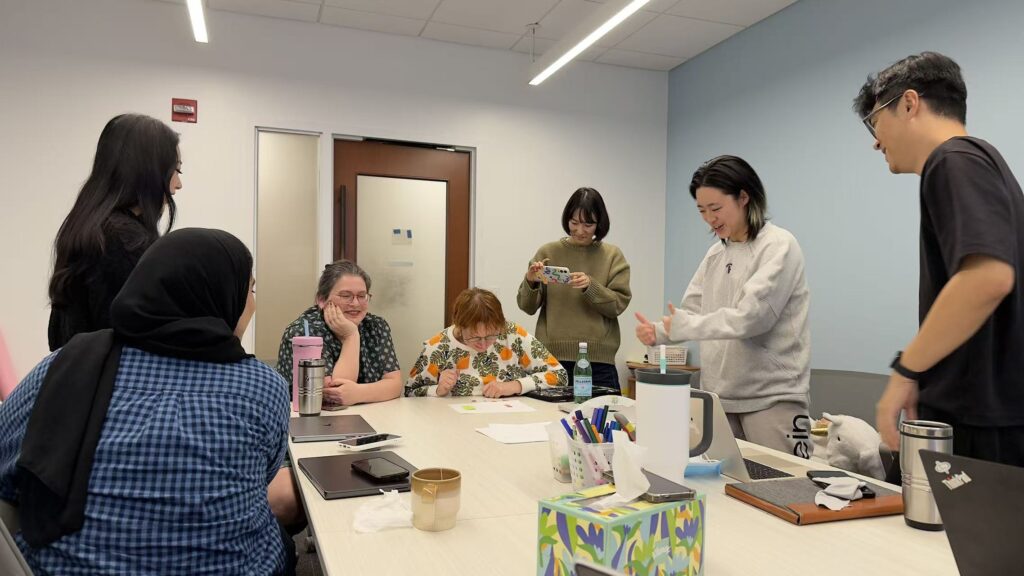
Week 4 was a highly productive bridge between conceptual research and tangible design iteration. With our transformational framework finalized and early research insights in place, the SoKids team focused on expanding our paper prototypes, developing a first draft Unity build, and creating visual assets to support our research narrative and presentation needs.
 Iterating Paper Prototypes
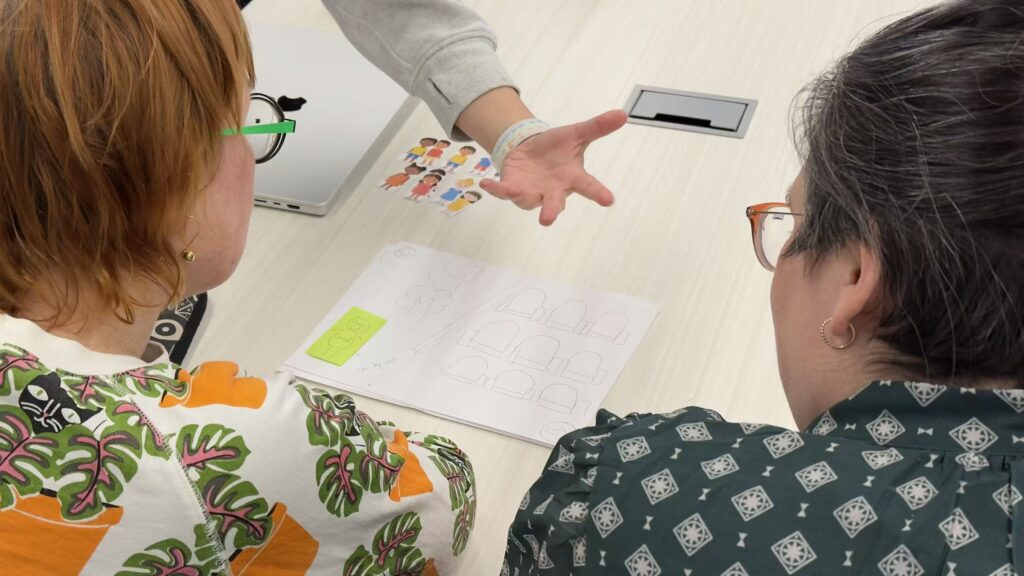
Building on our Week 2 analysis of prior TGDS prototypes and game-based assessment literature, we generated multiple new paper prototype variations to explore key interaction design questions:
- How narrative framing affects choice without teaching social categories
- How structured interactions can separate feeling (preference) from action (decision mechanics)
- How modular mini-interaction sequences can serve as clean data checkpoints
These prototypes experimented with different visual layouts, decision flows, and activity types (e.g., proximity choice, sorting, placement tasks), helping us refine what kinds of touches, paths, and proximity behavior might yield interpretable data from 3–5-year-olds.
Iterating at the paper level also helped us evaluate what mechanics felt developmentally appropriate and what risks existed in presenting visually distinct characters (e.g., visual salience vs. perceived identity).
Finalizing the Transformational Framework
This week we completed our transformational framework document, articulating clearly that:
- SoKids is designed as an assessment tool, not an intervention
- Gameplay should reveal existing social perception rather than teach or correct it
- The game must minimize direct or indirect reinforcement of social categories
The finalized framework now explicitly ties design goals to research requirements and ethical considerations (e.g., minimizing evaluative feedback, avoiding failure states, respecting children’s agency), which will guide our next phase of prototyping and implementation.
First Draft Unity Prototype
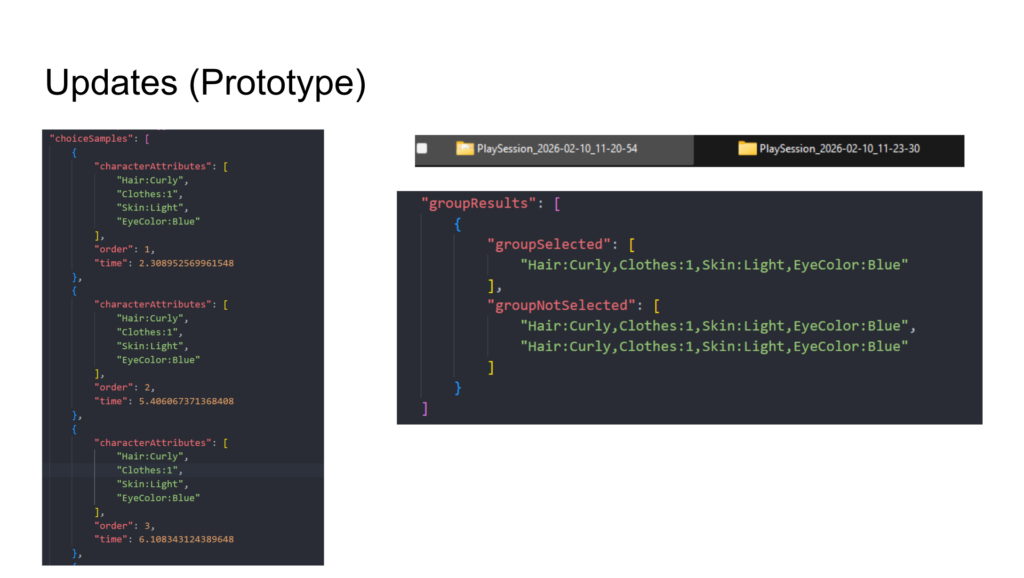
We also progressed into technical prototyping with an initial Unity build. This first playable version is focused on the foundational interaction loop:
- A simple avatar customization mechanic
- A structured choice interaction modeled after our paper sketches
- Logging of basic interaction data (touch location, timing, spatial choice)
Although early and basic, the Unity build already lets us observe how interaction flow feels in practice and what signals are captured during play. The prototype will serve as the base for usability refinement and will support future structured playtests.
Visual Identity & Communication Assets
To support external communication and research dissemination, we also developed:
- A finalized SoKids logo
- A poster summarizing project goals and visuals
- A half-sheet one-pager clearly outlining research intent, methods, and design approach

These assets are designed to communicate our project effectively to research collaborators, advisors, and future presentation audiences.
 Looking Ahead
Week 4 was an important transition from theory into design realization. Our progress has laid the foundation for:
- More refined Unity interaction prototypes
- Formal playtests with small sample groups
- Alignment with IRB documentation and research protocols
- Continued iteration on data capture models and interpretation techniques
As we move forward, our focus will be on validating design mechanics through iterative playtesting and ensuring that the interactions we build truly serve the research goals we established earlier in the semester.


