Since summer came before project starts in Fall, as a pitch project, we tried to get things figured out as far down as we were able to. Originally, we pitched to explore the gloves technology during summer, and immediately start with prototyping with audio and visual contexts. However, due to logistical constraints of ordering equipment before Fall semester, we decided to focus on design sprints and getting familiar with VR haptic development using controllers and not gloves as a start! Afterwards, once Fall started, we consolidated the team with a new member joining, and came up with a initial plan for exploration during the first few weeks while establishing language to talk about this exciting space that is full of various research and frameworks.
Summer Progress
Affinity Diagramming
First, in May, we underwent 2 design sprints using affinity diagramming. In brainstorming these interactions, even though we knew there were limitations of the gloves we will be using (no temperature, no wetness, only vibrations on fingertips and back of wrist), we tried to keep our imaginations unrestrained, so that we were not restricted by the limitations, and can find opportunities for innovation.
Each teammate brainstorming interactions on a FigJam board using their designated sticky note colors. Then, we went over each them together, discussing the idea details, adding more new thoughts, and connecting similar ideas using arrows on the board. (Plus, we had fun playing with the whiteboard drawing features!)

Then, using the same sticky notes, on a different board, we started grouping sticky notes by various categories we thought of, such as abstract feelings, bouncy feelings, and time-related changes.

We did not continue brainstorming this board in the summer as many of us started our summer internships or part-time jobs as well as taking courses. However, it laid a strong foundation of a shared understanding of what might or could be within our space of exploration.
Alex Hall’s VR Design Talk
Our teammate, Alex, has been in VR research academically and in industry! To help all of our team members get into designing for VR, we gathered for a 1-hour talk about best design practices in VR. The main points we learned were:
- Having room-scaled models so players feel immersed is crucial for the UX.
- When designing the environment, clearly distinguishing interactables and non-interactables is crucial.
- For clear understanding of player experience, sufficient tutorial is crucial for VR, especially since we’re working with novel input. We should make sure everything that is not intuitive gives sufficient hints on how to interact with them.


Software Architecture
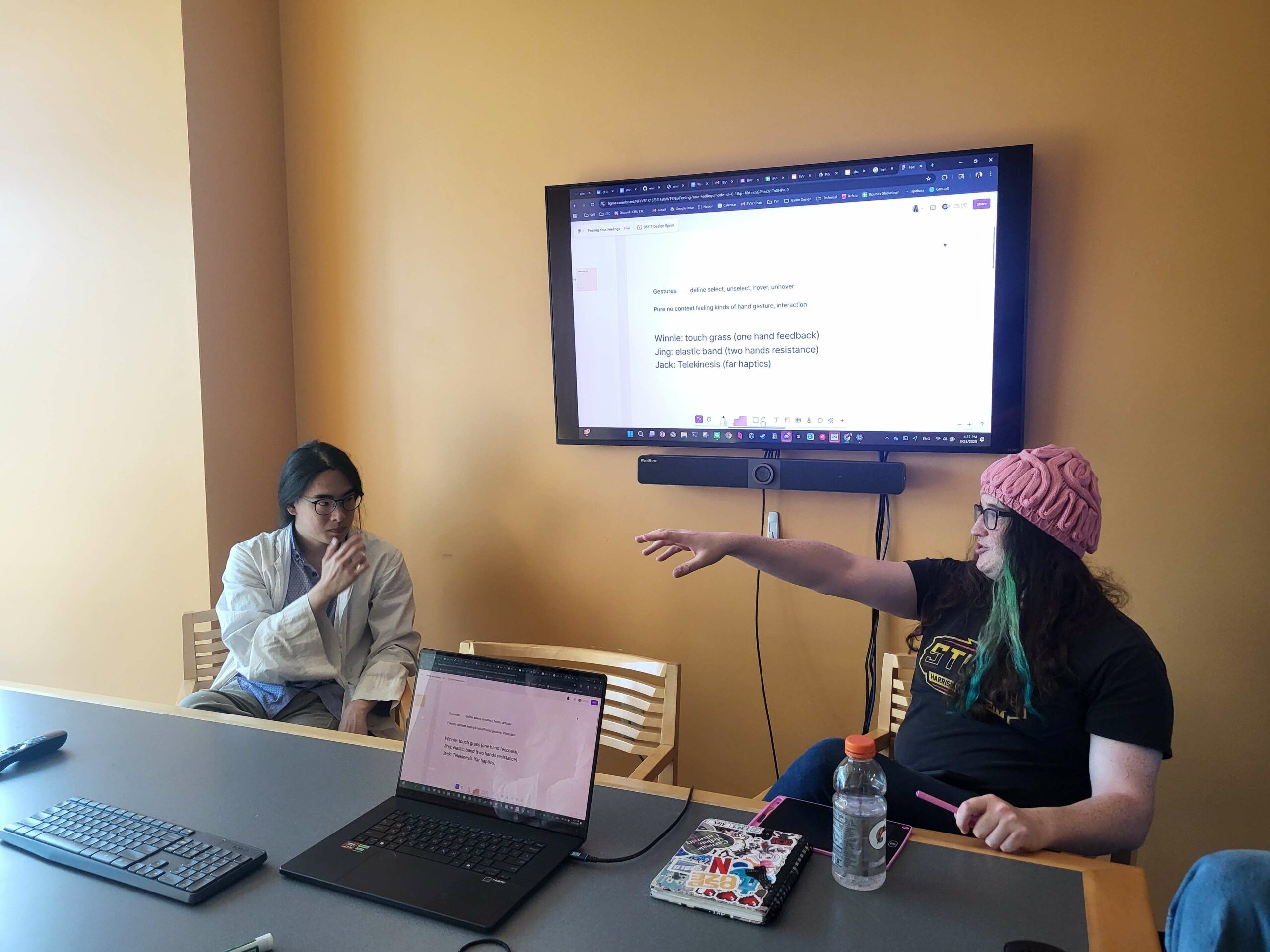
Two weeks before summer ends, the programmers Jing, Jack, and Winnie gathered to discuss software structure for our project that could help with convenience of easy haptic pattern or audio and visual context changes. Our goal is to have a simple interface so even our non-technical teammates can run playtests easily since playtest is such a central part of our project.

Proof of Concept Prototypes
In addition, out of the list of interactions on the design sprint board, we chose three to make gold spike projects for so we get familiar with the workflow working with each other but also with making a VR scene that implements the proposed software structure.
- Touch grass (separate-hand concrete sensation)
- Telekinesis (separate-hand abstract sensation)
- Elastic band (two-hand concrete sensation)
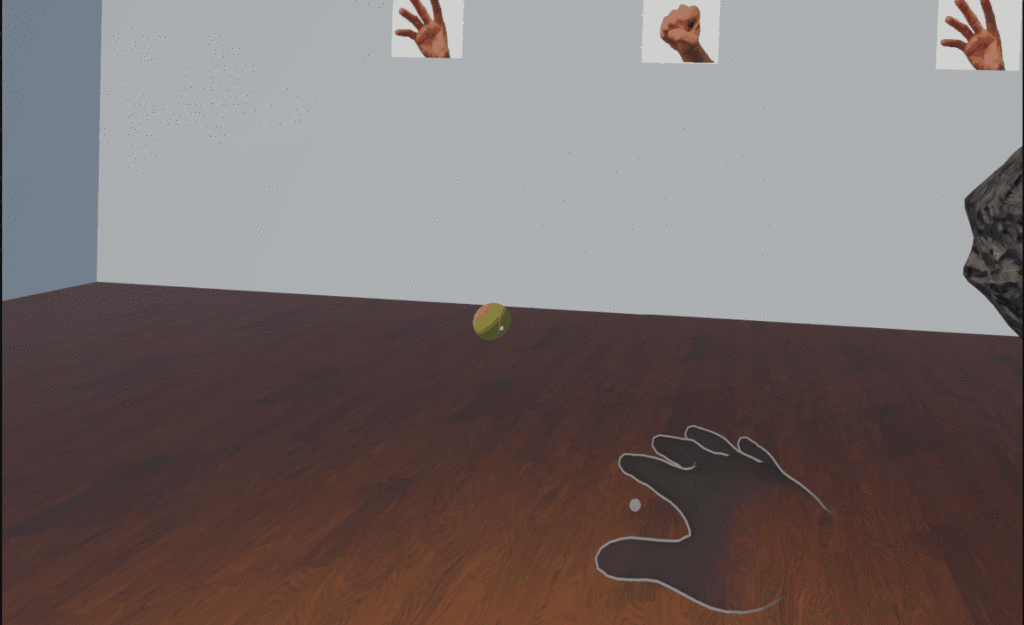
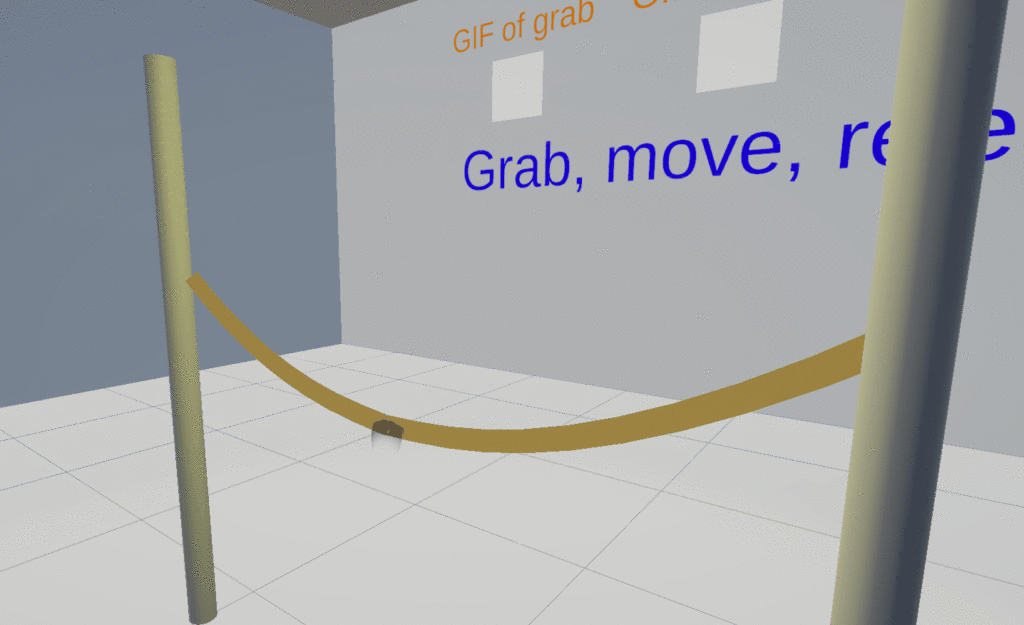
One fun detail to mention is that, while we weren’t able to collaborate using Perforce, we discovered Unity 6 Version Control, and we even had our other teammates try uploading 3D models to test out this functionality. It is indeed very user friendly and thanks to it online collaboration during summer is made possible.
Week 1
Fall finally started, and we immediately initiated the long-awaited glove order process. As mentioned in the pitch devlog, the glove we eventually settled with was the bHaptics TactGlove DK2, as it provided complete SDK support (for us to focus on design), as well as having sufficient parameters for us to test. In addition, it is 2 zeros down the price of the other gloves, and they are also incredibly comfortable. However, we weren’t able to get the gloves at the start of the week. Furthermore, all the headset we borrowed had to be returned and cannot be checked out before Friday. Instead, we focused on solidifying our ideas once again. After all, summer was long, and we were in different time zones, as well as without the newest addition to our team, Michael, the sound designer who has always been in our discord, and finally officially joined as a team member.
Finally, we also met with our assigned faculty mentor Heather Kelley, who had been our pitch champion, and Vivian Shen, who was at time of pitch, a subject matter expert (SME), but now a faculty at ETC! We were extremely lucky to have both of them on our team.
Before Your Eyes
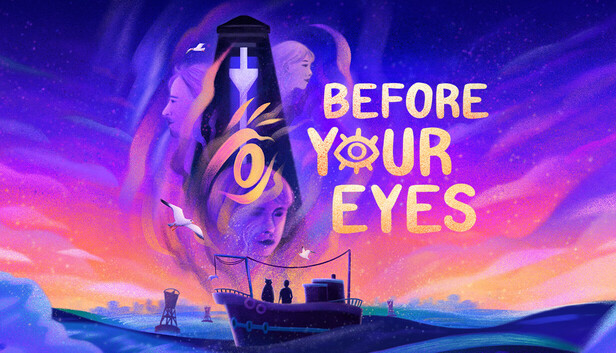
Michael shared with us how during pitch our project reminded him of the game Before Your Eyes, which uses a webcam to track your gaze, and uses blinking as a mechanic to progress the game. The players see their lives flash by, then might intentional close eyes to skip sad emotional parts, or try their best to keep their eyes open so when they blink, they have missed a lot in their life!
We realized this is exactly the kind of emotional experience we want to build, and this game utilized this special input so well, it has served as a guiding light for our exploration!
Haptic Technology
We still weren’t able to get the gloves, so we continued refreshing our memories for haptic design, and fleshed out the exact development timeline and design ideas.
Project timeline

Composition box
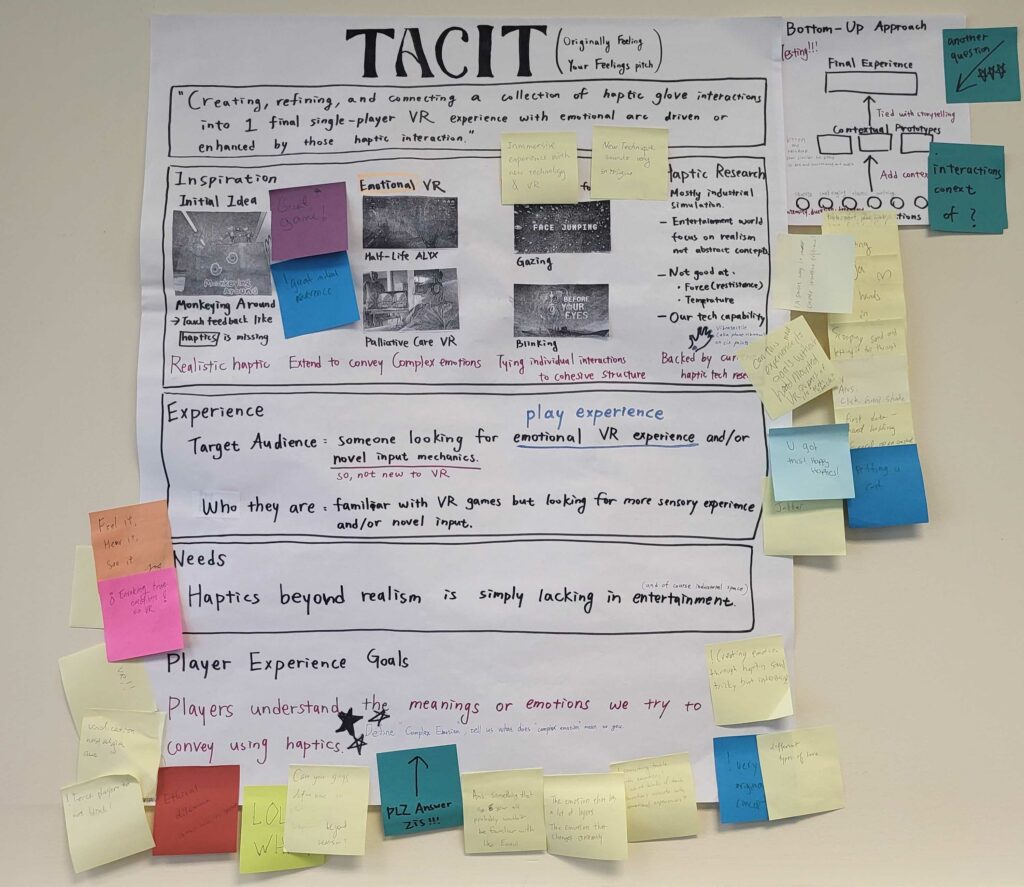
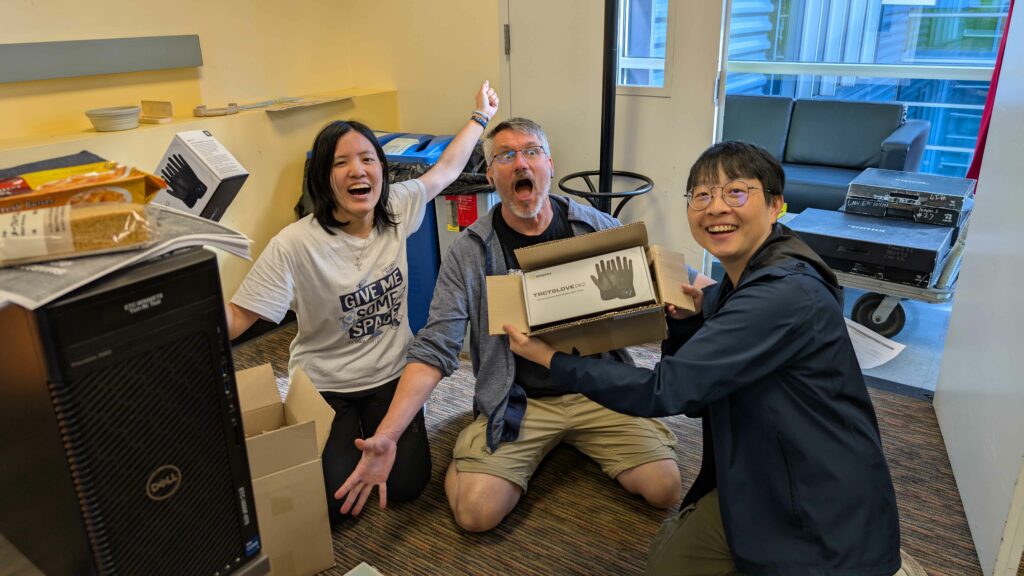
What’s next
Friday after Compositional Box, we were pleasantly surprised by the 6 Quest 3 headsets, 6 gloves (finally!), and all other supporting materials like batteries, Link cables, duct tape for VR playtesting area, etc. We kneeled on the ground happily holding our precious technology we’ll be exploring and developing on and for. Next week, our focus will be on getting more research done and migrating the initial gold spike prototypes into using the bHaptic gloves!