We’ve just wrapped a three-week sprint on our first major prototype: an asymmetric, multi-platform battleship game. The goal was to test our pipeline and get a baseline for how cooperation feels across VR, PC, and Mobile.
The setup was ambitious: the PC/Controller player handled driving, the VR player controlled the weapons and spotting, and the Mobile player managed the radar. After our first big playtest, the verdict is in. While the game sparked some genuinely fun moments (who doesn’t love firing a VR cannon?), the feedback also highlighted serious problems.
So, while we’ve unfortunately decided not to continue with this prototype, the lessons we learned are invaluable.
Core Feedback & Platform Insights
Our playtest feedback broke down clearly by platform:
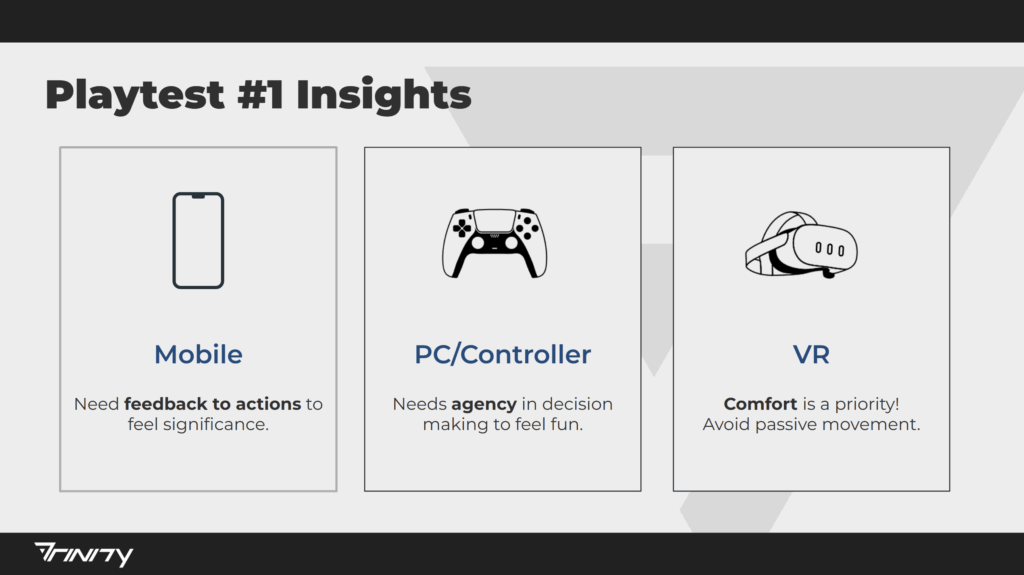
PC/Controller: This role ultimately “felt passive.” With “unintuitive controls” and a “lack of agency,” the driver felt more like a chauffeur with limited contribution. This lack of meaningful decision-making quickly led to boredom. The key insight: PC needs agency to feel fun.
Mobile: The radar operator felt the most disconnected. “Unclear targeting” and “weak feedback” meant their actions had “low impact” and felt the “least meaningful.” This left the player feeling restless and disengaged. The key insight: Mobile needs clear feedback to feel significant.
VR: The VR player felt central to the action, but comfort was the number one issue. Delayed hit feedback and, most importantly, passive movement (being driven by the PC player) led directly to motion sickness. The key insight: VR comfort is a priority, and passive movement must be avoided.
Next Steps
These individual issues created a “connection” problem. The team tried to communicate, but the feedback delays and confusion between roles undermined the feeling of cooperation.
The prototype successfully taught us what doesn’t work. Moving forward, we’re shelving the battleship but building our next iteration directly on these crucial insights.
Which leads to our prototype 2: the cat game