Halves: Reflecting on Our Progress and Exploring What’s Next
https://www.youtube.com/watch?v=hXD1zG-2twY
Weekly Overview
Week 7 marked an important milestone for 360 Studio as we presented our progress at the ETC Halves Presentation and invited faculty to experience our prototypes during the Halves Playthrough.
After several weeks of exploration, rapid prototyping, and playtesting, this was an opportunity to reflect on what we have learned about the 360° cylindrical display and share our vision for a multiplayer location-based entertainment (LBE) experience.
The faculty discussions also challenged us to think beyond our current prototypes and ask a more fundamental question: What makes an experience on this cylindrical display meaningfully different from one on a traditional screen?
Halves Presentation
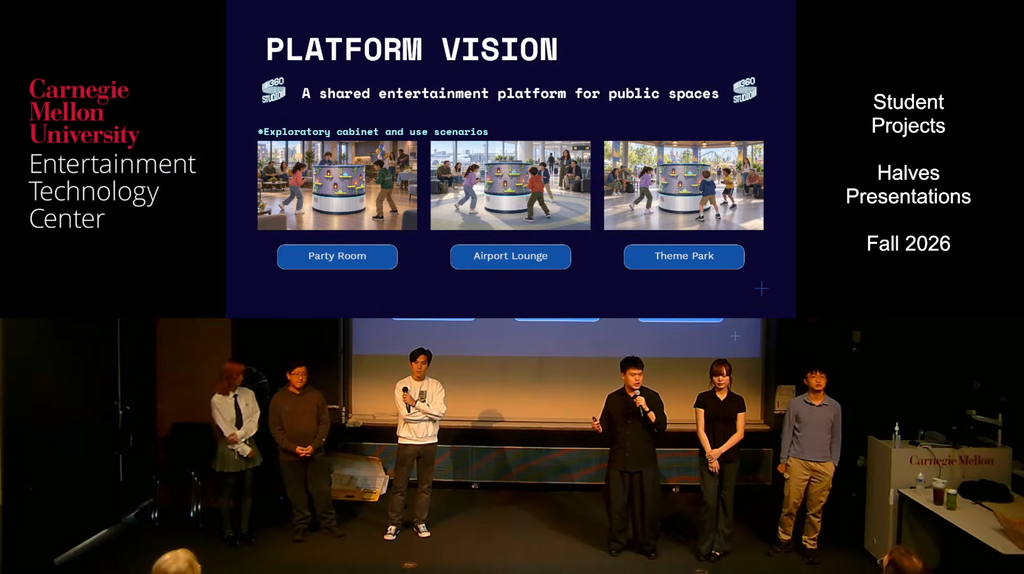
During our Halves presentation, we walked faculty through our design journey, from our initial research into the possibilities and limitations of the device to the development and playtesting of our first two game prototypes.
We shared how our focus gradually shifted toward multiplayer social experiences, particularly the opportunities created by having players physically surrounding the display. Unlike a traditional flat screen, the cylinder only reveals part of its content from any one position, naturally encouraging players to move around, observe one another, and interact within a shared physical space.
Through our playtesting findings, we also discussed challenges such as player orientation, limited information visibility, and managing multiple players around the screen. These observations have helped us better understand both the potential and constraints of the platform.
Rather than only researching games online, we wanted to observe arcade experiences in the environment they were actually designed for. We played a range of multiplayer and physical games while paying attention to how people approached them, understood them, interacted with one another, and decided whether to play again.
Halves Playthrough & Faculty Feedback
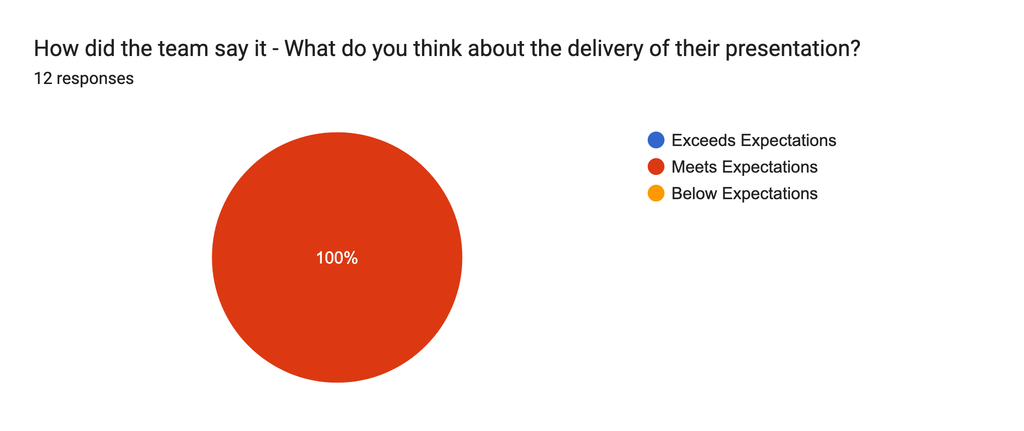
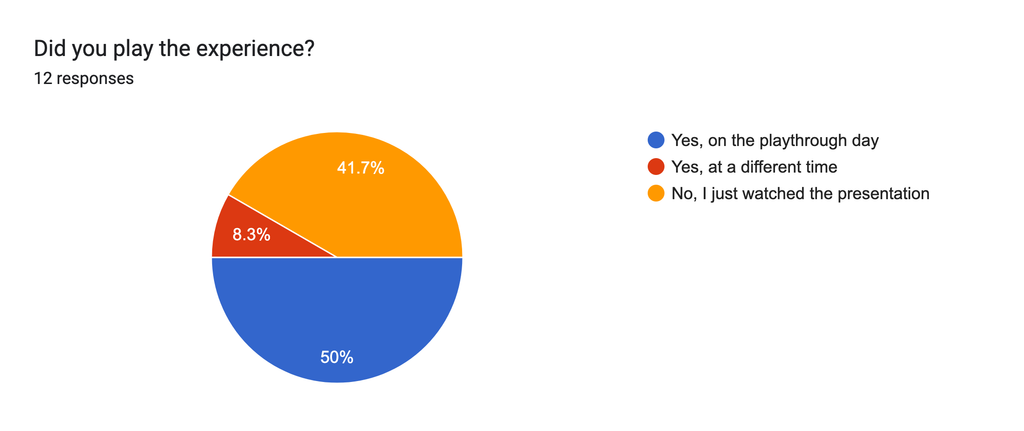
Feedback Form: https://docs.google.com/forms/d/16JD36UxFXFQWJhFL4zgQZAckl_Y7dj-8wBwBejA6OJo/viewanalytics
Following the presentation, we welcomed faculty into our project room to try Super Smash Slime and experience the 360° display firsthand.
The playthrough generated some encouraging reactions. Faculty enjoyed the multiplayer interactions and recognized how our simple, color-coded slime characters made it easier to distinguish players, even with the display’s resolution limitations. At the same time, the sessions revealed that our onboarding and controller instructions still need to be more intuitive for first-time players.
More importantly, the conversations raised several valuable design considerations for our next phase:
- Making hidden information meaningful: Since players cannot see the entire display at once, we could turn this limitation into a cooperative mechanic. Instead of simply forcing players to move to see missing information, different players might need to communicate and share what they can see to accomplish a common goal.
- Encouraging natural physical movement: Rather than explicitly telling players to walk around the screen, we should explore game mechanics that make movement feel necessary, rewarding, and intuitive.
- Designing for a specific environment: A cylindrical installation in an airport, arcade, or public exhibition would create very different expectations. The physical build, input devices, gameplay complexity, and audience should all respond to the intended location.
- Finding the unique value of the cylinder: Faculty challenged us to consider why this experience needs a continuous cylindrical display instead of several flat screens arranged in a circle. This encouraged us to think more deeply about spatial interaction, immersion, and the relationship between the physical installation and its digital content.
The discussions also introduced interesting references for cooperative gameplay, circular interaction systems, and 3D environments. These suggestions gave us new perspectives on how to explore the platform beyond our current competitive game.
Narrowing Our Design Direction
One of our biggest takeaways from Halves is that having many possible directions is both an opportunity and a challenge.
So far, adapting familiar arcade mechanics has been an effective way to test the display and understand its technical constraints. Moving forward, we want each prototype to investigate a more specific characteristic of the device rather than simply adapting another existing game.
We are especially interested in exploring cooperative gameplay through asymmetric information, physical movement around the display, and the possibilities of interactive 3D environments. In parallel, we will continue researching physical installation concepts, including how the surrounding structure and sound system can become part of a cohesive experience.
With the second half of the semester approaching, we also need to balance exploration with production. Our goal is to conduct a few more focused experiments, evaluate their strengths, and narrow our direction toward one polished experience for the end-of-semester festival.
Next Week — New Explorations
Following Fall Break, we will begin exploring new directions while continuing to develop the physical setup around our display.
- New Prototypes: Experiment with interactive 3D visuals and brainstorm another gameplay concept, with an emphasis on the unique capabilities of the cylindrical screen.
- Physical Build & Sound: Develop concept art and potential physical installation designs, while exploring speaker placement and sound integration.
- Field Study: Continue investigating potential public locations and how different environments might influence the experience and its interaction design.
These parallel explorations will prepare us to develop another playable prototype and organize a new round of playtesting alongside Super Smash Slime in the following week.
Our focus is gradually shifting from discovering everything the display could do to identifying what it can do best.