Playtest Feedback and Future Plans
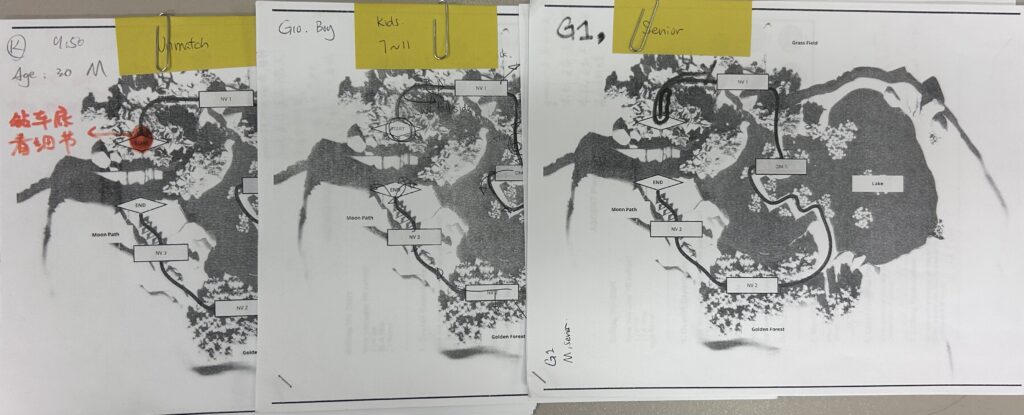
This week, we focused on analyzing feedback from last Saturday’s large playtest. We tested with 12 groups of participants ranging in age from 7 to 70, though our main focus was on feedback from our target audience, which consists of adult players. Overall, the playtest went very well — many participants praised the environment and described our visuals as beautiful and immersive.
we prepared printed maps and survey forms to better track player behavior and gather structured feedback. During the playtest, we used the maps to mark the areas where players stopped for longer periods of time, allowing us to clearly visualize whether they paused at the intended scenic spots. Afterward, we organized all survey responses and categorized them by age group to help us better understand how different audiences experienced the world. Each player filled out a survey after completing the session, which gave us both quantitative and qualitative insights into their experience.
Overall, the playtest went very well — many participants praised the environment and described our visuals as beautiful and immersive. The most common issue reported was rendering delay, with some players noticing lag and black particles in unrendered areas when turning their heads. A few participants also found the waterfall texture confusing. After the playtest, we optimized the rendering performance, stabilizing the build at 90–120 FPS, though we haven’t conducted a full test yet. We also started investigating the performance impact of transparent rendering, as many of our leaves use transparency instead of geometry. Meanwhile, the art team began refining the water shader based on player feedback.
Another observation came from the latest Meta Quest system update, which now displays players’ hands in VR. While this feature sometimes distracted younger participants, several players expressed interest in interacting with objects once they noticed their hands. This has led us to consider whether to keep the visible hands and how we might introduce light interactive elements in future iterations.
We also conducted an additional playtest midweek with one of our faculty advisors, who confirmed that we are on the right track. They encouraged us to explore some light interaction and emphasized the importance of sound in creating a relaxing, immersive atmosphere. By the end of the week, we had already implemented environmental sounds throughout the scene and continued refining water effects. These updates made the experience feel more cohesive and atmospheric, and we plan to keep improving both visual and audio elements moving forward.
Art Progress
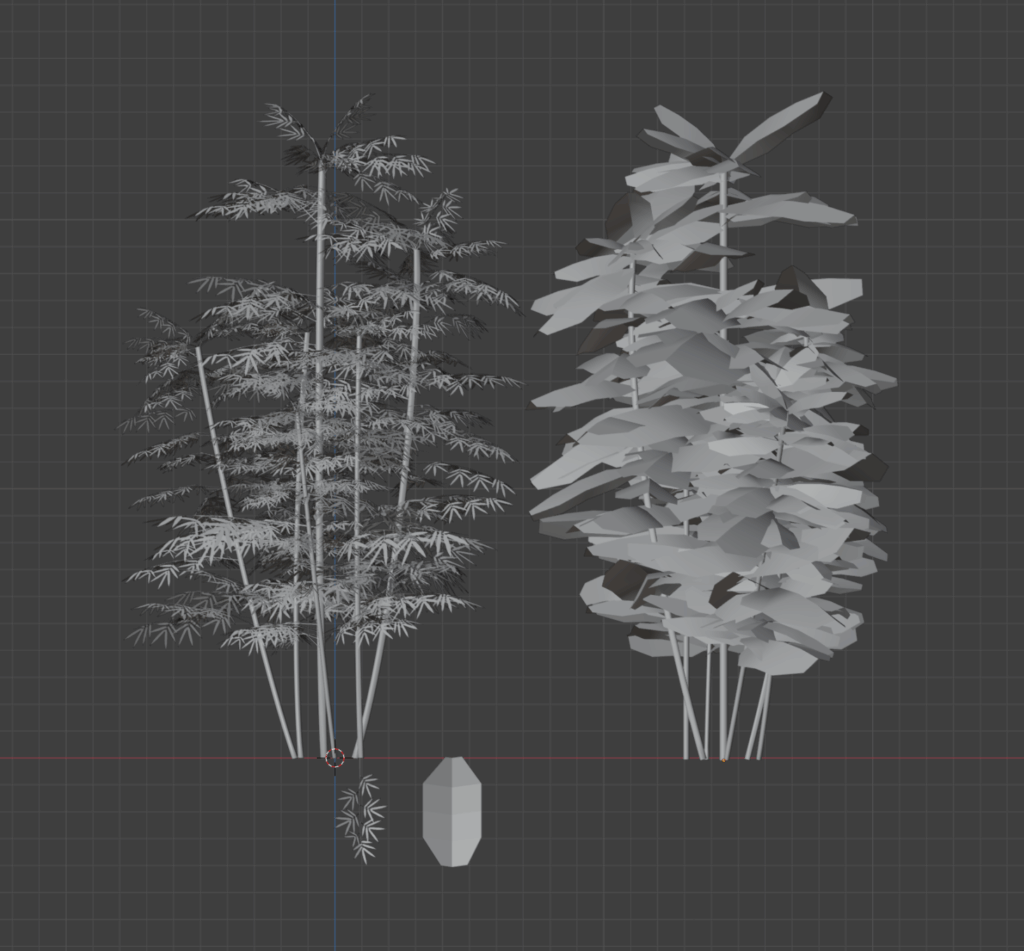
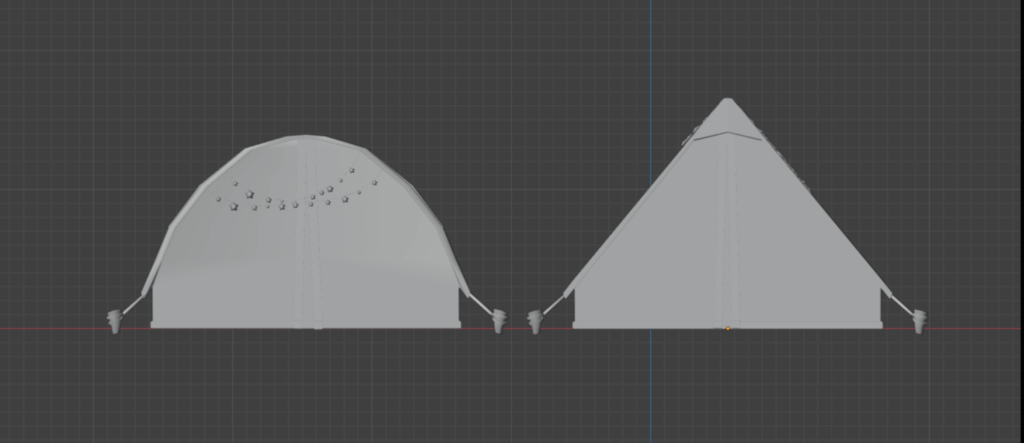
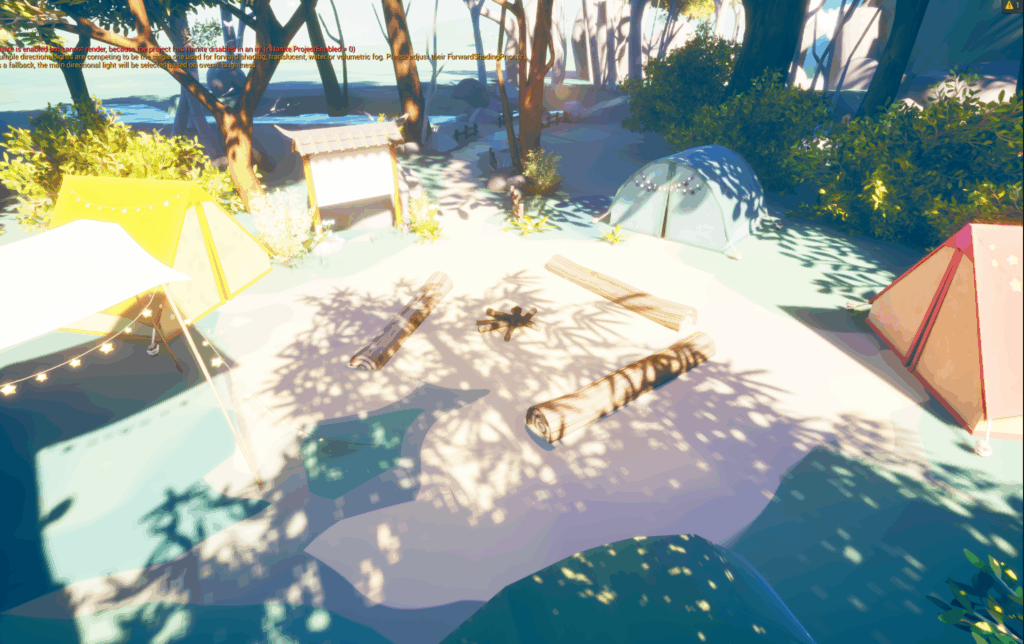
This week, the art team focused on refining and wrapping up the map. All major elements have now been placed into the scene, and several previous placeholder assets were replaced with their finalized models. We also redesigned the ending area and updated the final scene to better support the overall flow and mood of the experience. In addition, we began refining the water shader and made further adjustments to lighting and materials to create a more cohesive and atmospheric environment. The world is now close to final, with only a few remaining details and issues that still need polishing and debugging. Art team has also helped implemented sound.
Tech Progress
This week, the tech team worked on improving performance and preparing for future testing. We try to adjusted the rendering settings to maintain a more stable 90–120 FPS in VR, which improved overall smoothness. In addition, we integrated the Brilliant Sole plugin into our project, allowing faculty to start testing foot tracking in the future. Tech team has also helped implemented sound.
