Week 7 marked an important milestone for the team as we presented our Halves presentation and shared the current state of the project with faculty and peers. While the presentation accurately reflected the progress we had made so far, the feedback revealed an important challenge: many faculty members felt they did not yet have a clear enough understanding of the game to provide detailed feedback.
A recurring theme in the responses was that the new gameplay mechanic and overall game flow were still difficult to grasp, making it challenging for reviewers to fully evaluate the design decisions. Faculty emphasized that while the presentation effectively communicated what we had accomplished, they wanted to see more of the game’s components working together in order to better understand the player experience.
Key Feedback from Halves
Several areas of feedback emerged from the discussion:
- Commitment to Direction: Faculty noted that progress over the past few weeks appeared slower and suggested that the team may have been hesitant to fully commit to specific design decisions. Moving forward, they encouraged us to confidently lock in systems so development can accelerate.
- Clarifying the Core Gameplay: Reviewers recommended simplifying the explanation of the mechanics and ensuring the experience remains centered around the divination questions themselves. Example questions discussed included:
- Should the king begin a war?
- Will it rain?
- Should the king go on a hunting expedition?
- Highlighting the Ritual Process: Faculty encouraged the team to clearly communicate the ritual steps and ensure that players come away from the experience with an understanding of how oracle bone divination works.
- Integrating the Components: There was some confusion about how different parts of the project—such as the 3D environment, the bones, and the card mechanics—connect within the gameplay loop. Faculty encouraged us to focus on integration so that these elements feel cohesive.
- Seeking More Feedback Earlier: Another recommendation was for the team to involve faculty more frequently in the development process, allowing us to gather input earlier rather than waiting for milestone presentations.
- Sprint Planning: Faculty suggested establishing a month-long sprint plan and working backward from key milestones to ensure the project stays on track.
Planning the Next Month
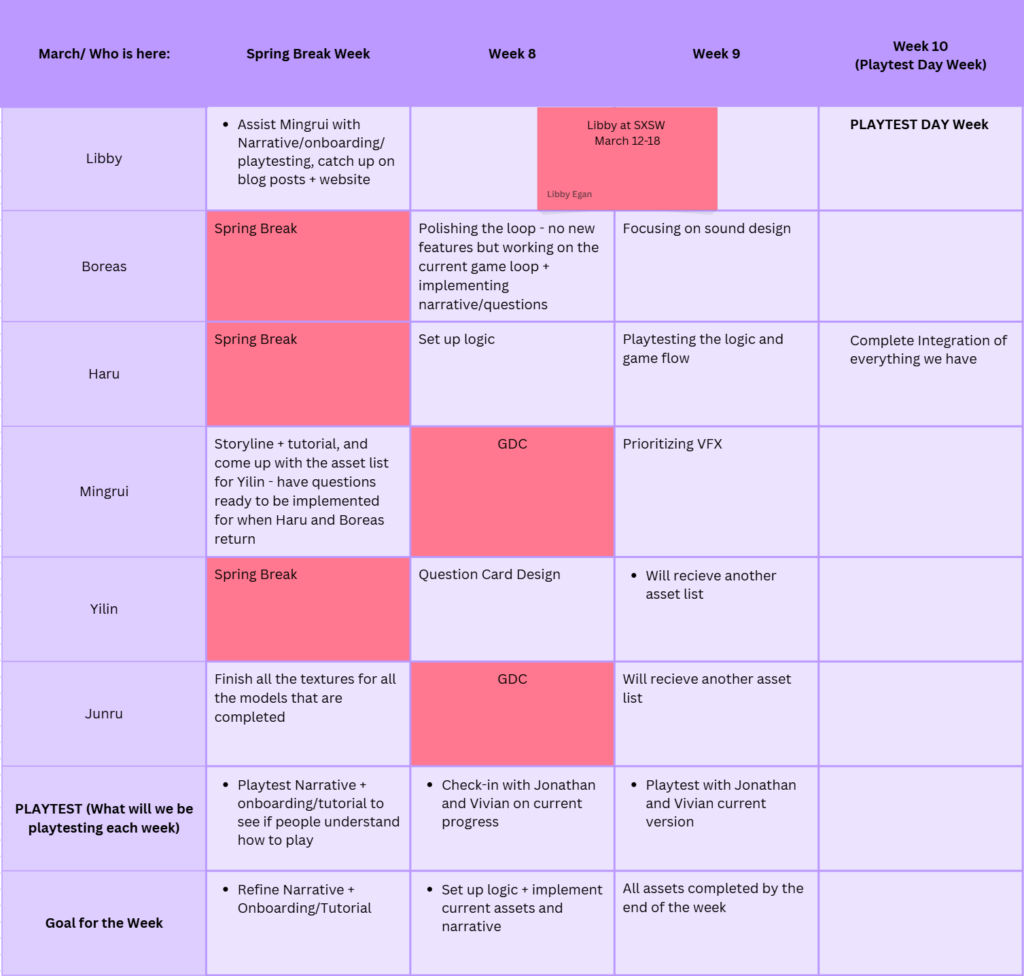
Following the presentation, the team met to discuss the feedback and create a clearer roadmap for the upcoming weeks, which also coincide with a busy conference period including Spring Break, Game Developers Conference, and South by Southwest.
Our plan for the coming weeks includes:
Spring Break
- Focus on strengthening the branching narrative structure
- Finalize the tutorial and onboarding flow to ensure the ritual process is easy for players to understand
GDC Week
- Prioritize programming development, including implementing the core game logic
- Polish the gameplay loop
- Begin integrating narrative content and finalized assets
Week 9
- Conduct extensive playtesting to evaluate the game’s logic, pacing, and overall player flow
- Begin implementing sound design
Week 10
- Focus on integration and additional playtesting in preparation for Playtest Day
Game Flow Review with Jonathan
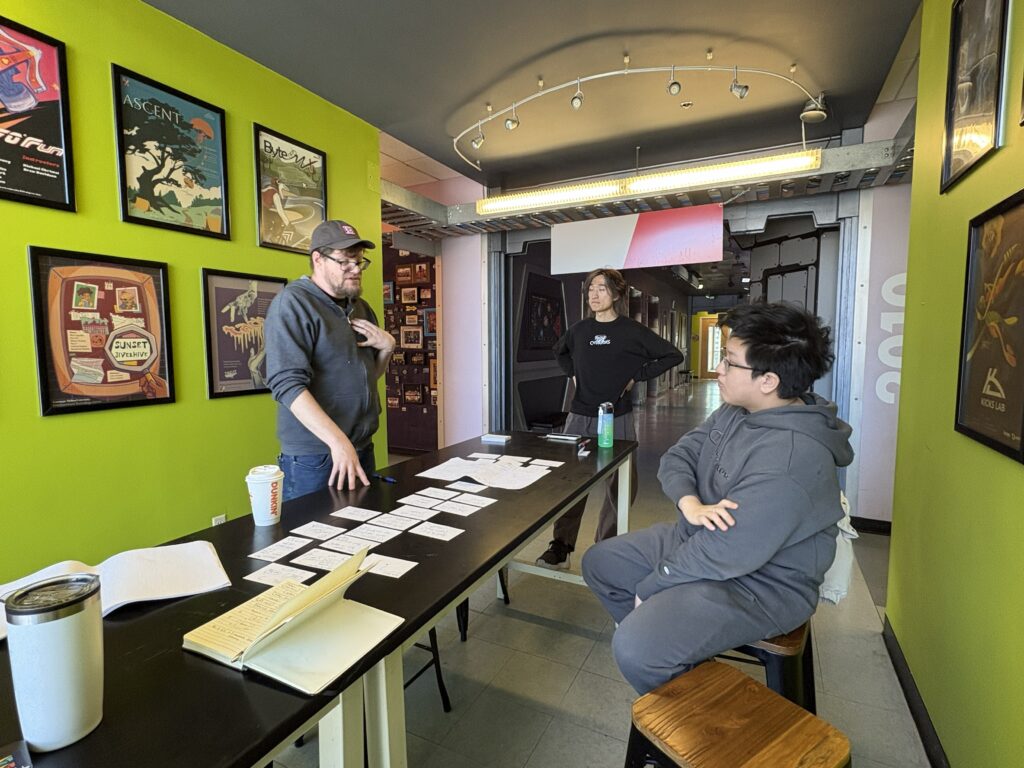
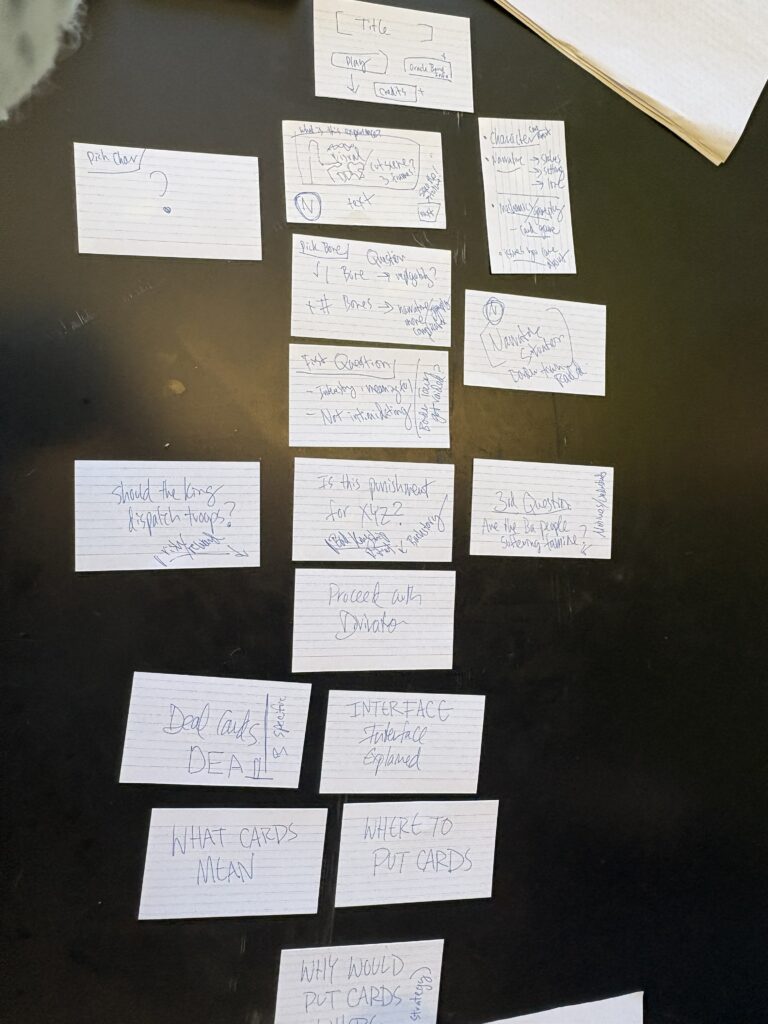
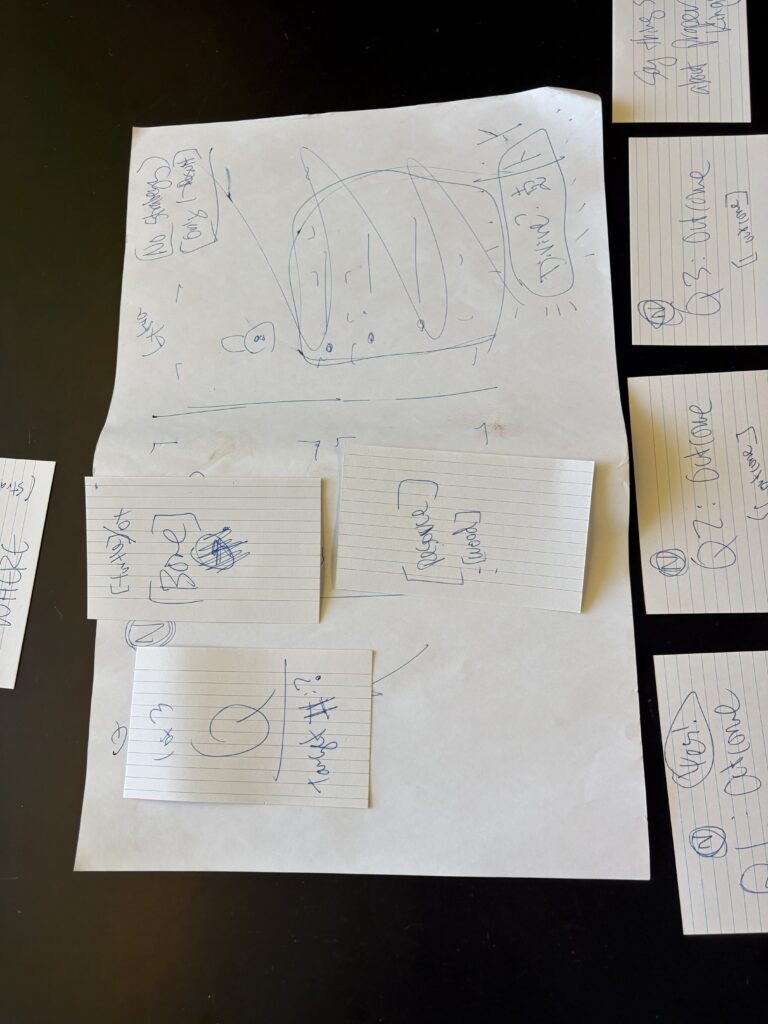
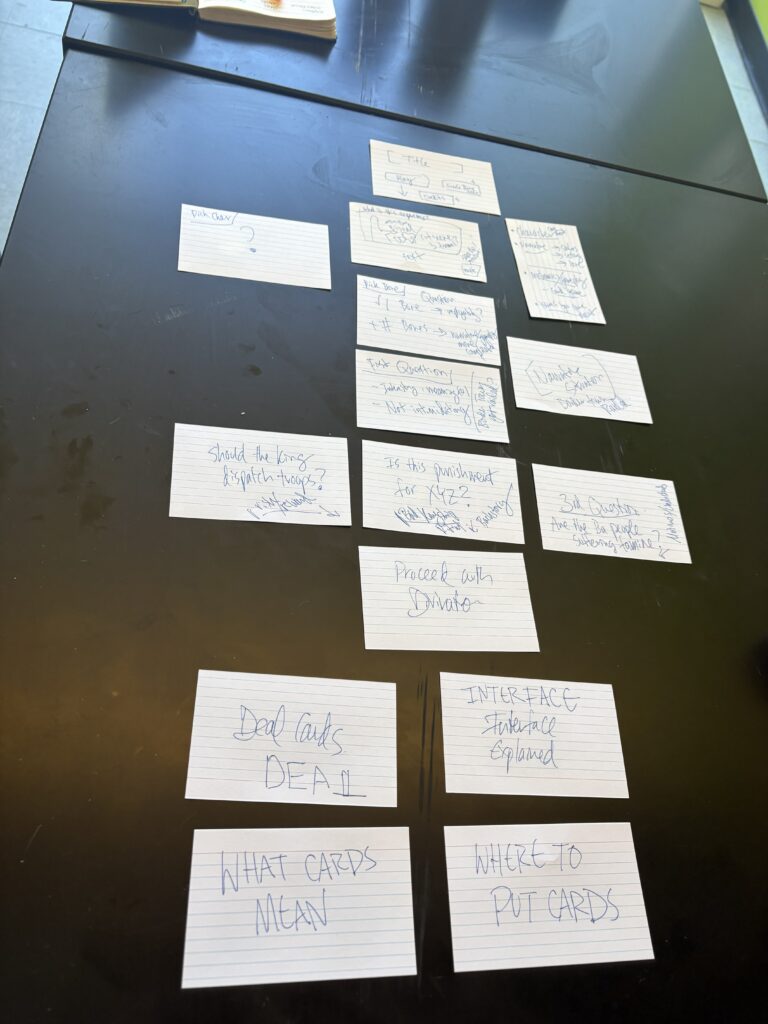
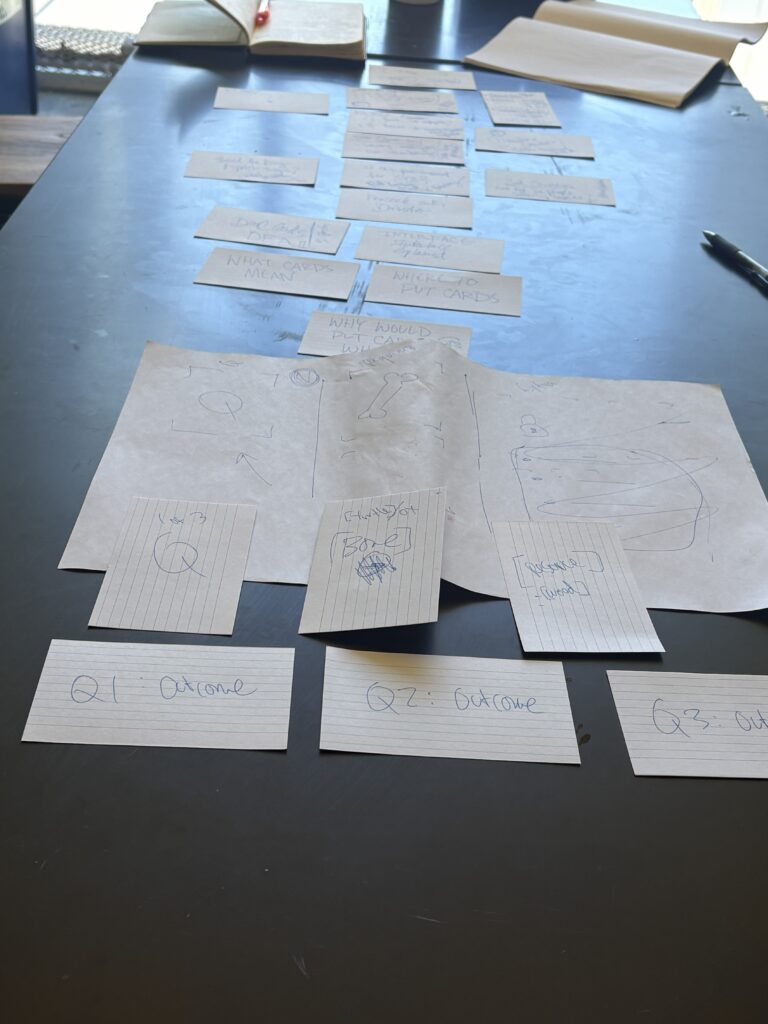
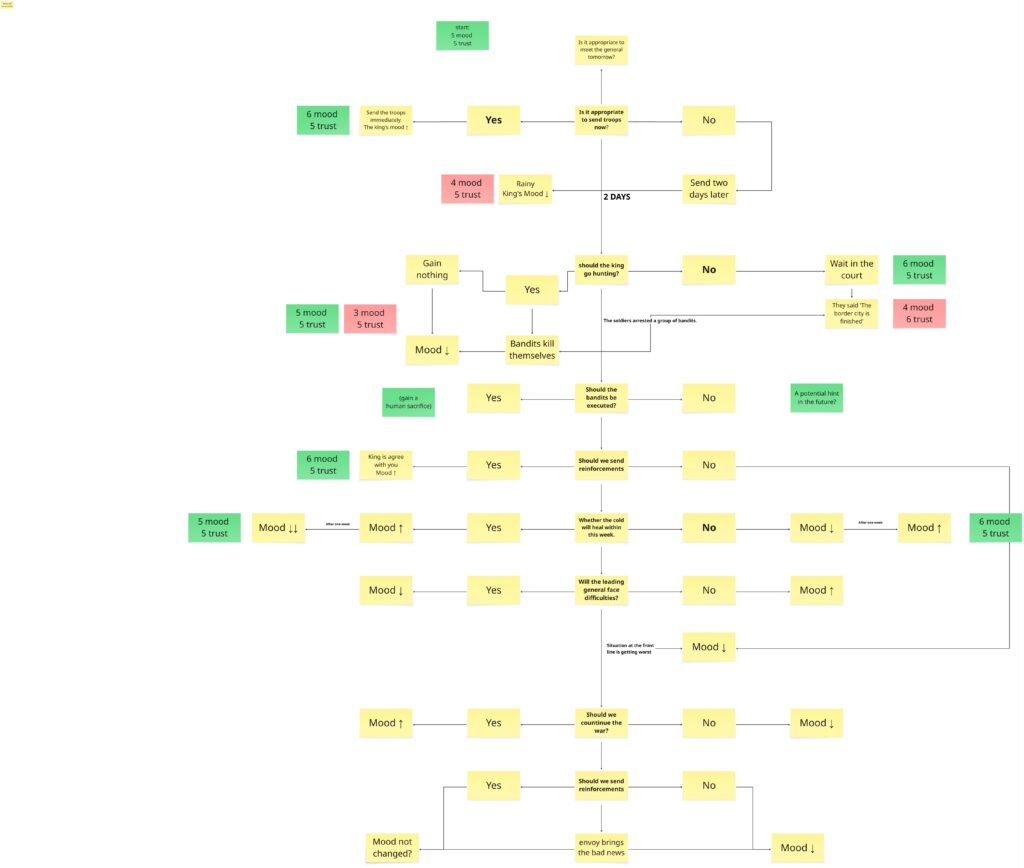
At the end of the week, Libby met with Jonathan, Mingrui, and Boreas to walk through the current game flow and identify potential challenges that might arise during development. This meeting provided an opportunity to step through the player experience from start to finish and discuss areas where the structure or mechanics could be clarified.
During this discussion, the team also began realigning the project toward a museum installation–style prototype goal. While the game continues to be developed on PC during production, the conversation focused on how the experience could function in a museum context—where interaction time is shorter and the ritual process needs to be communicated quickly and clearly. This perspective helped the team rethink how the gameplay loop, narrative structure, and onboarding should be organized.
Jonathan also provided guidance on how the narrative question system could be structured. One approach discussed was organizing questions into thematic categories while allowing some controlled randomization within each topic. This would allow players to encounter different questions related to themes such as war, weather, or royal decisions while still maintaining narrative coherence and design control.
The meeting ultimately helped the team better understand how to simplify the experience and ensure that the ritual process and decision-making structure remain central to the player experience.
Although the Halves presentation revealed areas where the project needs stronger clarity and integration, the feedback provided valuable direction for the next phase of development. With clearer priorities and a stronger alignment between narrative, mechanics, and museum context, the team is preparing to refine the experience and move toward a more cohesive playable prototype.