Week 9 was a pivotal development week as the team focused on pushing the project toward a fully playable prototype. While one team member was attending South by Southwest in Austin, the rest of the team remained on campus and concentrated on integrating systems and finalizing core functionality.
Progress Toward a Playable Build
A major milestone for the week was reaching a point where the game could be played end-to-end. Haru completed the majority of the playable prototype systems, bringing together key components of the game loop. At the same time, Mingrui worked on finalizing the narrative configurations, ensuring that questions, outcomes, and story elements were properly structured for implementation.
By the end of the week, the team was working toward having a fully playable version of the prototype, marking an important transition from isolated systems to an integrated experience.
System and Asset Integration
As development progressed, much of the team’s effort shifted toward integration work—bringing together assets, systems, and design elements into a cohesive build.
This included:
- Updating and implementing card images and UI elements
- Integrating new textures into the 3D environment
- Refining visual consistency across assets
Junru also made visual adjustments to the environment, including changing the color of the oil lamp and planning additional details such as grips to improve the overall look and usability of the scene.
Gameplay and Systems Refinement
Alongside integration, the team continued refining core gameplay systems. A particular focus was placed on:
- Balancing and configuring the King’s Mood and Trust systems
- Iterating on the trade-offs and decision-making mechanics within the game loop
These adjustments are critical to ensuring that player choices feel meaningful and that the system responds in a clear and engaging way.
Audio and Feedback Systems
Boreas continued development on the game’s sound effects, helping to reinforce player interactions and provide feedback during gameplay. These audio elements will play an important role in making the ritual feel responsive and immersive.
Reuniting and Refining the Player Experience
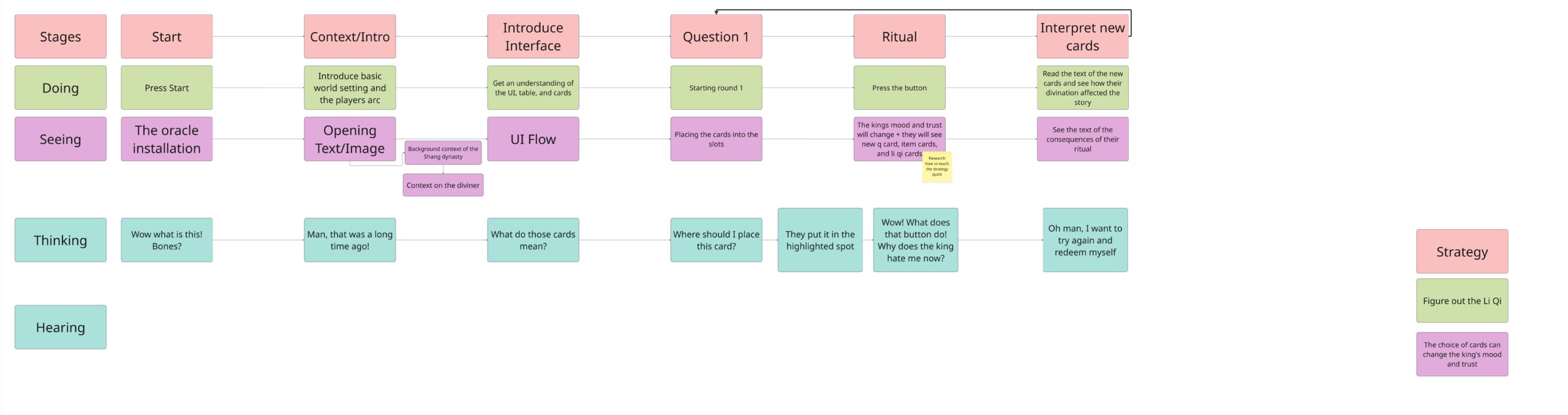
Once the full team was back together, we spent time mapping out the player experience from start to finish. This included identifying potential friction points, clarifying the flow of interactions, and ensuring that each step of the ritual is understandable.
As part of this process, the team also supported one another across disciplines—helping to implement assets, refine systems, and troubleshoot integration challenges.
Early Tutorial Exploration
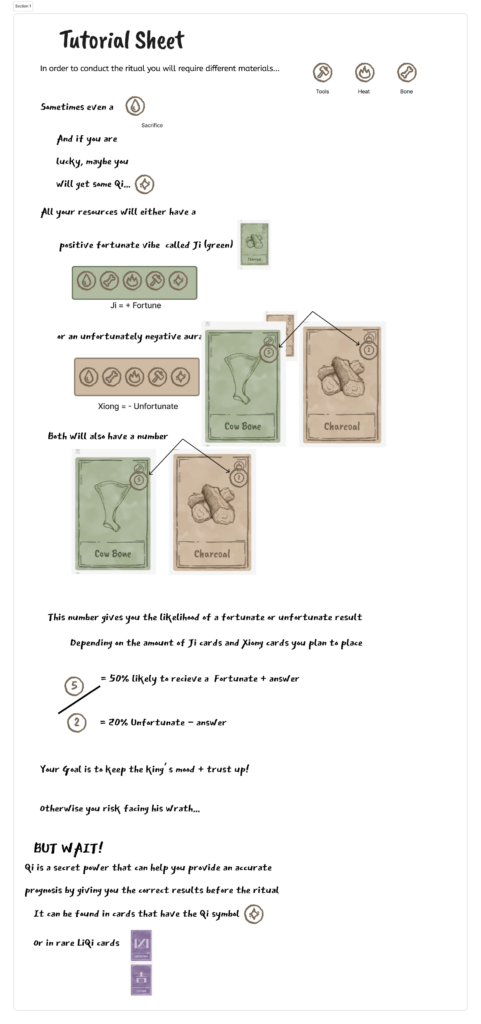
In parallel with development, we began exploring ideas for how a tutorial and onboarding experience could be structured. Given the complexity of the system, it became increasingly clear that guiding the player through the ritual step-by-step would be essential.
This early exploration laid the groundwork for the more structured tutorial approaches developed in Week 10.
By the end of Week 9, the team had made significant progress toward a cohesive, playable prototype. With core systems largely in place and integration underway, we entered the next phase focused on refinement, onboarding, and preparing the experience for user testing.