Research
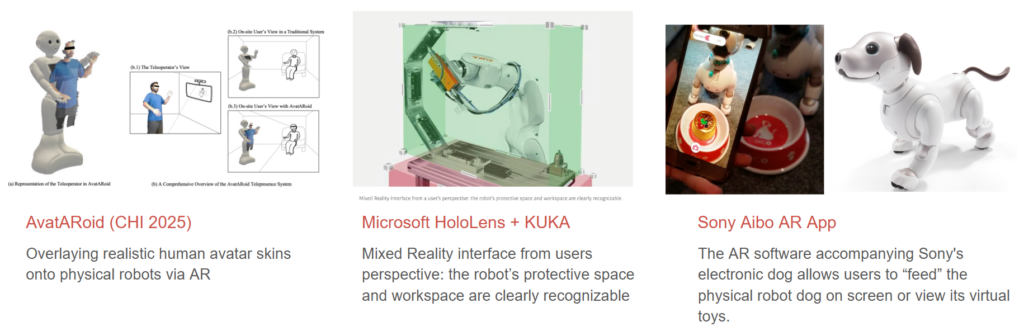
This week, we focused on mapping the landscape of entertainment robotics and AR-integrated interaction. We researched companion robots like Moxie and Ballie, performance robots such as Disney’s Stuntronics, and expressive humanoids like Sophia and Ameca to understand current interaction patterns. We found that most systems rely on simple gestures, facial expressions, or voice interfaces. We then explored emerging research combining physical robots with AR overlays, such as AvatARoid, which enhances social presence through virtual skins. Additionally, we examined Unitree’s SDK ecosystem, teleoperation frameworks, and simulation tools to evaluate the technical feasibility of integrating AR, autonomy, and expressive motion into our own robot project.
Reference
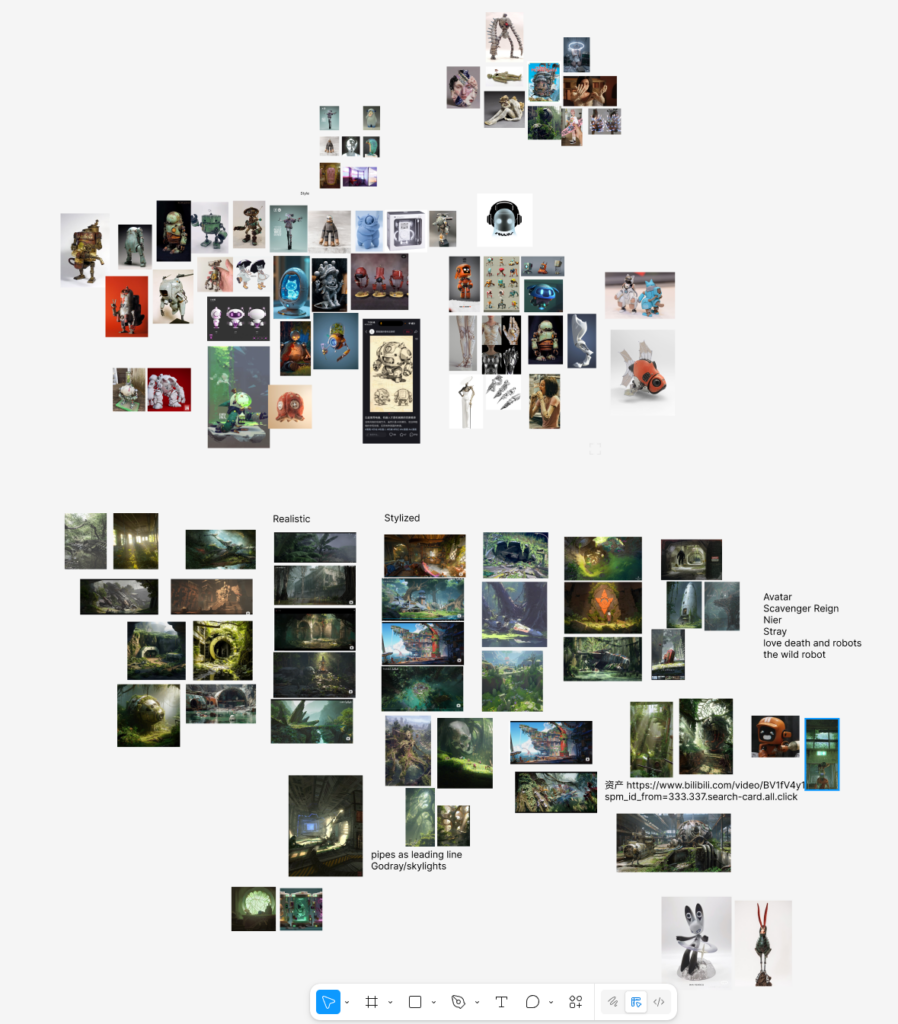
We conducted visual research on character and environment design, comparing realistic and stylized directions. We explored robot aesthetics within overgrown ruins and nature-infused spaces, analyzing mood, composition, and material language to define a cohesive art direction for our project.
Development
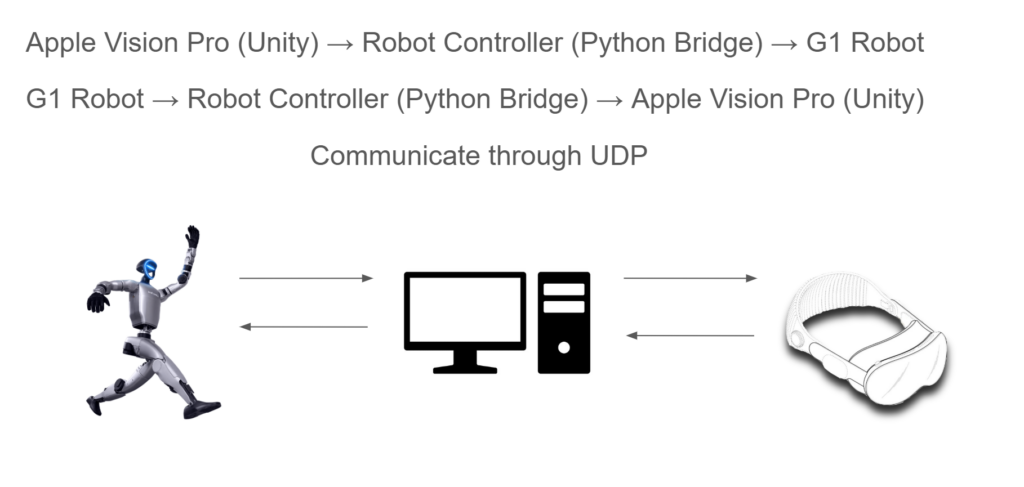
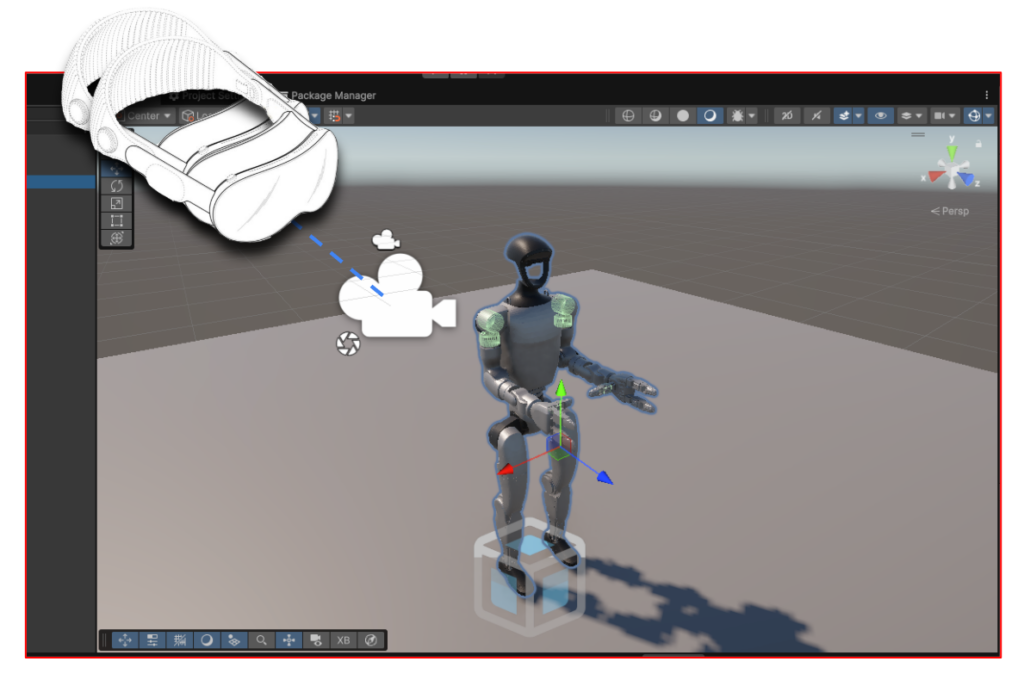
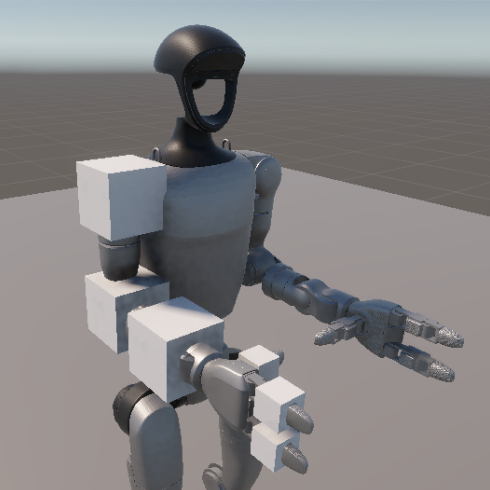
We developed the technical pipeline connecting Apple Vision Pro (Unity) to the Unitree G1 via a Python bridge using UDP communication. We built a real-time digital twin in Unity to track the robot’s movements and enable bidirectional control, synchronizing physical embodiment with virtual visualization.