Welcome back to the SpellChemists development blog! This week, we made new progress in both design and art. On the design side, we iterated on our spell system and visualized how different types of spells will behave during play. Although we do not plan to implement the full tutorial before Halves, we also completed the design work needed to define how the game’s core mechanics should be introduced. Meanwhile, after finishing the elemental rune and Swift models last week, our artists continued developing the 3D visual direction of the project.
Giving Each Spell Type a Clear Purpose
We currently divide our spells into four categories: Attack, Defence, Force, and Mobility. Rather than treating them as four variations of the same action, we want each category to support a different kind of decision.
Attack spells turn aim and positioning into immediate damage, making them the most direct way to pressure an opponent. Defence spells allow players to creating opportunities to survive an incoming attack or remain in a risky position for longer. Force spells push or pull one or more characters, allowing players to disrupt positioning and take advantage of the elemental terrain introduced last week. Mobility spells reposition the caster and can shape the space they move through, opening new possibilities for approaching, escaping, or preparing a future attack.
This means that spell selection is not only about choosing how much damage to deal. Players must also consider where both characters will end up, how a spell interacts with the arena, and whether an immediate effect is more valuable than creating an advantage for a later turn.
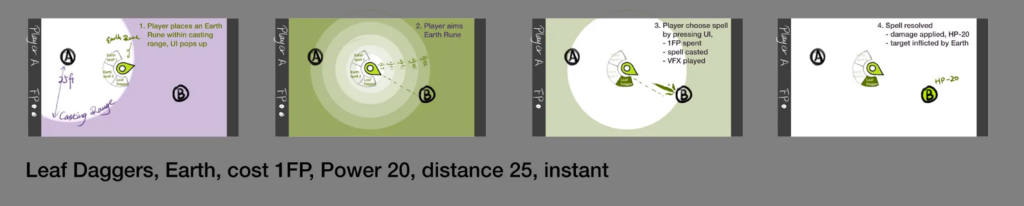
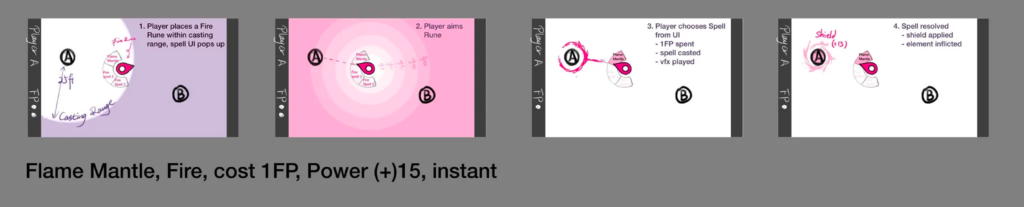
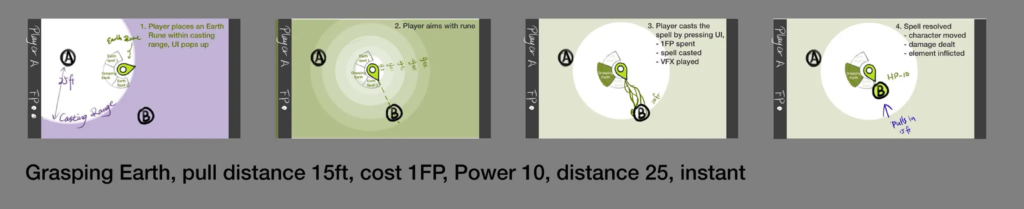
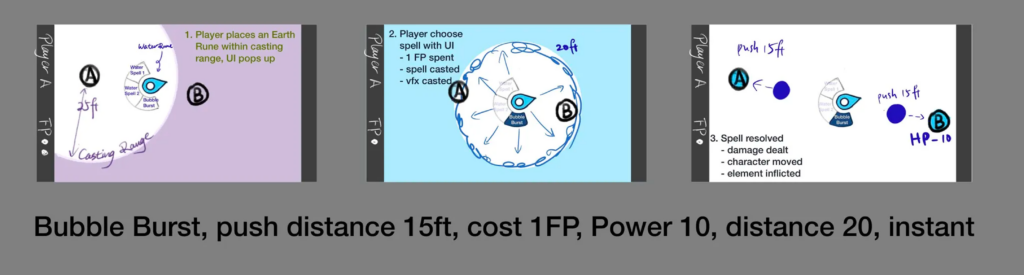
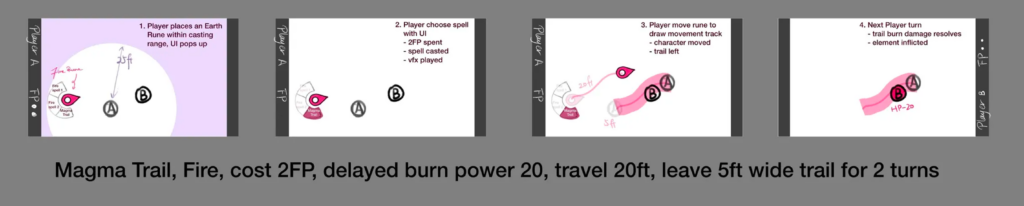
To make these interactions easier to evaluate, we created visual sequences showing the full casting process for different spell behaviors. These diagrams helped us compare casting range, targeting, rune orientation, Focus Point cost, movement, elemental infliction, and the timing of each spell’s resolution. They also provide a shared reference for design, programming, UI, art, and VFX as we begin translating the spell system into the game.
Planning the Tutorial
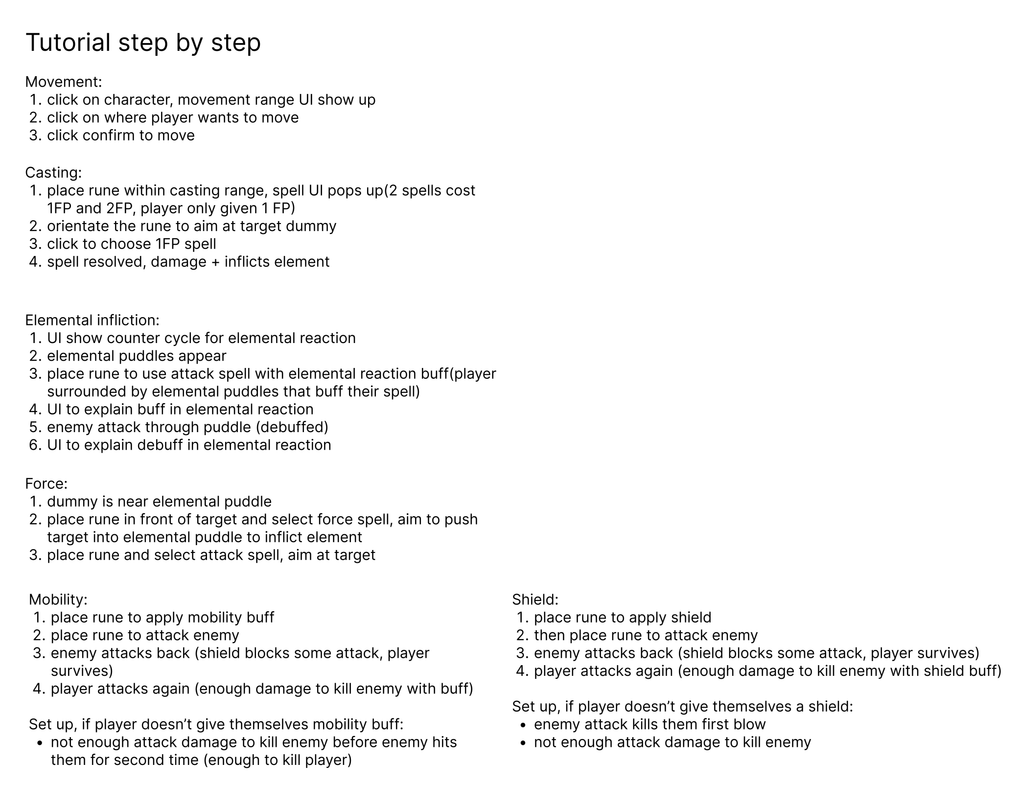
The tutorial begins with the basic physical language of SpellChemists: moving a character, placing and orienting a rune, selecting a spell, and seeing its effects resolve. It then introduces elemental interactions before moving into Force, Mobility, and Defence spells. This sequence allows players to first understand an individual action and then learn how different actions can be combined with terrain, positioning, buffs, and debuffs.
Designing these scenarios also gave us a useful test for the spell system itself. If a mechanic cannot be demonstrated clearly in a short, controlled situation, its rules or feedback may still need refinement.
Bringing Tank into 3D
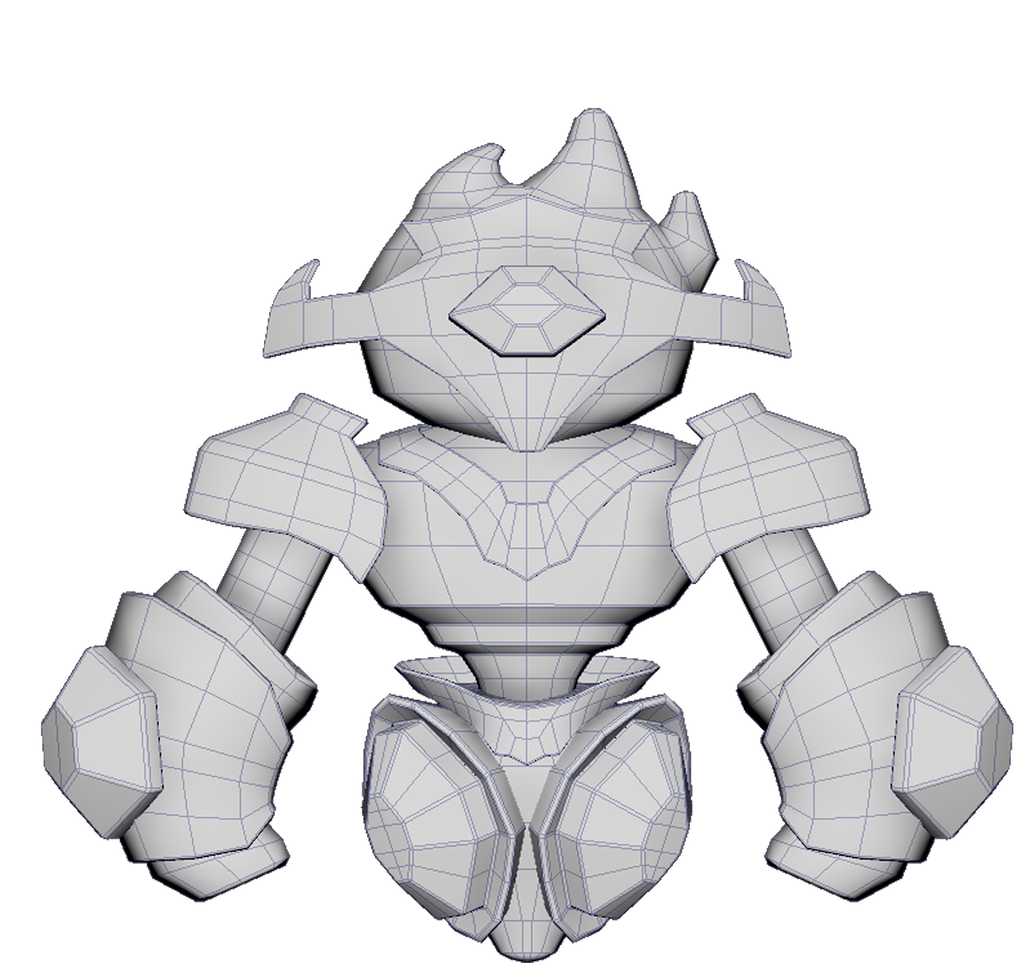
On the art side, we continued developing our two character rigs. In contrast to Swift’s light and agile silhouette, Tank has a broader, heavier body designed to communicate strength at a glance. Its thicker proportions and grounded shape make the difference between the two rigs visible before the player reads any statistics or spell descriptions. This week, our artists continued translating that design into a 3D model.
Finalizing Our Production Materials
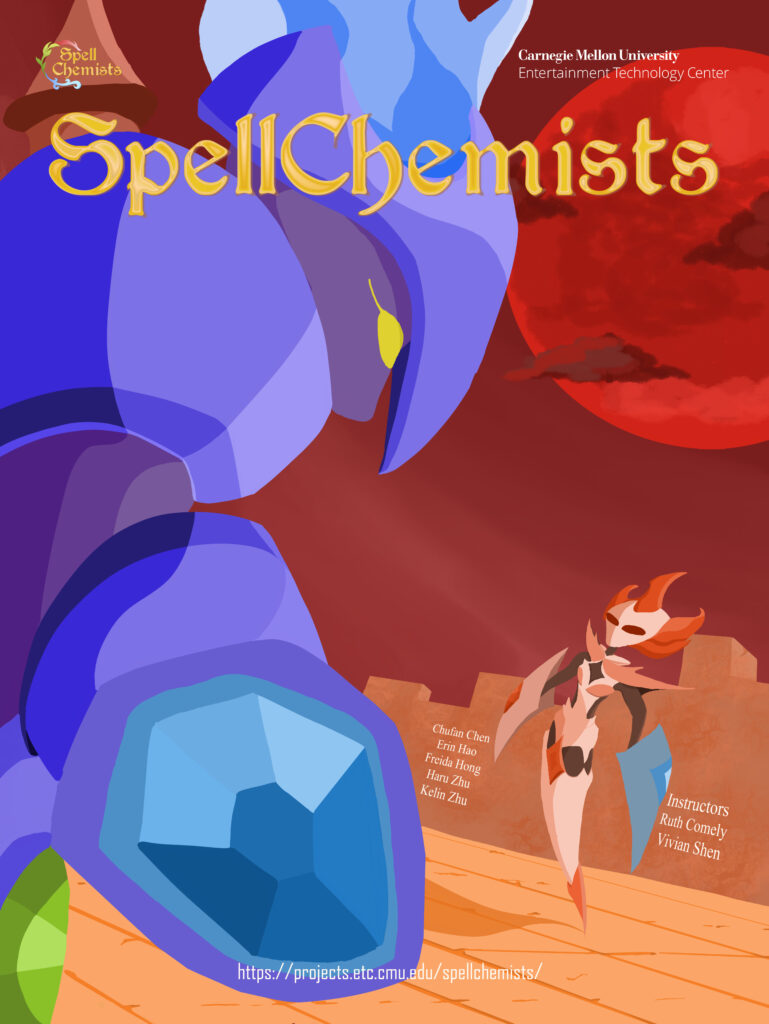
We also finalized our design production materials! You may have already noticed a small version of our project logo in your browser tab. Alongside the logo, we completed our poster, half sheet, and team photo, all of the production material has been uploaded to our Media Page.
Over the past several weeks, we explored and revised the poster layout multiple times. The final composition centers on a dynamic duel between Tank and Swift, capturing both the competitive energy of the Arena and the contrasting identities of our two character rigs. You can visit our Media page to see the completed artwork in greater detail.
We are excited to see how these materials look in print, and we look forward to sharing the physical versions with you in the future.