Category: Uncategorized

  • Week 4

    Week 4 began with the designers sitting down with the intention of coming up with several puzzle designs. This is our biggest roadblock due to its complexity. How do you come up with a puzzle for young audiences that also teaches them the abstracted basics of programming while simultaneously asking them to use a unique, novel interface, all while getting them to work together in a team of 2?

    It’s a daunting task, but this design session was a good step in the direction, as we were able to design 2 levels, with concepts in the work for a few more. Our goal is to create only a handful of levels, due to time constraints on us, as well as the audience, who will be asked to wear uncomfortable wired glasses.

    After positive feedback from our advisor and clients, we are going ahead with developing our first level to see how it plays. Our next steps involve playtesting these levels once they’re ready and iterating the methods of interaction based on those playtests.

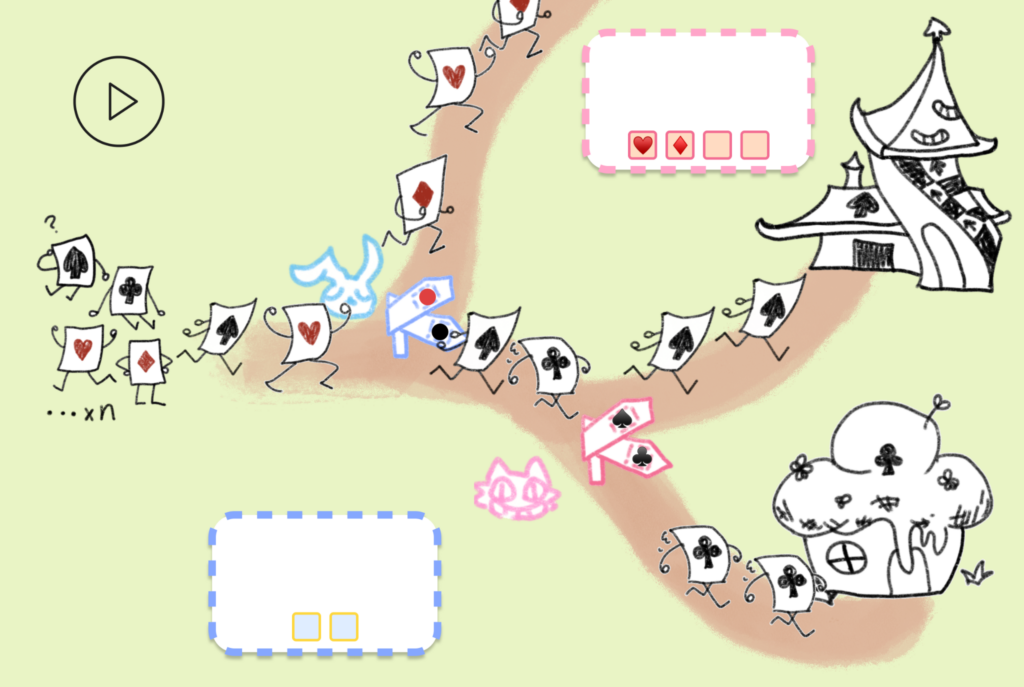
    Our programmers also presented a simple demo of how the levels will play, including cards that obey logic signs like they will in the final product.
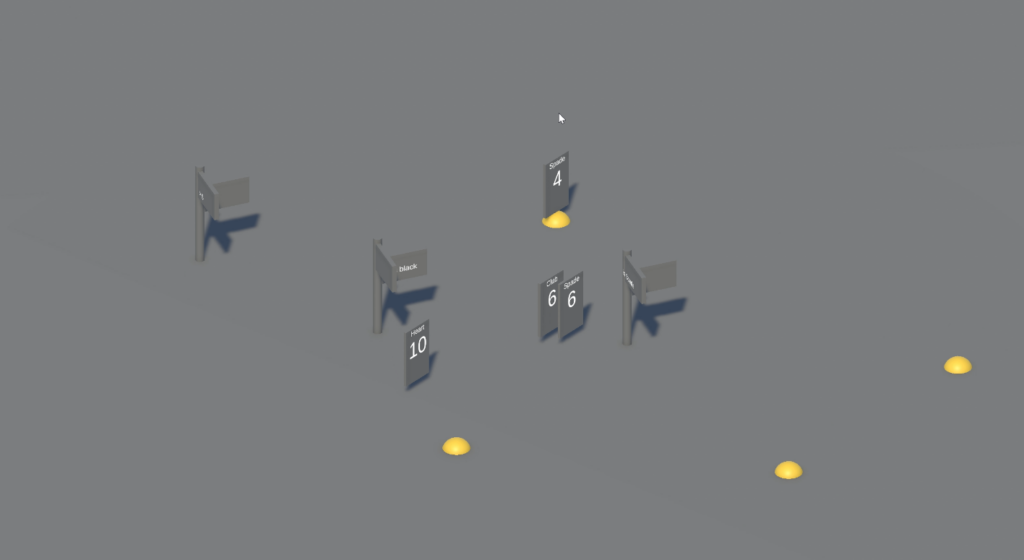
    Now, they’re working on making it interactive and multiplayer! By the end of next week we hope to have a playable first level, which will make development of subsequent levels much easier.
  • Week 3

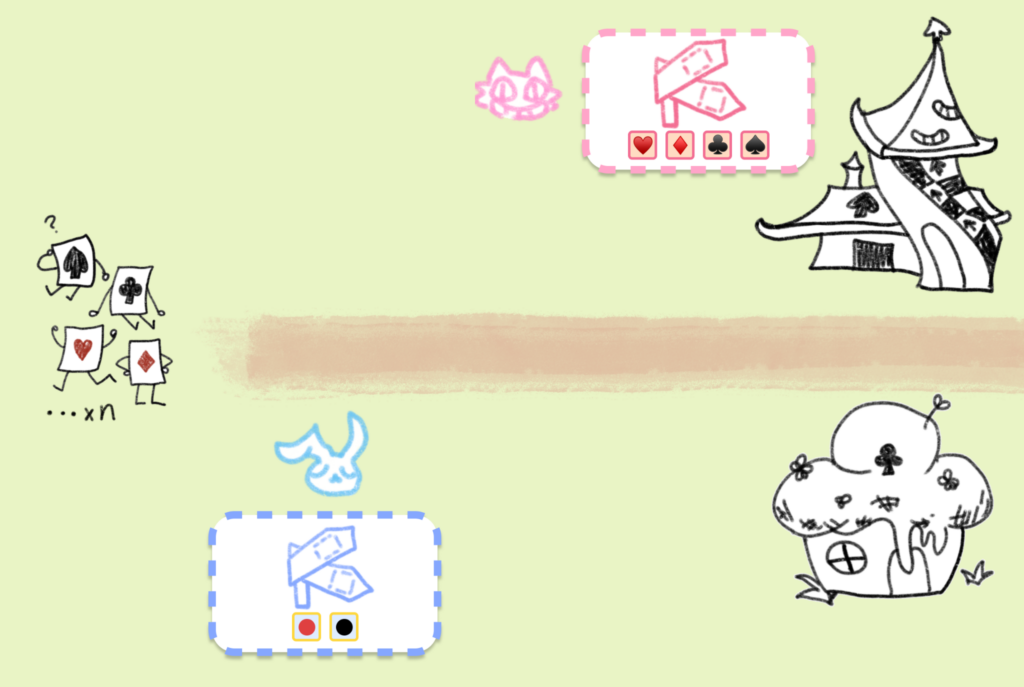
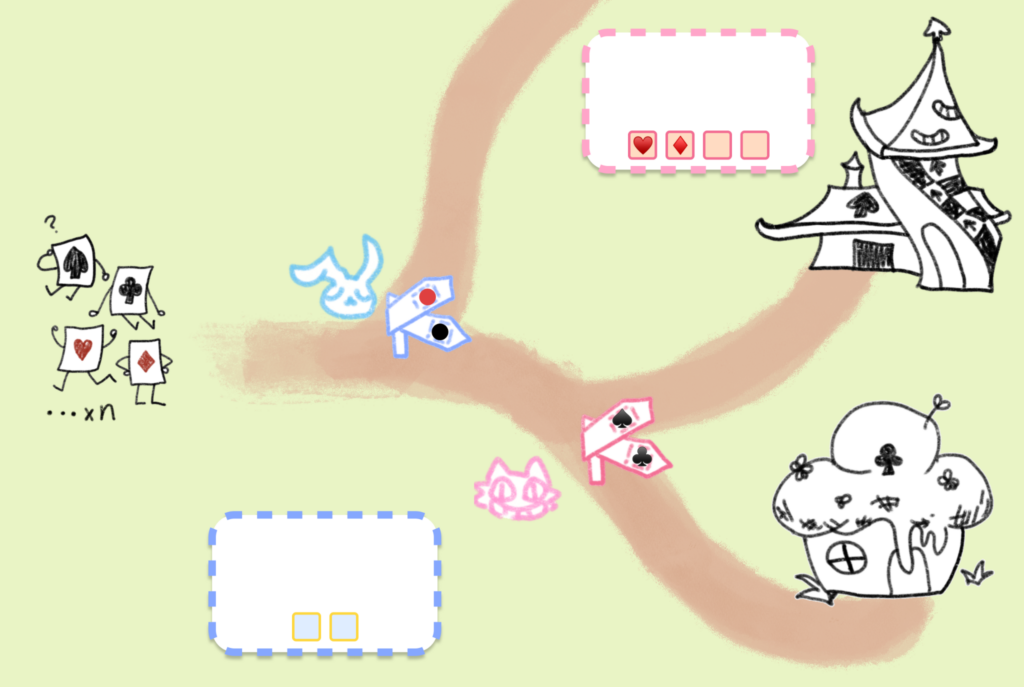
    At the very end of last week, one of our artists presented drafts for our half-sheet and logo at a workshop and the feedback was overwhelmingly positive! This was a great step for establishing the aesthetic going forward in this project. However, there wasn’t a lot of time to enjoy our success. Week 3 was It Takes Two Alices’ Quarters presentation! Based on our feedback last week, we created a revised presentation that focused more on a level prototype. We walked faculty through the level step by step to give them an understanding of what gameplay will look and feel like.

    Feedback was positive overall. The biggest critiques were concerns that we are not using the Tilt Five to its fullest potential. The Tilt Five is great at presenting 3D Visuals on the board. Our prototype was presented on a flat screen, and we made little mention of how the 3D would be used specifically to improve puzzle-solving.

    We had a lot of discussion about this afterwards. Balancing using the Tilt Five’s 3D, creating good puzzles, and being educational for new programmers is an extremely challenging design problem. We are still in the process of solving this conundrum, but at the moment we are trying to focus on designing educational puzzles, and once we are confident in that we can start looking into using the 3D element.

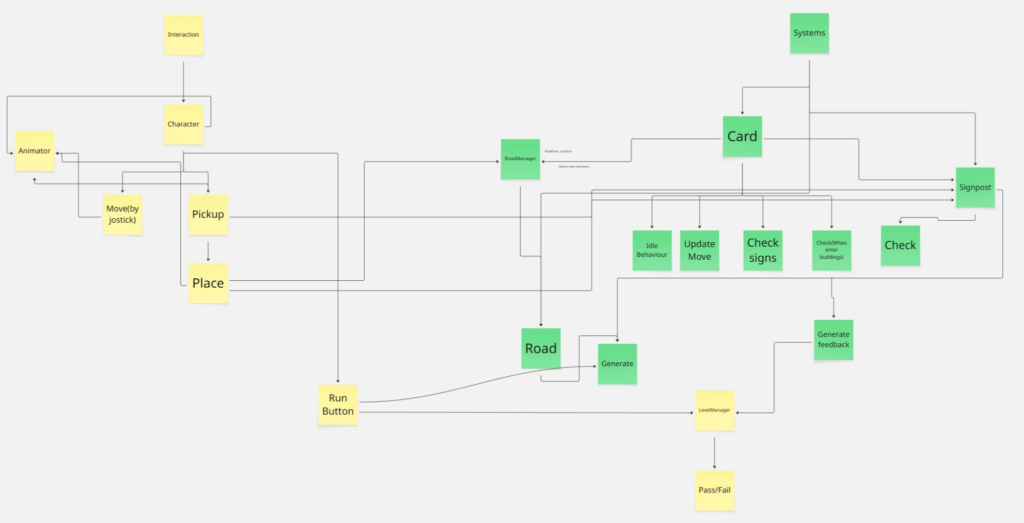
    The programmers developed the code architecture we’ll be using going forward, and the designers started brainstorming to create levels beyond our prototype.

    All in all, it’s a good thing that our core gameplay is relatively set in stone, because it allows us to move ahead with other aspects of development. However, there are a lot of challenges ahead, especially surrounding design.

    Next week, we hope to have a complete prototype for the level we presented at Quarters, as well as 3 or so more levels designed on paper.

  • Week 2

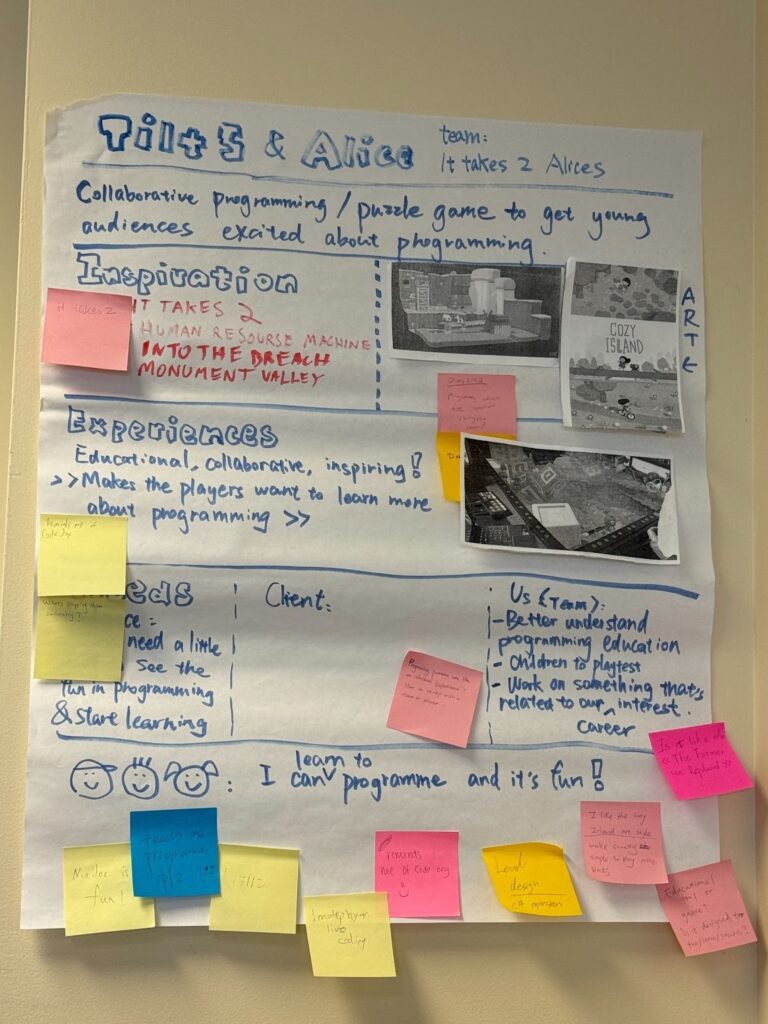
    This week, the team made progress with both art and programming. We kept working on our concept, building our quarter’s slides around it. We decided that our demographic should be the same with Alice, which is around 10-15 yrs old. 

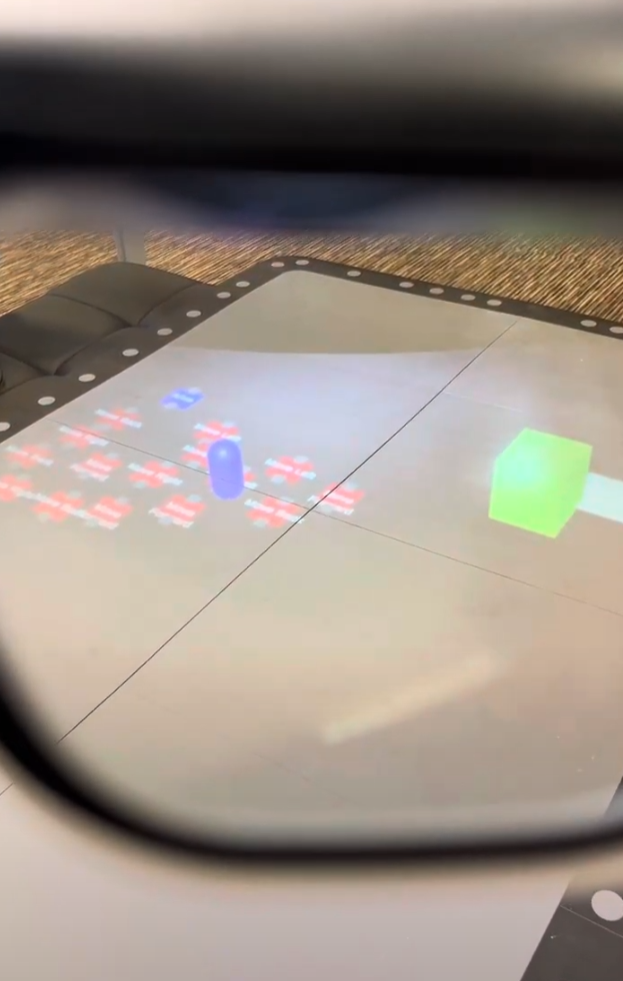
    The programmers did a successful tech test, bringing the prototype from last week into the Tilt 5 glasses. Currently, we don’t know a way to record what’s happening in the Tilt 5 with clarity. Therefore we shot a video through the glasses. It definitely shows what’s happening correctly, but in the future we hope to find a more professional way to present this.

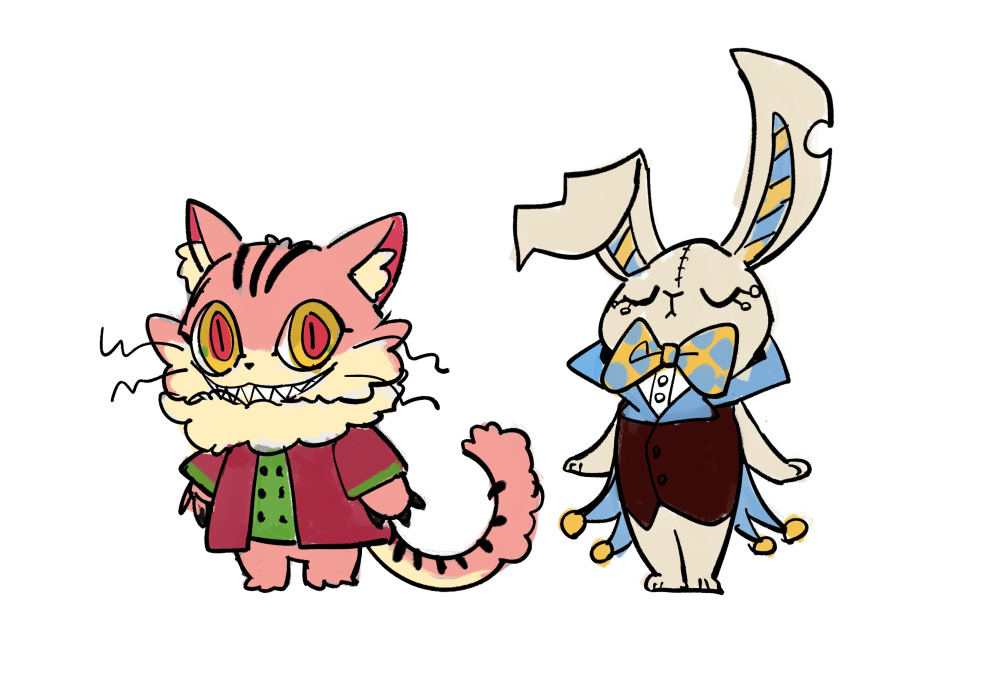
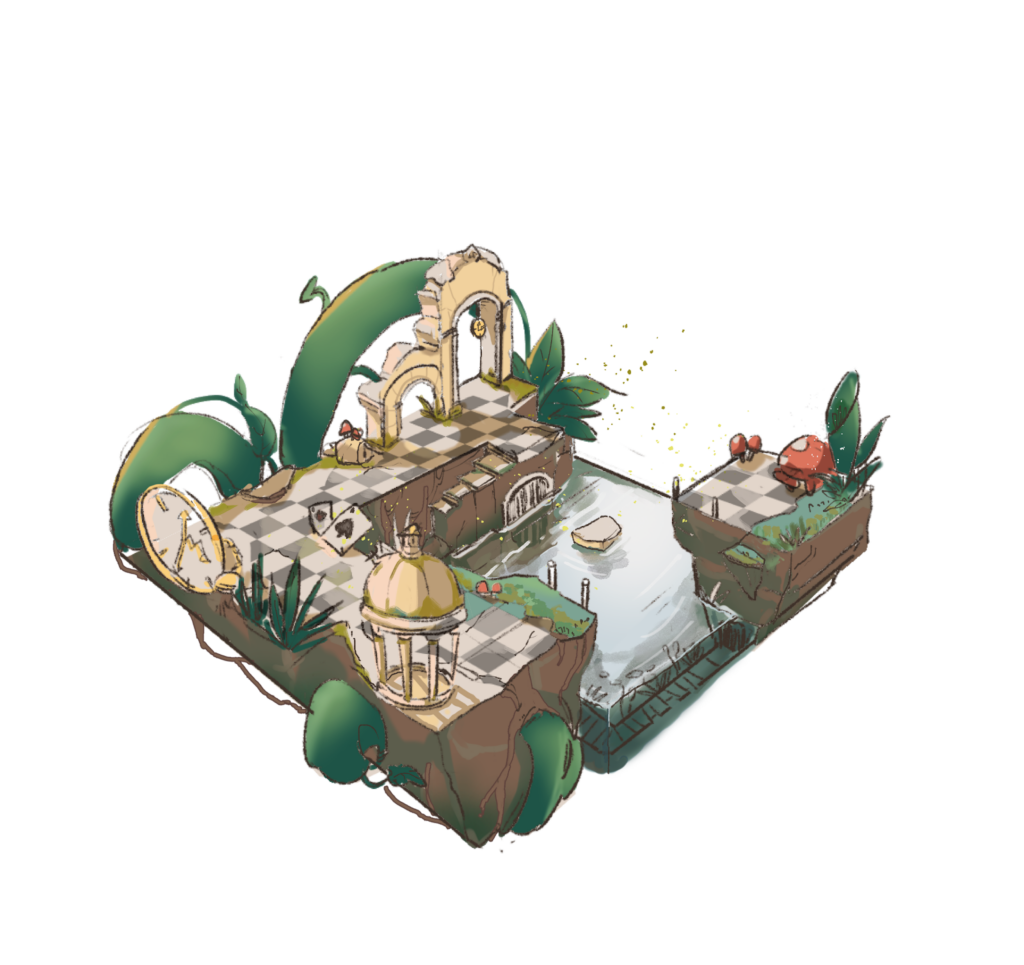
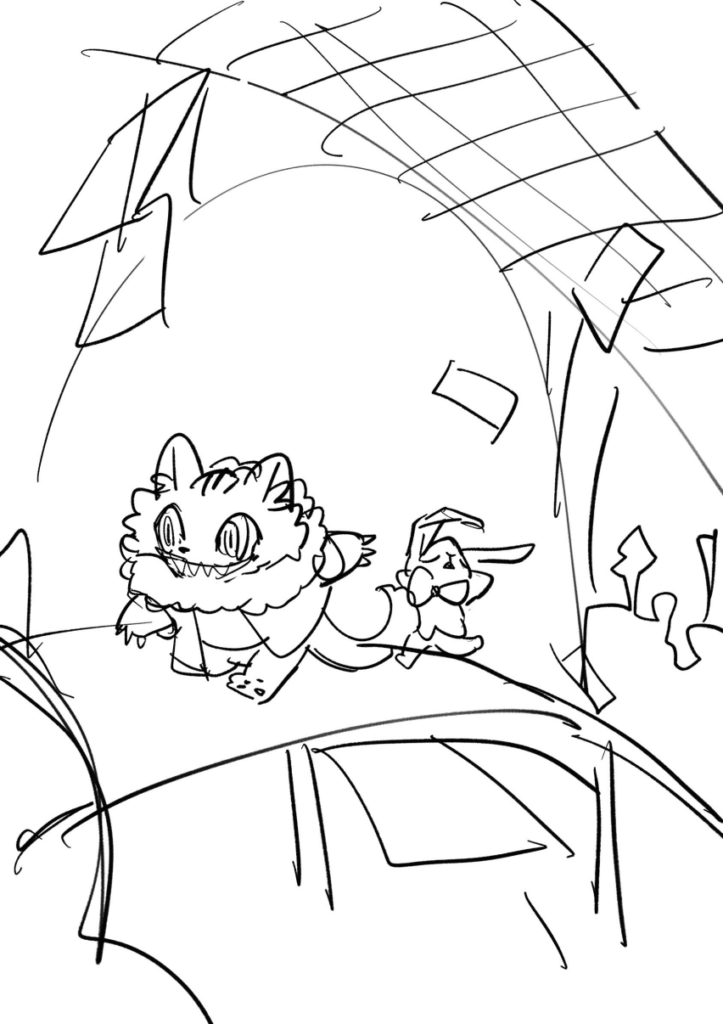
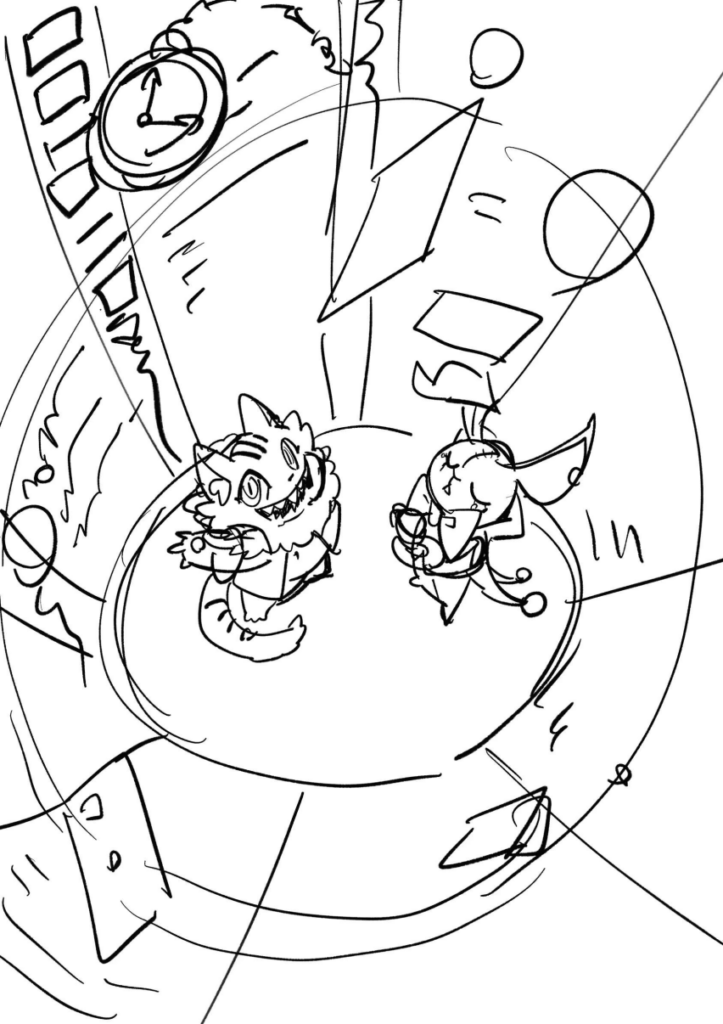
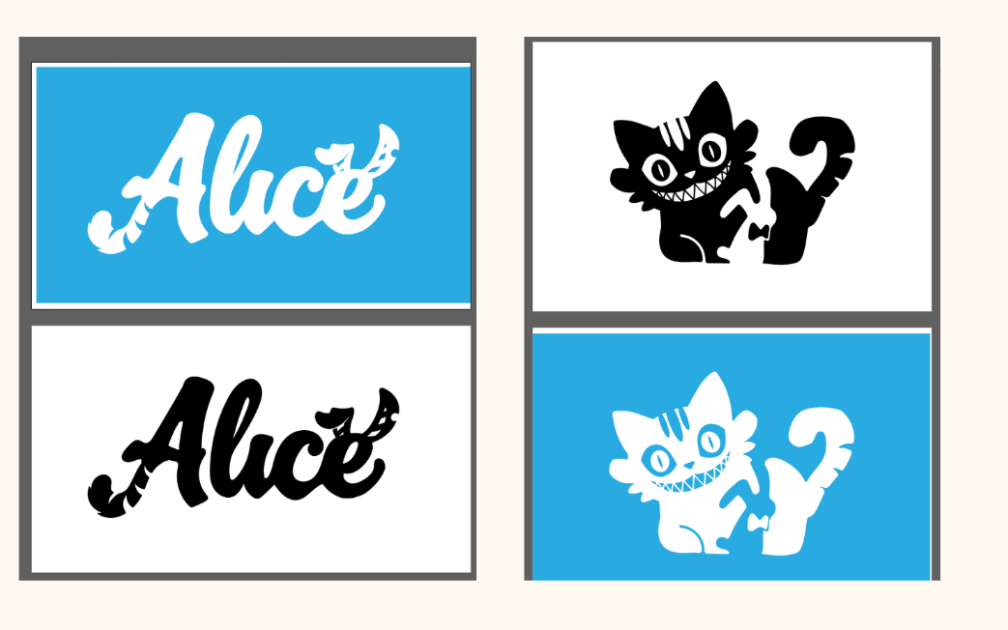
    Our artists did wonderful work for the concept design and UI design, as well as poster sketches and logo design for our team branding.

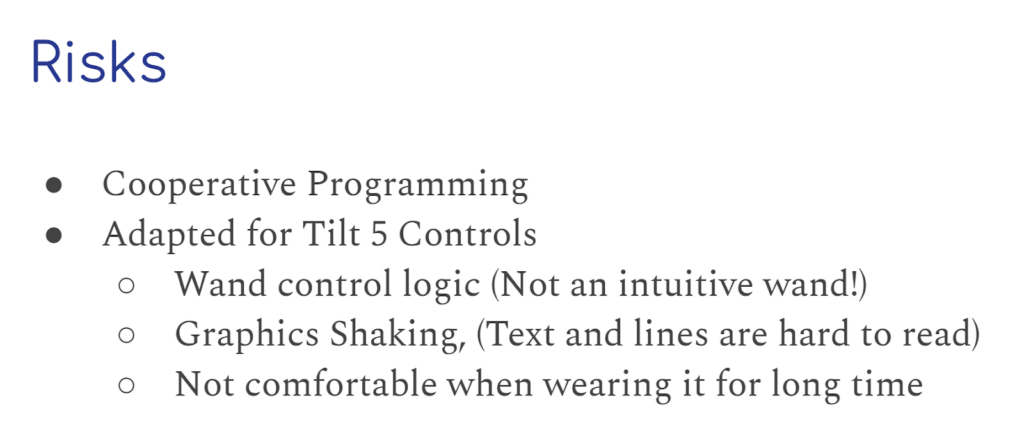
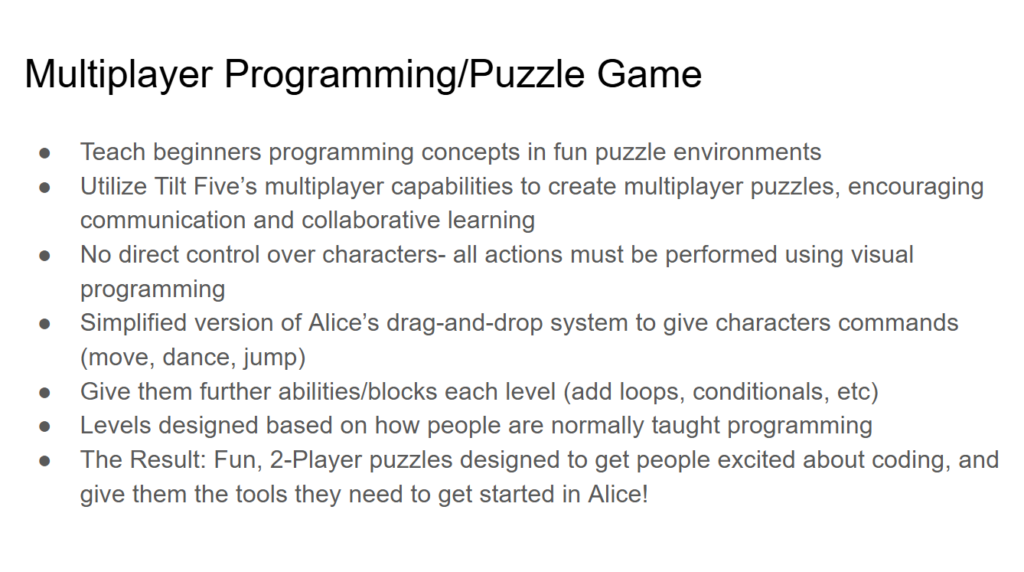
    We further narrowed down our design goals in the slides, as well as recognizing the risks and challenges we might face in this design:

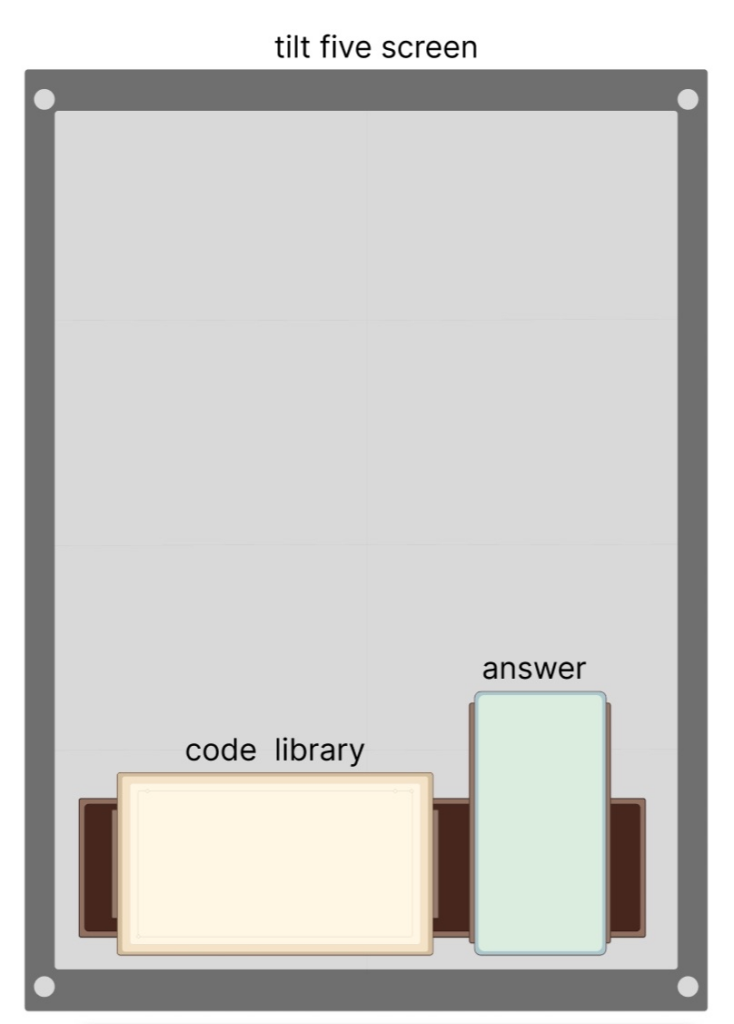
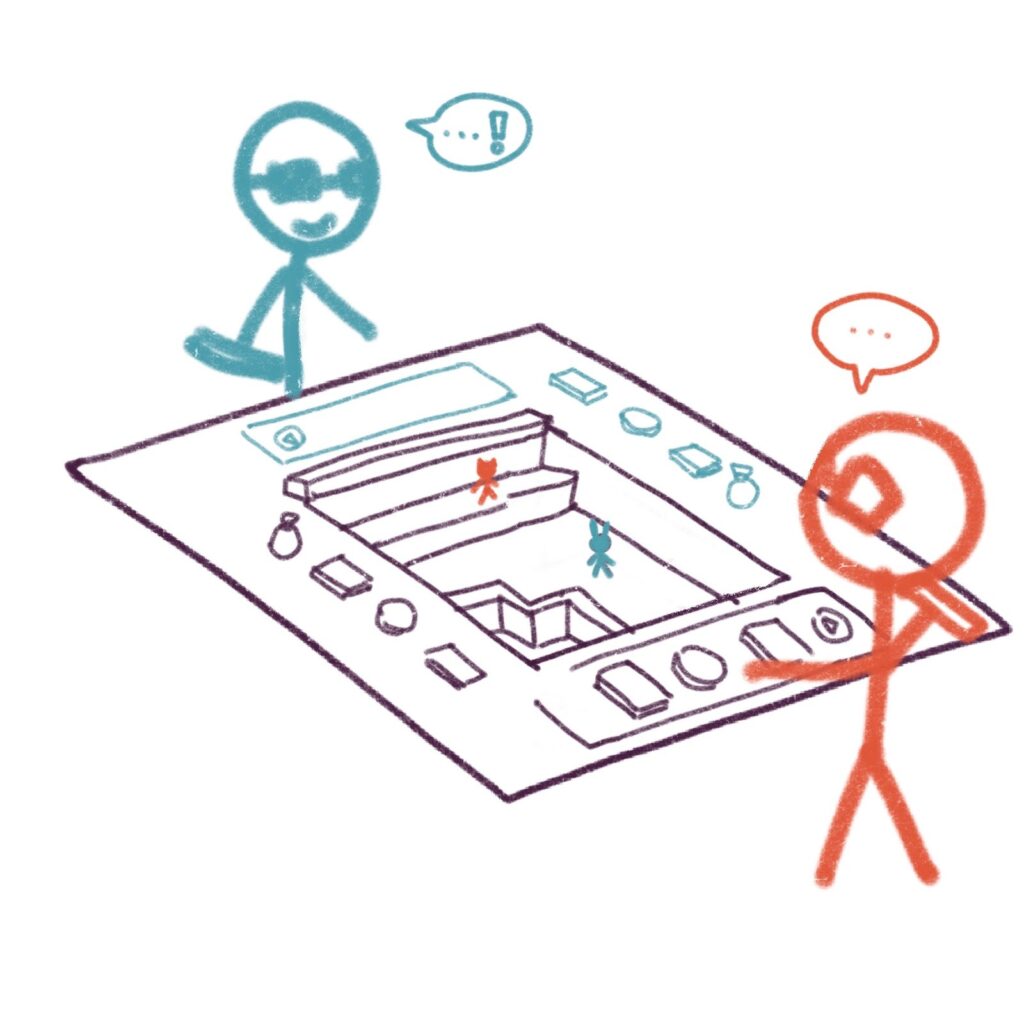
    During our meeting with Dave, Melanie, and Daniel, Melanie suggested avoiding UI designs that feel like 2D apps ported to Tilt Five and instead embracing the platform’s spatial and tactile strengths. Based on the fact that visuals are often shaky in the Tilt 5, Melanie gave some valuable advice to reduce text and make the interface more like tangible toys or board game pieces, which fits Tilt Five’s unique immersive tabletop feel. Therefore, we plan to let players drag symbolic tiles representing commands instead of 2D UI with code similar to what Alice has.

    Our clients also asked about how we envision kids working together in our levels. We answered that we plan to let each of the 2 players control their own character in the scene with code blocks. To help us get reference for our model, Melanie recommended Alice Together as an example that has already solved many two-player programming collaboration issues.

    Dave expressed concerns about how our presentation doesn’t quite show the audience what a level might look like or how the kids can learn from it. In order to narrow this down and present a clearer design idea during quarters, we began to do brainstorming after the meeting. We have several ideas on what computer science concepts our game could be teaching. We came across lists, memory, object oriented programming, etc. While having some creative conflicts on deciding what we should be teaching (logic vs. hardware concepts) and how much learning we should aim for (a few simple concepts vs. multiple concepts that have potential for more advanced learning), we finally decided to first make a mock/intro level based on a simpler concept (lists) just to get started.

  • Week 1

    Coming back from the winter break, we spent time getting to know each other and warming up. We spent the first few days:

    • Had a meeting with our advisor, Dave, and got advice on how to move 
    • Played Alice
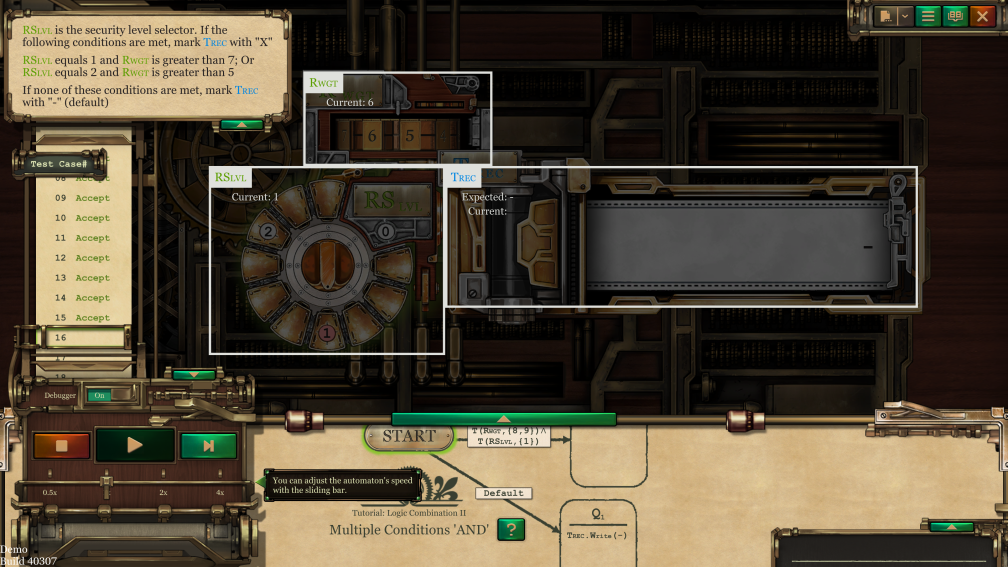
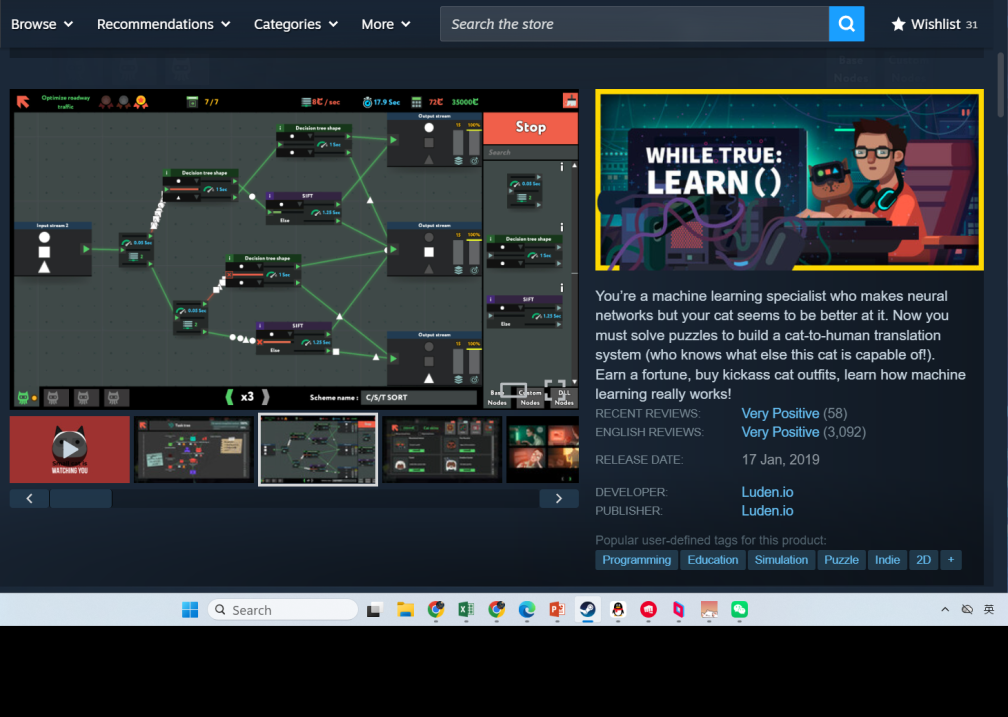
    • Played educational programming games, including Human Resource Machine, The Farmer had been Replaced, While True: Learn(), and Alan’s Automaton Workshop.
    • Waited for Tilt 5 set

    From speaking with Melanie during the West Coast Trip and meeting with Dave, we learned that they are pretty open to any concepts we might have. We assessed the skillsets of every team member, and decided to make a collaborative educational game.

    During the meeting with our advisor, Dave, and our clients, Melaine Lam and Daniel Abeshouse from the Alice Team, we pitched our game idea to them and got approved. Moving forward, our task is to keep narrowing down on our design ideas.

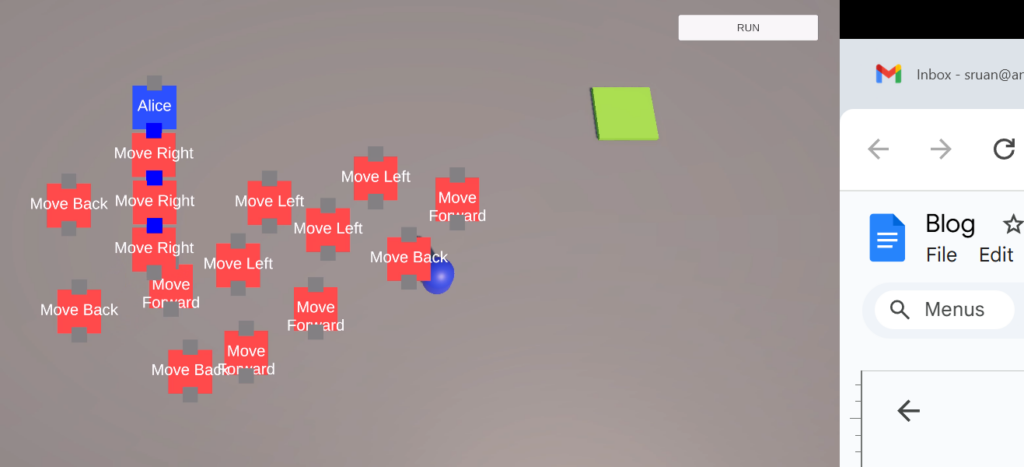
    The programmers also made a block-based programming prototype that runs on PC, in which dragging and dropping blocks would move an avatar.

    The blue capsule moves when we connect commands to it.

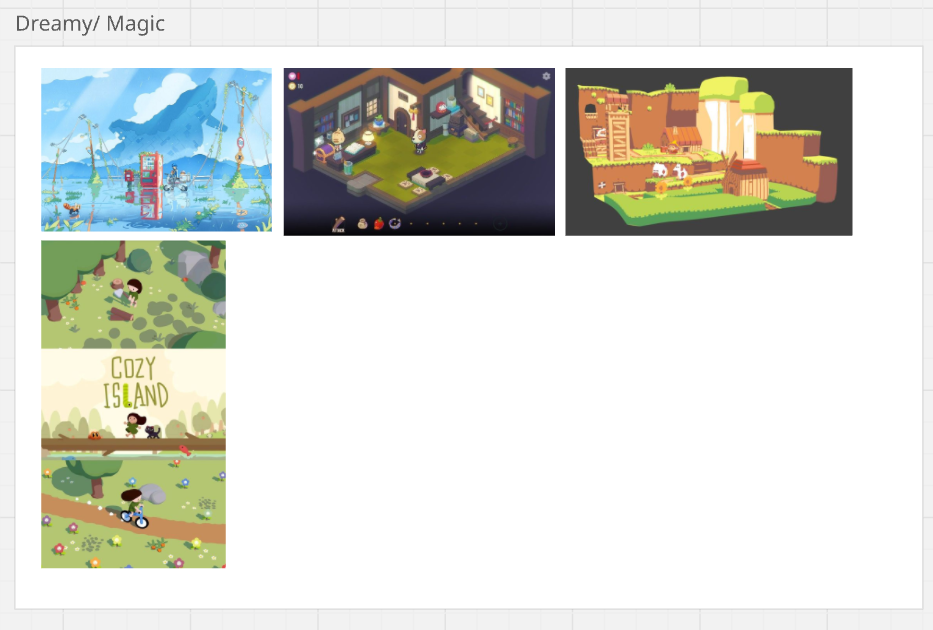
    The artists found some references for the visual style, aiming to build a low-pressure learning environment for children as well as keeping the whimsicalness of the Alice style.

    Next week, we aim to bring the prototype into the Tilt 5 to see how it works. For visuals, we aim to have character and environment concept art as well as some UI design.