Preparing for Our Second Playtest & Scaling the Experience
This week was all about gearing up for our second live playtest, deepening character storytelling, and strengthening the technical backbone of Kicks Lab. With testing at Life STEAM Male Academy scheduled for November 12, the team shifted fully into iteration mode: building new clients, integrating materials data, expanding narrative elements, and preparing the next playable build.
Design, Narrative & Audio Development
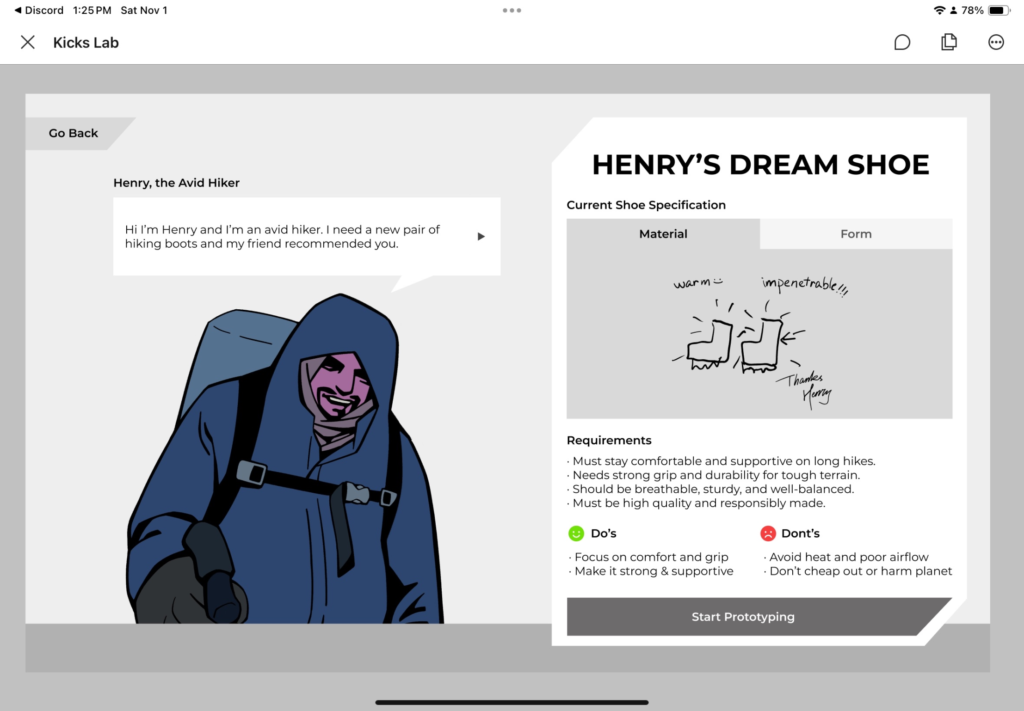
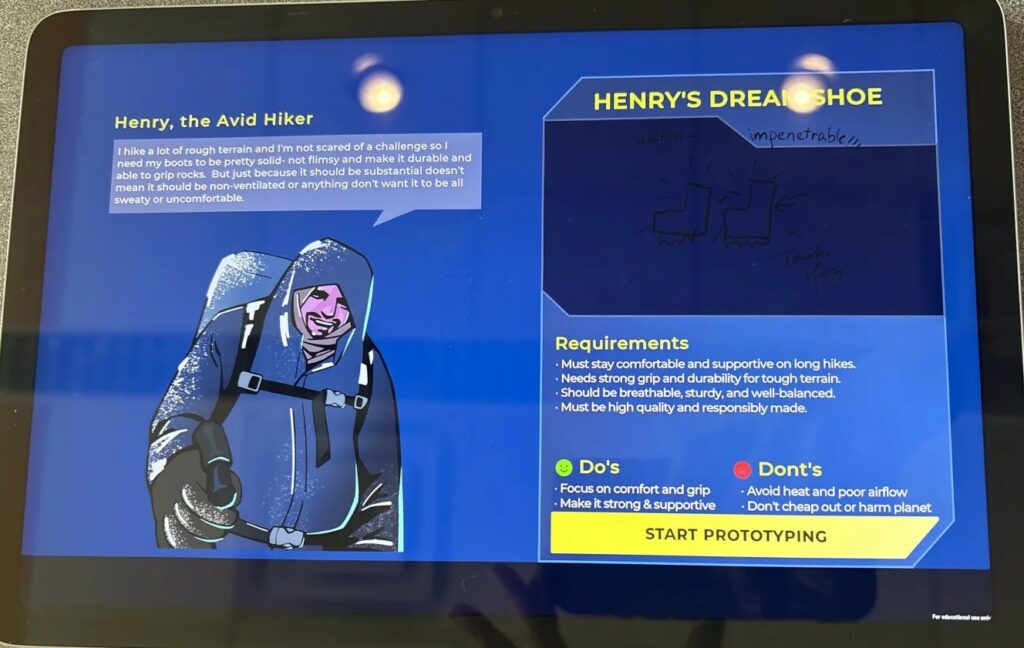
Character expansion took center stage this week. Our team developed three new profession-based clients, translating real-world job needs into footwear personality and performance requirements. The designs aren’t simply visual: each client carries a narrative, dialogue system, and gameplay-driven shoe requirements that teach materials science through storytelling.
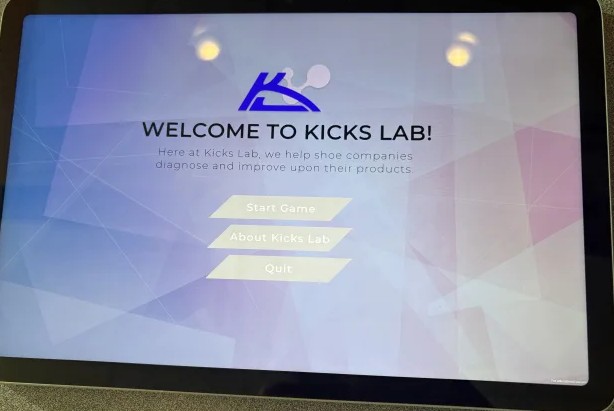
Sound also became a key asset in shaping world-building. The voice of Henry, our Hiking Client, was recorded this week, giving us our first fully voiced character interaction. Background music also entered early prototyping, with two original tracks composed for the startup menu to support immersion from the moment players launch the game.
Data Integration & Engineering Collaboration
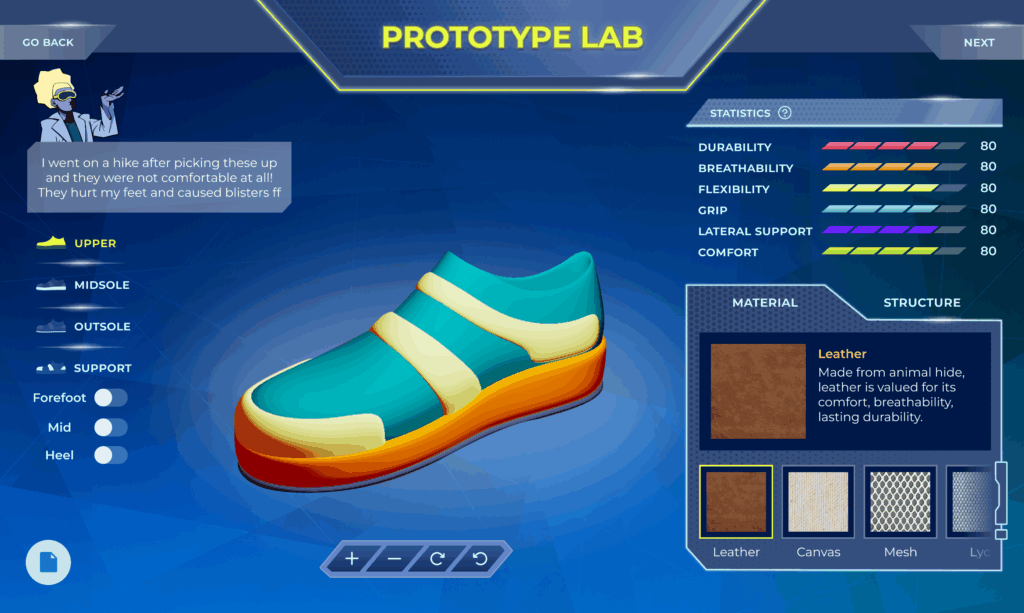
To further ground gameplay in real material science, we held a working session with ANSYS to interpret materials data sheets and define how metrics like flexibility, rigidity, and durability translate meaningfully into gameplay decisions. This bridges our core vision: making real engineering data playful, accessible, and intuitively educational for teens.
This collaboration marks an important milestone: moving from conceptual wireframing to numeric inputs that will shape mechanics, performance feedback, and the shoe-building process in game.
Iteration Planning & Production Alignment
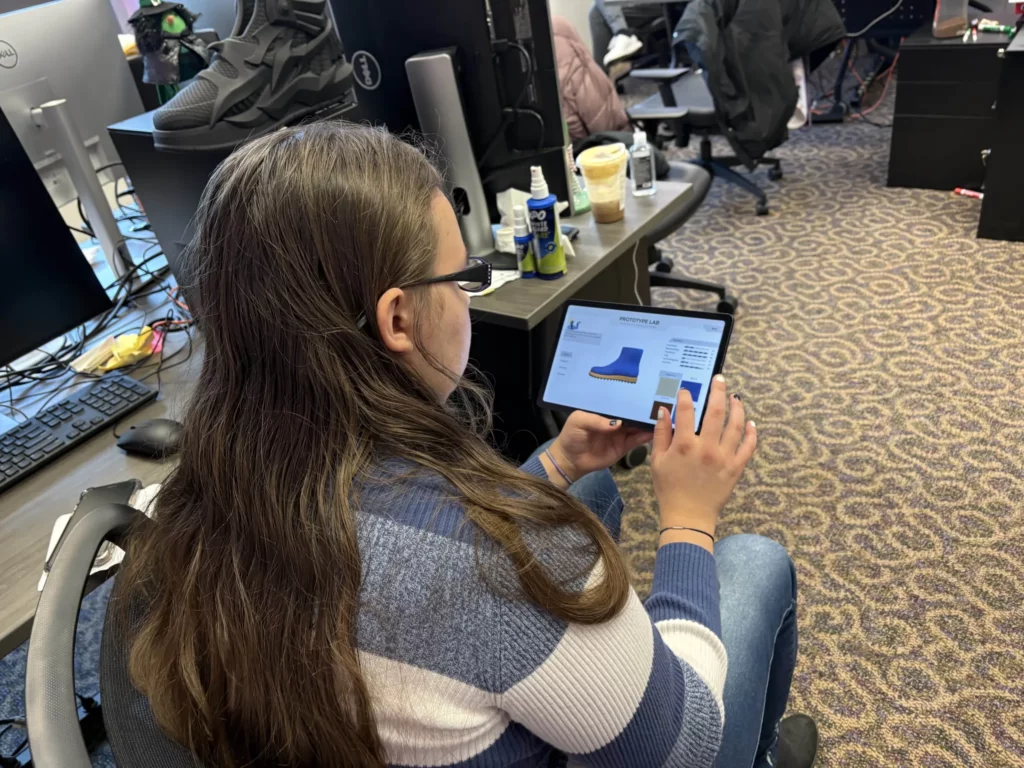
Preparing for another live playtest required tight coordination and clear division of tasks. A full sprint planning meeting was held to ensure that all components of the build: art, UI, audio, engineering, and narrative move forward in parallel without bottlenecks.
Key production focuses included:
- New client narrative and dialogue design
- UI updates informed by previous playtest insights
- Unity implementation of new art, sound, and menu music
- Integration of preliminary ANSYS data into the gameplay prototype
We also scheduled a post-playtest team alignment meeting to immediately translate live feedback into our next development cycle.
UI, Art, & Build Integration
Visual identity continued evolving this week: UI was refined with updated colors and layouts informed by real user interactions, ensuring clearer navigation and improved visual communication. At the same time, new client character concepts were produced with profession-specific design elements woven into their silhouettes, such as a nurse with a syringe motif and a skateboarder integrated with board imagery to communicate personality and function at a glance. Environment backgrounds and supporting in-game assets continued development to build out the world, while all new audio, UI, and visual elements were integrated into the Unity prototype, keeping the build current, cohesive, and fully playable as we move into the next playtest.
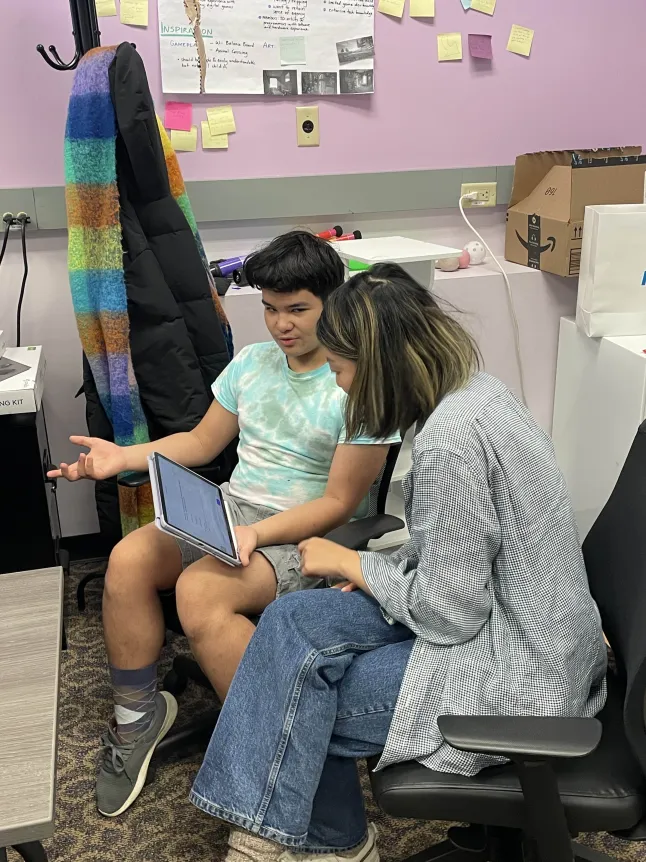
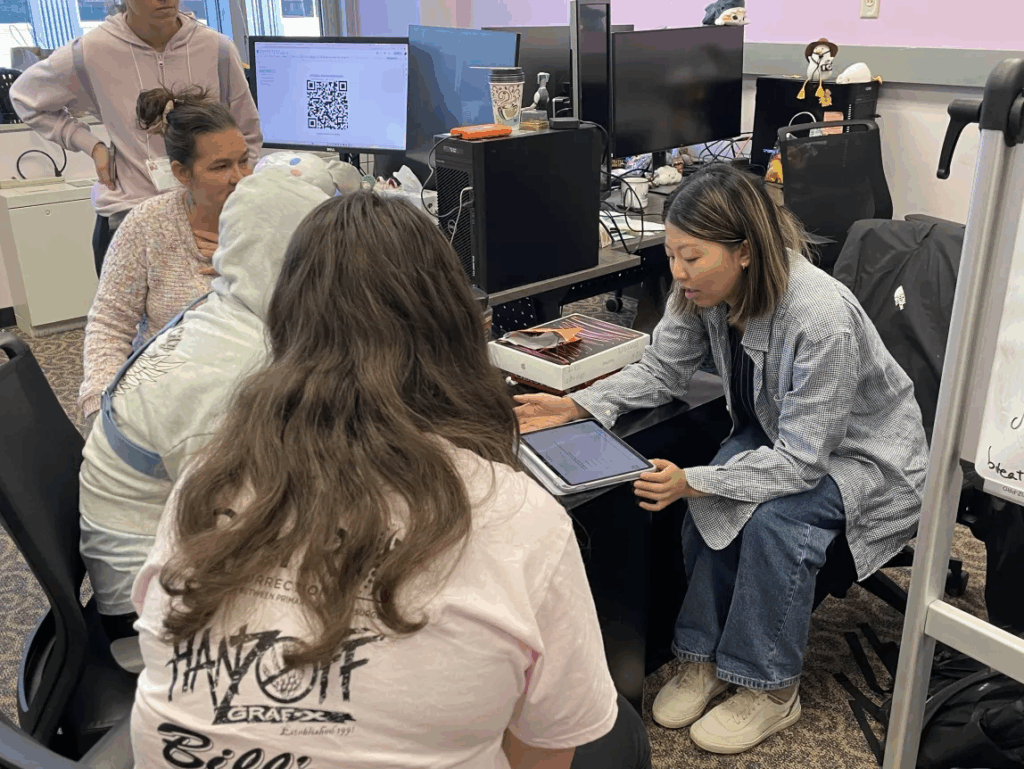
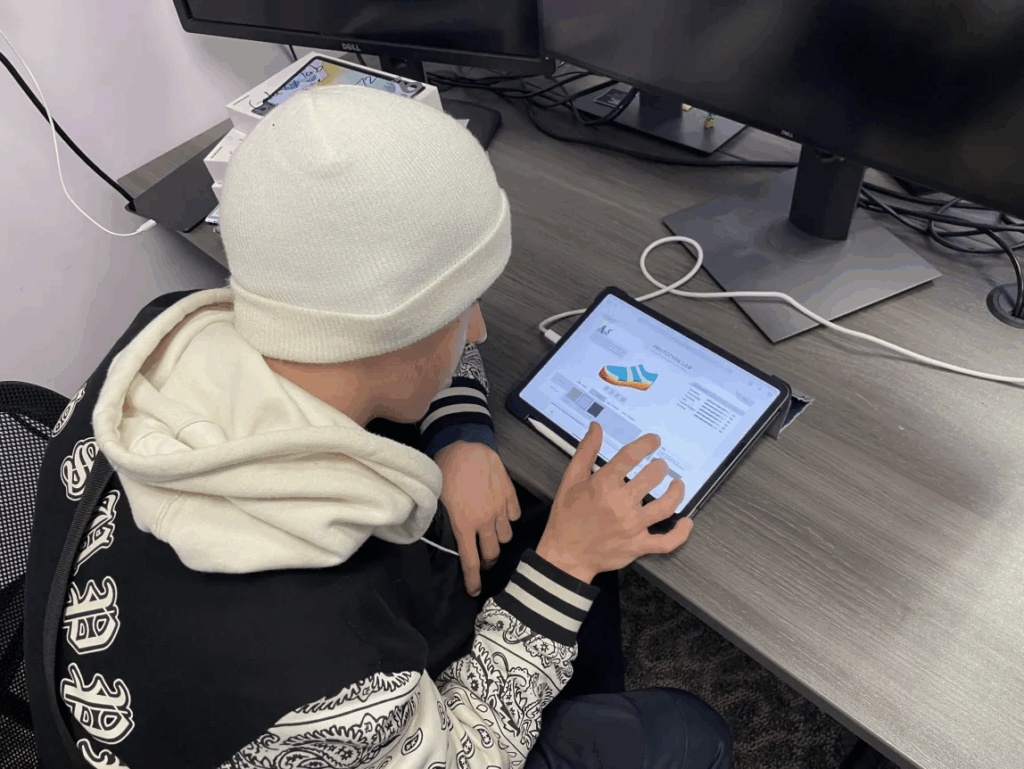
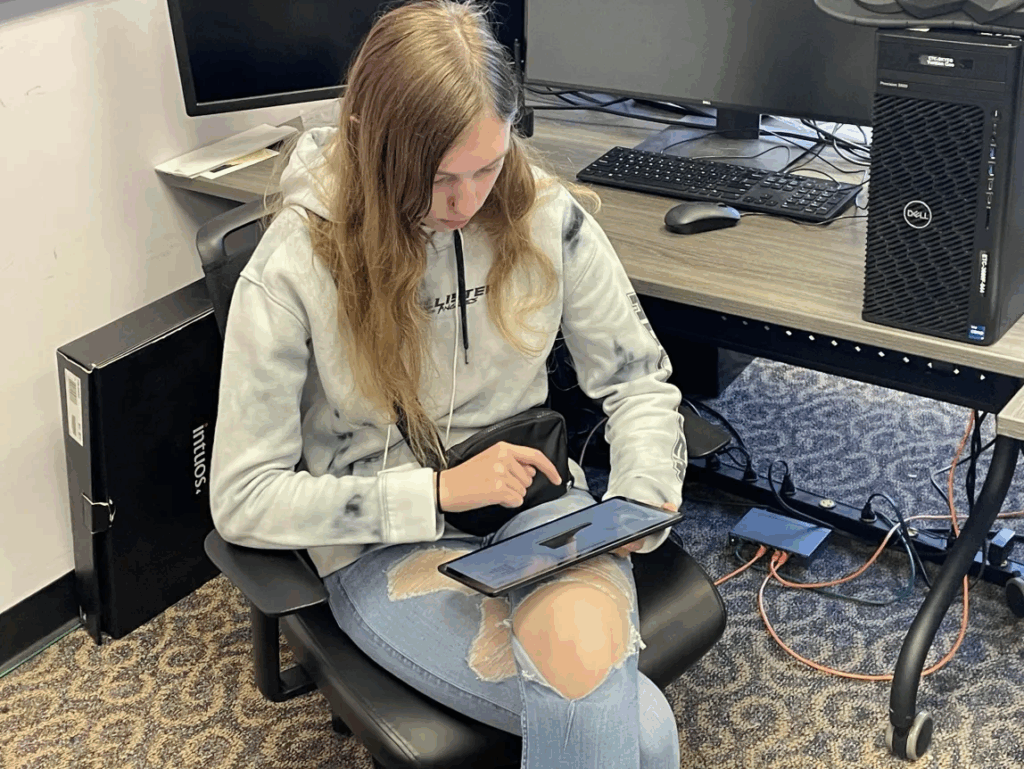
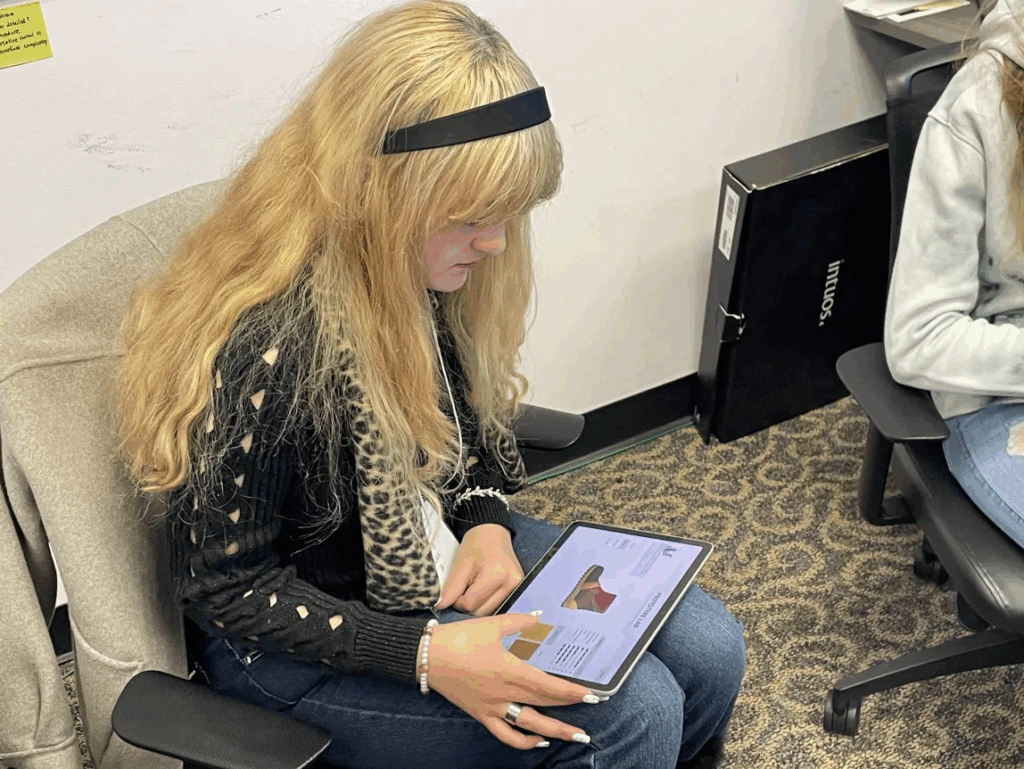
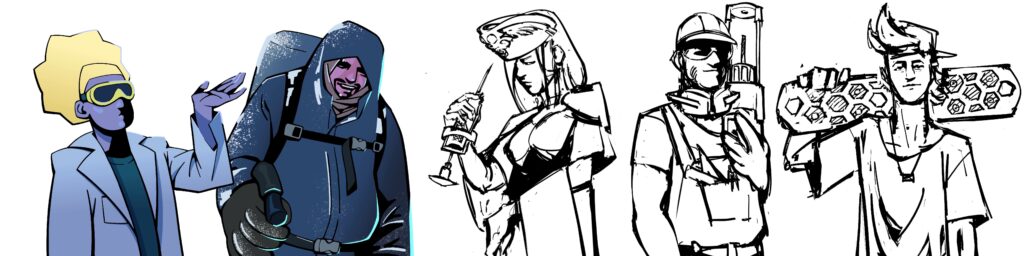
These updates move us closer to a cohesive world that feels both stylized and purposeful.
Looking Ahead
With Playtest #2 just days away, next week will be a focused sprint toward final polish and implementation. Our priorities are:
- Finalize dialogue and voice recordings for new clients
- Complete UI implementation and client art assets
- Integrate materials data into gameplay calculations
- Refine and embed background music and sound design
- Lock and deploy the next playable Unity build
- Conduct playtest and gather structured feedback for iteration
We’re entering one of the most exciting stages of development: where mechanics, storytelling, sound, and data synthesis merge into a single playable experience. Our next playtest will reveal not just how the game feels, but how well we’re delivering on our core mission: making engineering concepts creative, engaging, and understandable through play.
We can’t wait to put this in front of players again and learn from what happens next.