
As we prepared for our Soft Opening Presentation the team decided to set our final minimum viable product goals:
- Integrate the data matrix within the gameplay so the results were backed by Ansys provided data
- Playtest a paper resource “cheat sheet” to see if it eliminated pressure from the user to remember a lot of information and help support the UI
- Prepare for Soft Openings
Softs Week: Building, Testing, and Learning
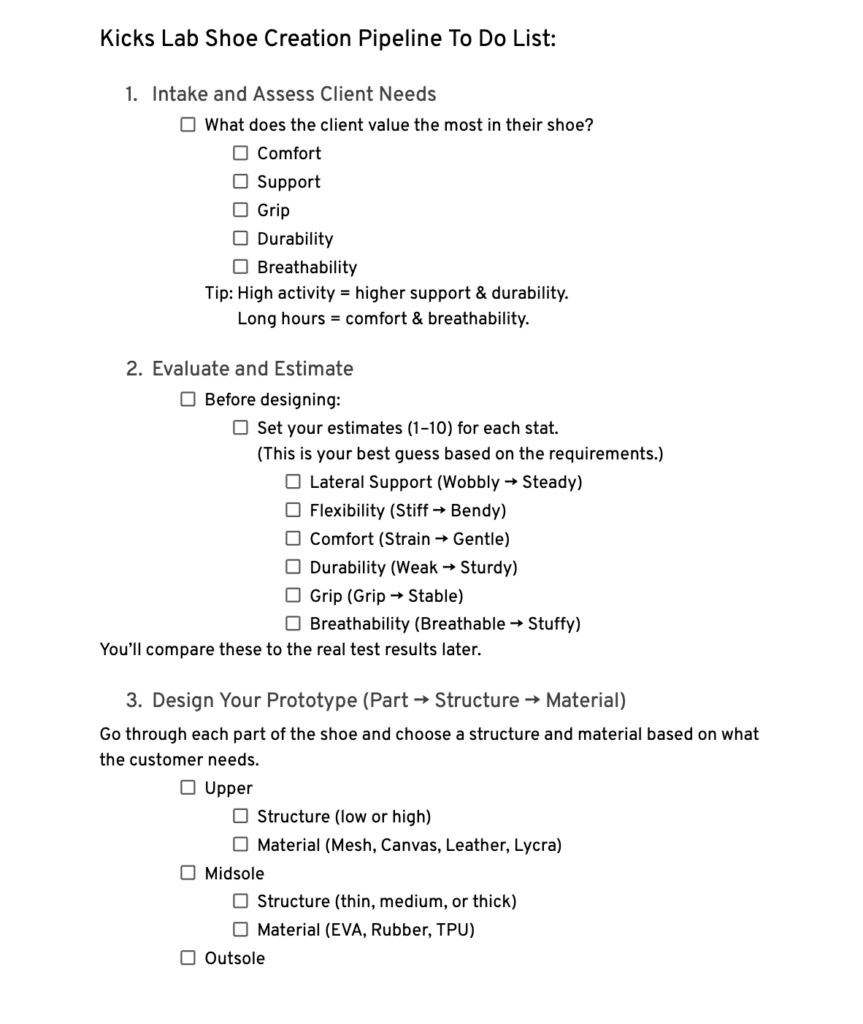
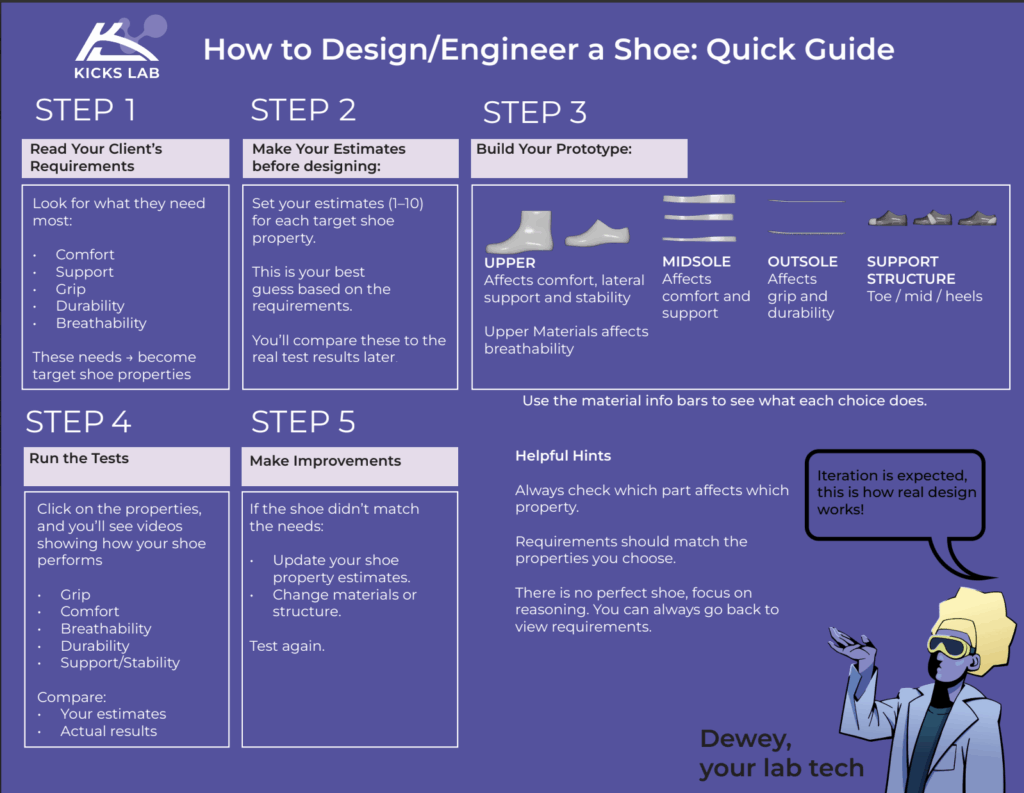
After an insightful meeting with our consultant, Dave Cuylba, the previous Friday, we walked into Softs week feeling nervous but ready to try out some new onboarding materials. Dave had floated an idea that stuck with us: with the depth of our material, players might benefit from a physical visual aid—something tangible they could glance at to ground their understanding of shoe materials and components.
Designing the First Facilitator Guide
So on Monday we created our first two versions of a facilitator guide. By midweek, we were ready to put it into AB testing. We brought it to fellow ETC students for a playtest, only to discover that no one wanted to read that much. Even when the information was helpful, the volume alone made it easy to ignore. That moment of collective “Ohhh…” was humbling and clarifying.
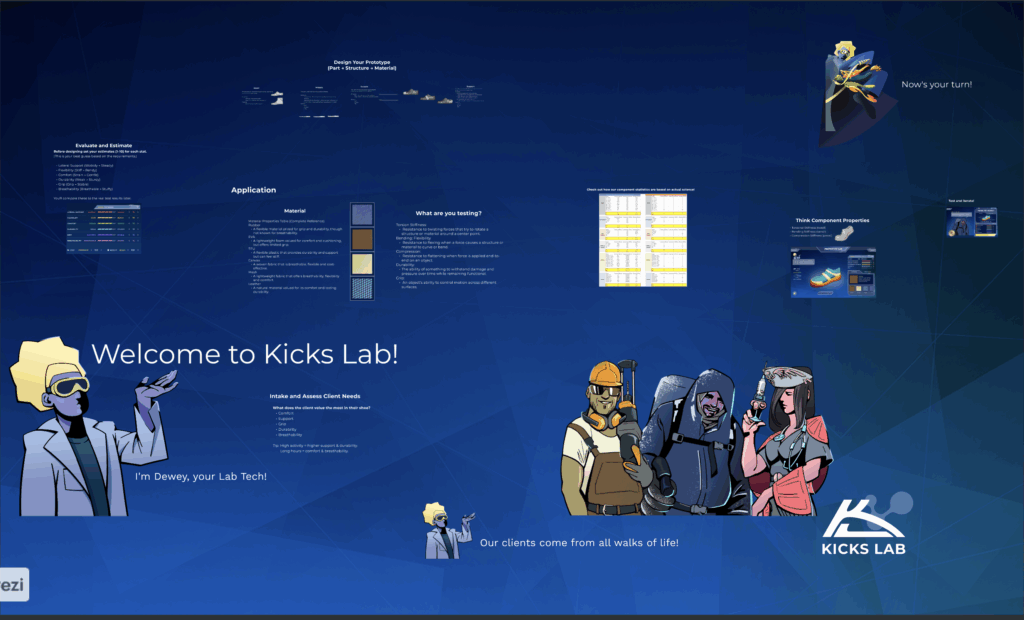
Instead of forcing a dense handout, we pivoted. For Softs, we decided we’d present the guide the way it was actually meant to be used—as a live, spoken facilitator lesson. The guests would learn by doing, and we would support them throughout their iteration process rather than expecting a sheet of paper to do the teaching.
Art Breakthroughs and Beautiful Characters
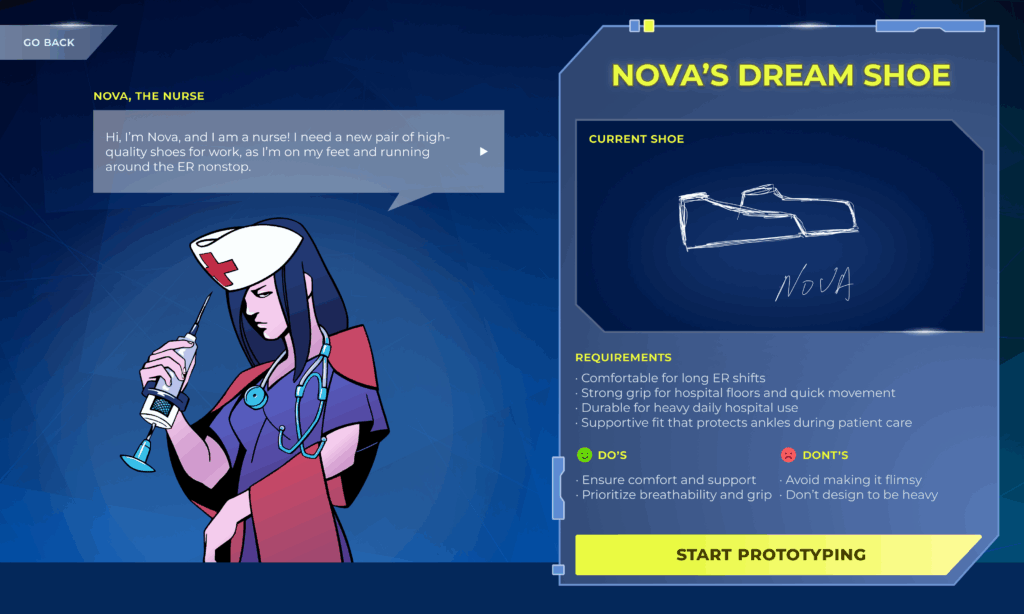
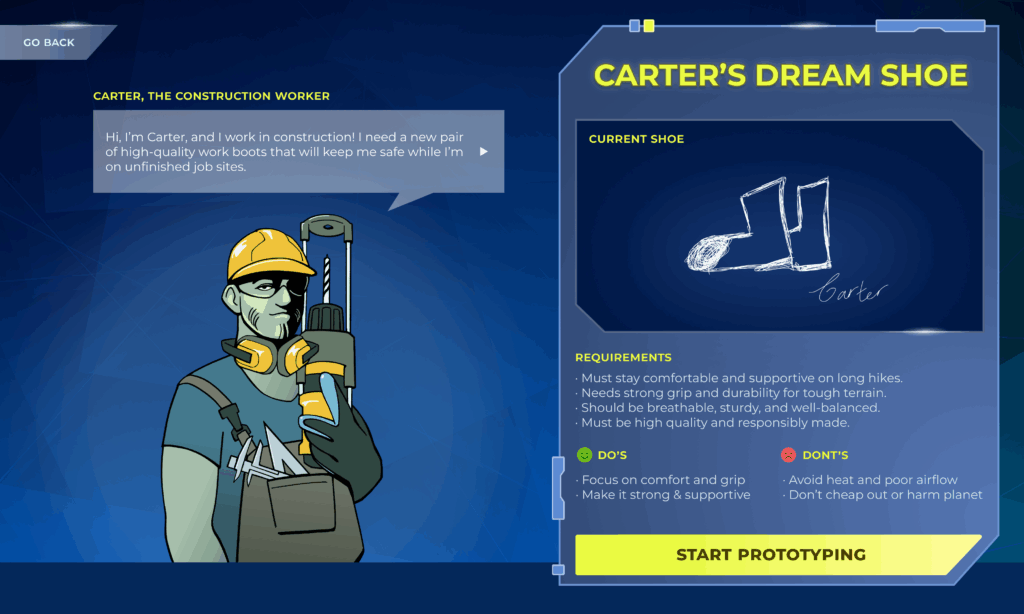
On the art side a few new characters took shape on the page, while the original ones were polished and finalized. Seeing them fully realized added a burst of excitement to the week—suddenly the world of the game felt more alive, more cohesive, more real.
The Data Matrix Challenge
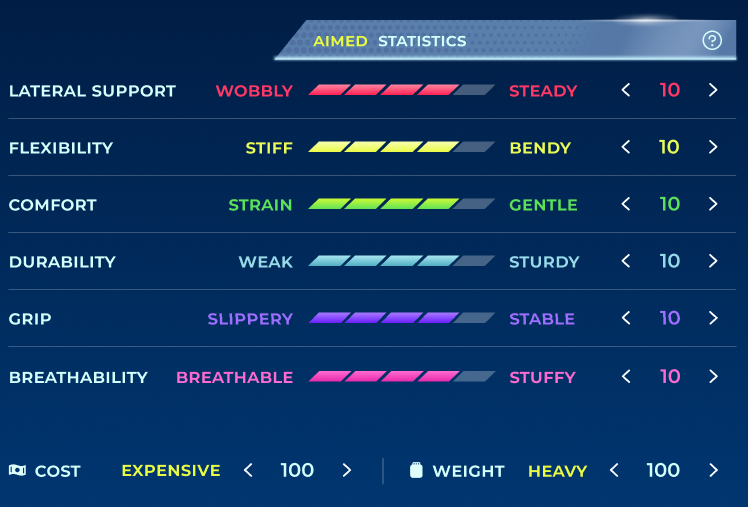
The biggest mountain we climbed, though, was integrating the data matrix into the backend of the game. This system, powered by abstract but realistic data from Ansys, was essential: it’s what ties player decisions to measurable, believable outcomes. Getting it to work was complicated—lots of trial, error, and small victories—but once it clicked into place, the difference was immediate.
Suddenly, designing a shoe wasn’t easy breezy anymore. Choices had weight. Results had nuance. The game felt not only more challenging, but more grounded. We spent additional time refining thresholds to keep it balanced but still demanding in a satisfying way.
UI Work in Progress
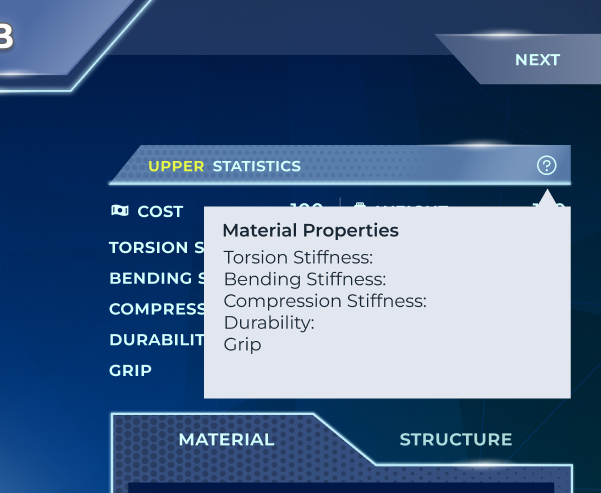
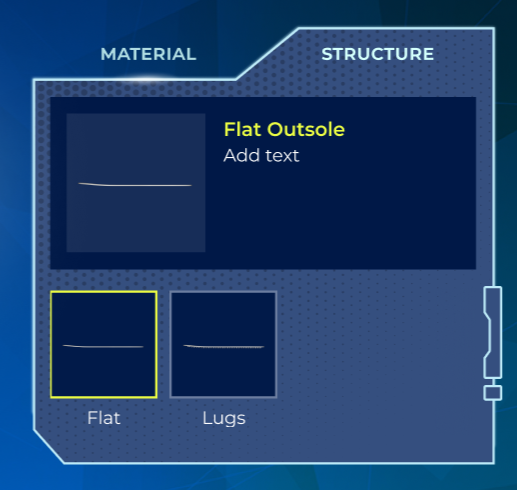
In parallel, we kept chipping away at implementing our new UI, which looks incredible and adds so much clarity and personality to the experience. Bringing those designs to life in the game continues to be a rewarding process.
Soft Opening Results
Friday we had our Soft opening presentation marking that we had made it through three quarters of the semester. Our biggest takeaways included:
- Suggestions to refine phrasing. An example of this would be adding material clarification: TPU = “flexible plastic,” EVA = “cushioning foam.” or simplify it to plastic and foam entirely. Also replacing the “Next” with a “Test” button.
- Figuring out how to frame the trade off measurements and how they could be more clearly represented. Along with overlaying the test results and portraying the individual part measurements versus whole shoe.
Overall it was informative getting to playtest the most recent iteration and especially rewarding to test out the integrated data matrix.
Next Steps
With Softs behind us, we’re shifting our focus to next week’s goals. The big ones: landing on our final deliverable, implementing sound, and developing the next round of character designs. The work ahead is substantial, but after a week like this—equal parts problem-solving, creating, and learning—we feel ready for it.
Softs Week tested us, but it also revealed just how much the project has grown. And now, more than ever, it feels like our game is becoming exactly what we hoped it would be.