

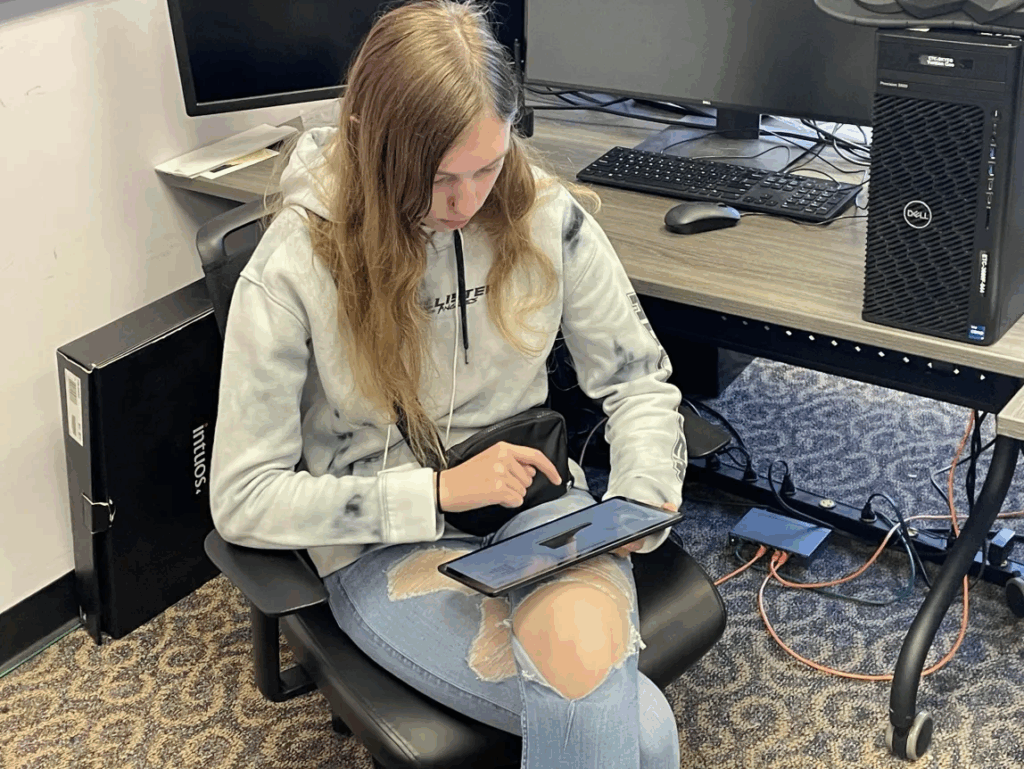
Week 9 was all about testing, tuning, and tightening the story we’re trying to tell through our game. After several rounds of development, we brought our prototype to the Life Male STEAM Academy on October 27th to see how our target audience would respond. The playtest turned out to be one of our most revealing yet not just in terms of usability, but in understanding how players made sense of what we were trying to communicate.
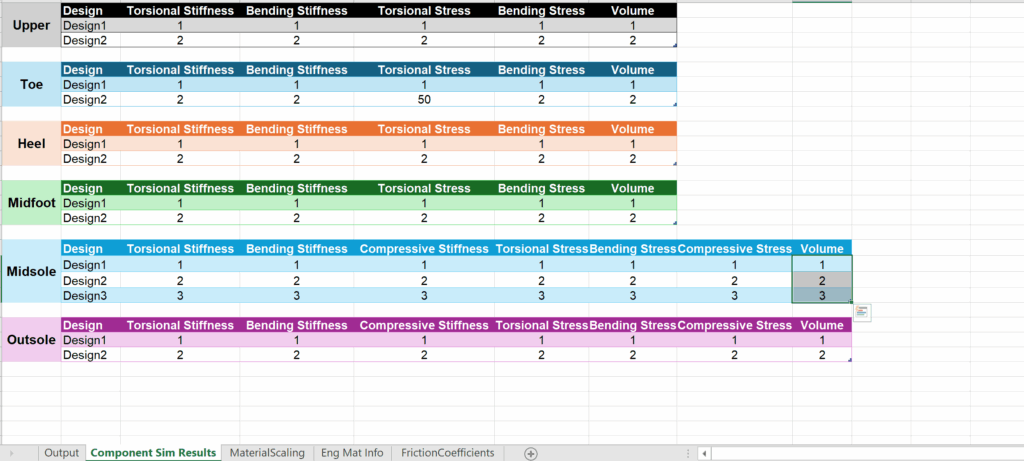
On the backend gameplay design and mechanics side, on Wednesday, we also received a mock data sheet from ANSYS (these numbers are placeholders which would be filled in after ANSYS completes the simulations) the current excel sheet demonstrates the parameters used to determine the shoe properties, i.e. what are we looking at in order to determine whether a shoe is durable or not.
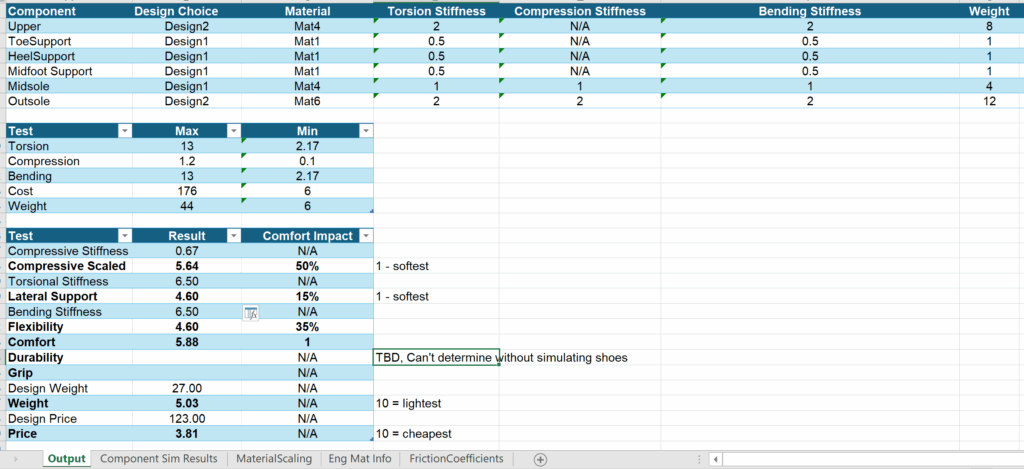
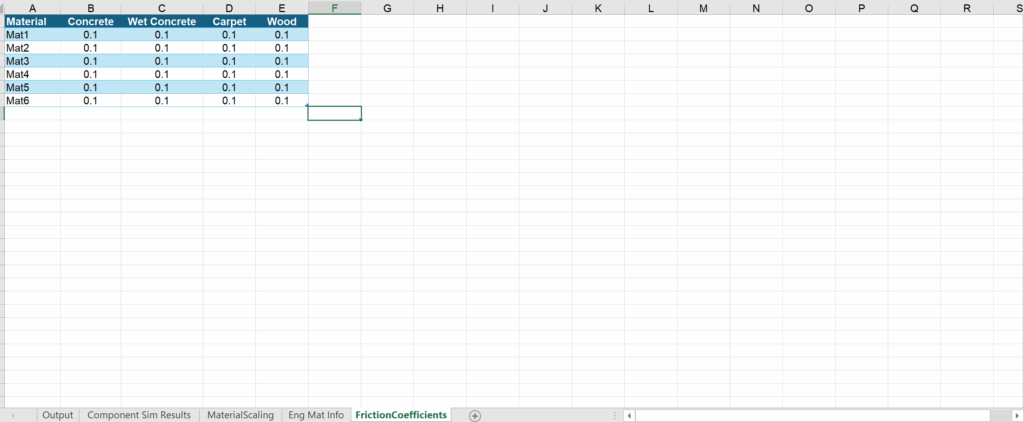
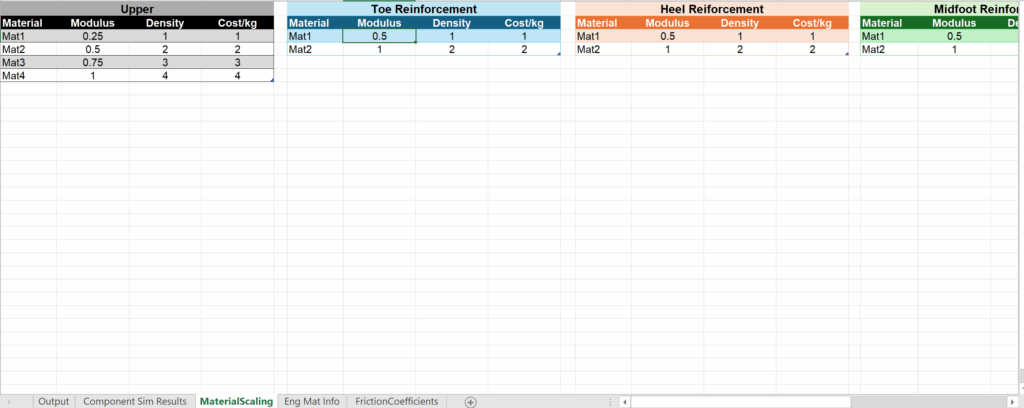
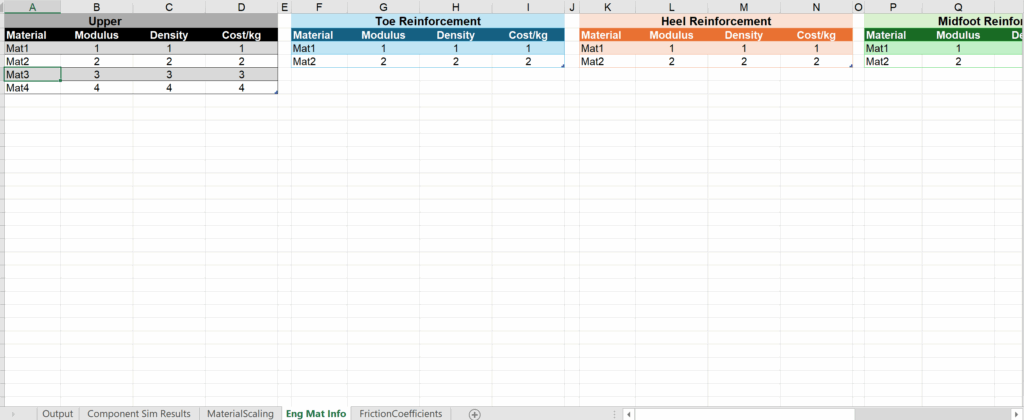
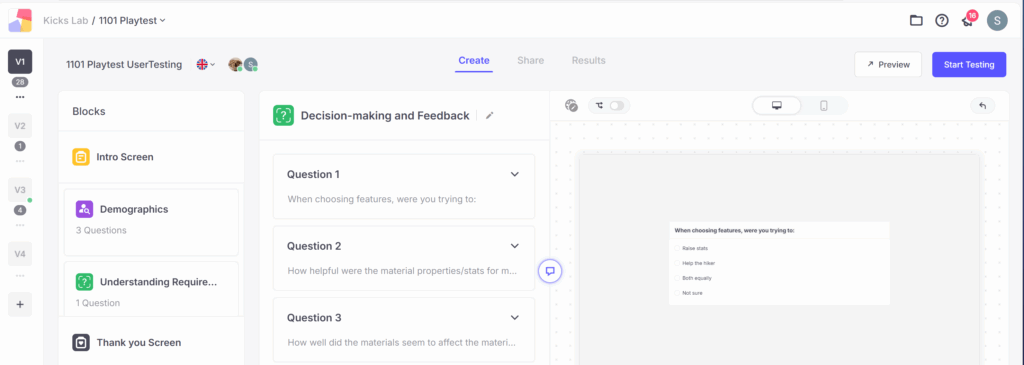
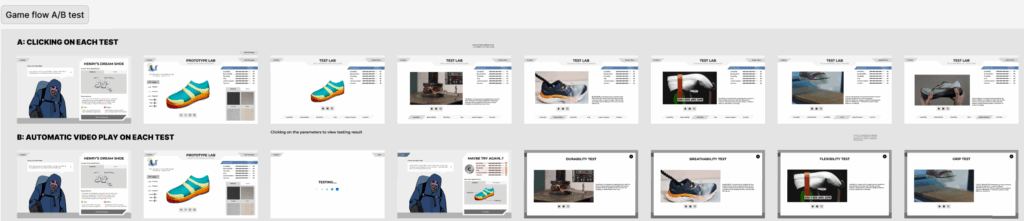
Leading up to Saturday’s playtest, we updated our gameplay flow based on comments we received from playtesting with Life STEAM Male Academy and the refine playtest workshop. We created a very detailed user survey and AB UI design test, to roll that out to our users during playtest day.
The first questions that came up were deceptively simple: “What’s the narrative? What did you do? What is this experience about?” It was a good reminder that, even in a game centered on design and science, the story matters. Players need a clear reason to care about what they’re doing. Once they understood that their goal was to help a hiker who needed better shoes, something clicked. They began to describe the experience in their own words: “helping somebody who has a specific goal,” “customizing shoes for someone,” and “a hiker who needs to go on rough hikes.” The customer’s story became their motivation, and they naturally started connecting choices to real-world needs like grip and water resistance.
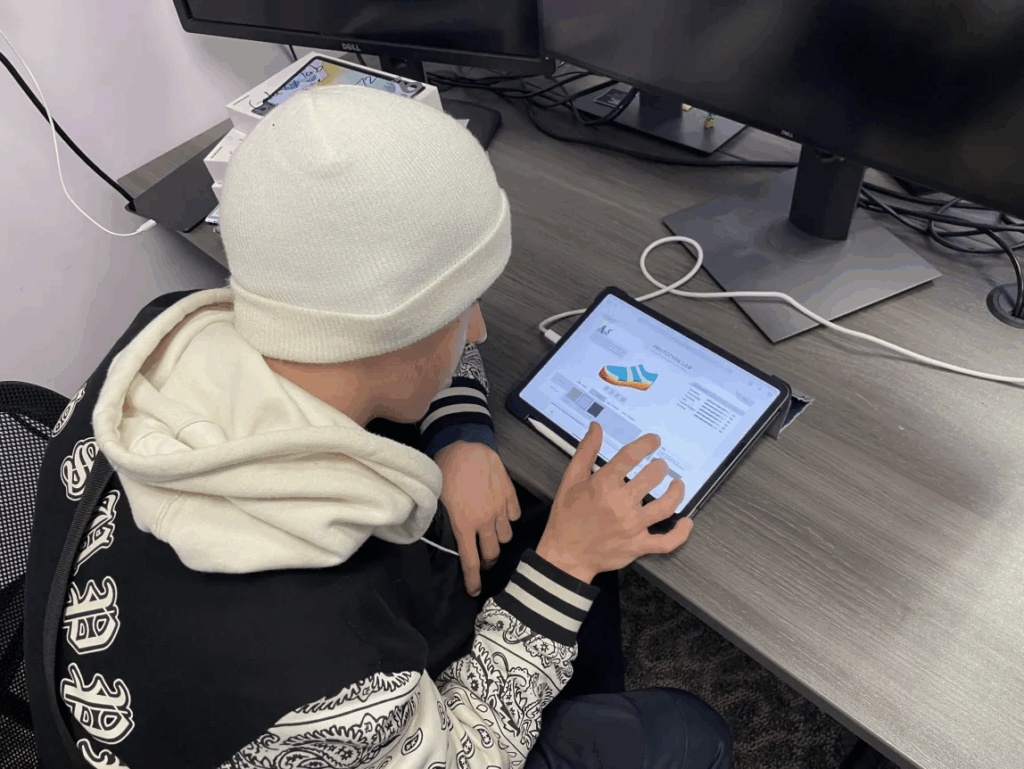
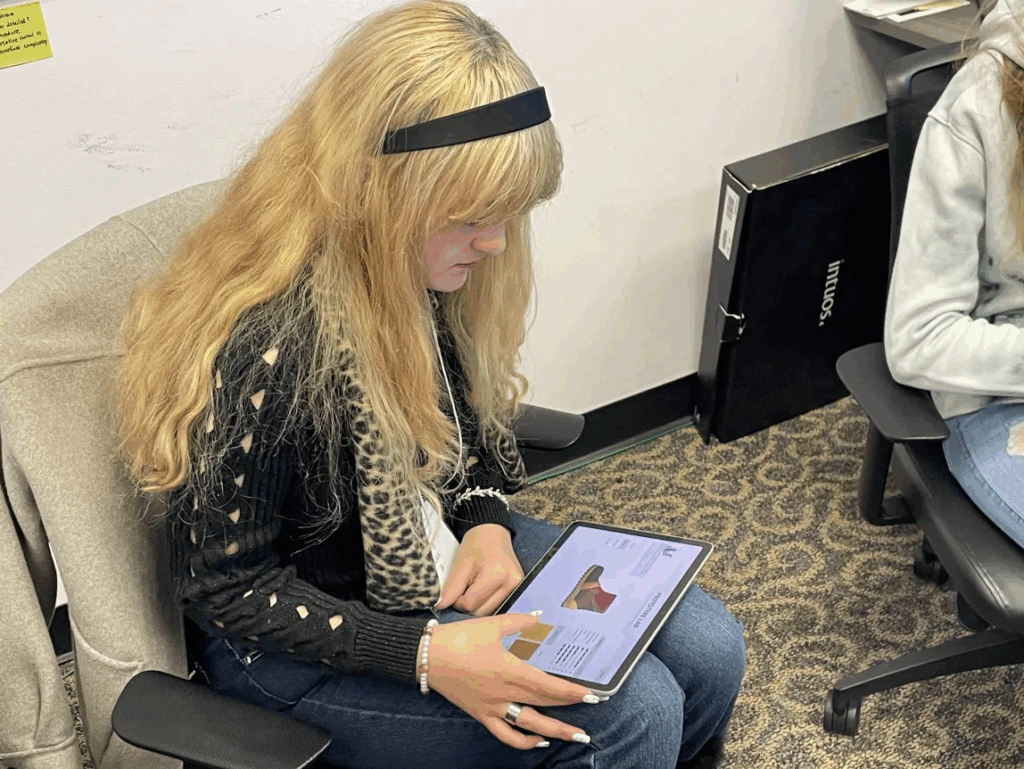
Some players, however, approached it from a more mechanical angle. They described the process as “trial and error” choosing materials to see what happens rather than thinking about why a particular material might work best. That divide became one of our biggest takeaways: players were clearly experimenting and engaging with the system, but the scientific reasoning behind their choices wasn’t always translating. When they encountered terms like TPU or EVA, many were curious but confused, asking for short explanations or visual cues to help them connect what they were seeing to real materials.
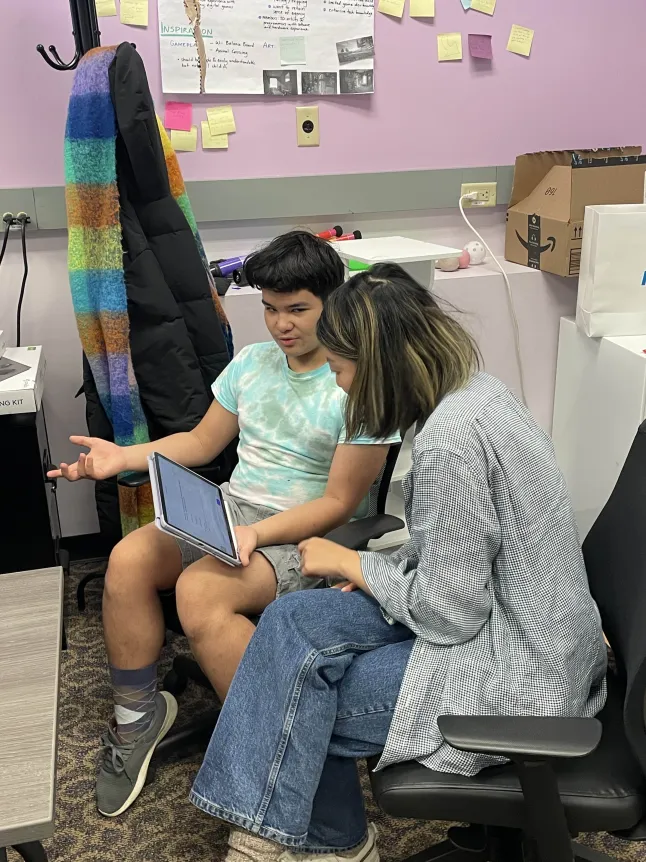
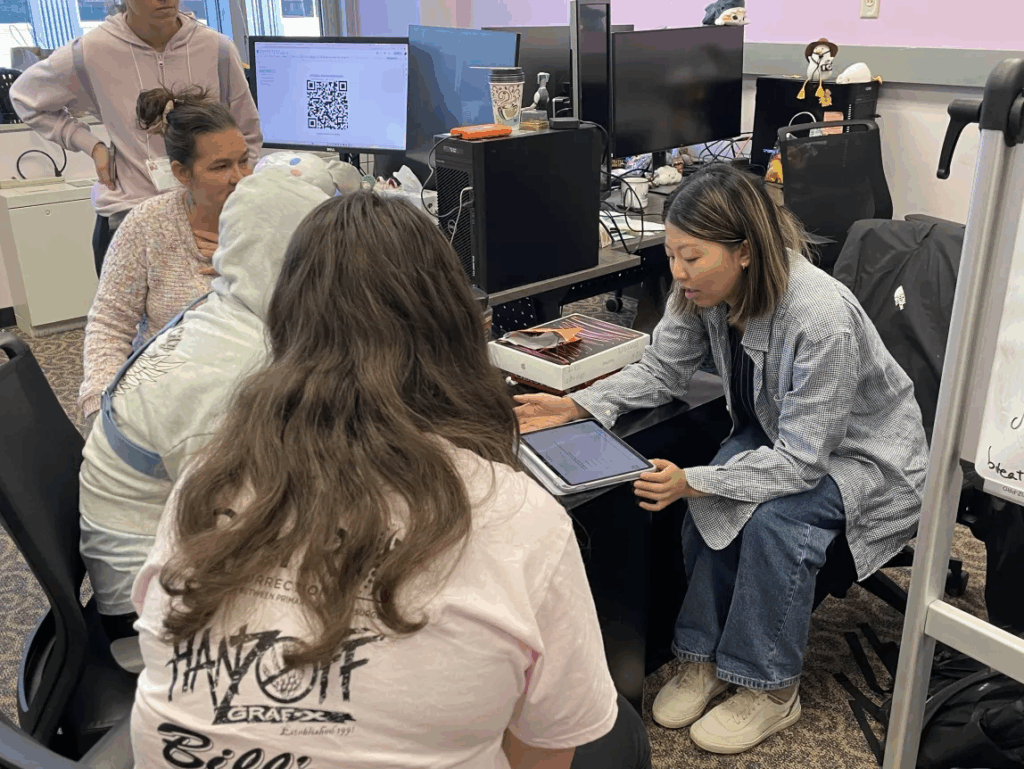
When asked how familiar they were with hiking shoes, most didn’t have direct experience but related through other footwear they knew: roller skates, Timberlands, work shoes, or even prosthetics. They understood functionality, even if the context was different. And when we asked how relatable the hiker felt, they said “mostly relatable” everyone had hiked before in some way, even if it was just a walk in the park.
The students also gave us practical feedback about how to make the experience feel more alive. Some wanted to see a reminder of the hiker’s goal throughout the game, like a small visual or note in the corner. Others wanted a money system to simulate trade-offs in design: how higher-end materials might cost more or yield better results. There were even discussions about pacing and time pressure: a few liked the idea of deadlines, but most said that strict timers could make the experience stressful, suggesting a more flexible “day system” instead.
When we asked what guided their decisions, nearly everyone pointed to the stats bars. They wanted to help the hiker, to raise the numbers and balance trade-offs. Yet several mentioned that the slider looked interactive when it wasn’t: something we immediately noted to fix. For some, the connection between materials and stats felt strong; for others, the impact seemed too subtle. Still, the general feeling was that the feedback loop — test, fail, adjust, and test again: felt fair and rewarding. Failure wasn’t discouraging; it was part of the process.
By the end of the session, many said they understood more about why hikers need specialized shoes. They talked about ankle support, comfort, and how certain materials made a shoe sturdier or more protective. Some even began thinking like designers: about balancing cost and performance, or about which features would matter most to different users. One student said they’d design shoes for firefighters next time; another imagined a boot that could adjust to the terrain.
The playtest also gave us a fascinating glimpse into how players’ existing mental models shaped their understanding. When asked about “functional shoes,” they listed everything from basketball sneakers and dress shoes to nurse shoes, Heelys, and gardening boots. They spoke about features like traction, breathability, insulation, and comfort: and even brainstormed wild ideas like temperature control, built-in massages, and wall-walking shoes. It showed us that kids are already thinking in terms of trade-offs and innovation; our challenge is to channel that creativity into a clearer understanding of material science.
Between two different prototype flows we tested: one with clickable individual simulations and one that played as a single video: players overwhelmingly preferred the first. They liked being able to interact, make decisions, and control what they tested. The second felt too passive, like watching a demo instead of doing science.
After the playtest, we regrouped to figure out what to tackle next. We decided to replace the confusing slider with a progress bar, and we’re exploring adding numbers or icons to make it even clearer. The upper support section is being reworked so that three design elements can be toggled on or off at the same time. We also revisited the “Testing Lab,” debating whether it should stay interactive: showing different shoe properties: or transform into a short cutscene that transitions to a results page. Whichever route we choose, the end page will include both success and failure states, supported by qualitative feedback like “Hey, TPU is this!” paired with visuals to reinforce learning.
Later in the week, we prepared updates for the 10/28 faculty meeting, focusing on how our onboarding and educational flow tie together. On 10/29, we met with Ethan and Chris from Ansys, who shared data mock-ups that will help us calculate shoe performance. We learned about parameters like modulus, force coefficient, density, cost, and volume: key ingredients for turning design intuition into measurable outcomes.
By the end of the week, we felt like we’d bridged two important gaps: understanding how players perceive meaning, and learning how to express that meaning through better systems and feedback. The students at Life Male STEAM Academy reminded us that clarity, curiosity, and a sense of purpose all need to walk hand in hand. Our next steps will focus on giving them the tools: visual, textual, and interactive: to connect what they’re doing in the game to the science that makes it real.