This week, we focused on preparing for Softs while continuing to improve and connect different parts of the experience. On the implementation side, we completed Jim’s tripping animation and finished setting up the lighting for the Jam-O-Drum room. We also finished several important parts of the clock room, including the virtual window and the flower pot.
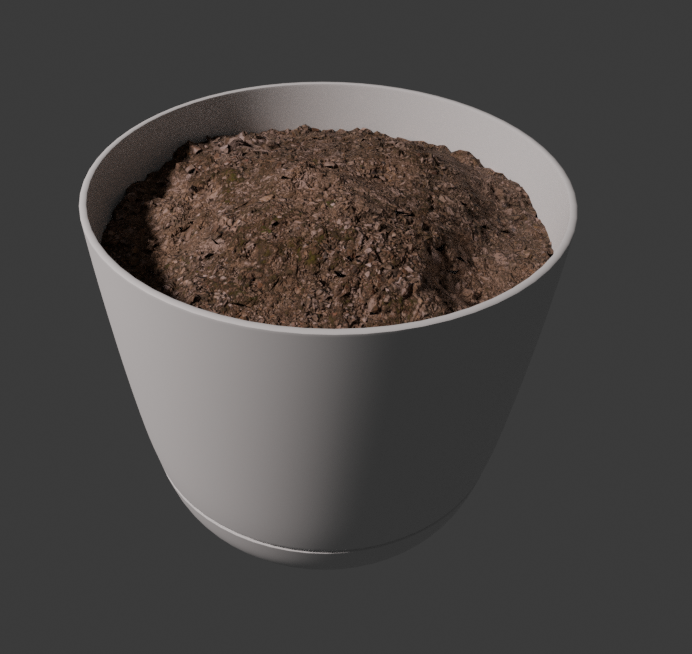
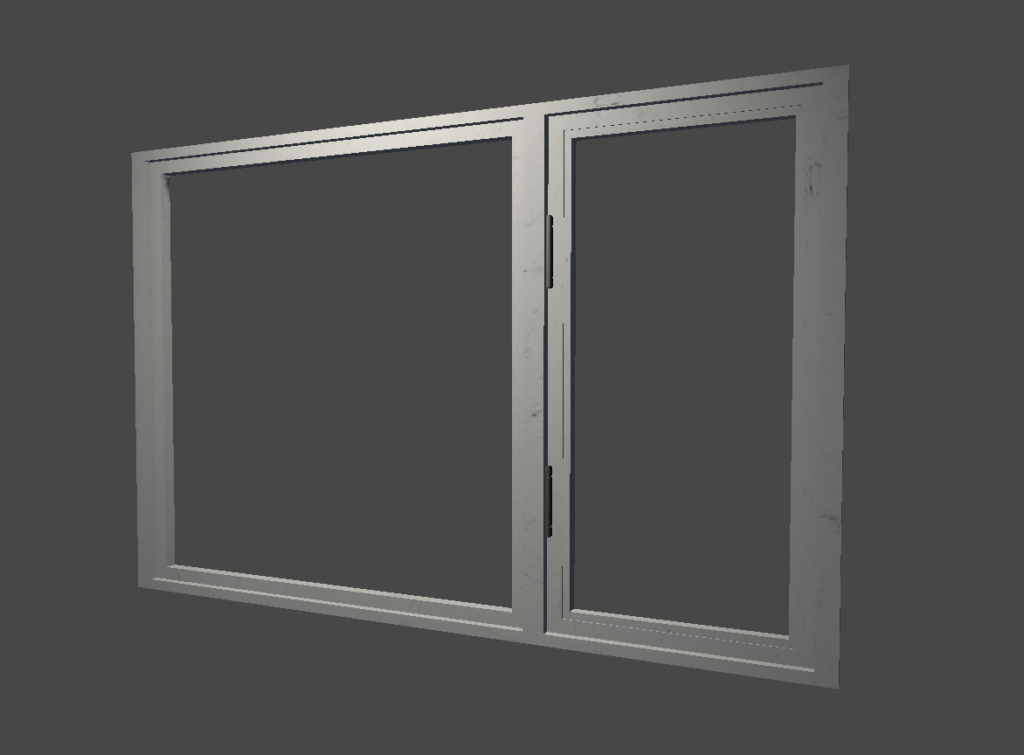
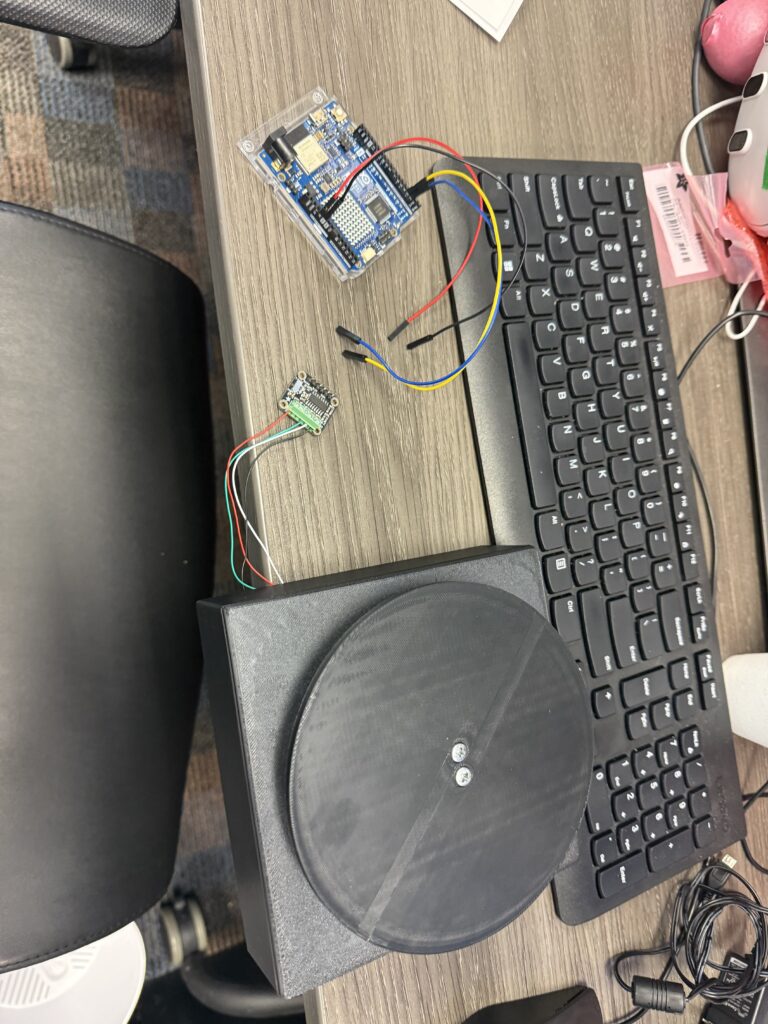
For the physical interaction in the clock room, the clock is now working. The player can move the clock hands by hand, and after being adjusted, the clock is also able to continue running like a normal clock. In addition, we finished soldering the weight sensor for the flower pot and got it working successfully. This gives us a usable input for the plant interaction and helps bring the clock room closer to a more complete playable state. We also remeasured the distances required for the tracking tags in order to improve reliability for the upcoming presentation.
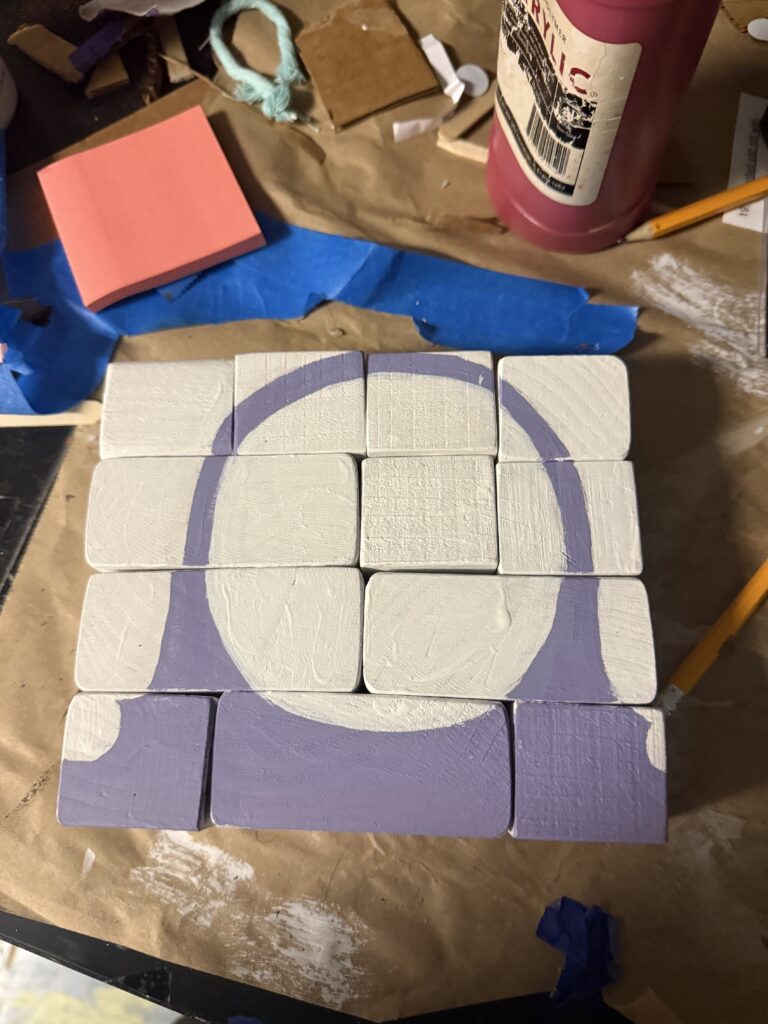
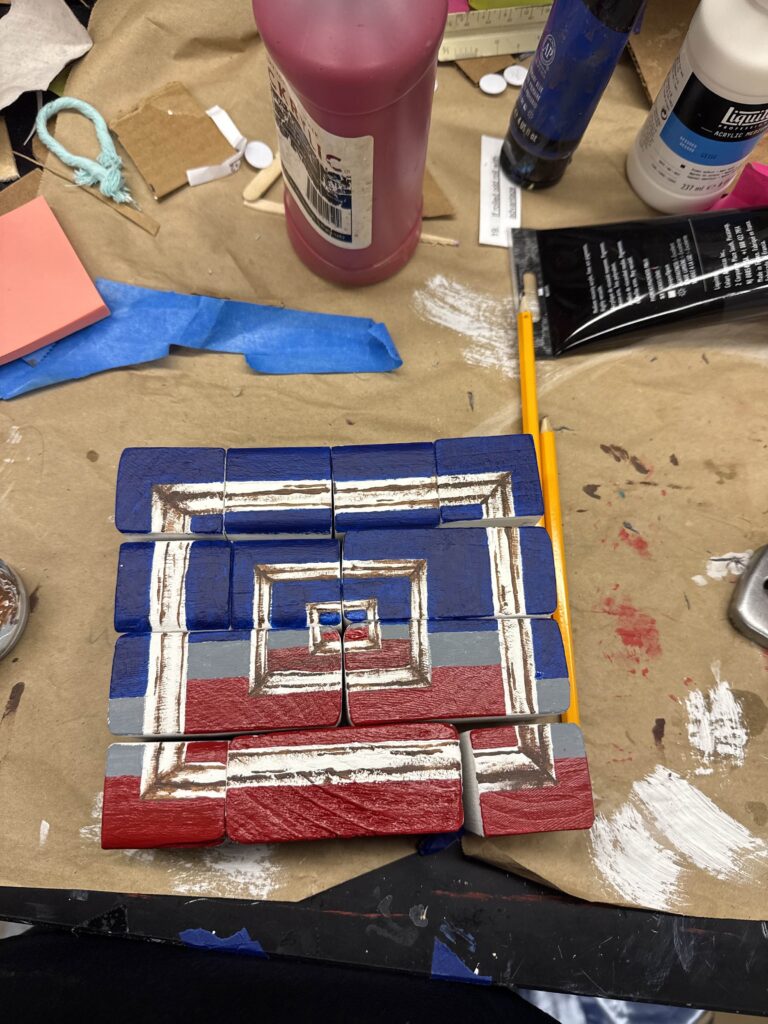
For the painting experience, we finished painting the physical blocks used in the interaction. The front side matches the still life loop shown in the painting, while the back side uses the clock visual, helping connect the painting room and the clock room more clearly.
We also showed our current demo to Jesse Schell and received a lot of feedback, especially about the narrative. Much of the discussion was about making the story more concrete and easier for the player to understand. For example, we started thinking more carefully about why the player was hired, whether the player is supposed to be an expert or simply someone brave enough to take the job, and what kind of organization is behind the museum. We also got feedback about clarifying why AR is important, how the abnormalities are affecting the real world, why cameras exist in the space, and why those cameras are virtual. Jesse also raised questions about Jim’s backstory, including what exactly went wrong with his project and how his work with space and time led to the current situation.
We also got feedback that Jim should feel more present throughout the experience, especially in the painting room and the clock room. Other questions included how the team knows that Jim is Jim, why the player should care about reviving the plant, and whether Jim’s role in the ending should become more direct. These questions helped us see that while the interactions are becoming clearer, the story still needs to better support them.
Based on this feedback, we started making plans to improve the narrative and visual logic of the clock room. One idea we decided to move forward with is creating a timelapse video of the outside of the ETC building using a webcam attached to the window. This will let the virtual window show a more believable change of time throughout the day. Dave also suggested a possible ending where the player fails to free Jim, or even deletes him by accident, which gave us a new direction to think about for the ending.
Overall, this week was helpful not only because we made progress on several technical and physical components, but also because we identified many of the remaining narrative problems more clearly. Next week, we will continue preparing for Softs by polishing the current demo and improving the connection between interaction, environment, and story.