

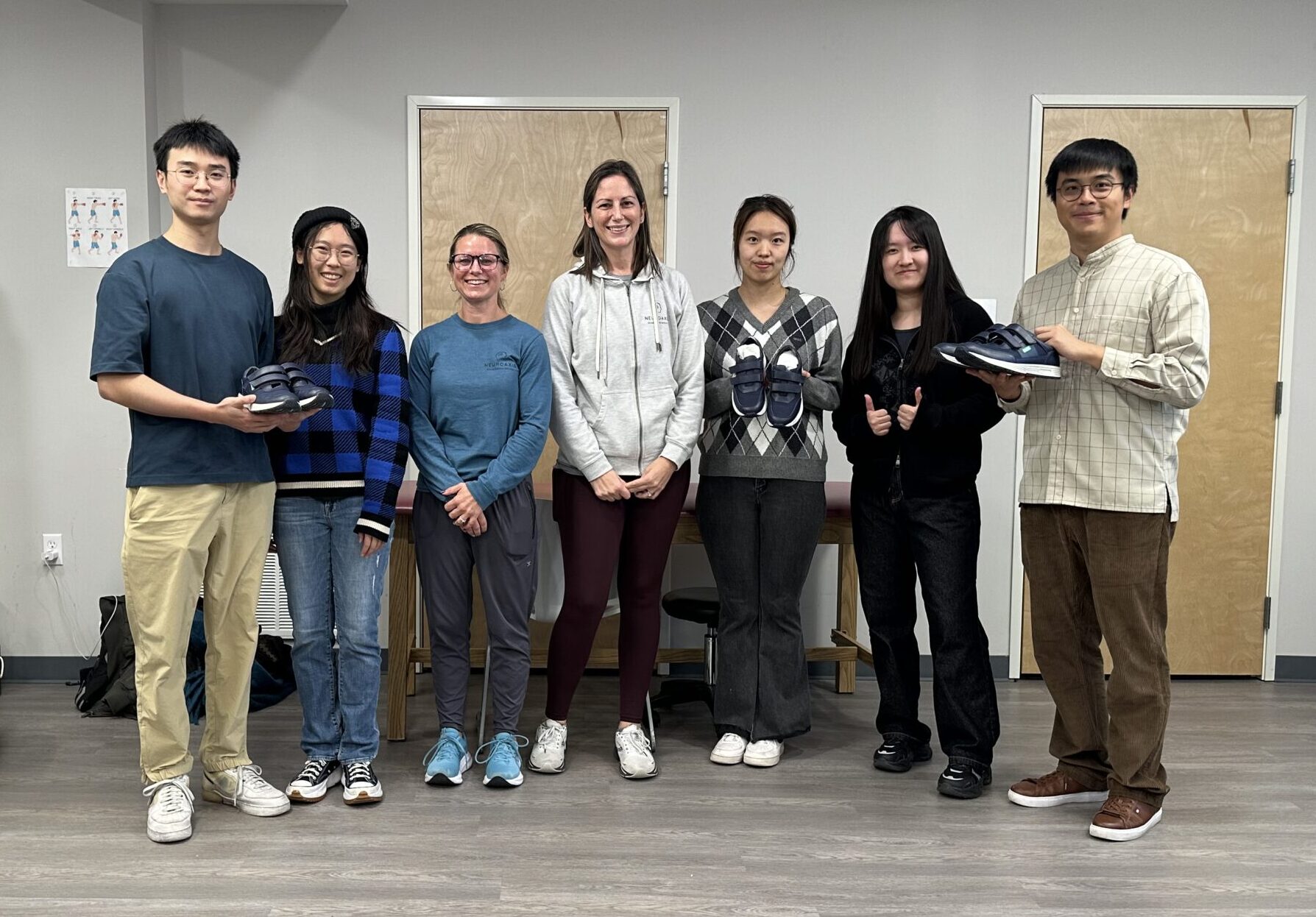
Validation, Refinement, and Closing the Loop
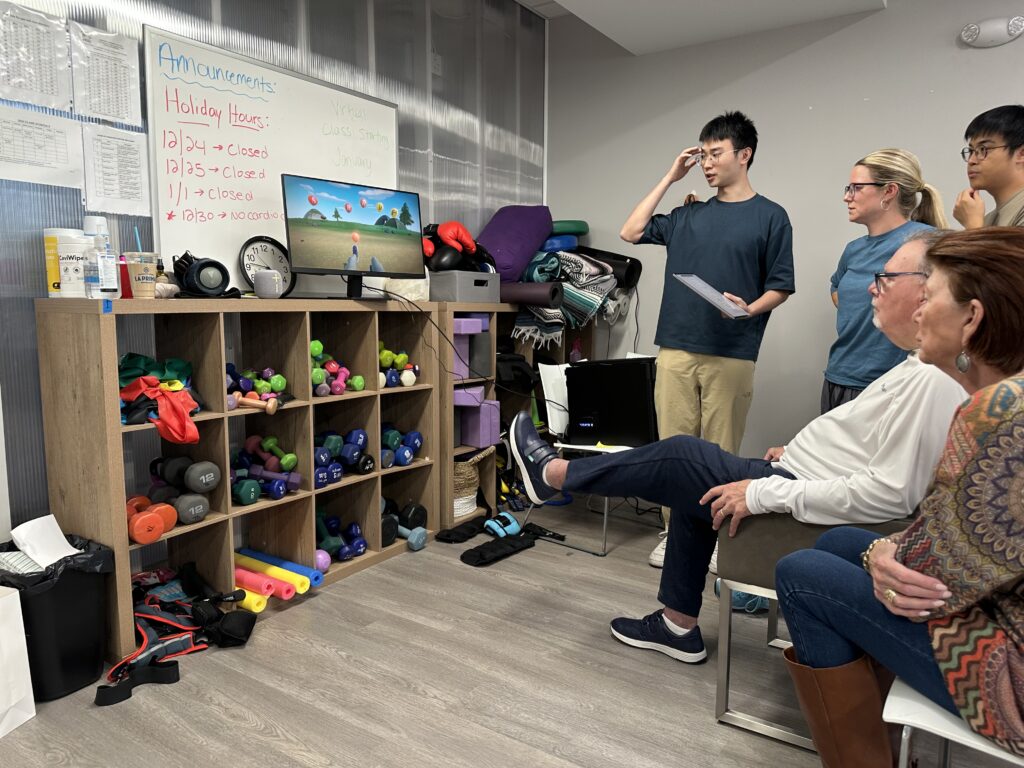
Week 14 marked a defining moment for ReNUSHU. On December 1, we conducted our most important playtest of the semester—testing the system with two patients with Parkinson’s disease under the supervision of a licensed physical therapist. This session was not only a technical milestone, but a meaningful validation of the direction we have been working toward all semester.
Clinical Playtest: Seeing the System in Use
The playtest involved two patients with different mobility profiles, providing us with a wide range of observations across balance, gait, and cognitive-motor interaction. Both patients were able to understand the games quickly, engage with the experience, and meaningfully perform the exercises with therapist guidance.
One of the strongest signals we received was motivation. Both patients expressed that the experience felt approachable and engaging, and one explicitly stated that they would be willing to play the game at home. The therapist also noted that the cognitive challenges felt appropriate for Parkinson’s patients and that the system successfully encouraged large, intentional movements.
Importantly, the therapist was able to use the PT interface intuitively without instruction—reinforcing our belief that simplicity and restraint are essential in clinical tools.
Affirming Our Design Direction
Throughout the session, several patterns reinforced that our core design decisions were sound:
- Abstracted gameplay worked.
The balloon-based cognitive-motor loop supported repetition without requiring precise, one-to-one motion mapping. Patients could focus on completing movements rather than worrying about technical correctness. - Haptics added value.
Even though the games could function visually, both patients and the therapist found haptic feedback reassuring and motivating—helping patients understand when movements were “big enough” to count. - Dual-tasking felt appropriate.
Cognitive challenges added meaningful load without overwhelming motor performance, especially when pacing and visibility were carefully tuned. - Engagement mattered.
“Looking Over the Fence” was consistently identified as the most engaging experience, suggesting that subtle environmental change tied to physical effort can be more powerful than explicit rewards.
These observations confirmed something we had been hoping—but could not fully know until now:
the system does not just function—it resonates.
Focusing on Refinement, Not Redirection
With strong validation of our overall approach, the remainder of the week was dedicated to refinement rather than redesign.
We focused on:
- Addressing small performance issues such as balloon speed, visibility, and cue clarity
- Making shoe recentering more forgiving for Parkinson’s gait patterns
- Improving detection thresholds to better support smaller steps and backward movement
- Streamlining setup flows to allow faster switching between different shoe sizes
These adjustments were not about changing what ReNUSHU is, but about making it smoother, safer, and more respectful of real clinical use.
Client Feedback and Looking Forward
Following the playtest, our client expressed strong enthusiasm for the project and interest in continued development. They see ReNUSHU not only as a semester prototype, but as a system with potential for further exploration and external presentation, including conference submissions.
This response reinforced what the playtest itself made clear: the work we have done is meaningful beyond the classroom.
Closing the Semester
As the semester comes to a close, we are deeply proud of what ReNUSHU has become.
We began with a simple but ambitious question:
What would it look like if rehabilitation felt more like play—without losing its clinical integrity?
Through research, iteration, hard decisions, and collaboration with therapists, patients, faculty, and our client, we believe we arrived at an honest answer. ReNUSHU does not replace therapy. It supports it. It respects the effort patients put in, and it rewards consistency, intention, and progress.
In that sense, we feel confident saying that we achieved what we set out to do:
From rehab to play.
From play to progress.
Comments are closed