Co-op · Shared rotation
Undercooked
We built a co-op kitchen around a shared turntable. Turning the Lazy Susan changes what every cook can reach.

What we built
Players prepare and serve orders from stations arranged around the Ring. We wanted the physical act of moving an ingredient or a tool to give cooks a reason to talk to one another.
Iterations and findings
-
Two cooks and one shared set of tools
We started with a two-player version. Each cook handled different tasks and turned the Lazy Susan to pass tools. We tried it with guests on October 31.
What we foundGuests liked turning the Lazy Susan, and some pairs got faster once they started talking through a plan. It still took time to work out who did what, what action was available, and whether an order had been submitted.
-
Four stations and a shared conveyor
We gave each station one part of a takoyaki order and used the turntable to carry ingredients between stations. We built a UI preview with order cards and instructions so we could check what a cook could recognize at a glance.
What we wanted to checkThe layout gave each station a purpose. We still needed to check on the Ring whether a single recipe could teach the handoffs and whether the text and icons were readable while the conveyor was moving.
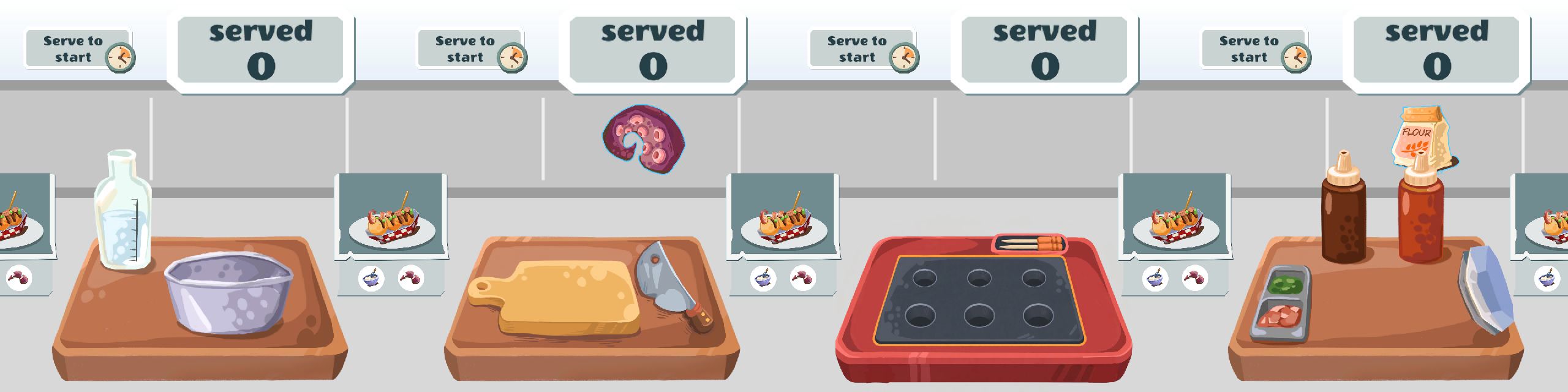
Our four-station build shown as a flat strip, before wrapping it around the display. -
Giving a big spin a purpose
We tried putting two teams on the same conveyor. The review also brought up a different way to play: a quick spin could move an ingredient sooner, and a small turn could line up a handoff.
What we want to test nextWe want to see when cooks choose to spin hard and when they slow down for someone on the other side. That will tell us whether the turn itself is an interesting choice.
What we tried on the Ring
One turn changes the conveyor at every station. Moving something closer to one cook can move it away from another, so sharing the input is part of the recipe.
What we learned about designing for the Ring
- Put each cook’s immediate task and the shared order where they can read both.
- Make it clear who moved something and what the turn did to the other stations.
- Test comfortable reach and handoffs on the full-size setup.