
From Bus Stops to Matchmaking / Dating Show: A Narrative Pivot
With a joyful atmosphere around ETC due to the Lunar New Year celebrations and the first hints of spring in the air, we began Week 6 of the project semester with a positive and energized mindset. We held our scheduled instructor meeting at 2:00 PM on Monday, where we shared our findings on prompts designed around six core emotions inspired by Inside Out: Fear, Jealousy, Sadness, Disgust, Anger, and Joy.
During the meeting, we conducted a simple playtest session with Brenda serving as the improv actor alongside our OpenAI-powered geese. The session helped us better understand how emotionally driven prompts influenced the interaction dynamics. We also informed our instructors that we had started implementing Hume AI and would gradually move away from OpenAI due to limitations in OpenAI’s emotional analysis capabilities.
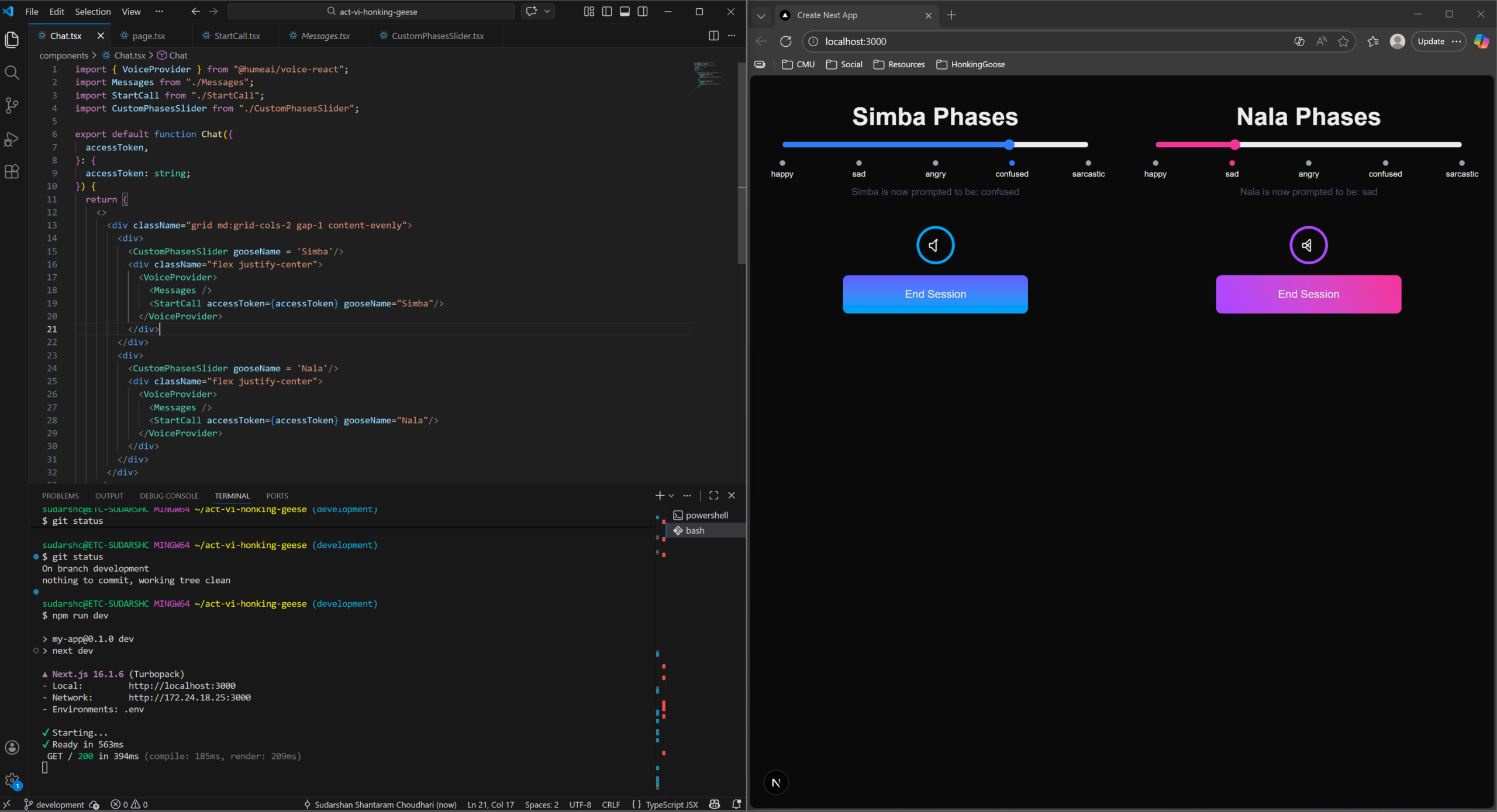
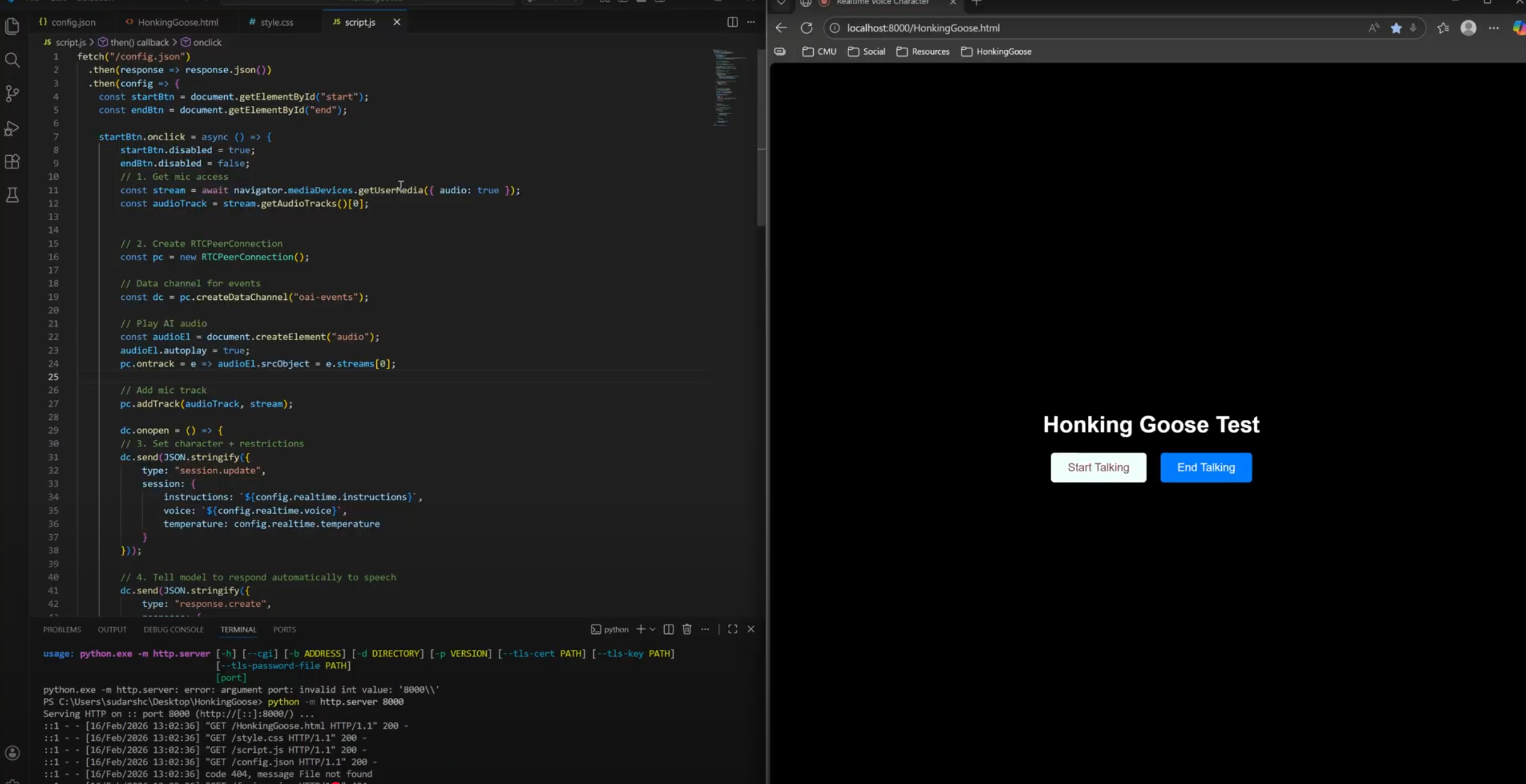
We initiated an IT request for a Pro subscription to Hume AI; however, the subscription had not yet been approved by CMU financials. To maintain momentum, our team began developing a basic UI in Next.js to support future Hume AI integration.
This week also marked a significant narrative shift. We decided to move away from the previous concept of a single goose at a bus stop waiting for a phone call. Instead, we pivoted to a new format: a dating show featuring two geese, with an improv actor serving as the matchmaker. In this updated narrative structure, there are two geese powered by Hume AI, an improv matchmaker, and an additional backstage role—potentially a production member or director—who controls the flow of the show by switching response phases for the geese.
At this early stage, each goose will have adjustable emotion sliders that guide how they respond. The backstage manager will also have the ability to start, end, or mute one or both chatbots as needed. The mute functionality is particularly important to prevent the two AI agents from entering an endless loop of conversation without human intervention.
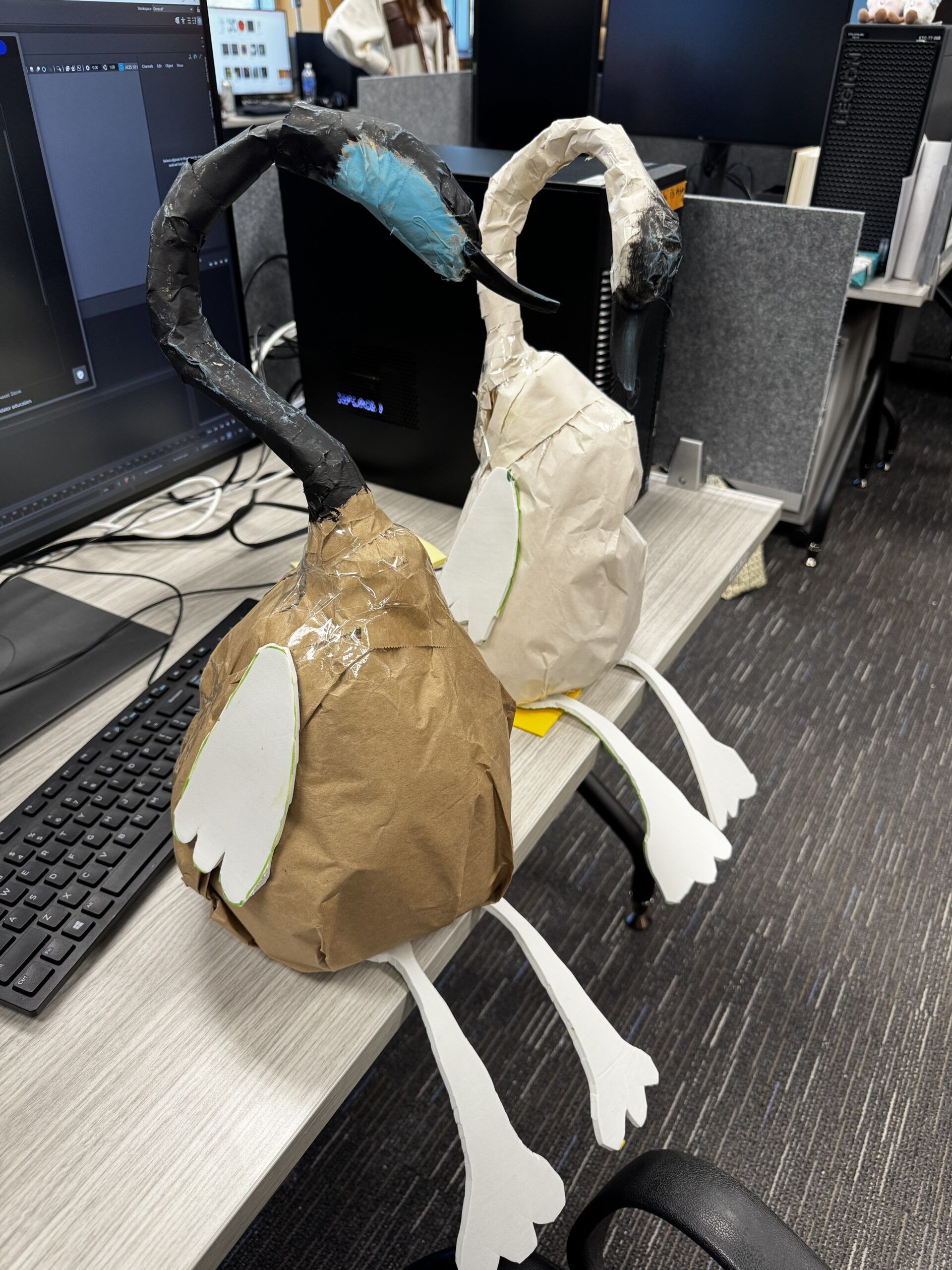
In parallel, our team began designing the personalities of the two geese. We want each character to have a distinct personality and a unique emotional range. We also started designing physical “goose motels” that can function as stage props during the live improv matchmaking show.
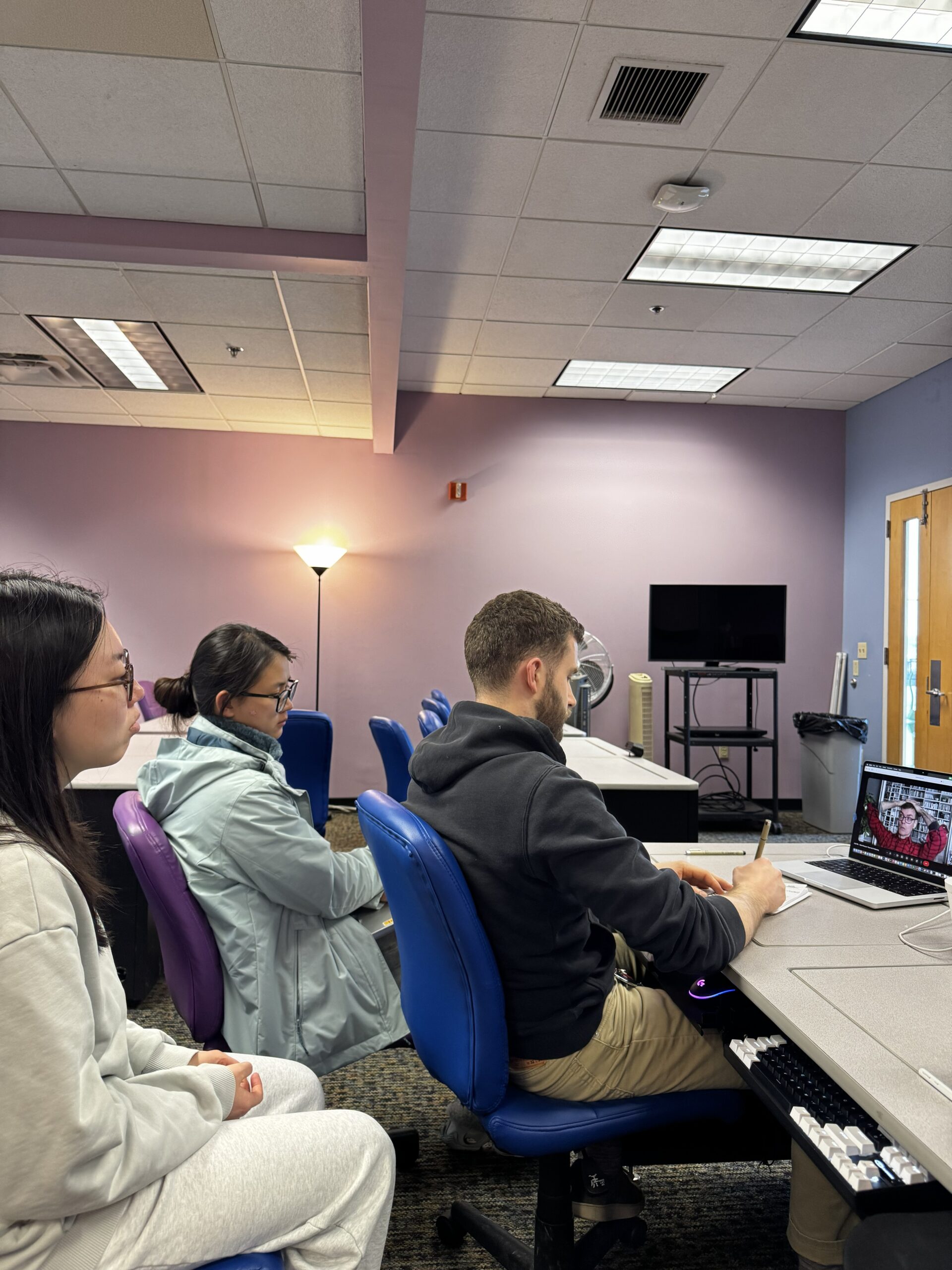
Additionally, we met with Mark Piszczor, an ETC alum who works with AI and is also an improv actor. The meeting provided valuable insights and prompted a thoughtful set of questions that helped us refine both the technical and performance aspects of our concept.
Looking ahead, our next steps include integrating the Hume AI API, testing prompts within Hume’s emotional framework, further developing the staging of the show, conducting additional playtests, and preparing for halves presentations next Friday.
Overall, Week 6 was productive and noticeably busier than previous weeks. We wrapped up the week feeling both excited and slightly nervous as we prepare for next Friday’s presentation.