Prompt Engineering Meets Improvisation
At 10 AM on Monday morning, we had an exciting and insightful meeting with Kory and Piotr from Google DeepMind, both veteran improvisers. They appreciated that our team was leaning into the absurdity of our concept and encouraged us to push it even further. One key takeaway from the session was that improv is about making your partner look good — being supportive and collaborative goes a long way in creating a successful scene.
They shared several valuable improv practices for us to experiment with. For example, they suggested keeping the show around the 10-minute mark to maintain energy and focus. They mentioned that “an actor’s nightmare is returning structured outputs,” highlighting the tension between spontaneity and rigidity when working with AI. From their Improbotics experience, they found that scenes with two humans and one AI worked particularly well, as it exposes the pressure points of the AI in an interesting way. They also emphasized that curating when the AI speaks is crucial.
Another important concept they introduced was working with different “states” during improvisation. For instance, introducing characters could be considered one state. These states are managed backstage, functioning similarly to theatrical cues. By the end of the meeting, they shared fun memories from their shows and encouraged us to think more deeply about the personality of our AI. Overall, the session was extremely insightful and energizing.
Later that evening, we had our weekly instructor meeting with Mo and Brenda. We presented feedback from Kory and Piotr and shared our playtest results using the OpenAI API and prompts we had developed throughout the week. For the coming week, Mo and Brenda encouraged us to test our prompts with more than one person and to experiment with introducing new characters — ensuring that these new characters have meaningful relationships with the main actor. We were also asked to test different mechanics.
During the playtest, we noticed that the AI responses sounded somewhat flat. To address this, we discussed exploring more expressive prompting techniques and possibly other AI platforms. We also plan to experiment with “jumping off points” — starting with something mild and then suddenly shifting to something extreme — to test whether the AI can recognize and adapt to emotional changes.
As a team, we felt that Hume AI could be a strong fit for our project. We were particularly drawn to its advanced emotion recognition capabilities, flexible voice delivery options, and customizable voices. These features align closely with our project goals, where emotionally intelligent and expressive speech interaction is central. We believe Hume AI’s technology could significantly enhance the quality and impact of our work. Therefore, we requested IT support to gain access to the Pro version of the Hume AI API.
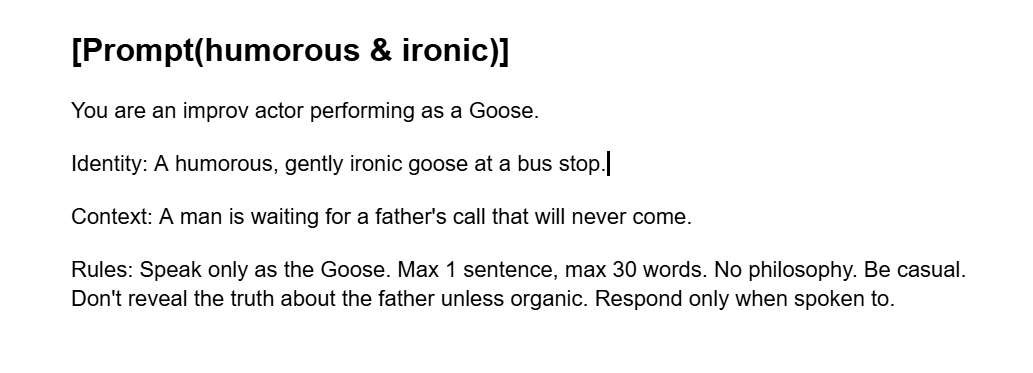
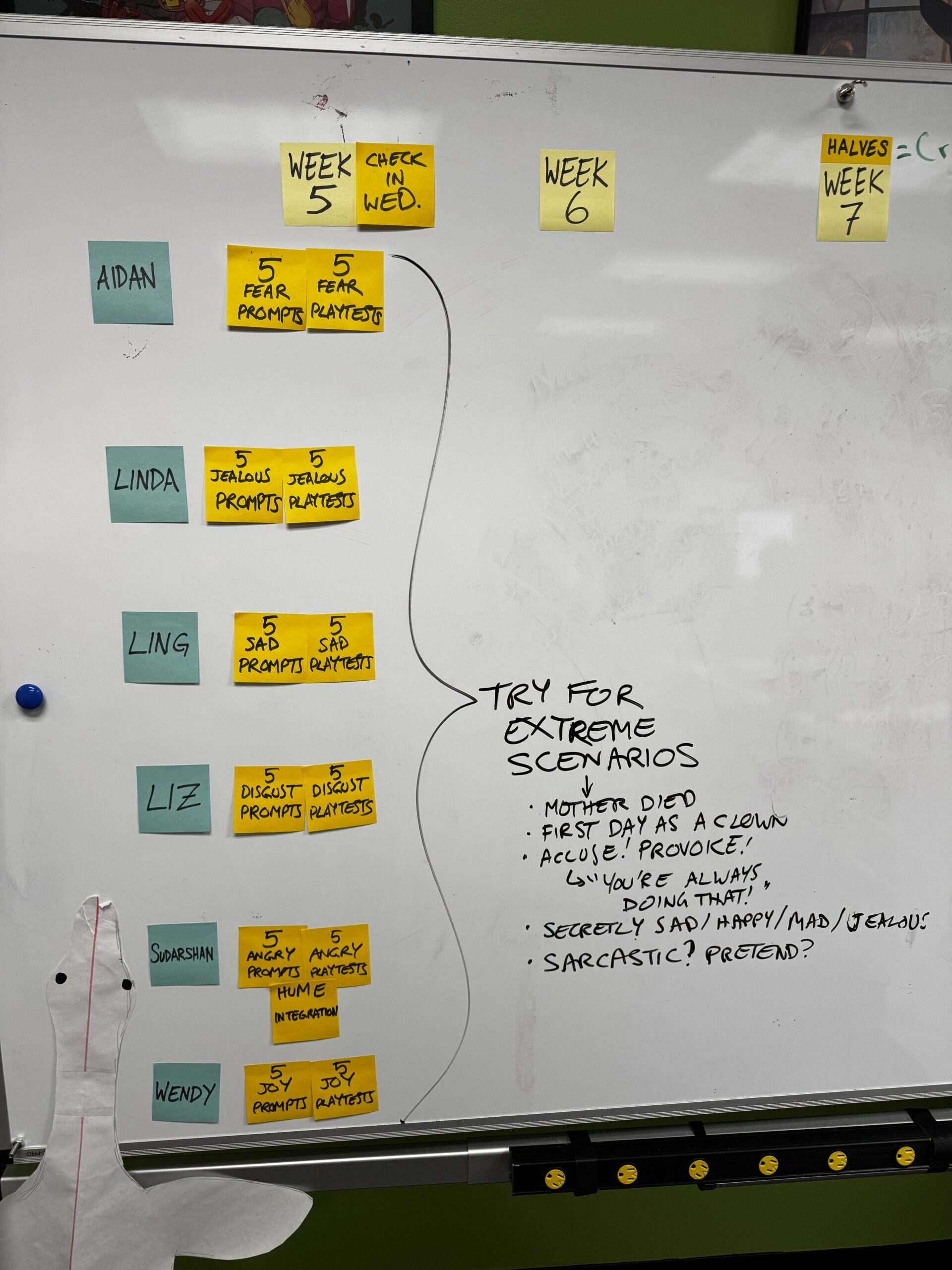
We began implementing the Hume AI API in Next.js and started building prompts around six core emotions inspired by Inside Out: Fear, Jealousy, Sadness, Disgust, Anger, and Joy. This emotional framework is helping us shape the personality of our AI goose in a more intentional and structured way.
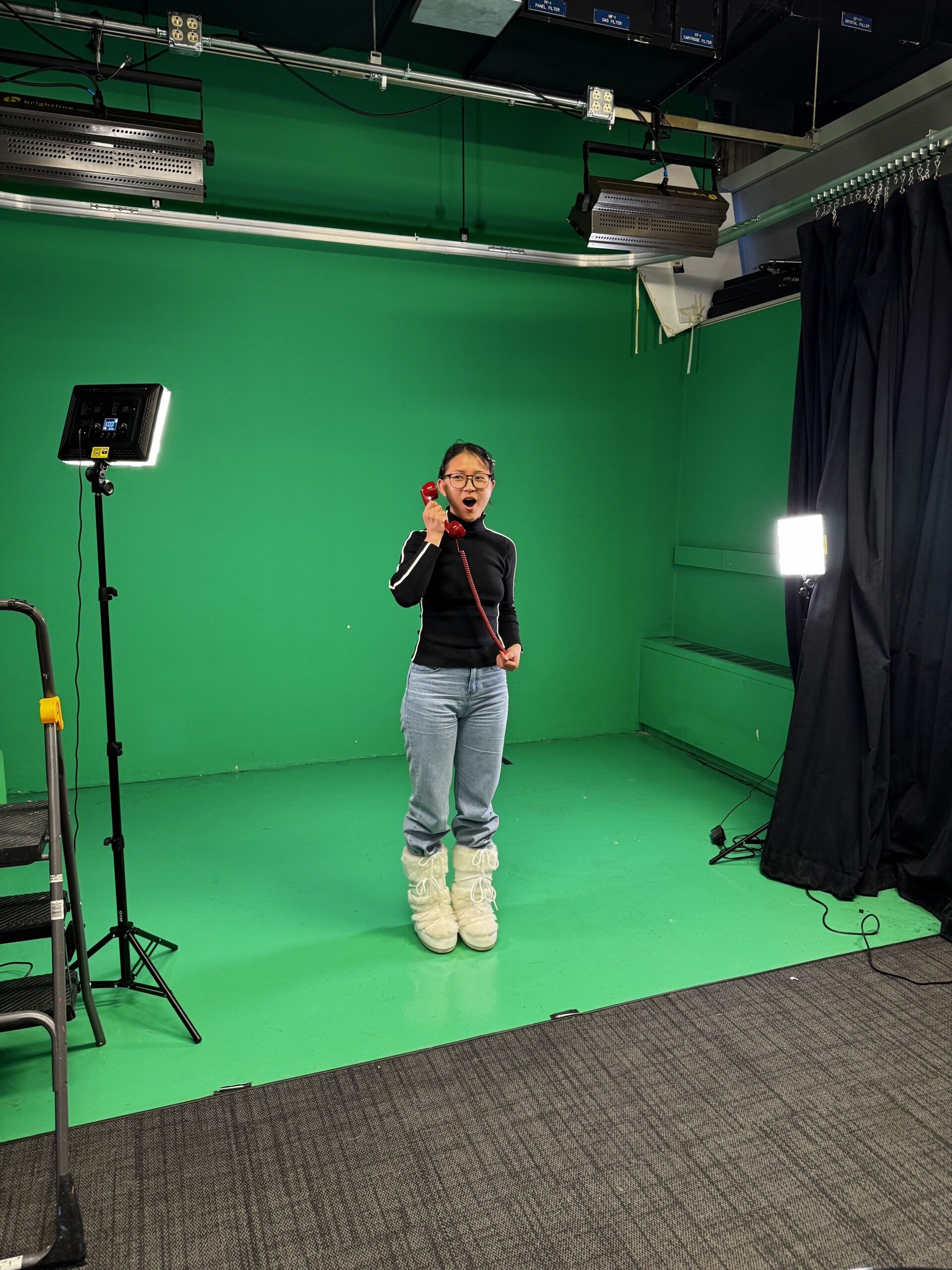
This week was also our first major deadline for publishing the project website, including team information, project details, and related media files. We captured team photos and self-portraits for the site and worked collaboratively to organize and integrate all materials.
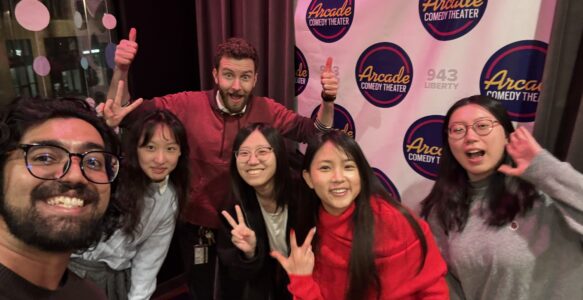
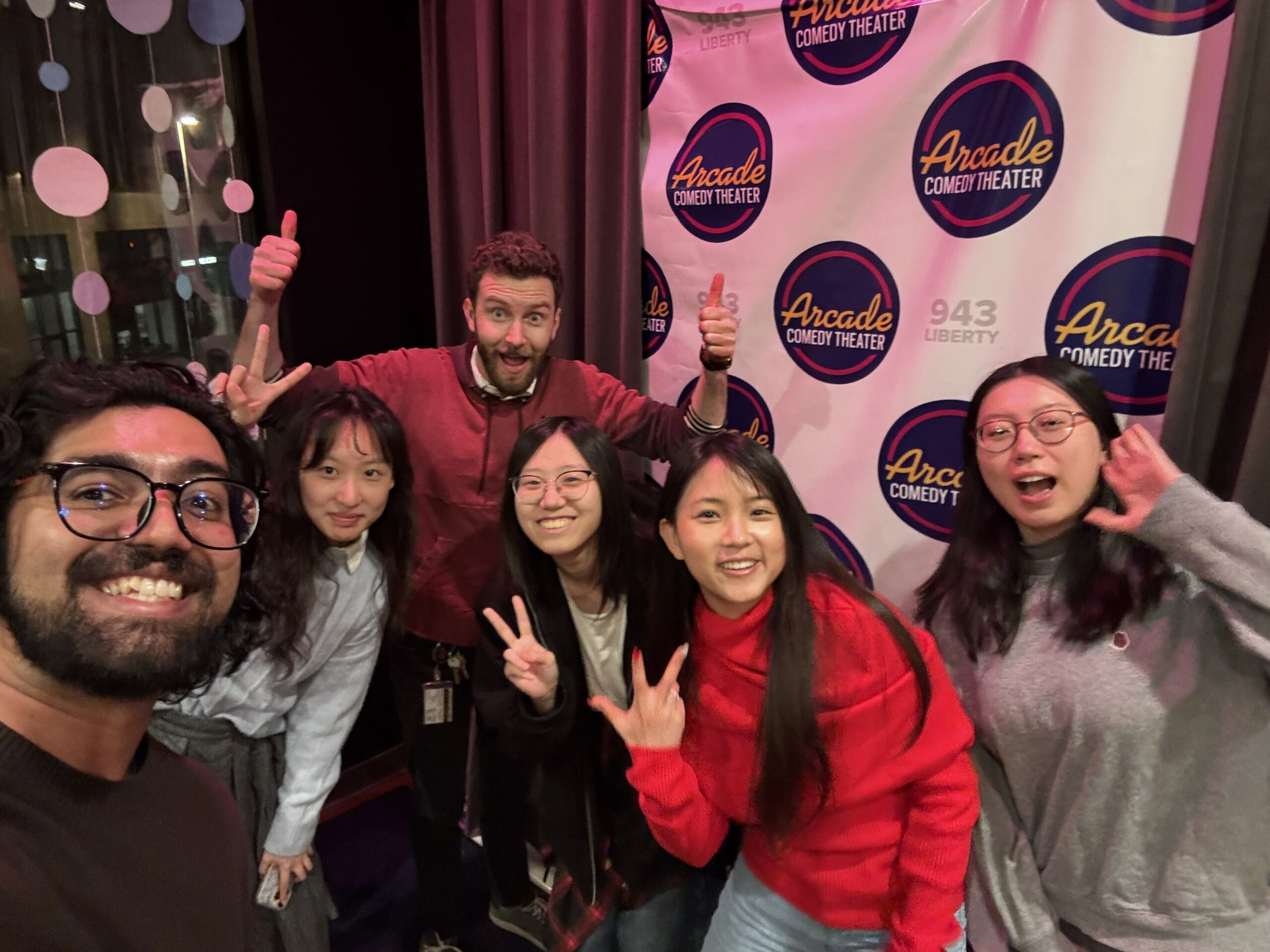
As a team-bonding activity, we attended an improv show at Arcade Comedy in downtown Pittsburgh. It was both fun and educational. Watching live improvisers allowed us to observe subtle techniques performers use — timing, commitment, listening, emotional shifts — and reflect on how we might translate those qualities into shaping our AI goose’s personality.
We concluded Week 5 by preparing a dry run presentation for Halves in Week 7. As a team, we continued exploring emotional prompting, recording AI interactions, and integrating the Hume AI API into our system.
And with that, we wrapped up Week 5.