
From last week, we thought we could start putting brainstorming ideas together with a narrative according to our game design document prototyping guideline of gameplay + narrative + art. However, the initial problem still came up – the chicken-and-egg problem. Since every direction is cool, and they will take away significant production time, how do we decided which ones to choose?
We decided to determine what experience we’re making.
Top-down guidelines
There were two ways for us to give us direction for our explorations: the worldbuilding and the player experience.
Player Experience
The only problem was that, our player experience is highly dependent on the actual designs, which we are still very unsure. The only goals we had for player experience were very conceptual:
- A magical moment when the phones connect.
- Having fun with phones physically (with or without other people).
- Experience a profound narrative moment through gameplay.
- What profound and gameplay means depend on how we understand this medium.
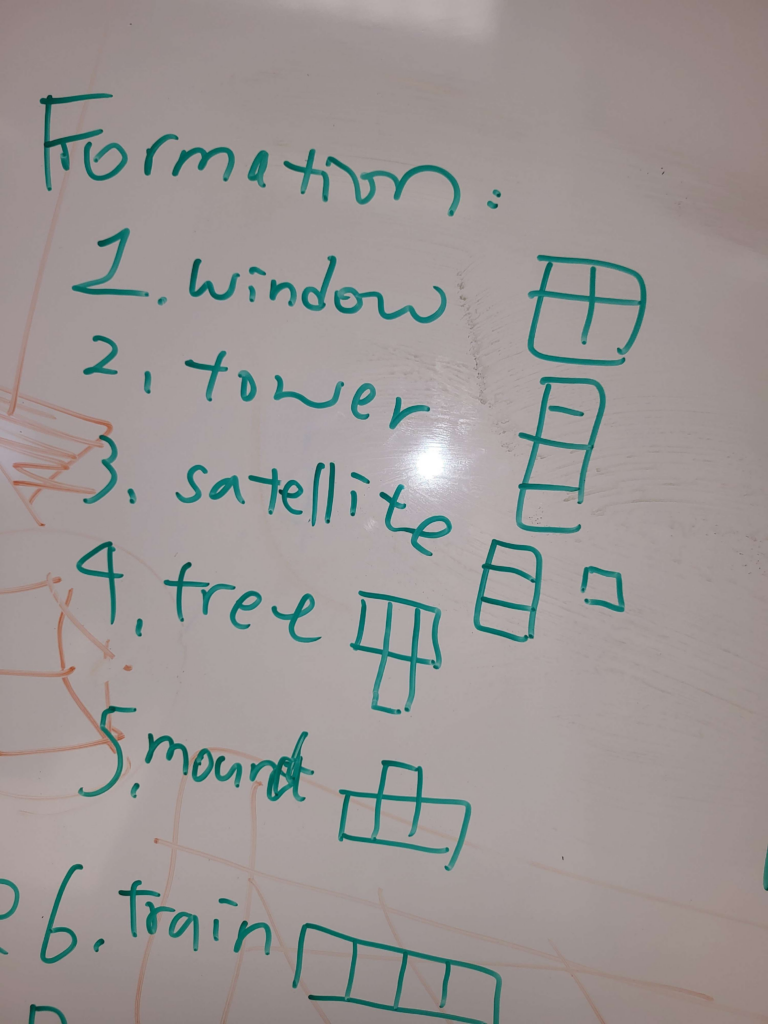
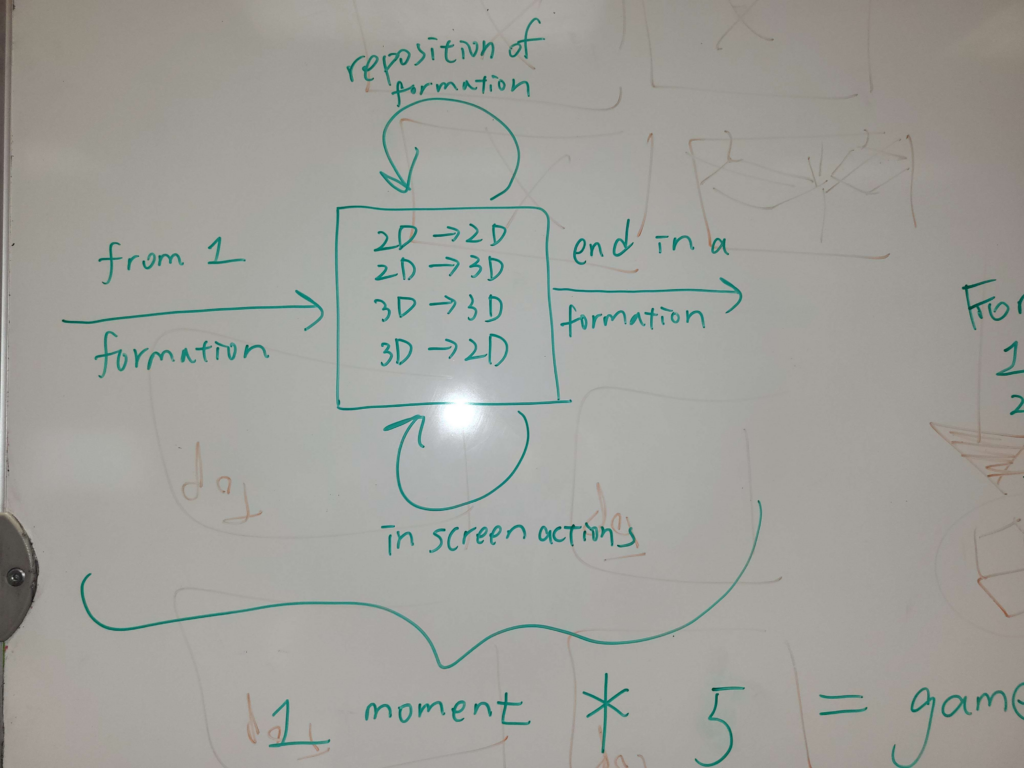
These are qualifying design goals, but it said nothing about whether we wanted the players to go from 4 blank screens to a crazy cool formation at a climatic narrative moment, or we would set the 4 screens up and players go through many different formations with indirect control. And being ambitious about what we can discover and make from
Worldbuilding
Instead, we decided to build a world first, consolidating a theme and setting we would be working within, so that both gameplay had an anchoring keyword to develop mechanics, vis-dev had a style to discover visual connection moments, and narrative has a story proposal for what we would want to tell with the phones.
Ideas went wild, but we settled on:
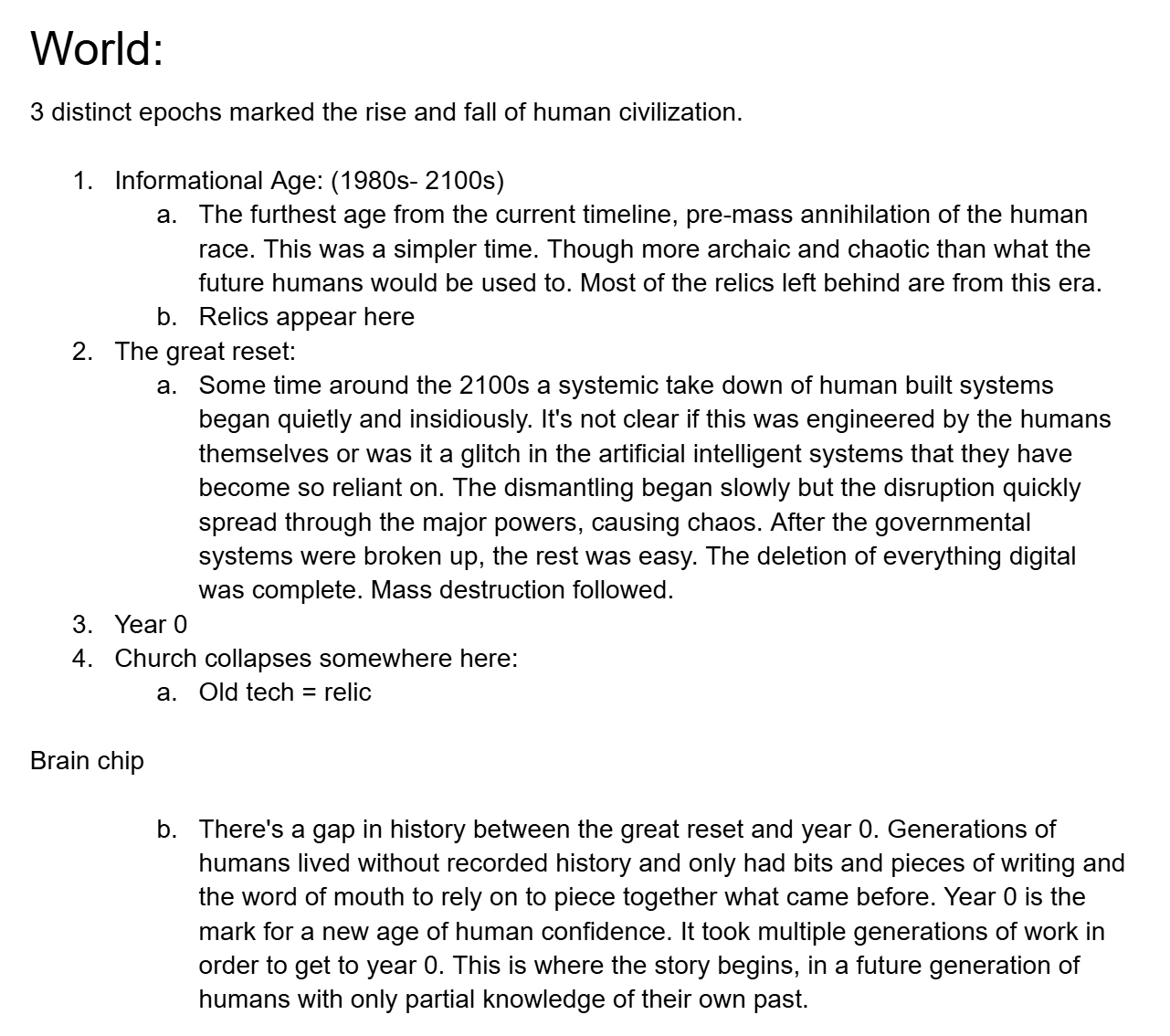
The church symbolizes a religion as our satire on phones and screens, as it deals with what our current generation has: information overload, viral cursed video, doom scrolling, performative labor, and we decided that it will be our relic our explorer finds.
In retrospect, this was a great converging of ideas moment. If we hadn’t chose the sci-fi theme and got excited about the idea of a sci-fi church as symbolic representation, we would’ve still been stuck with not knowing which out of gory horror moments, arcade-y phone manipulations, phone used as meta metaphor (yes, I wrote this correctly), and our heist would be best. Choosing a sci-fi scene, our minds immediately found our minds treating the phone more abstractly, less like a pure phone or screen, but an object or item in a world where it is similar to ours, and also more magical and futuristic than ours.
Design Assumptions
On Wednesday, we sat down with our instructor Dave to clarify amongst ourselves, what we are making. This was a critically needed meeting as implicit decisions (in our heads) have been made, but never formalized. It came from our reluctance to fully commit to a direction, fully knowing we should, so meetings always go “let’s settle with this for now”, yet always the “for now” sentiment got too strong. (This did not stop our team members from doing individual explorations in their functions though, as you’ll see in subsequent sections!)
In the meeting, it’s more about saying the unsaid, and making the hard decision to commit to it, at least for now, so that we have a concretized action list for our next three weeks prototypes. Here are the things we got down:
- Players are non-naive gamers. They know how to play games, and we’re introducing a new medium for the game they are used to.
- No player avatars, instead we have characters. The players have collective amnesia and have to find out information of the world layer by layer.
- We have 3 “systems” candidates as we define what exactly this medium is
- zooming, pinching, dragging across screens, and other phone actions is currently still in picture
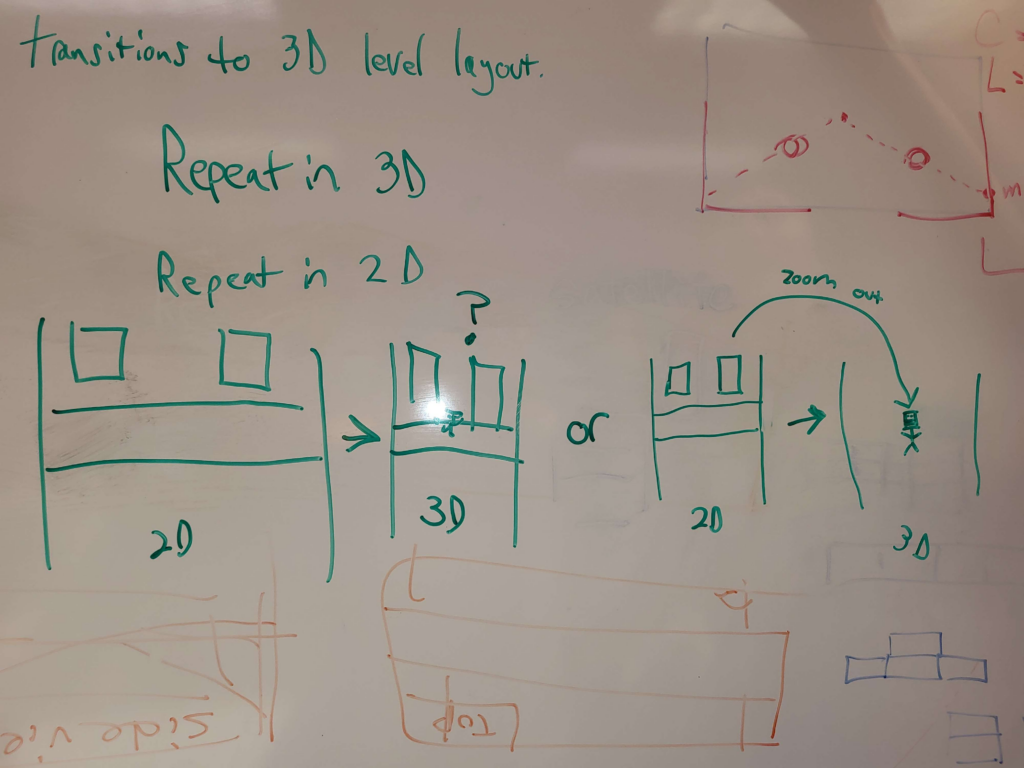
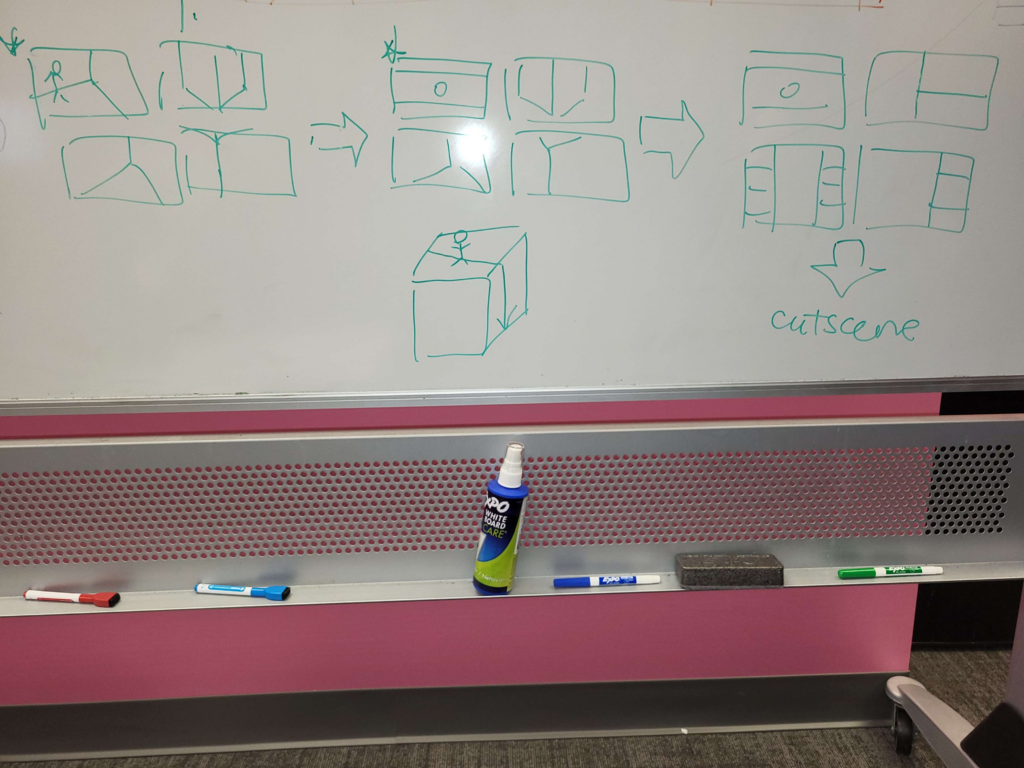
- 2D → 3D and vice versa as a transition between puzzles and moments
- physical phone repositioning as our main focus
- Since we’re leaning towards making puzzles and consolidating it with story, our first prototype should push for a single puzzle with a story perspective that will give us insights on when and how we should provide information for players, and how we should test for those in prototype 2.
These assumptions ended up evolving as we explore our medium, but it was critically needed at that moment for team alignment and exploration directions, so we’re glad we got these down.
Some other explorations
Puzzle Gold Spikes
At the end of the week, our programmers and technical designers got several prototypes up and ready on PC (while we’re still waiting for the phones to arrive), which gave us sufficient proof-of-concept feel of what the puzzle moments would be like. The only sad part is that since we don’t have the phones, instead of pinch, our current connection method is still: tap the first phone then tap the second phone that you want the first to connect to. Regardless, here’s our two technical prototypes. Adding the previous grid-based (ETC building), and polygon prototype, we already changed from pure technical gold spikes to puzzle application attempts! We weren’t sure we needed our game mechanics to be puzzle-based (that insight was crystalized in the next week), but I would say it wouldn’t have manifested if not for these gold spike attempts!
Zoom
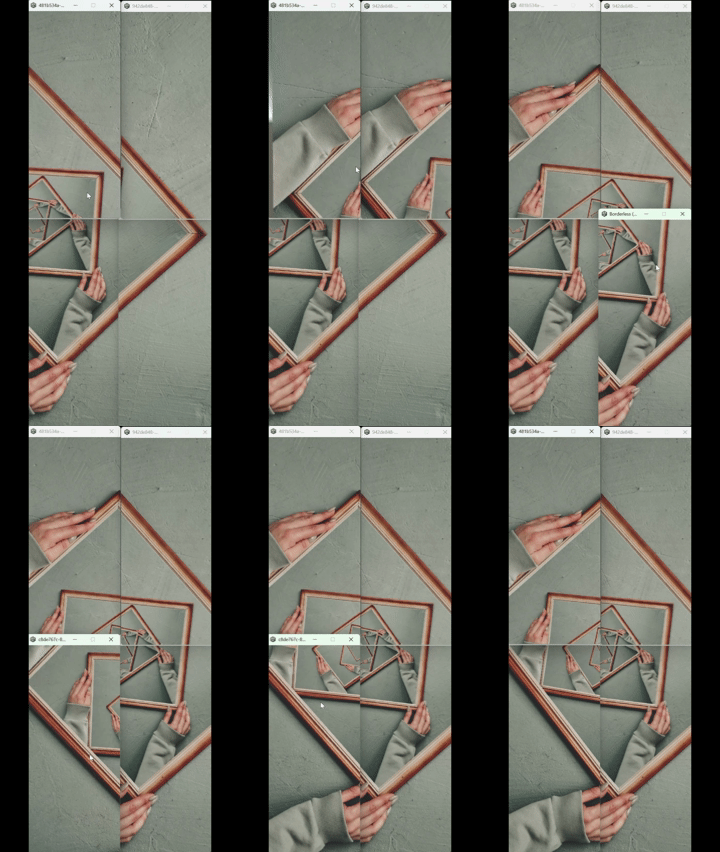
Zoom is when individual phones show parts of a picture, and through on-screen touch gestures zooming in and out of that picture, you are able to connect the 4 phones each individually set to a zoom scale, into a big picture.
Intro scene
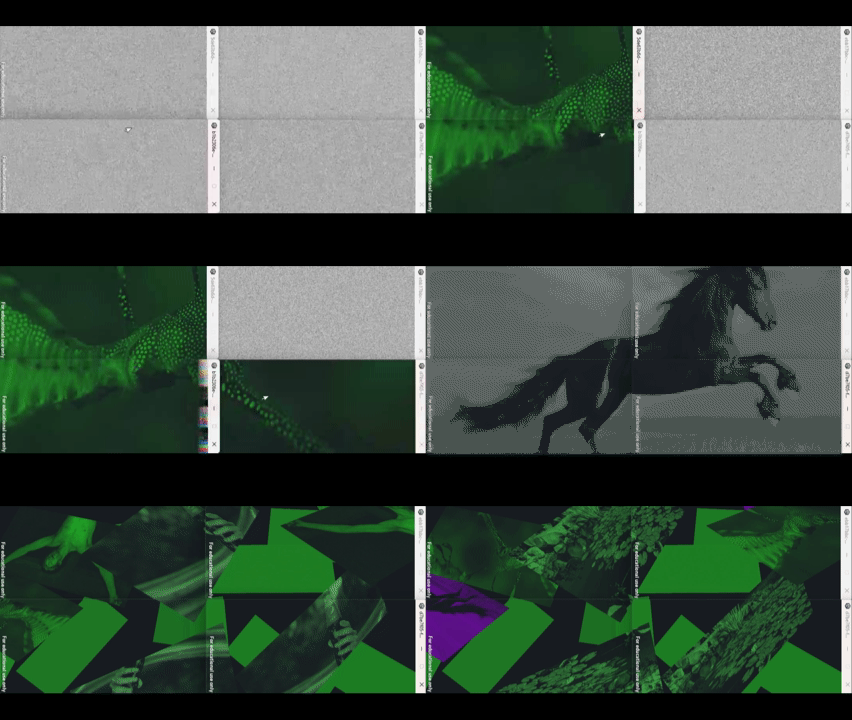
From the storyboard from our brainstorming document last week, we created a simple intro scene that showcases how 4 blank phones join together into 1 screen. This served as a great first attempt for a tutorial as well.
Next steps
Our next week is quarters walkaround, where faculty would come to project rooms and get a feel of what our current explorations and decisions would lead us to (our semester directions and next steps). For a team filled with ideas, it’s the difficult time to put down what we have been doing into a coherent narrative.