


Halves Presentation
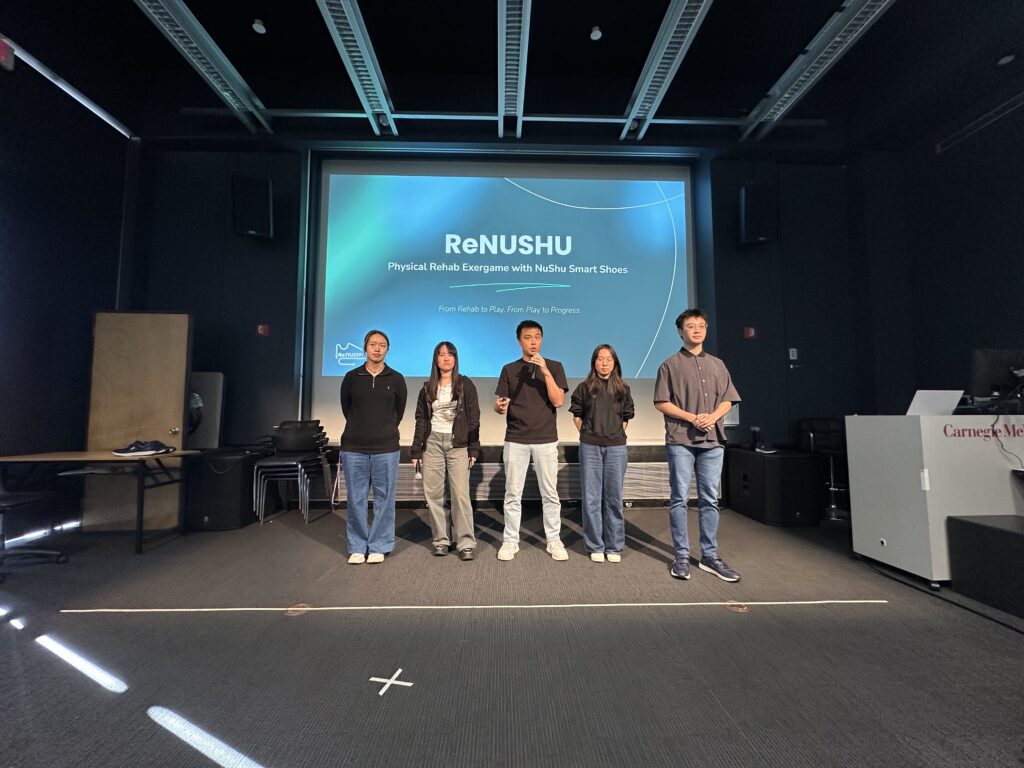
This week, Team ReNUSHU reached a major milestone — our Halves Presentation, marking the midpoint of the semester and the culmination of our early research, prototyping, and system development. The team focused on refining our prototypes, strengthening our technical infrastructure, and communicating our project’s long-term vision to faculty, clients, and guests.
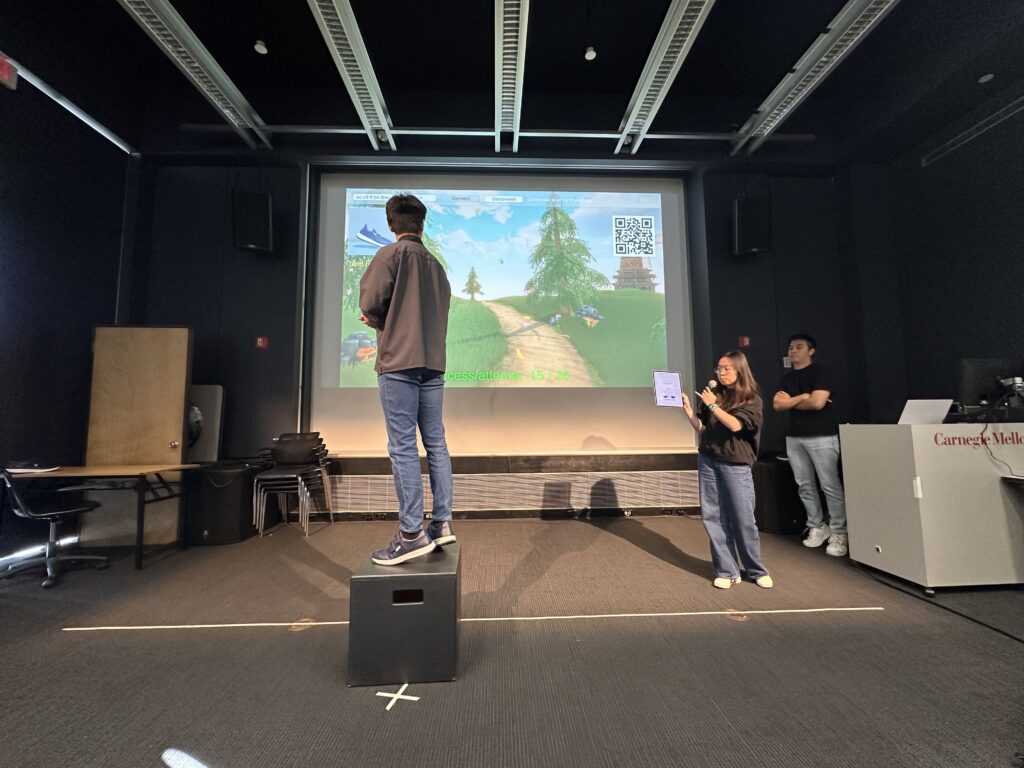
Playable Prototype: Heel Raises (Butterfly Watching)
We successfully developed a playtestable version of our heel-raise mini-game, which serves as both a physical exercise and a cognitive training tool. The game transforms a simple rehabilitation motion into an engaging moment of discovery — each successful heel raise lets players peek over a bush to see butterflies fluttering above.
This mini-game now supports real-time feedback through haptic vibration cues from the NuShu smart shoes, helping players maintain rhythm and consistency. We also introduced an optional cognitive layer, allowing the physical therapist (PT) to adjust elements such as the color or number of butterflies and prompt players with simple recall or counting tasks. These additions enhance “carryover” — how clinical training transfers into real-world movement and focus.
PT Interface: Laying the Foundation for Two-Sided Interaction
Alongside gameplay progress, this week also marked the successful implementation of the first functional prototype of the PT interface. Built on the data communication framework established in Week 6, the system connects the Unity game and the web application through a local Wi-Fi QR pairing system, removing the need for external servers.
The PT interface can now visualize live gameplay metrics such as heel raise frequency and success rate, and it enables therapists to adjust difficulty in real time. This foundation completes the first step toward a dual-sided experience where both patients and therapists interact with the same rehabilitation session.
Halves Presentation Highlights
During our Halves Presentation, we shared our project’s overarching goal: transforming rehabilitation into playful, data-driven experiences through physical-cognitive integration. We also demonstrated two working prototypes — Heel Raises (Butterfly Watching) and Reactive Balance (Step and Stop) — both of which embody our guiding vision:
“From Rehab to Play, From Play to Progress.”
Feedback from faculty and attendees was highly positive, noting the warmth and accessibility of our art direction, the balance between scientific grounding and playfulness, and the potential impact of our approach in both clinical and at-home settings.
Looking Ahead
As we move into the second half of the semester, the team will begin:
- Conducting playtests to refine usability and feedback pacing.
- Enhancing the PT interface with more robust visual displays and control options.
- Continuing development of additional mini-games inspired by validated physical therapy exercises.
With the foundation of our technical and design systems in place, ReNUSHU is now ready to move from prototyping to iterative testing and refinement, continuing to transform physical therapy into meaningful, motivating play.
Comments are closed