


This week, Team ReNUSHU focused on preparing stable prototypes for our November 1 Playtest Day. Guided by feedback from faculty, our client Magnes AG, and physical therapist collaborators, we refined gameplay clarity, strengthened technical stability, and aligned on how we want to observe players during testing.
Gameplay Refinement for Playtest Day
Heel Raise – Shorter Loops, Clearer Feedback
Advisors noted that the cutscene and camera movement in the Butterfly Watching heel-raise game were stretching the exercise loop too long. For a repetition-based activity, this risked breaking the rhythm that therapists care about.
In response, this week we:
- Tightened the timing between heel raises, visual feedback, and haptics.
- Adjusted the sequence so the game clearly communicates “what you do with your body” and “what happens on screen.”
- Prepared a concise PT instruction script so facilitators can introduce the activity consistently on Playtest Day.
The goal is for the game to feel like a natural extension of a real heel-raise set: focused, repeatable, and easy to understand without heavy explanation.
Reactive Stepping – Stabilizing Directional Behavior
For the Animal Picnic Raid reactive stepping game, we continued addressing a recurring issue: steps to the back-right direction were not being detected as reliably as other directions. Conrad confirmed that this was not expected behavior from the shoes and encouraged us to treat this as a technical debugging priority.
This week we:
- Adjusted animal spawn patterns to reduce pressure on the least reliable direction while we investigate a deeper fix.
- Began restructuring our state machine and hitbox logic so multiple steps, over-steps, and “step out then step back” cases are handled more gracefully.
These changes are not the final solution, but they bring the prototype to a point where it can be meaningfully tested on Playtest Day without constant breakdowns.
Playtest Strategy and Observation Goals
Faculty feedback this week focused less on adding new features and more on how we plan to learn from our upcoming tests. In particular, Heather emphasized that we should watch what people naturally do, not just whether they follow the path we hope they will.
For Playtest Day, we aligned on the following principles:
- Keep verbal instructions minimal and let the game communicate as much as possible through visuals, pacing, and feedback.
- Use the session to validate or challenge our assumptions: Do players understand the goal? Do they see the connection between movement and in-game response?
- Pay attention to confusion points: unclear goals, mismatched feedback, or places where players “fight” the system.
- Provide playtest facilitators (acting in the PT role) with a short instruction script, so the therapist perspective is present without over-scripting the experience.
- Capture observations in structured forms so we can compare results across participants.
Magnes AG also encouraged us to think ahead about difficulty scaling and partial automation. Over time, the games should remain engaging as players improve, and should not require constant PT intervention for every small change in difficulty.
Art Development Update
As we developed the new spot-the-difference variation of the heel-raise game, art and design work needed to support clearer, more readable visual changes. The target audience includes older adults, so silhouettes and contrast matter as much as style.
This week our art team produced new campsite props to serve as key “difference” anchors in the scene:
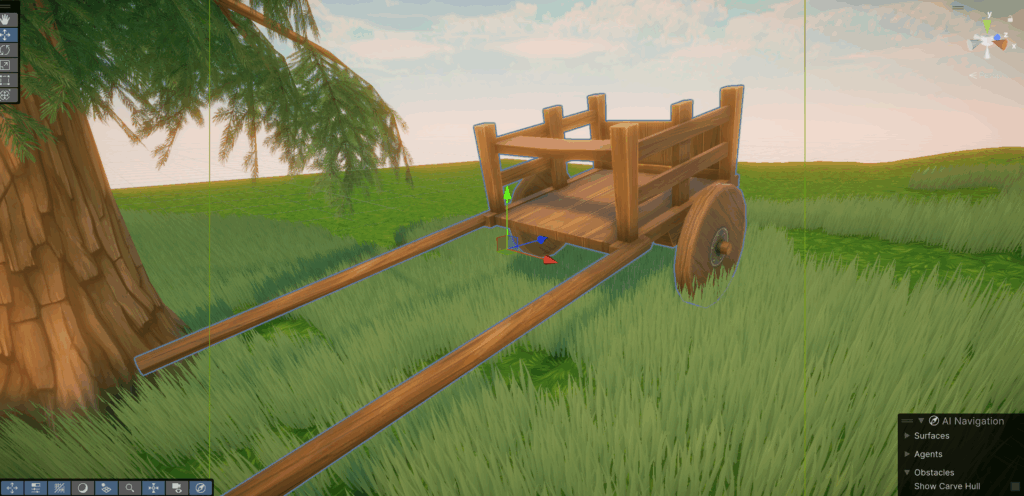
Wooden cart prop with clear, readable shapes for Spot-the-Difference gameplay.
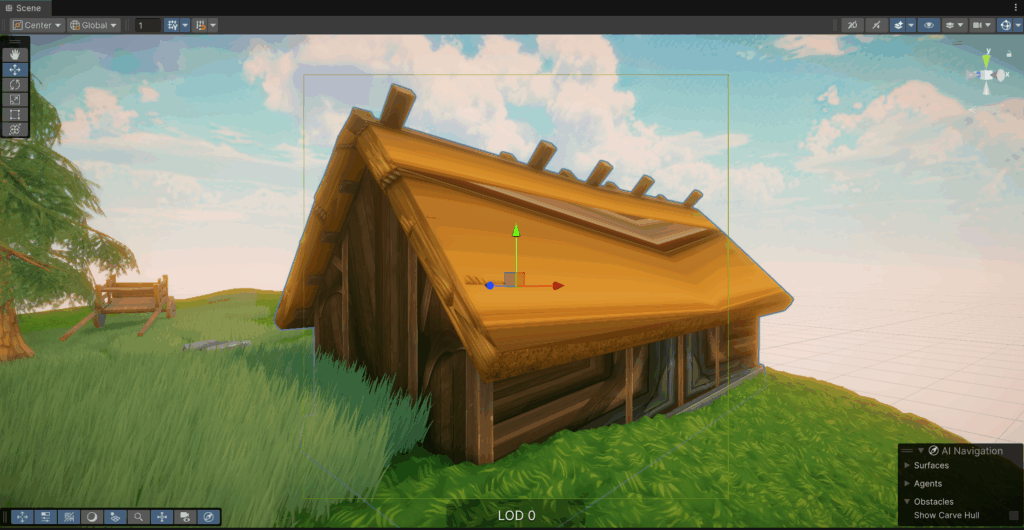
Cabin asset that strengthens the warm campsite setting while staying easy to read on screen.
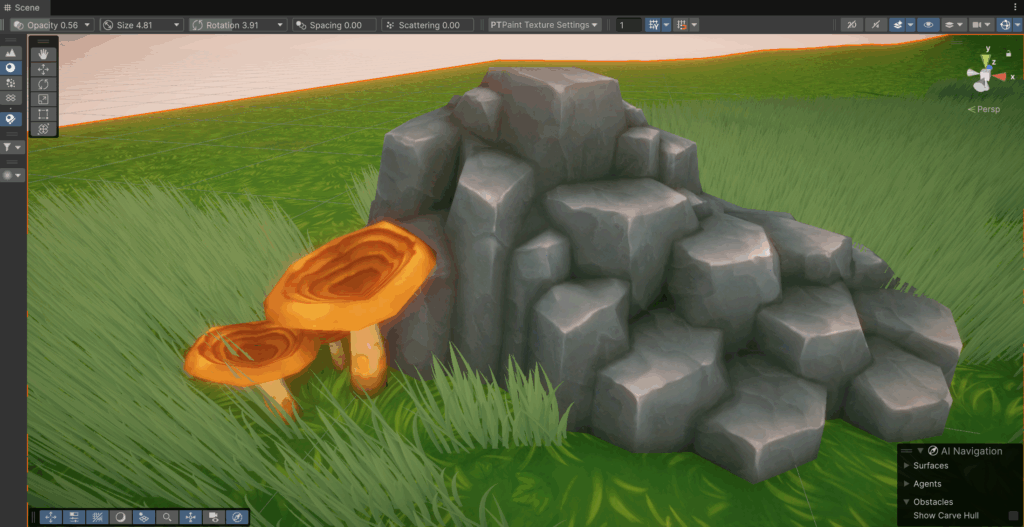
Rock and mushroom cluster designed with strong color contrast as a visual difference marker.
These assets are built to be easily distinguishable at a glance and to fit the warm, outdoor aesthetic that ties the ReNUSHU mini-games together.
Collaboration Highlights
Throughout the week, input from faculty and our client helped narrow our focus:
- Faculty pushed us to ensure that every physical action has a clear purpose in the game and that failure feedback is readable rather than punishing or confusing.
- Conrad and the Magnes AG team confirmed that our current level of cognitive challenge is appropriate for early stages, and encouraged us to keep exploring designs that can function with varying levels of therapist supervision.
Rather than documenting every meeting detail, we used these conversations to decide where to put our time: shortening loops, stabilizing reactive stepping, refining instructions, and preparing solid builds for testing.
Looking Ahead
By the end of Week 9, we locked in three builds for the November 1 Playtest Day:
- Improved Butterfly Watching heel-raise game.
- New spot-the-difference heel-raise variant.
- A playtestable version of Animal Picnic Raid for reactive stepping.
Week 9 was about getting ready to learn: putting our best current ideas into players’ hands and seeing how they respond. In Week 10, we will turn playtest observations into concrete changes to our mechanics, visuals, and PT tools.
Comments are closed