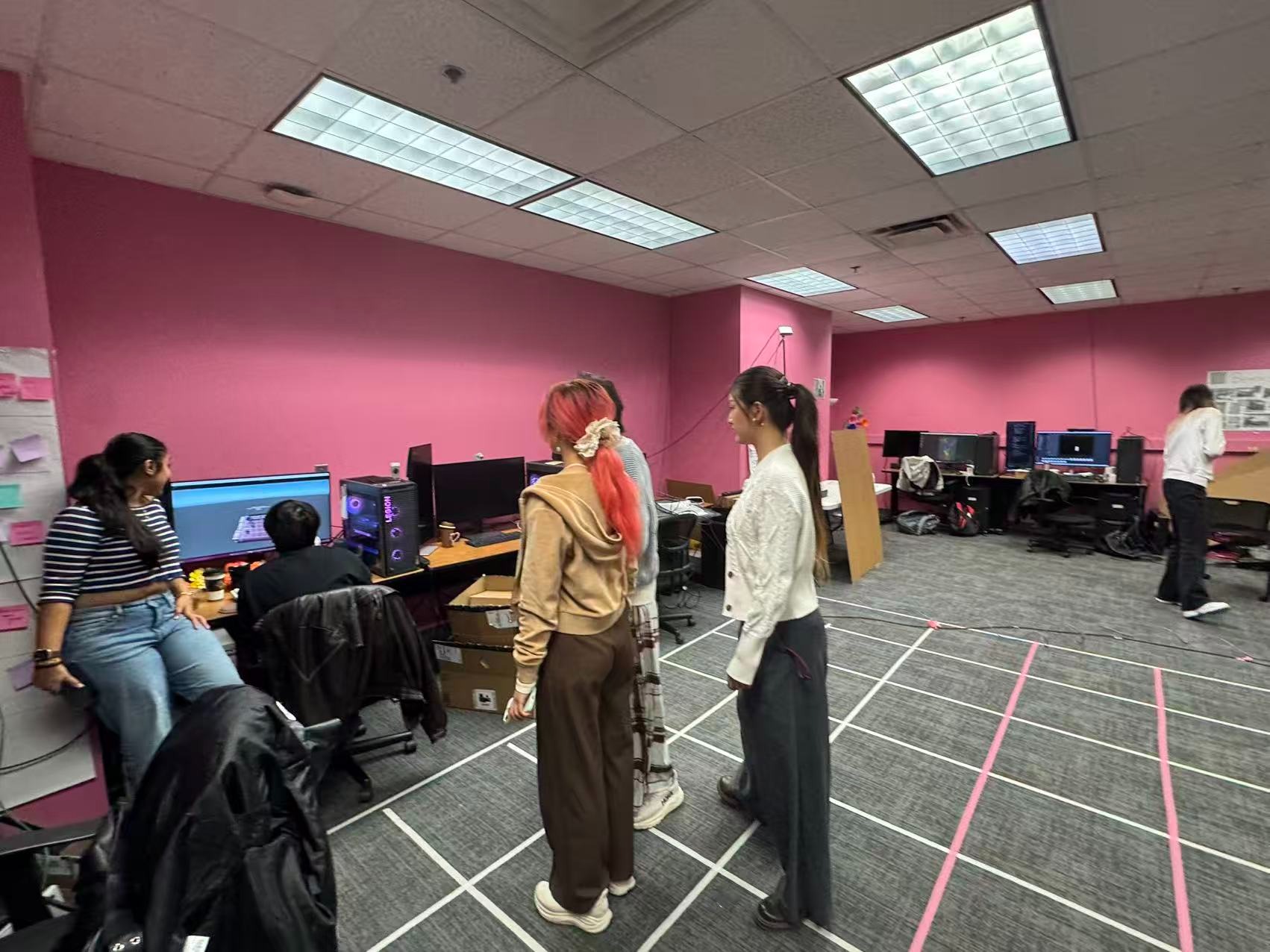
Last week, our team focused on refining our two existing mini-games, improving the technical setup, and preparing for Playtest Day. We also began designing a third game to explore a different approach to asymmetric cooperation.
Iterating on Our Prototypes
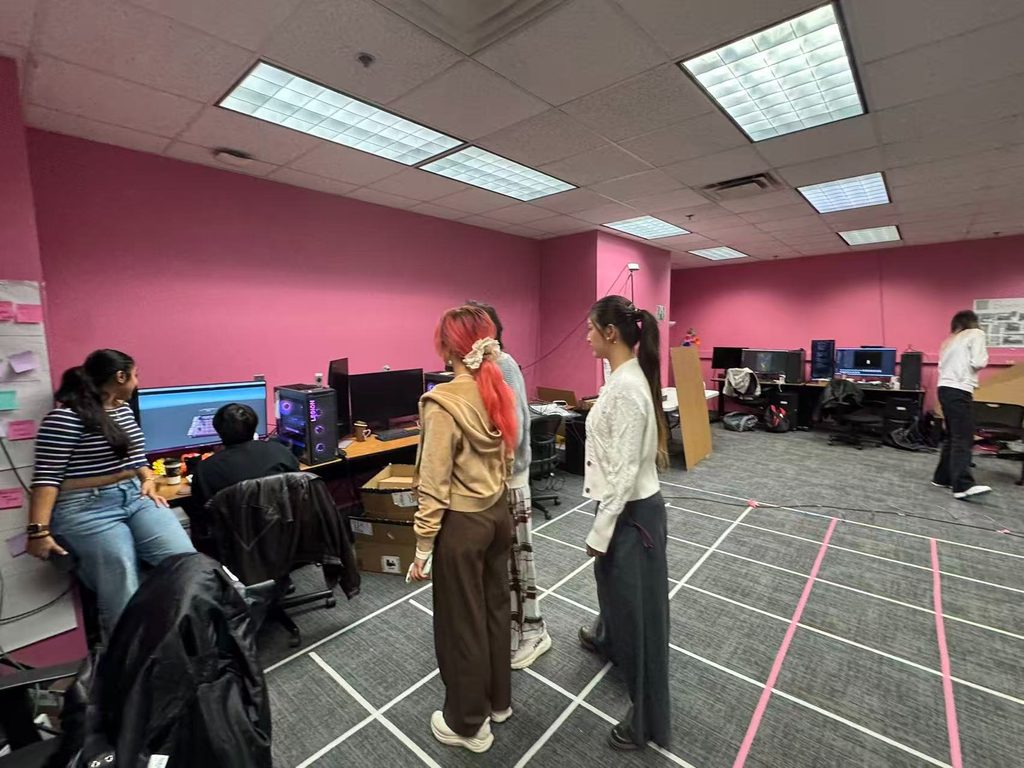
We did more playtests, continuing to develop Balancing and Hiding based on feedback.
For Balancing, we implemented three gameplay stages, added a countdown UI, and introduced a balanced state to the platform. We also updated the board visuals and adjusted the sound system to respond to changes in gameplay tempo.
For Hiding, we added collectible coins, an animated danger cone, and basic sound effects. We also experimented with procedurally generated audio that responds to the intensity of the game.
On the technical side, we improved the bird character rigs, fixed tracking and synchronization issues, and tested the motion-tracking rig in Unity. We also conducted three rounds of Balancing playtests and met with Jonathan to discuss our next design steps.
Exploring a Third Game
While preparing for Playtest Day, we also started designing our third mini-game. One recurring issue with our previous prototypes was that the Tilt Five player had most of the information and acted as a director, while the room players mainly followed instructions.
For the third game, we wanted to reverse this information structure and give the room players more responsibility.
Our new concept, Growing Magical Flowers, asks players to work together to grow magical flowers across the grid. Room players can see instructions and rune patterns in the physical space. By standing on the correct tiles or moving between them in specific sequences, they activate flowers in the virtual environment.
The room players then communicate the activation and required magic element to the Tilt Five player, who uses the wand to perform the corresponding virtual interaction and grow the flower.
We are currently designing the game around growing three flowers to unlock a final flower. The concept is still at the rule-prototyping stage, and we will need to test whether this information structure creates more meaningful participation for both sides.
Preparing for Playtest Day
Alongside gameplay development, we began planning the overall guest experience, including the introduction, game selection, and transitions between activities.
Our main priorities for Playtest Day are to establish a clear experience flow, provide enough feedback for both sides to understand what to do next, and evaluate how well the games support cooperation.
We are also working through practical setup issues, including player collisions and tracking identity switches, cable management, additional displays, and room decoration.
For the coming week, we will continue iterating on Balancing and Hiding, finalize the third game’s rules, and prepare the setup for testing with a broader range of players.