From Six Ideas to One Direction
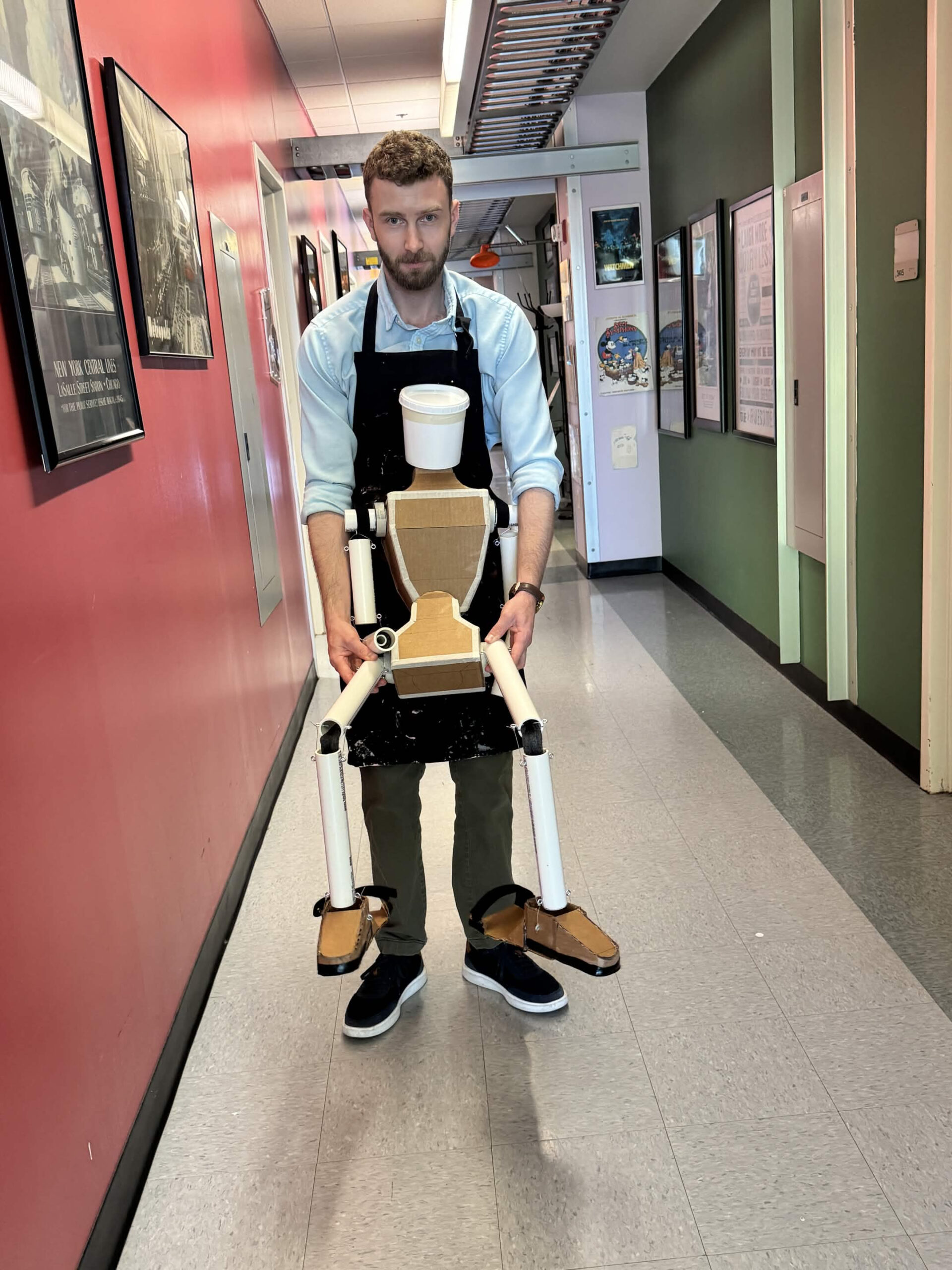
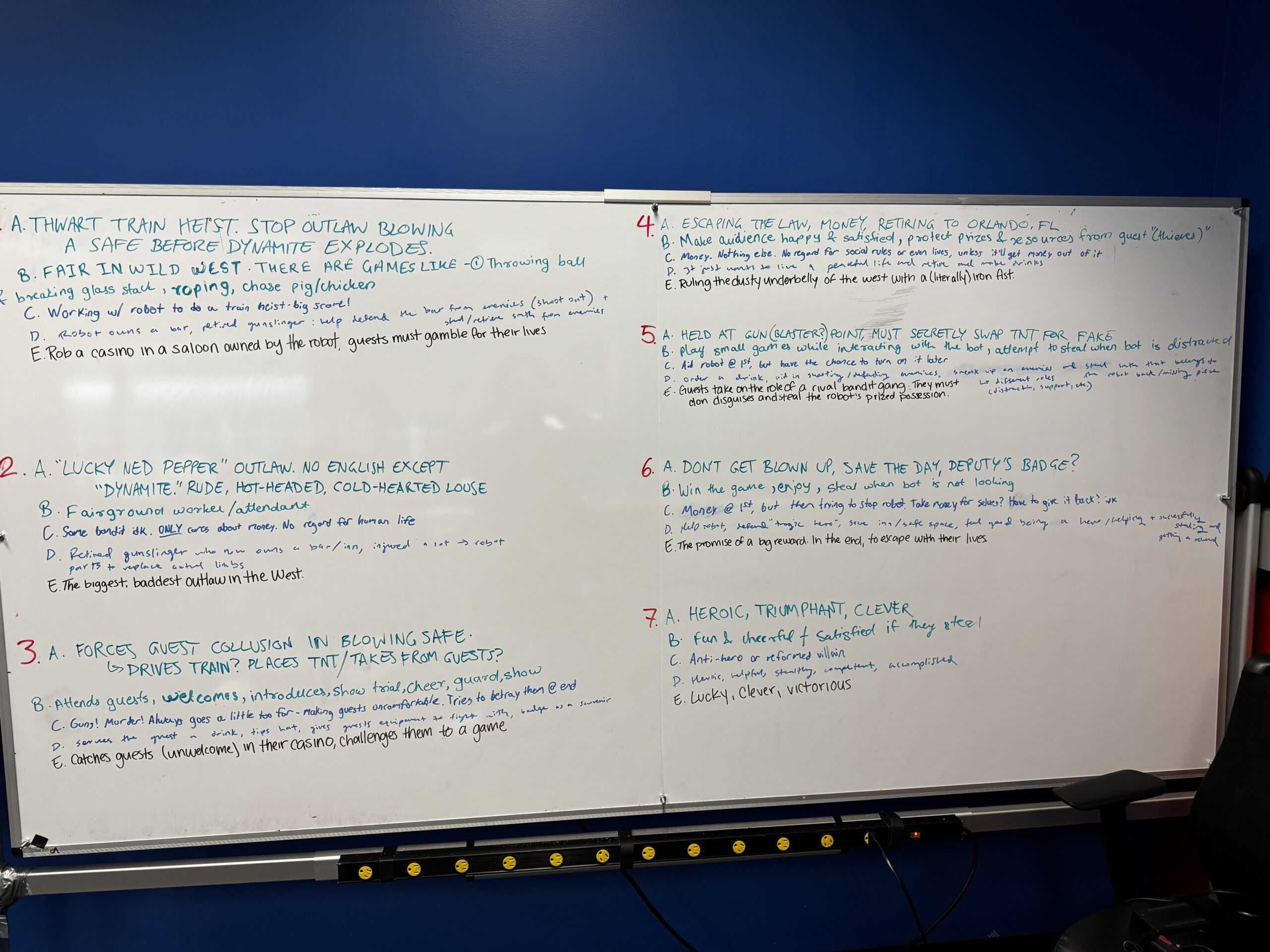
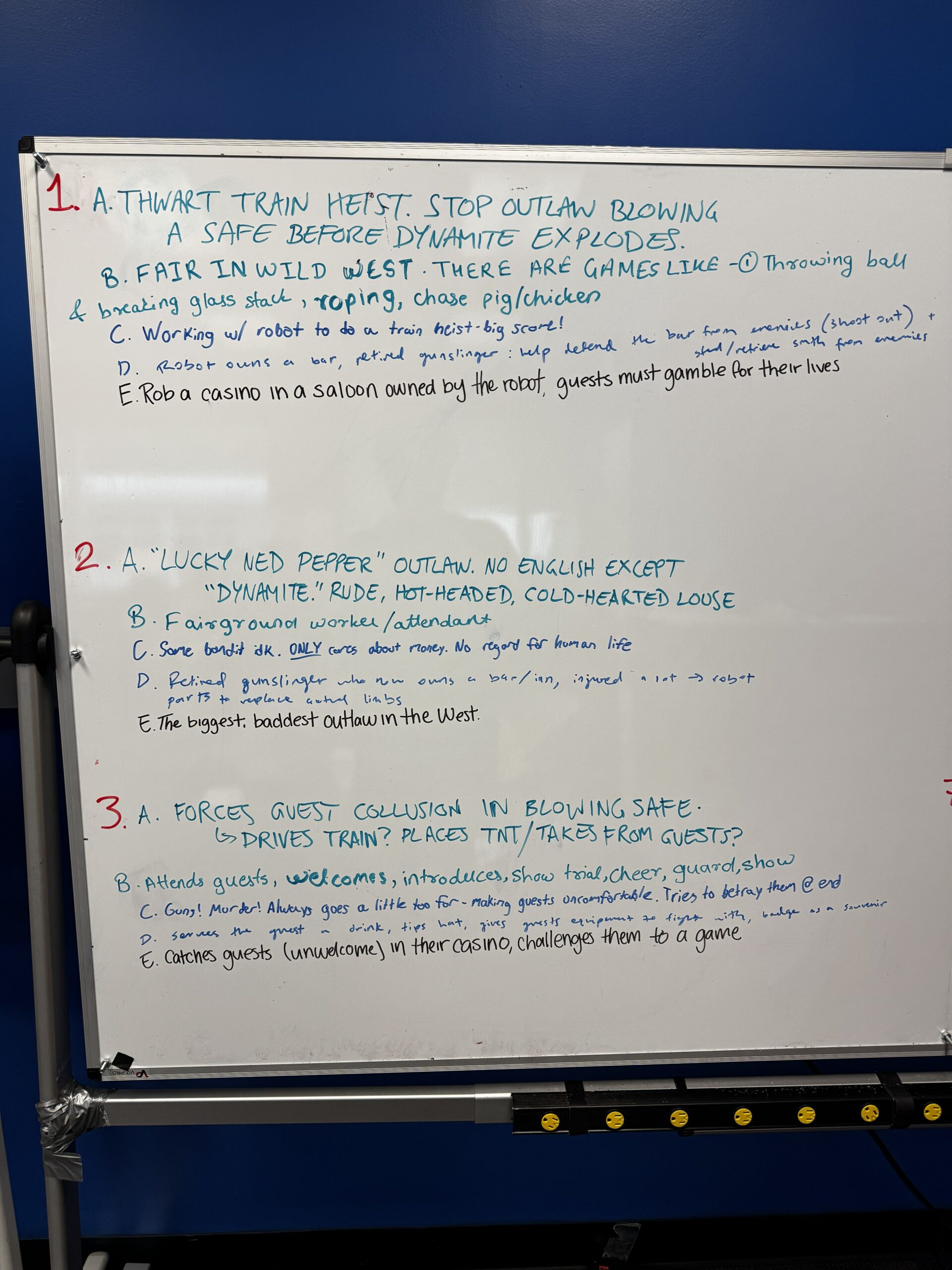
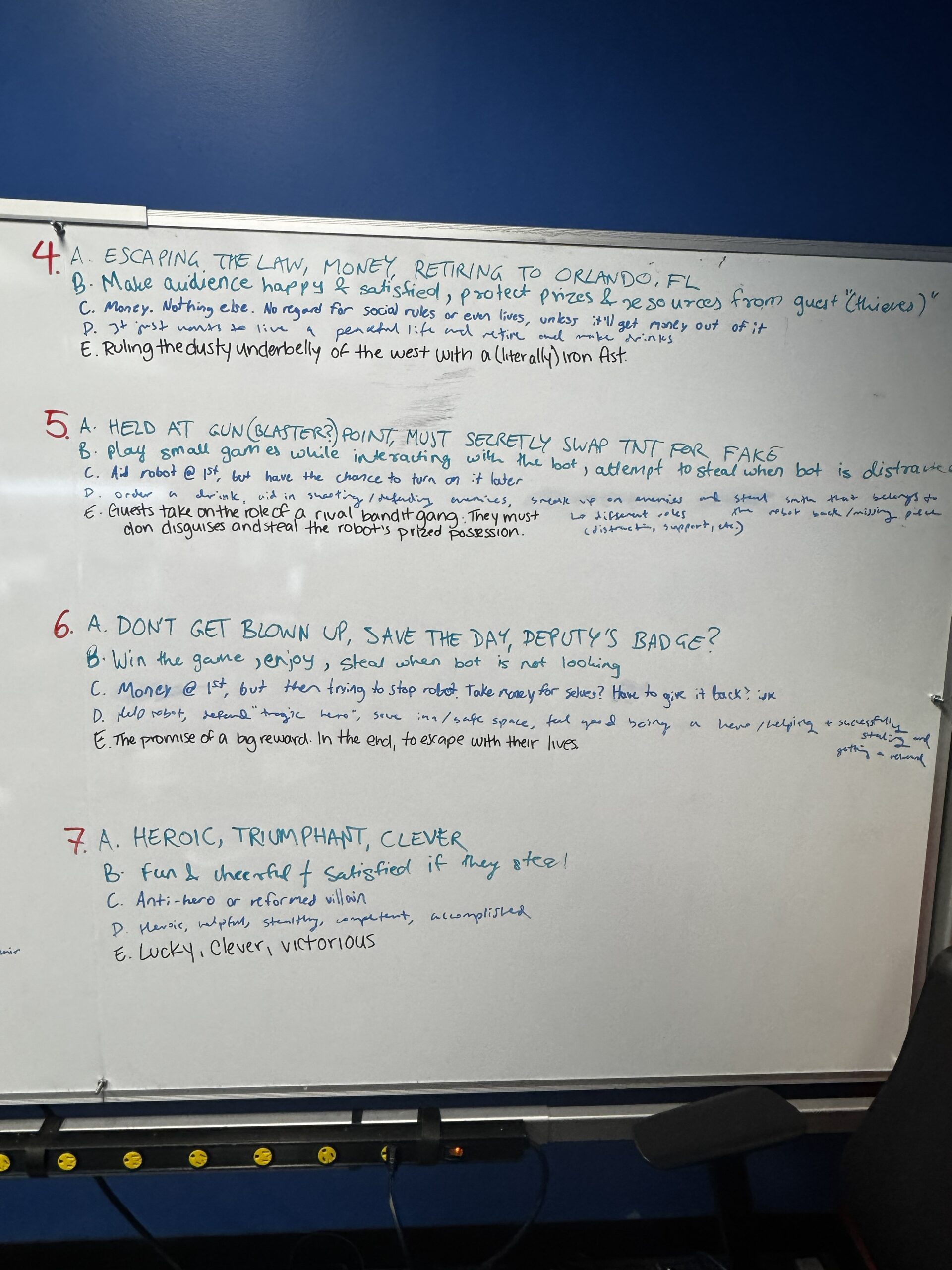
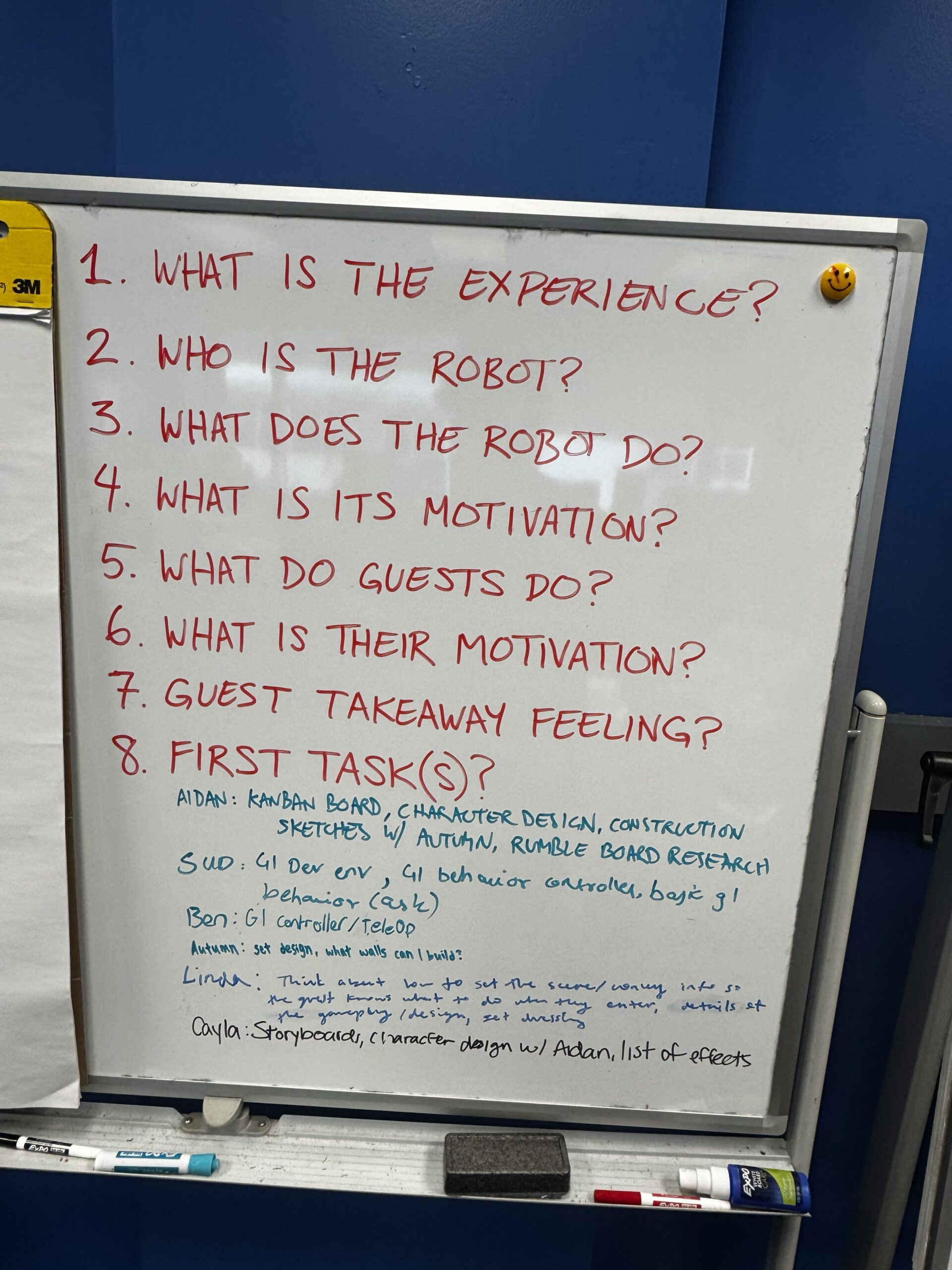
By the time Week 2 started, we had six different ideas and one big question – which one could actually become a good experience with the robot? On Sunday evening, we got together to go through all six ideas and narrow them down to two that we could pitch to our advisors the next day. We knew the experience had to involve the robot, take place in the Wild West, and include stealing in some way. After going through each idea and debating what could actually work, we voted on our top two.
Idea One was set in a Wild West saloon with actors involved in the experience. Our guest would play a potential employee trying to get hired by the bartender. The bartender has an enemy: our robot, who returns to get revenge or win back a title from a game the bartender won long ago. Instead of challenging the bartender directly, the robot challenges one of his employees, forcing our guest to play against the robot. At this point, we had not yet decided what the game would be.
Idea Two involved a robot carrying out a heist on a train. The robot would have dynamite that it could set off at any time and would choose one guest to be its partner. The guest would have to monitor the other passengers while helping the robot complete different tasks. Everyone’s lives would be at stake, making the guest an important part of the heist.
During this meeting, we also decided that we needed to start thinking about the risks we could face while working with the robot and these types of environments. On Monday morning, some members of the team met to list these risks and divide up tasks for the week.
That afternoon, we met with our advisors and pitched our two ideas. They gave us feedback, asked questions, and helped us identify what we needed to explore next. We left the meeting with a long list of tasks to work through before seeing them again on Thursday. These included listing everything the G1 can do, exploring possible audience-to-robot and robot-to-environment interactions, looking at different character designs for the robot, defining the emotional experience we wanted the audience to have, figuring out why the robot was necessary to the experience, developing possible loglines, identifying what made our project unique, exploring whether audience choices could lead to different outcomes, and researching existing G1 RL policies and technical capabilities. The goal was to use all of this information to help us narrow down our final concept.
On Wednesday morning, some of us met again to work on the narrative and prepare a new pitch for our advisors. We started exploring the idea of combining the two concepts we had pitched: a heist taking place in a Wild West saloon. We spent time discussing what we wanted the robot to be able to do and what actions would actually make the robot important to the experience.
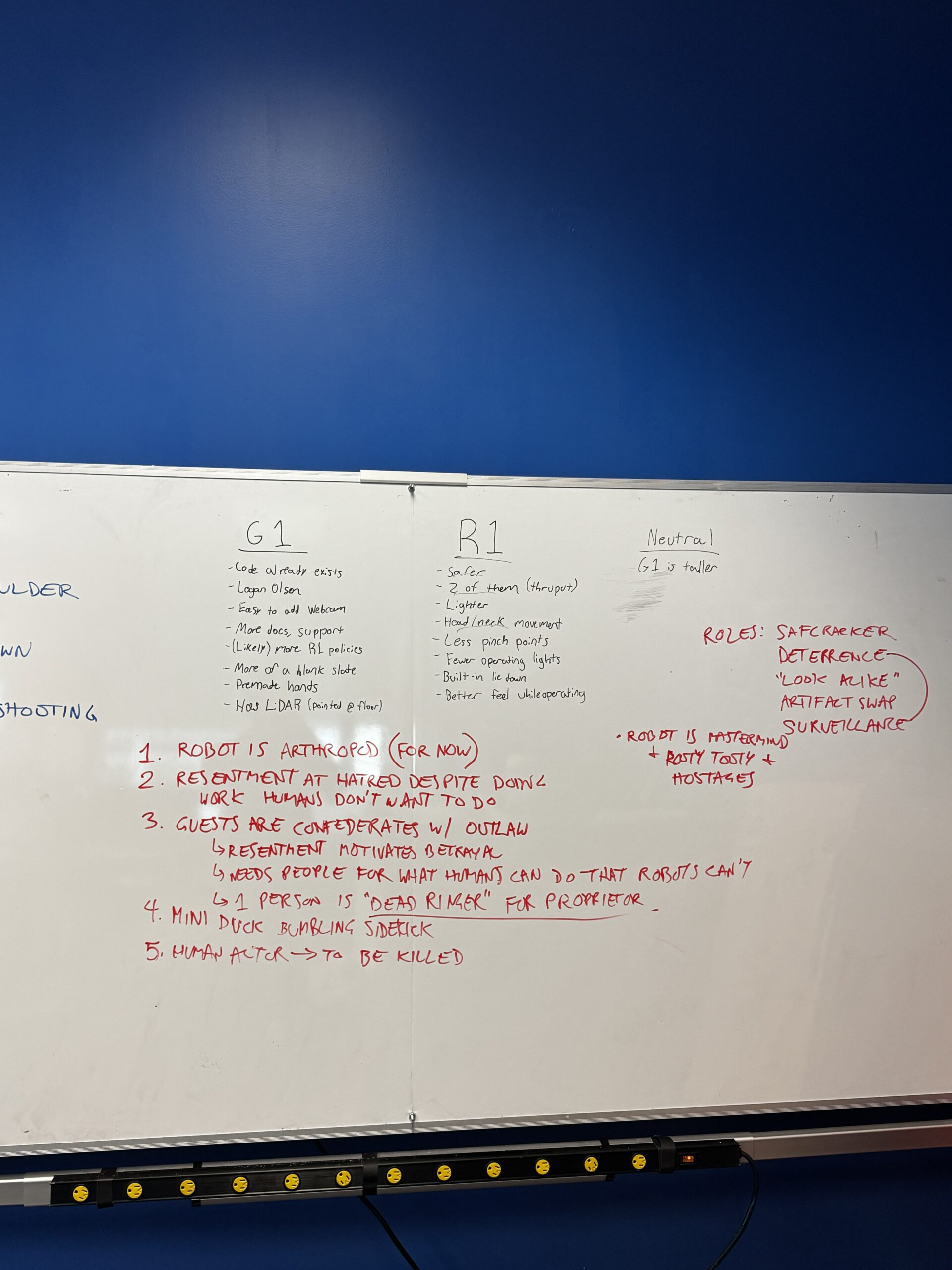
We also discussed whether we should continue with the G1 or switch to the new R1 robots. We decided to move forward with the R1. They are lighter, have new movement capabilities, and we have two of them available. Having two robots also means we can switch between them instead of waiting for a single G1 to cool down and charge. The R1 also works in a similar enough way to the G1 that the skills we had already developed could still be useful.
Another important step this week was completing our training so that we could access the robot room and begin working with the robots independently. This was exciting because it meant we could start moving beyond ideas and actually test what was possible.
On Thursday morning at 9 AM, we met with our advisors again. We went through our list of robot affordances, discussed the new pitch, and reviewed what we should focus on next. Our tasks for the coming week became much more focused on building the experience:
Experience
- Build our first experience prototype.
- Determine how the different roles interact.
- Explore collaboration and communication between the roles.
- Figure out what participants do when they are not performing their main task.
- Make sure the tasks meaningfully involve the robot.
- Decide what happens if the guests lose or fail.
Costume
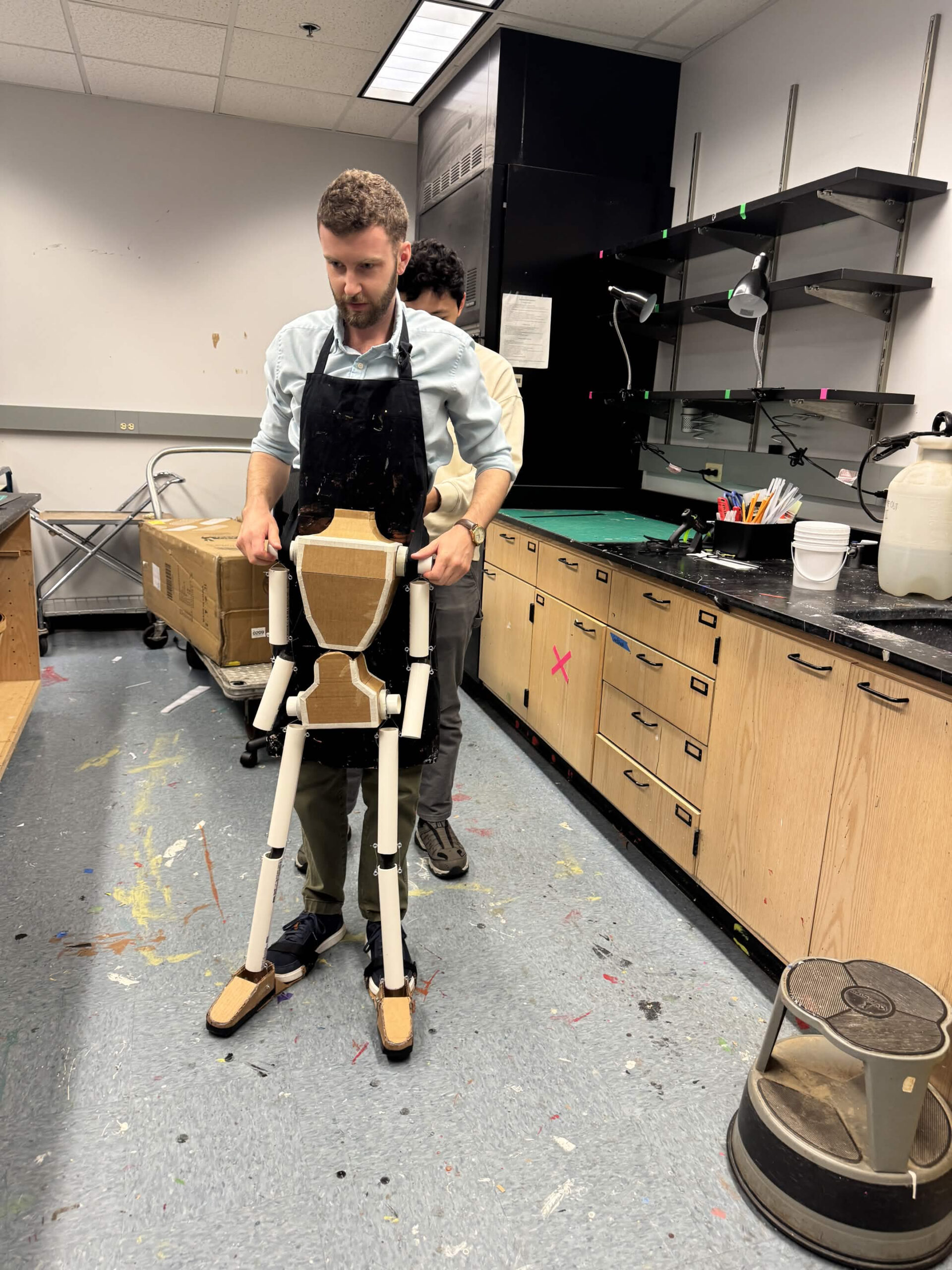
- Create our first actual costume prototype.
- Develop costume sketches.
Visual Direction
- Create a moodboard exploring Fallout, Mad Max, and Future Old West.
Set
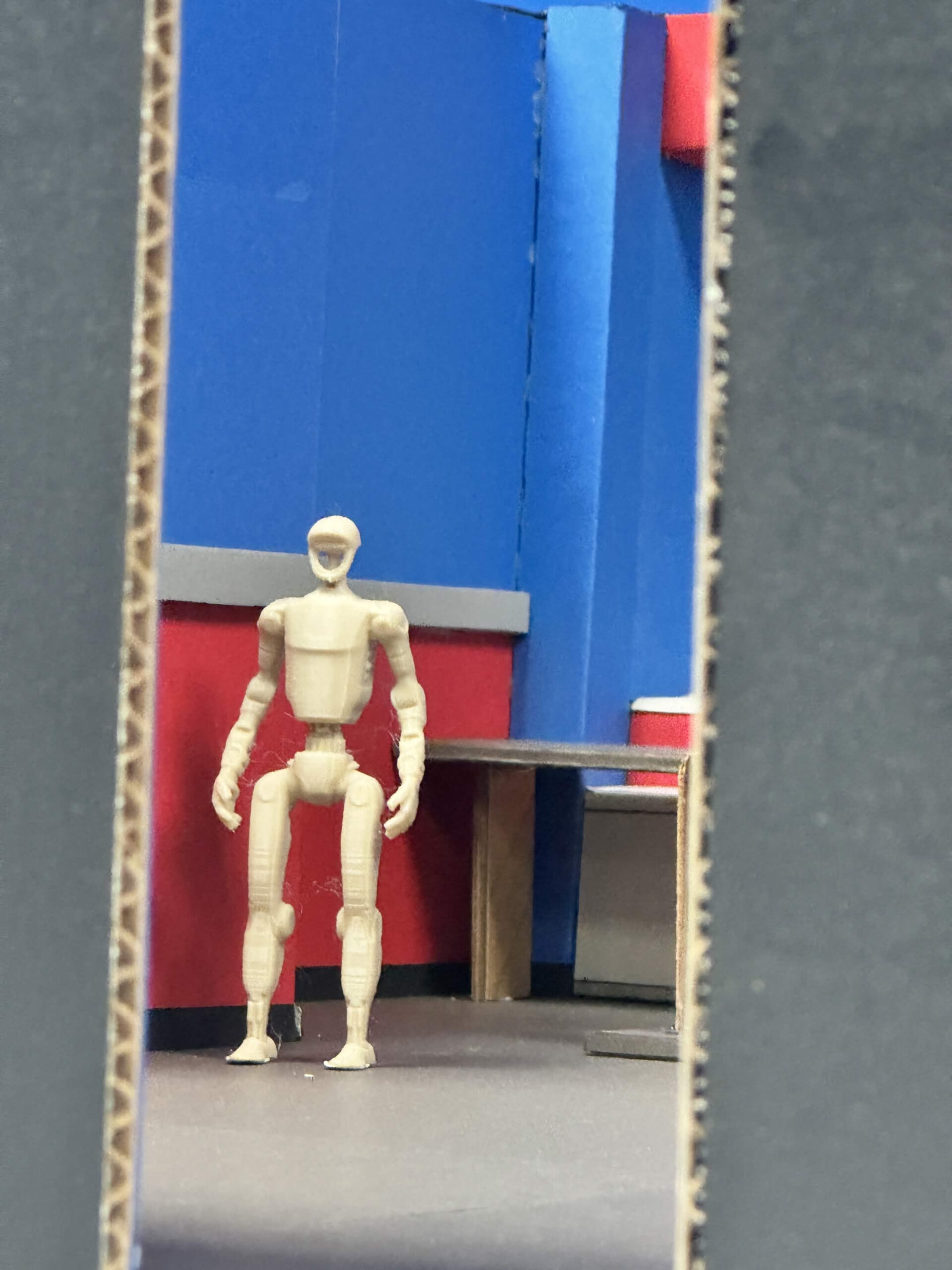
- Create cardboard mockups for the set design.
On Friday, we met with Mike Honeck and shared our progress with him. As always, the conversation was really helpful. He gave us feedback on our ideas and raised some concerns that gave us more things to think about as we move forward.
By the end of Week 2, we had gone from six different ideas to a much clearer direction. We had a new combined concept, access to the robots, a better understanding of their capabilities, and a list of things we could actually start building and testing. With a long weekend ahead and a lot to work on, we wrapped up Week 2 ready to start turning our ideas into something real in Week 3.
Links
Videos
- https://youtube.com/shorts/MtEpVMe0Rnc?feature=share
- https://youtube.com/shorts/9KOCEuCrZrQ?feature=share
- https://youtube.com/shorts/3P0xcq8f0iw?feature=share
- https://youtube.com/shorts/HMiRHOG63aA?feature=share
- https://youtube.com/shorts/j_TIsgHCS5Q?feature=share
- https://youtube.com/shorts/bksh0vLdFkc?feature=share
- https://youtube.com/shorts/vmIUUrhHQjU?feature=share
- https://youtube.com/shorts/9v6IiybwrhQ?feature=share
- https://youtube.com/shorts/lu8IQKv1ZVY?feature=share
- https://youtube.com/shorts/E0KF846ejC0?feature=share
- https://youtube.com/shorts/oV8eACK8tWs?feature=share
- https://youtube.com/shorts/JdGsfCRo2kc?feature=share
- https://youtube.com/shorts/xNTMZ1h_-K4?feature=share
- https://youtube.com/shorts/TL7FojLtDGU?feature=share
- https://youtube.com/shorts/YwfrageEmXY?feature=share
- https://youtube.com/shorts/p3MMofdBIkQ?feature=share
- https://youtube.com/shorts/T5EGKZ0F98I?feature=share
- https://youtube.com/shorts/52mttxjAmrM?feature=share