And so I held my torch up high,
to cut a path through the darkness…
It’s the beginning of a new semester!
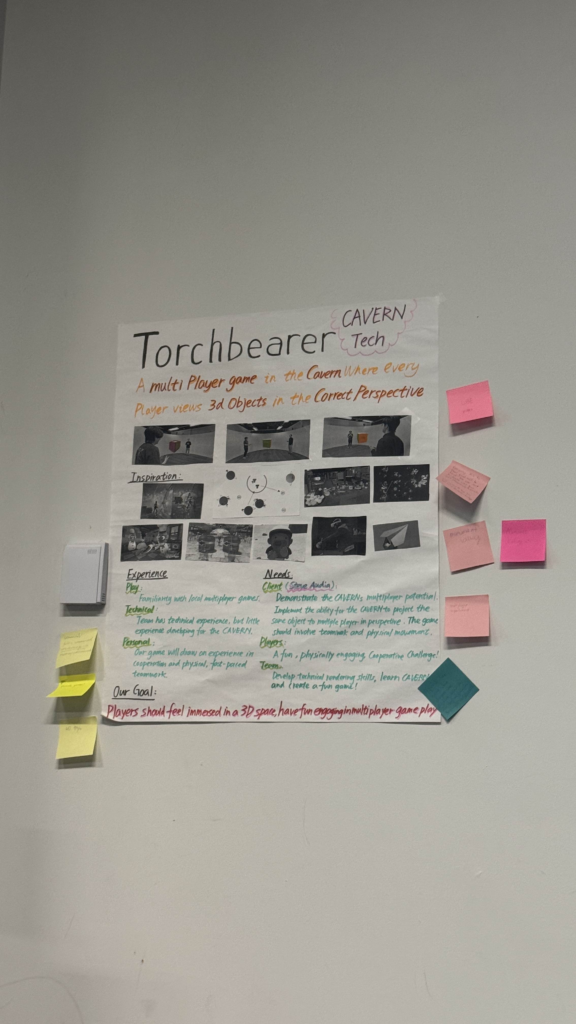
We are Team Torchbearer! This week, as with most ETC projects’ first weeks, is all about setup!
But first, what exactly are we doing here?
The CAVERN
The CAVERN has been a fixture of the ETC for many years now. It was built here, and is unique to our building. Many past teams have created films and games for it.
CAVERN stands for “Cave Automatic Virtual Environment Round”. It’s a type of CAVE system that is unique in that instead of having harsh angles at the walls of a box, it’s… well, round!
A CAVE system is method of VR that involves the use of projectors on the walls of a space to create a VR environment that doesn’t require the user to wear a headset.
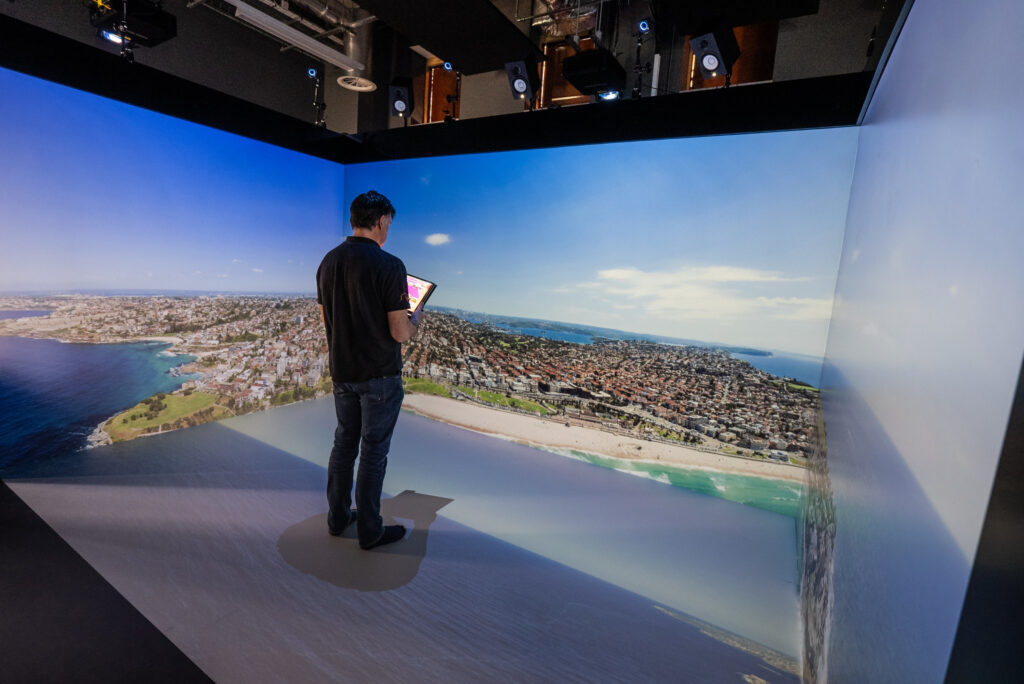
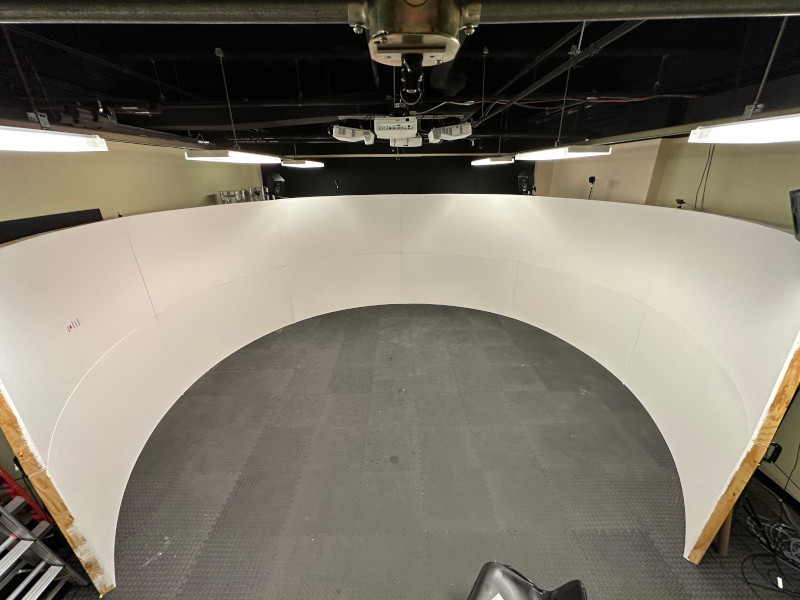
The CAVERN uses stereoscopic 3D projection and glasses along with headtracking to create a 3D effect. Objects can appear to exist into the CAVERN, or they can appear to be inside the space the players are standing in. The result is a uniquely immersive space. Player’s can move around the virtual world as it surrounds them in the CAVERN, and unlike with traditional headset VR, they can look at and directly interact with each other, without needing virtual avatars.
Steve Audia’s Dream/Our Challenge
When Steve Audia, the ETC’s director of IT, had the idea for the CAVERN, it was primarily intended to be used for multiplayer VR games. Afterall, its unique affordance is that two players can physically look at each other.
However, there is an issue with that, and it comes in two parts:
First, in order to convincingly create a 3d effect, the image rendered by the CAVERN needs to “skew” itself to match the perspective of the viewer. This means that for anyone that is not the “chosen perspective” of 3D in the CAVERN, the image appears distorted and “off”. This effect gets more pronounced the “closer” the object is to the viewer. For objects that we want to appear far off in the distance, this is barely noticeable. For anything we want to appear inside the CAVERN, this effect completely breaks the illusion of 3d for anyone that isn’t the main player.
Second, currently the CAVERN Toolkit, developed in a previous semester by the team Spelunx, only head-tracks one player. The head-tracked player is the one whose perspective is used for the aforementioned “skew” needed to create the 3d effect. Even if we simply added a tracker to another player, who would we use as our reference perspective for the world?
Enter, Multi-Perspective Rendering
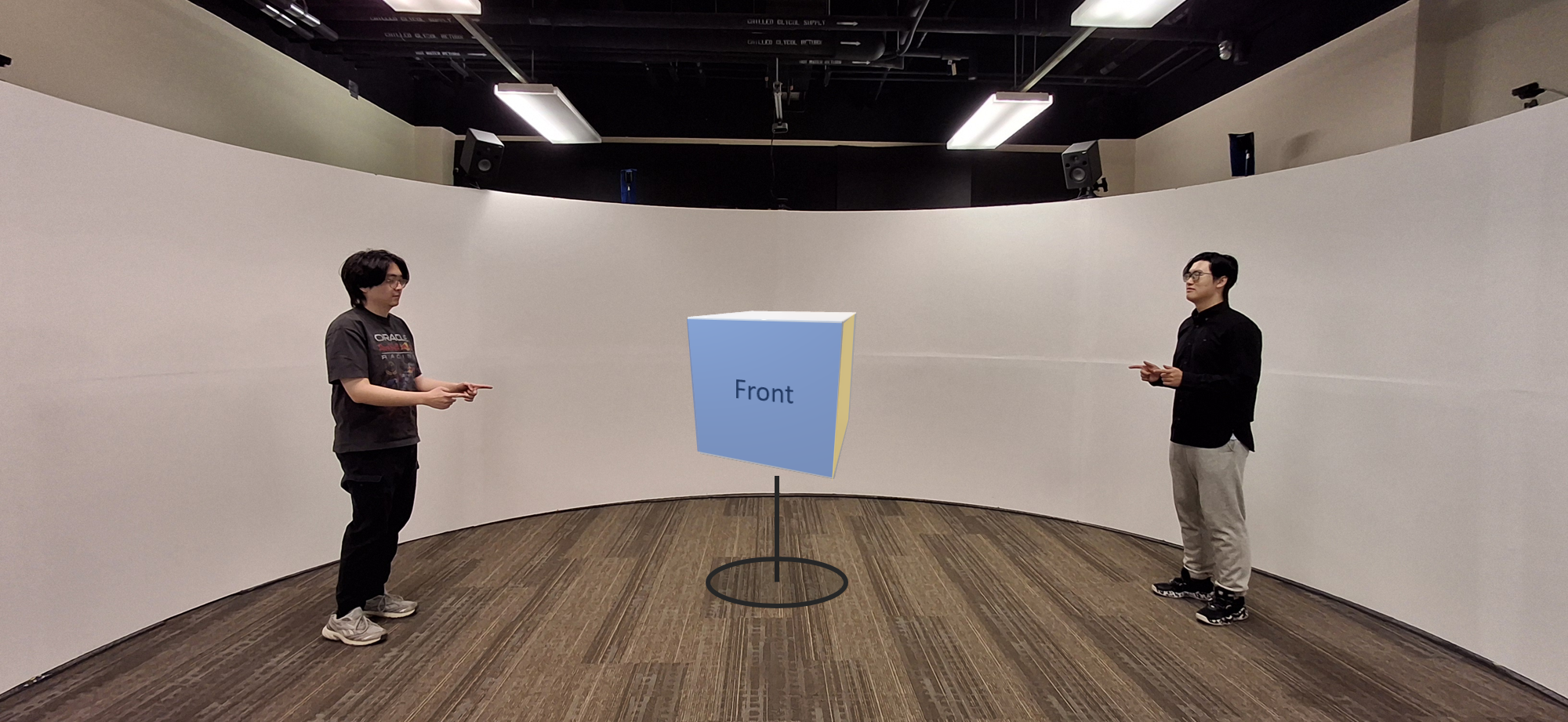
Over this last summer, Steve came up with a potential way to solve these issues. The idea essentially boils down to this: Treat every object that is “outside” of the CAVERN walls as if the players are standing directly in the center of the CAVERN. Because those objects are more distant, the distortion isn’t very noticeable. Then, track every player, and render every object “inside” the CAVERN multiple times – once per player. This way, every player gets their own perspective, and they gain the ability to walk around, or encircle a virtual object, and see the correct side of it from their position.
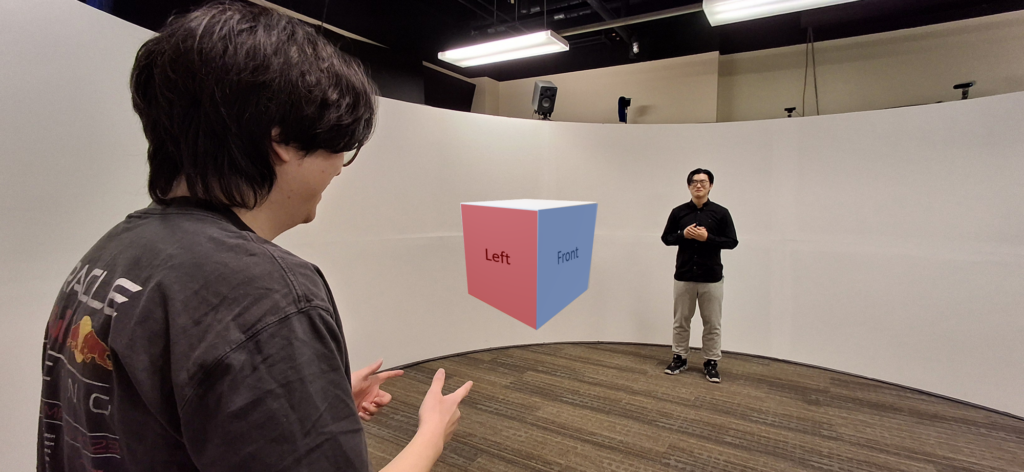
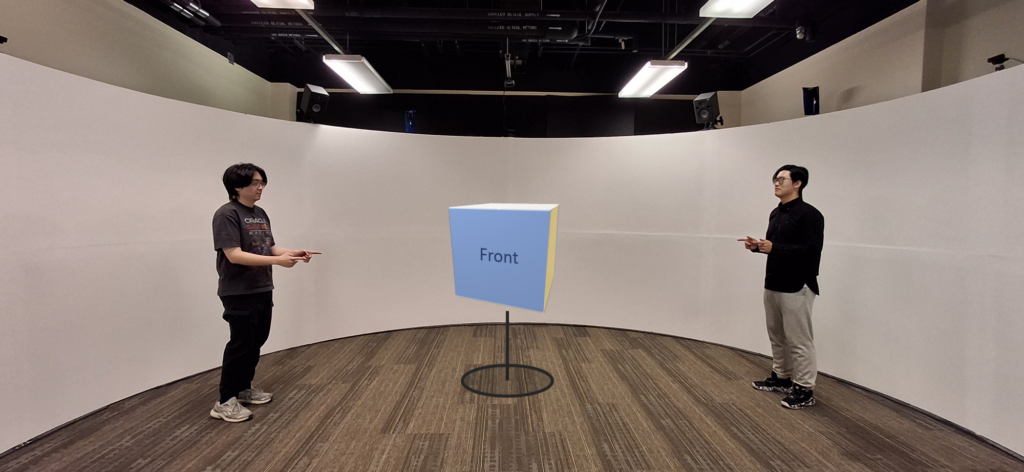
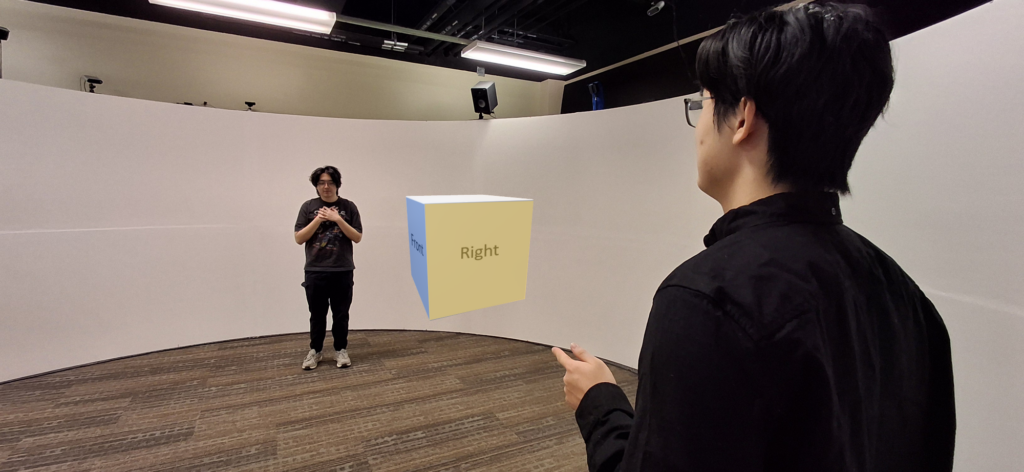
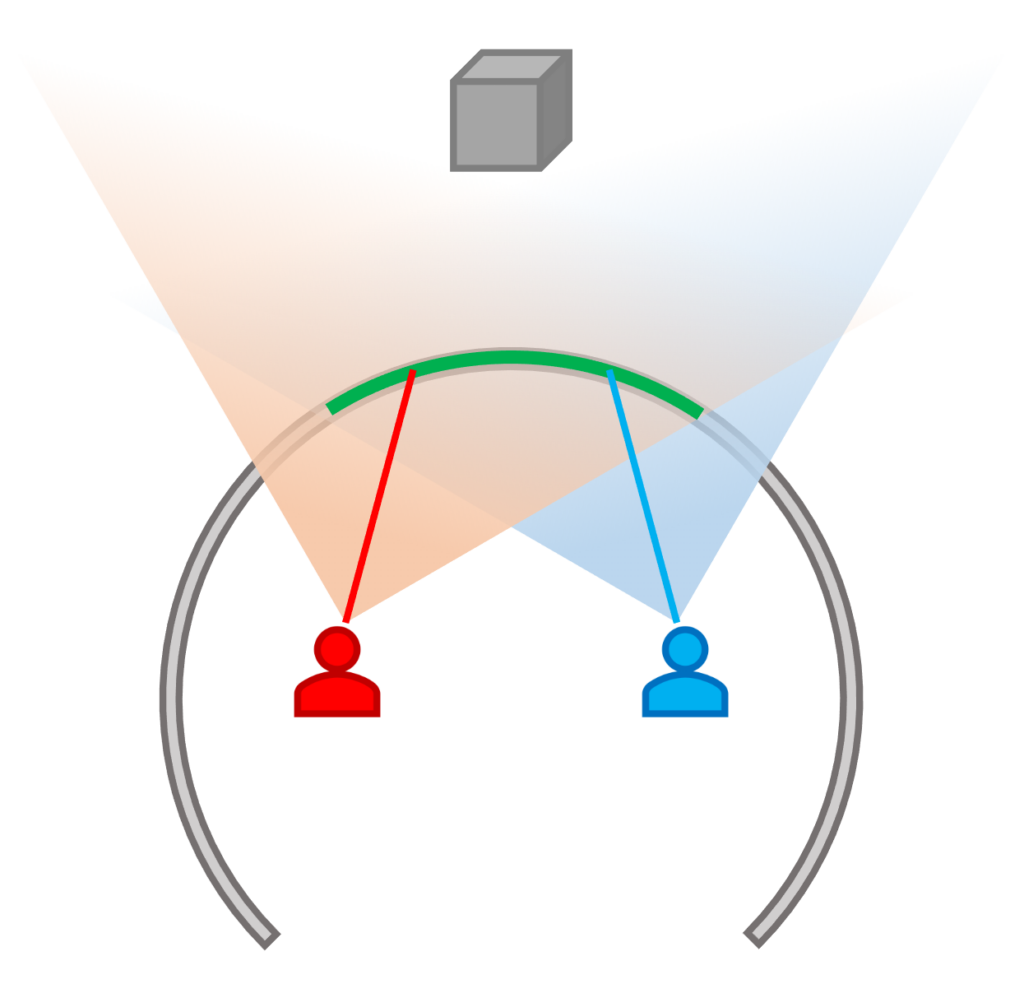
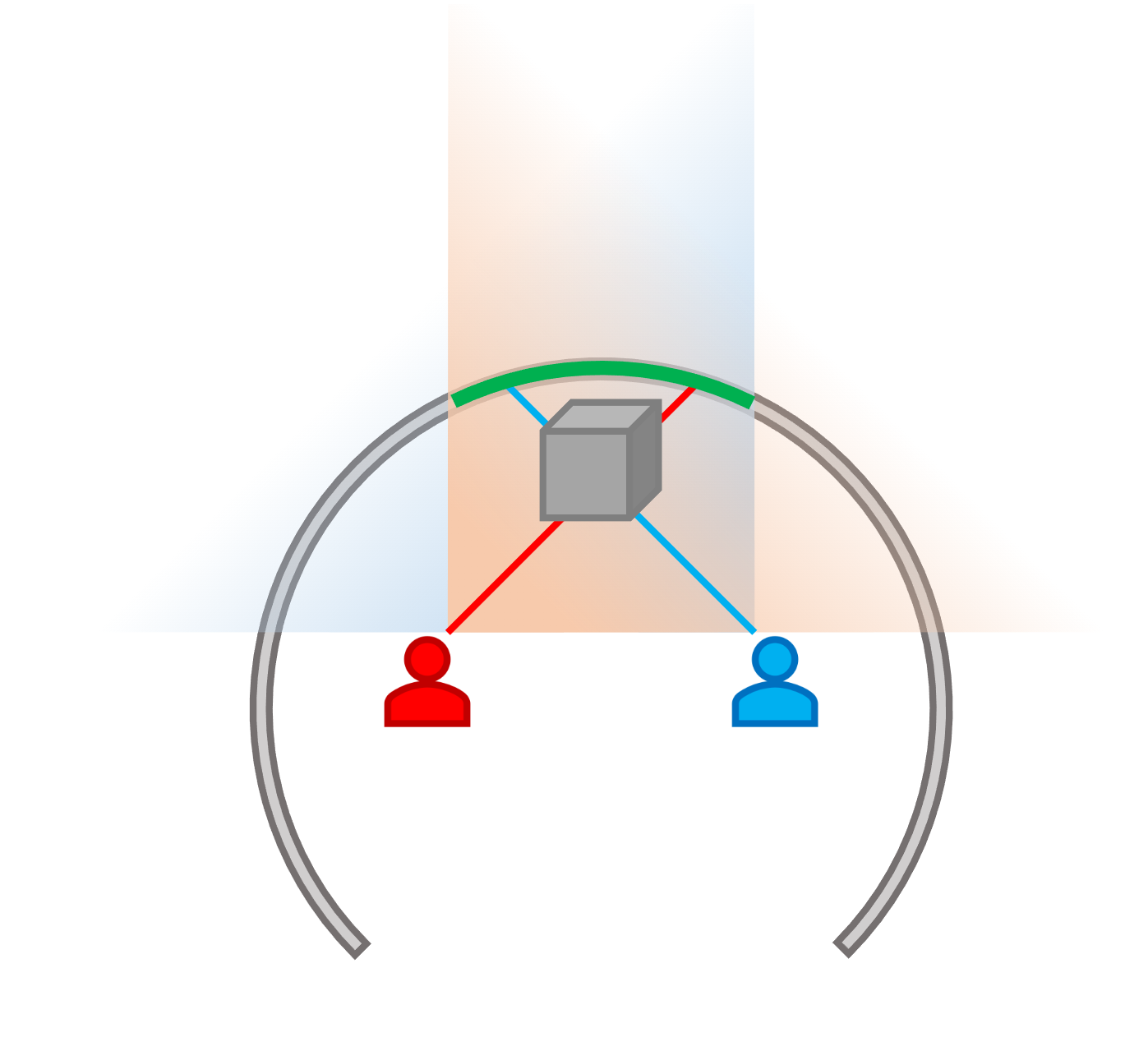
This solves the multiplayer perspective issue, but has a lot of unanswered questions. The CAVERN is unable to separate what individual players see, so if one player is looking in the same direction as another, they would both see each other’s version of the object. It would appear doubled!
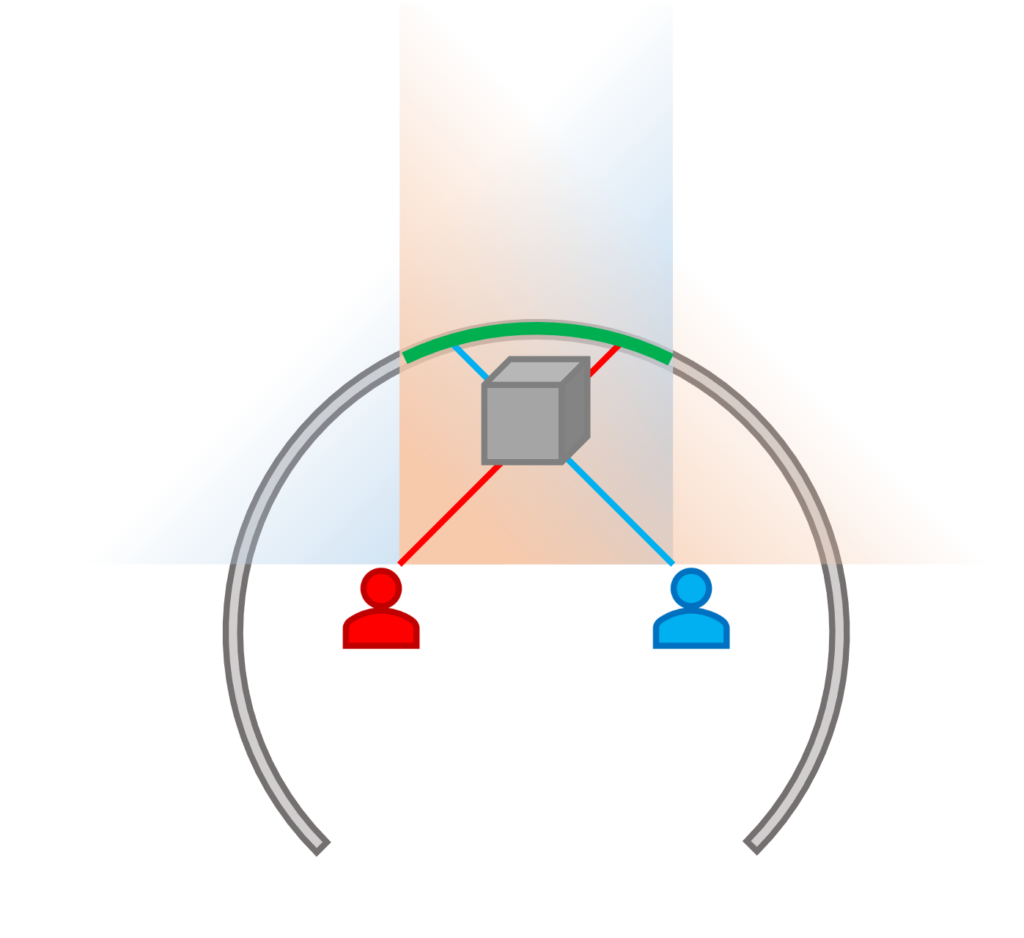
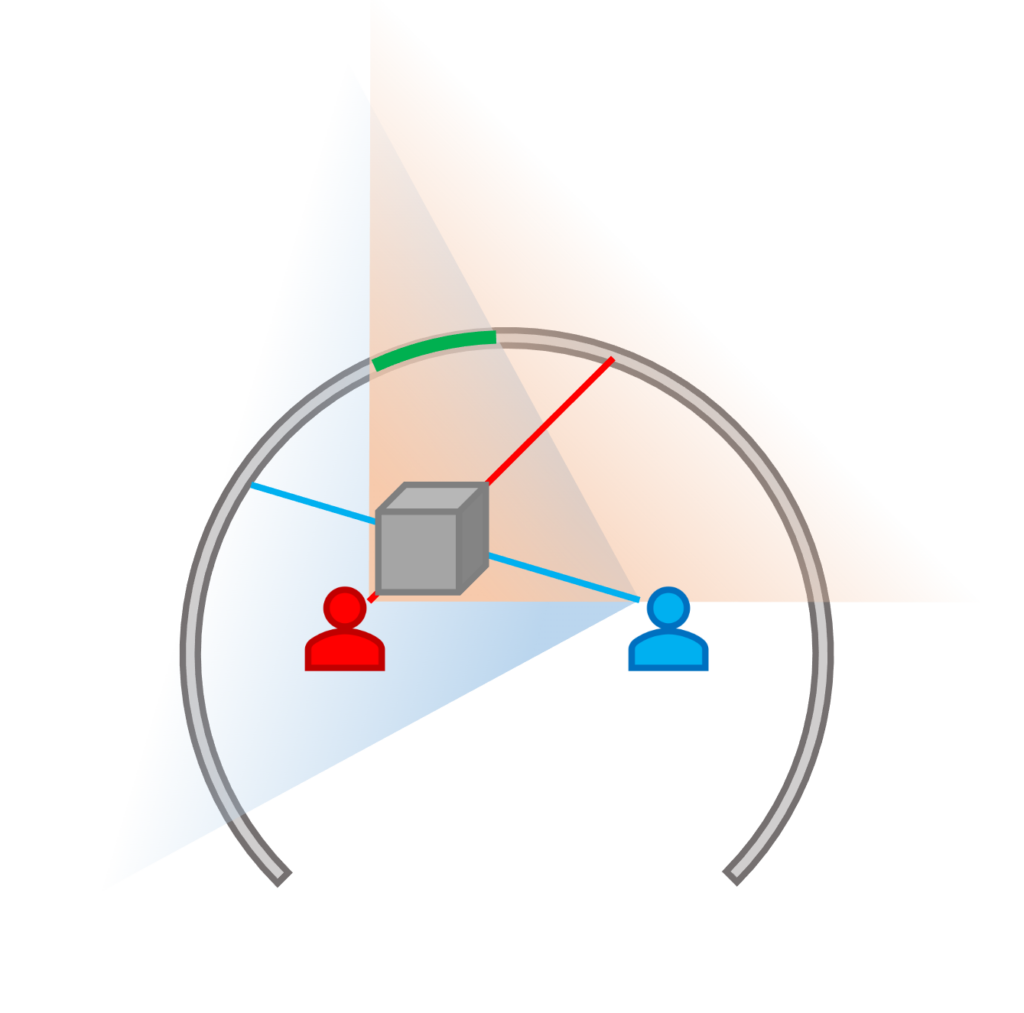
Also, because objects are projected onto the CAVERN screen to appear 3D, even if they should be in front of both players, it’s entirely possible for the players to block each other’s views of the object anyways, if they are standing in the right positions.
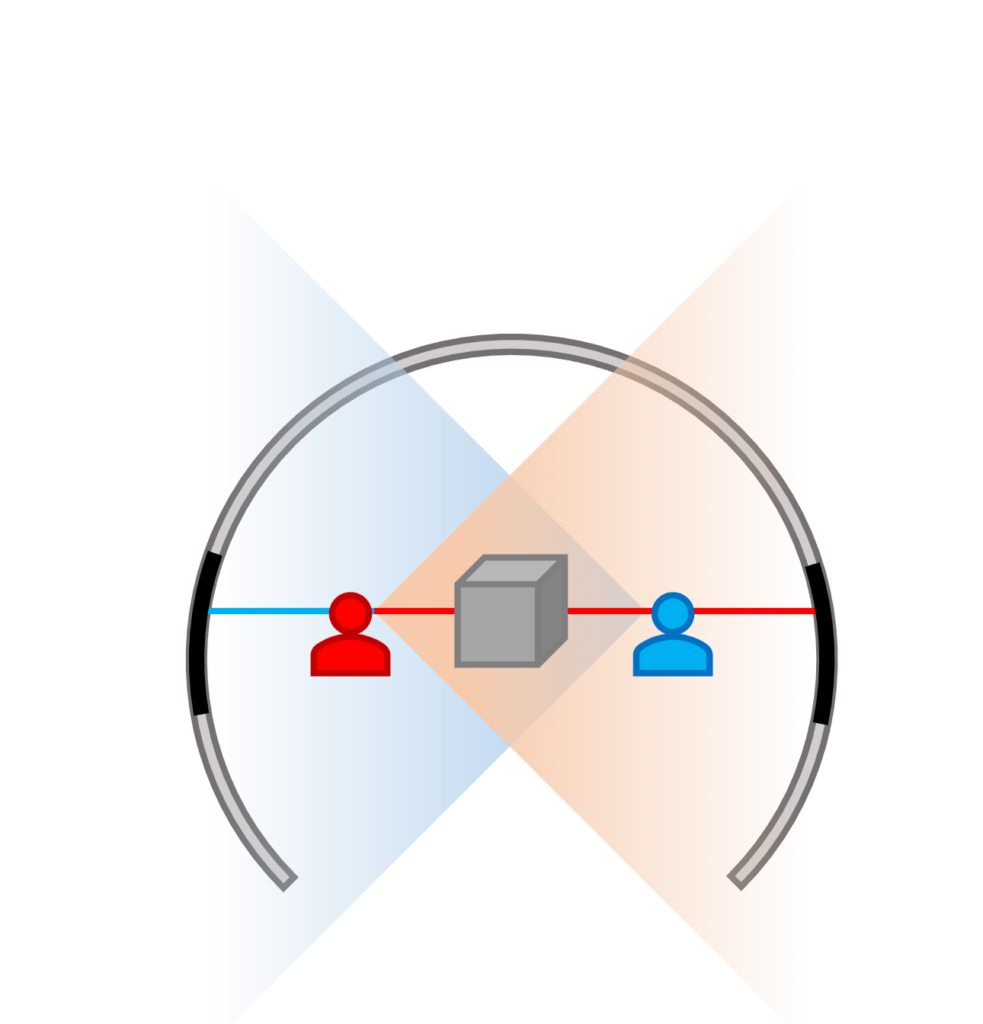
There are also a variety of other unknowns. How do we render the same object multiple times using Spelunx’s existing system? Will there be any performance issues? Will the 3D effect be strong enough to use “moving” objects? Will the distortion on other player’s objects be distracting? How would we handle overlaps in the rendering? How do we separate the “interior” objects from the “exterior” objects? And so on and so on…
It is with this idea and this pile of problems and unknowns that we begin our semester!
Enter, Team Torchbearer!
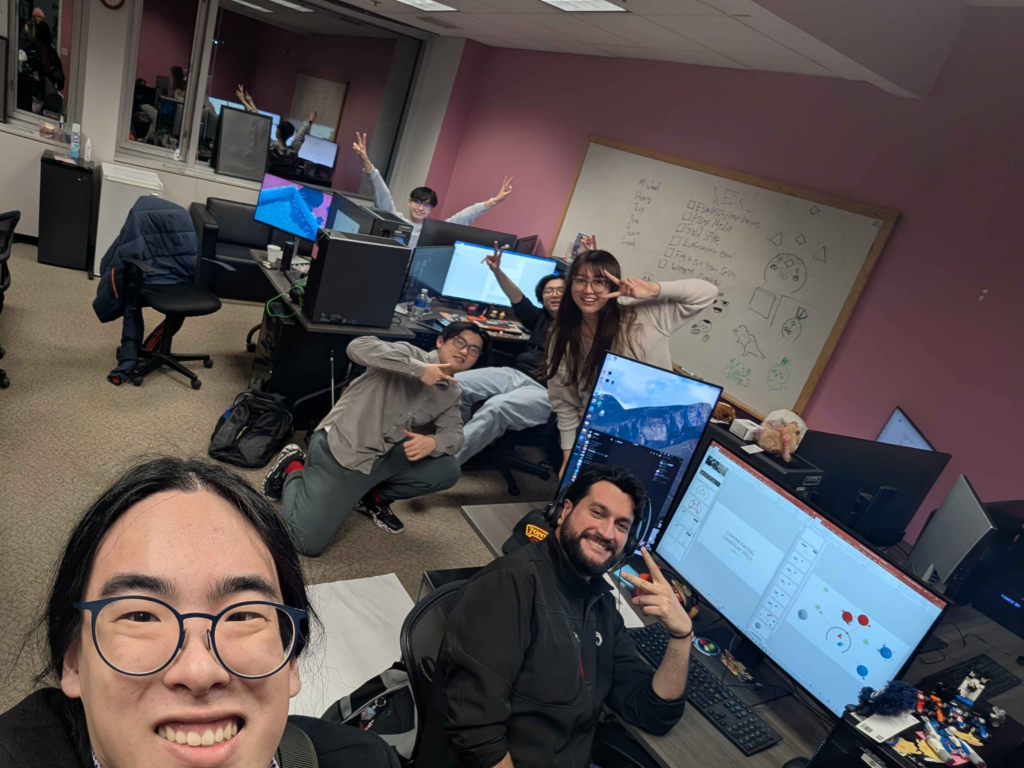
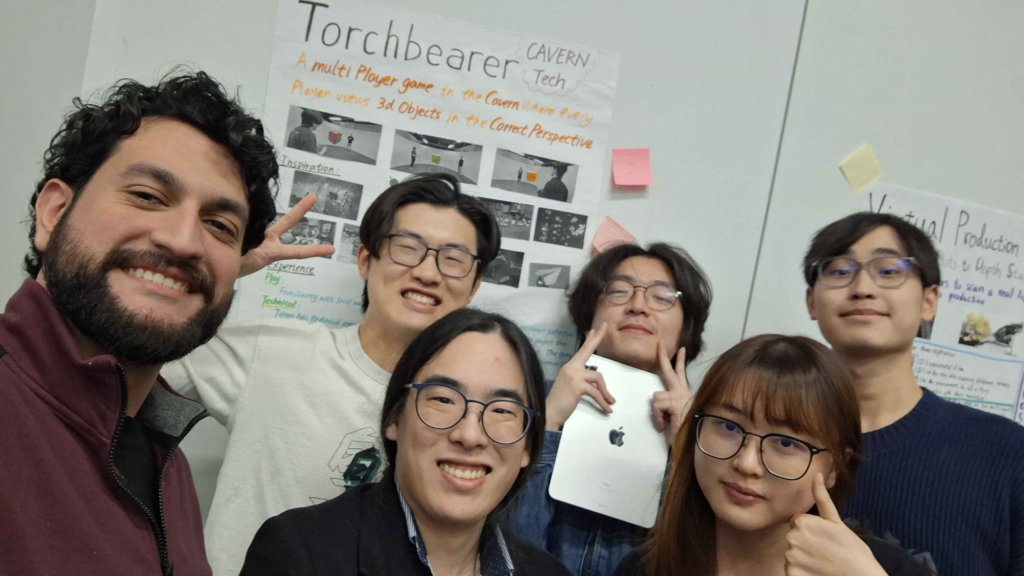
From back to front:
Henry Wang, our gameplay programmer,
Frank Lin, co-producer and 3D Artist,
Jason Jiang, our graphics programmer,
Ivy Hu, our second 3D Artist,
José Francisco Mireles Macario, our game designer,
and finally,
Michael Wong, our sound designer, composer, and other producer (this is me)
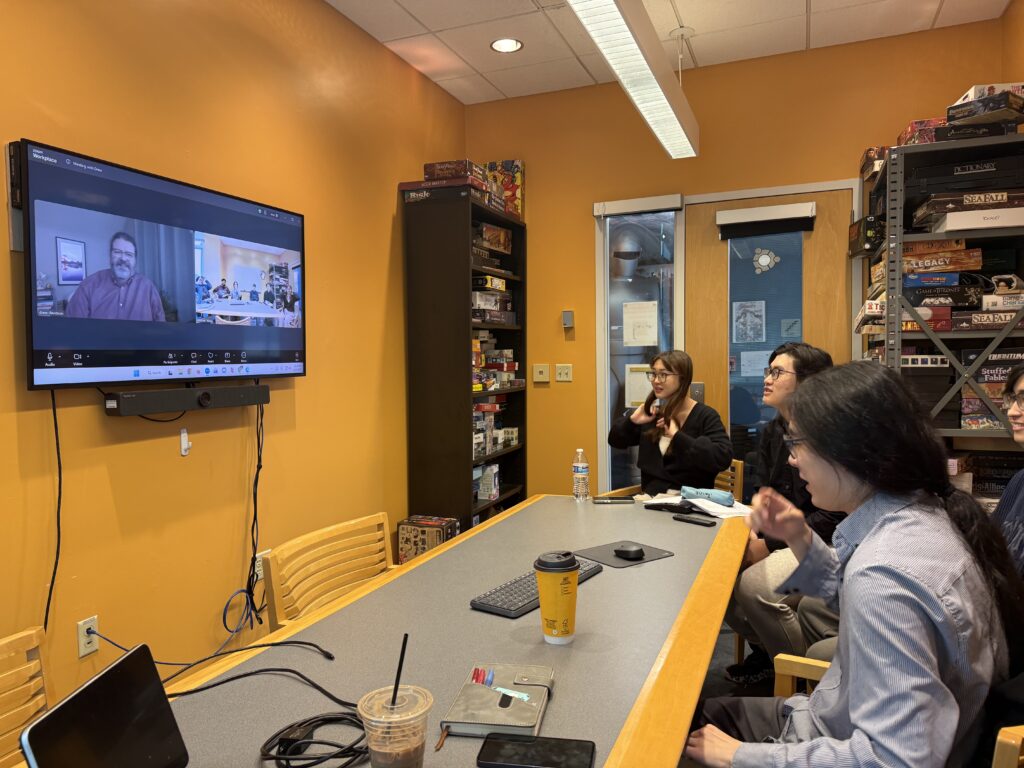
This week, we established our team’s identity (that’s our name, Torchbearer), met with our advisors
Drew Davidson and Steve Audia for the first time, tried out the CAVERN, and created a simple test scene of the single player version of 3D