
This weeks post is covers our teams deep dive into the past where we unearthed, saw, learned from relics created way before our time.
The Gift
Our project is about pinball, this much I assume you know dear reader, . . . but did you know that our amazing project professor Jonathan started us off on this adventure by offering us a relic of the past. This old, and if I may add, slightly broken Gottlieb Cover Girl has since become the inspiration and body of our ongoing work this semester.
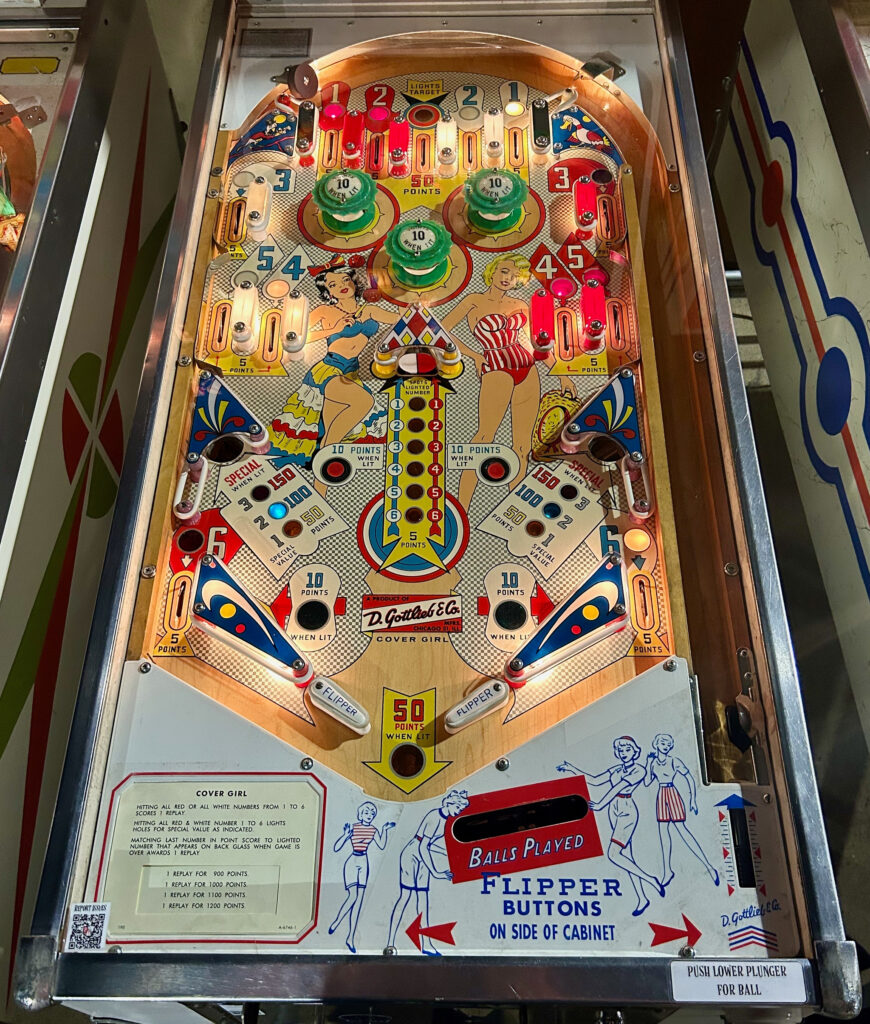
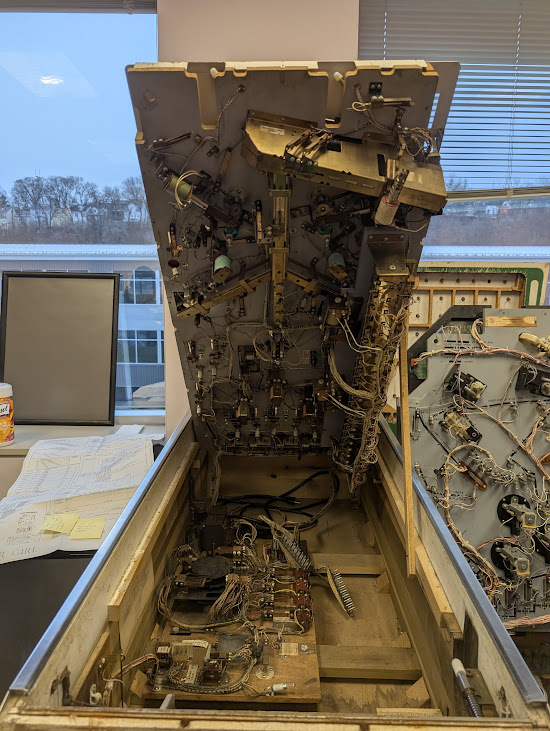
Since our cabinet is a little worse for wear at the moment (and we can’t turn it on without risking it breaking), we decided to try and look into getting some hands on experience with older pinball cabinets outside of our project room.
A Treasure Trove of Antiquities?!
When we asked our Principal Investigators (Heather and Jonathan our Project Advisors), where we could find more relics to study they recommended us Pinball Perfection, a “Year-round museum with hundreds of pinball machines from the 1930s to the present”. So we packed our bags and went right away!
Here’s how it went:

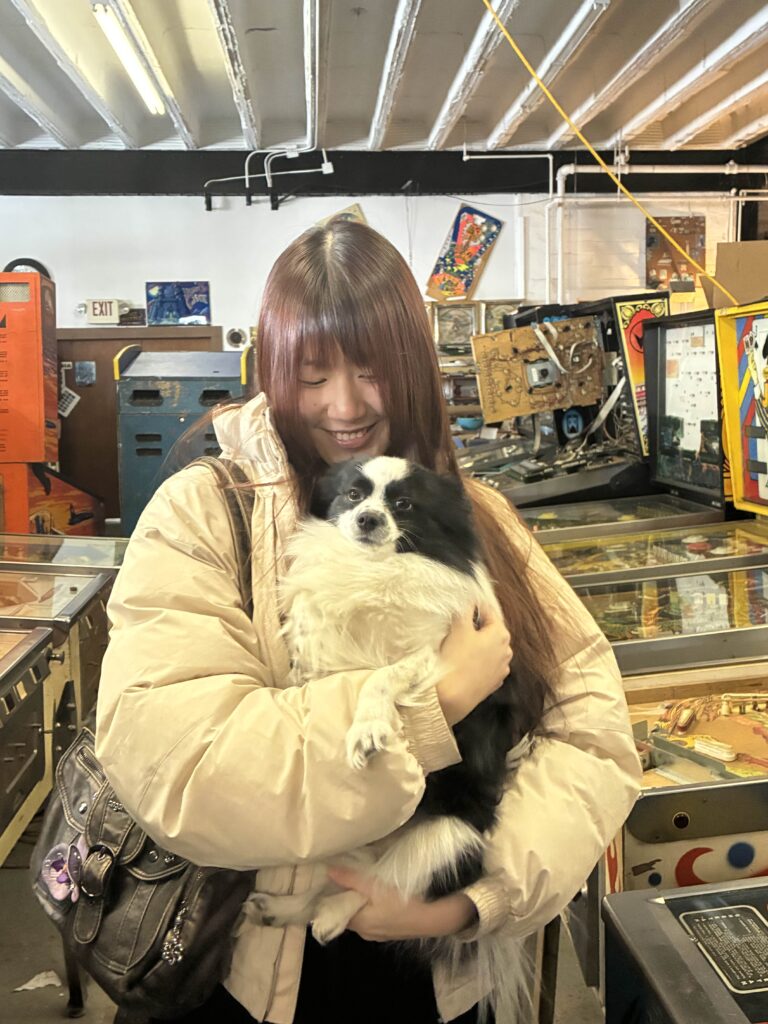


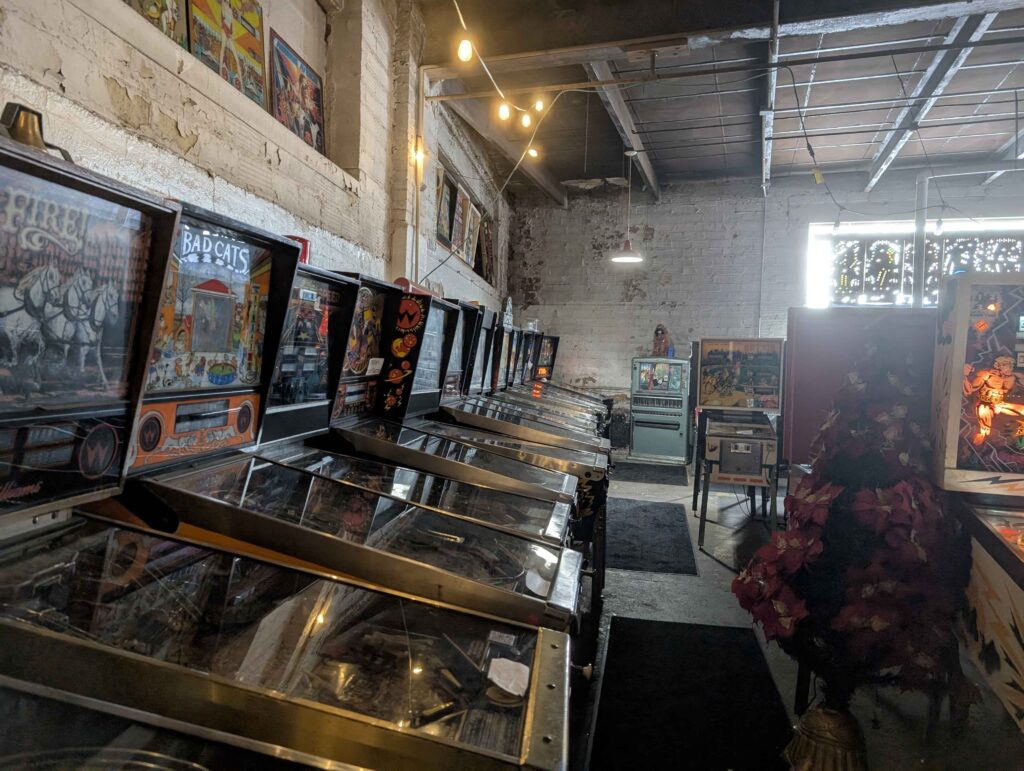
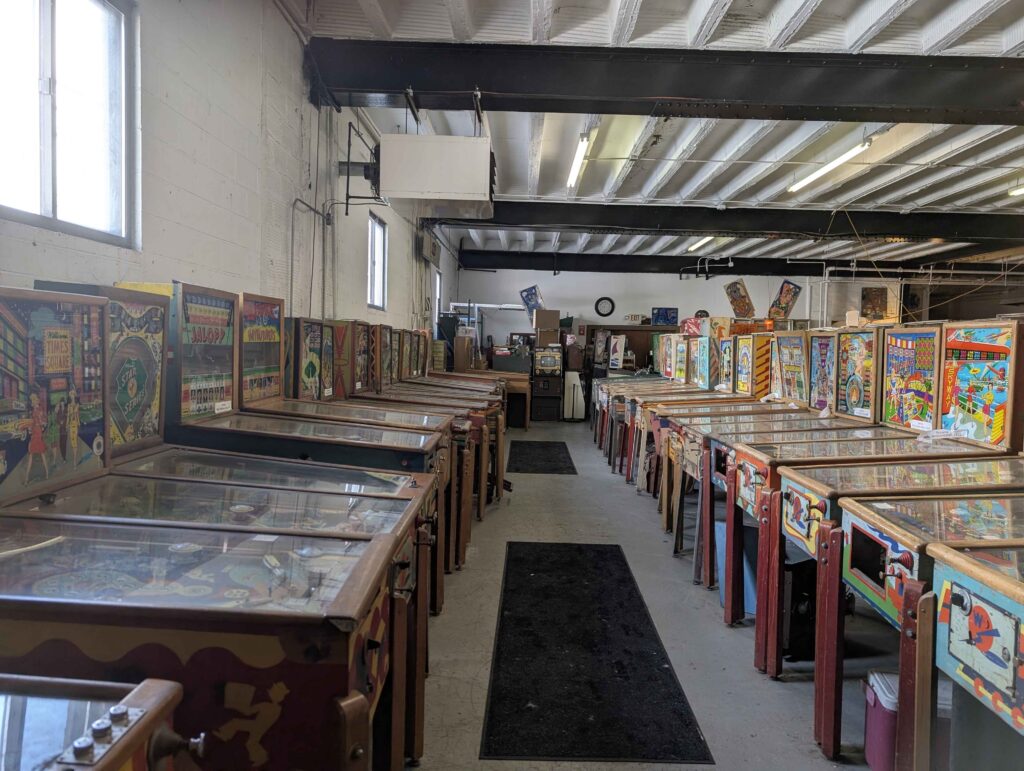
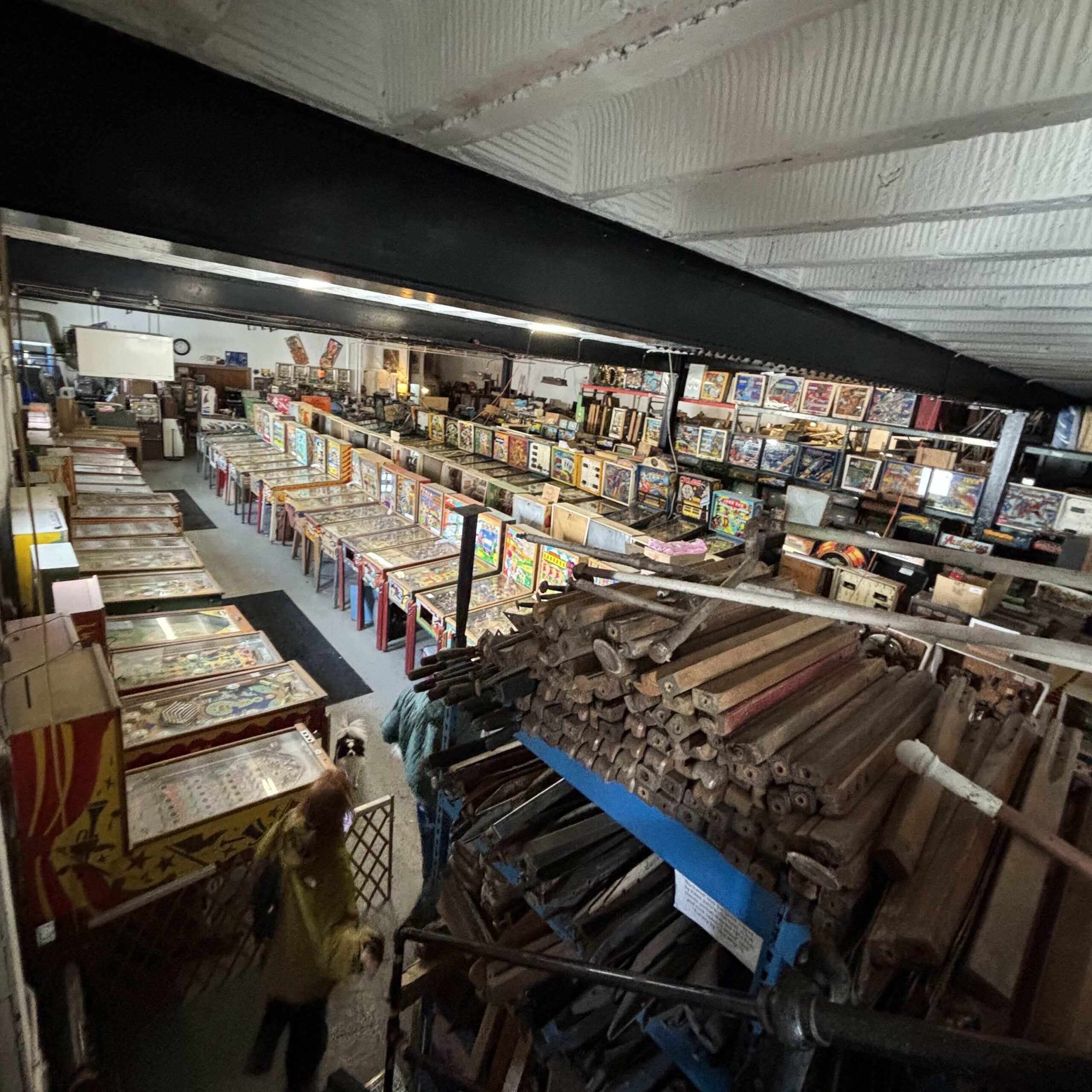
During our visit we got a tour of the collection and hands on experience playing all types of cabinets! Notably these old-style cabinets played a lot slower than any of the ones we played at PINS last week and also were much less vertical, doing without all the ramps and tunnels. Playing these improved the whole teams understanding of the Gottlieb Cover Girl Jonathan gave us and also helped inspire us to make a few design decisions.
Our Design!
There were three major questions we had to answer before moving forward.
- What parts of the Gottlieb Cover Girl we have on hand should stay in our design?
- What type of play do we want our experience to have? Fast, like the modern cabinets we played at PINS? or Slow like some of the relics we saw at Pinball Perfection?
- How do we want to explore modernize tech within our design?
Here’s what we decided:
—> 1. We wanted to use the same frame and playfield size as the Gottlieb Cover Girl but we wanted to create a completely new playfield that would essentially “slot in” to its body. This would let us reference any existing older Gottleb when testing gameplay or ordering parts, this would also help limit some of our design options since we would be working within an older case.

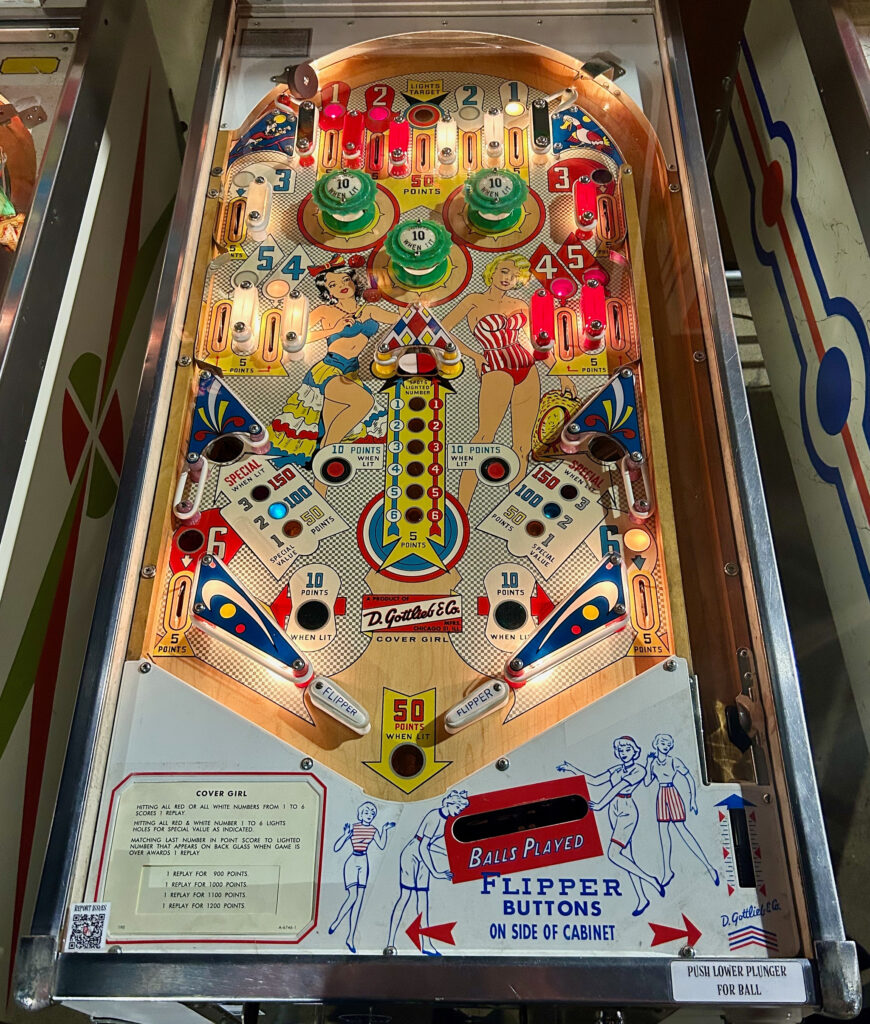
Pictured above a comparison of another older Gottlieb next to ours, showing a different playfield design within the same wooden frame.
—-> 2. As for the feel, we actually enjoyed the older cabinets better than the modern ones, we think that was because their gameplay tended to be more upfront, hit a target, knock it down, gain points, for example. While modern cabinets often did things like holding the ball, moving it around or giving you multi-ball without a clear visual communication of what was going on, which led to some overall confusion on what was happening while we were playing. In order to avoid this we want to focus on clearly communicating our scoring and rules to the player.
—-> 3. Although we didn’t enjoy every modern cabinet there were some things we noticed during our trip to PINS that we wanted to incorporate into our design! First, and most importantly, we wanted to add a monitor to the head of our pinball machine that would help support the clarity of our physical gameplay. While playing Dungeons & Dragons The Tyrant’s Eye we liked how they used the monitor as a lead-in to the game. Before even playing the physical game it let you select a character, starting town. After the physical game started it then used the screen to display your ongoing “fight” with a dragon while you were playing. It had animations that would go off every time you hit the dragon figure on the board making it really clear how your fight was going! It also made playing pinball feel more interactive and fun, and it was overall a clearly communicated game loop that worked well for naive pinball players (us).
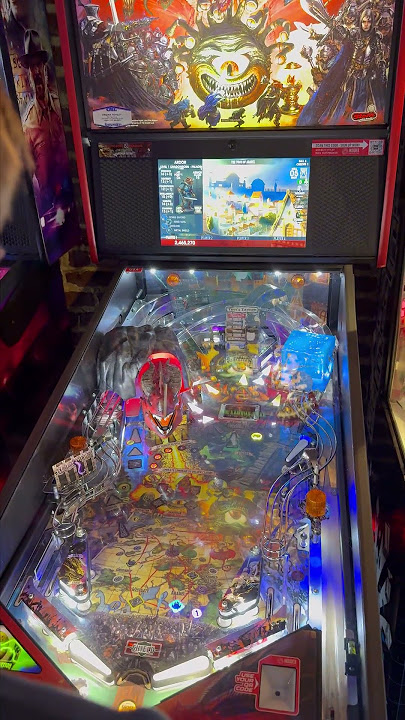
So we decided we would need to create a custom pinball build incorporating some modern tech to allow us to keep track of the physical boards sensors and triggers to link them with a digital display.
To be continued…
Now that we have some our our physical design limitations and constraints laid out, we will be heading into week three focusing on our message and theme exploring sexy in 2026!
-Nina