
Simply, this was halves week, we finished halves with our demo, and had a hearty meal unwinding, and played a narrative puzzle board game our instructor recommended us to play.
Halves presentation
During halves, we went over our fundamental goal: to define and create for a novel medium that utilizes tech that is very ubiquitous – the phones. Inspired by ETC founder Randy Pausch’s Stage 3 concept of creating content for a new medium with the goal of inventing idioms for a new interaction paradigm, we also structured our presentation with that same 3 stages: Exploration, Adaptation, and Innovation.
This exploration then includes defining our exploration space (phone repositioning game references), and outlining techniques that would help us achieve what we want (blend screen contents together as if border-less), such as taking inspiration from Understanding Comics by Scott McCloud. Then, we described what initial gold spike prototypes we underwent in order to detect the foundational limitations of our tech, from pinching to connect, and experimenting with different 3D perspectives and deciding what we’re choosing. Finally, ending the exploration discussion with the fundamental mechanics we’ve discovered.
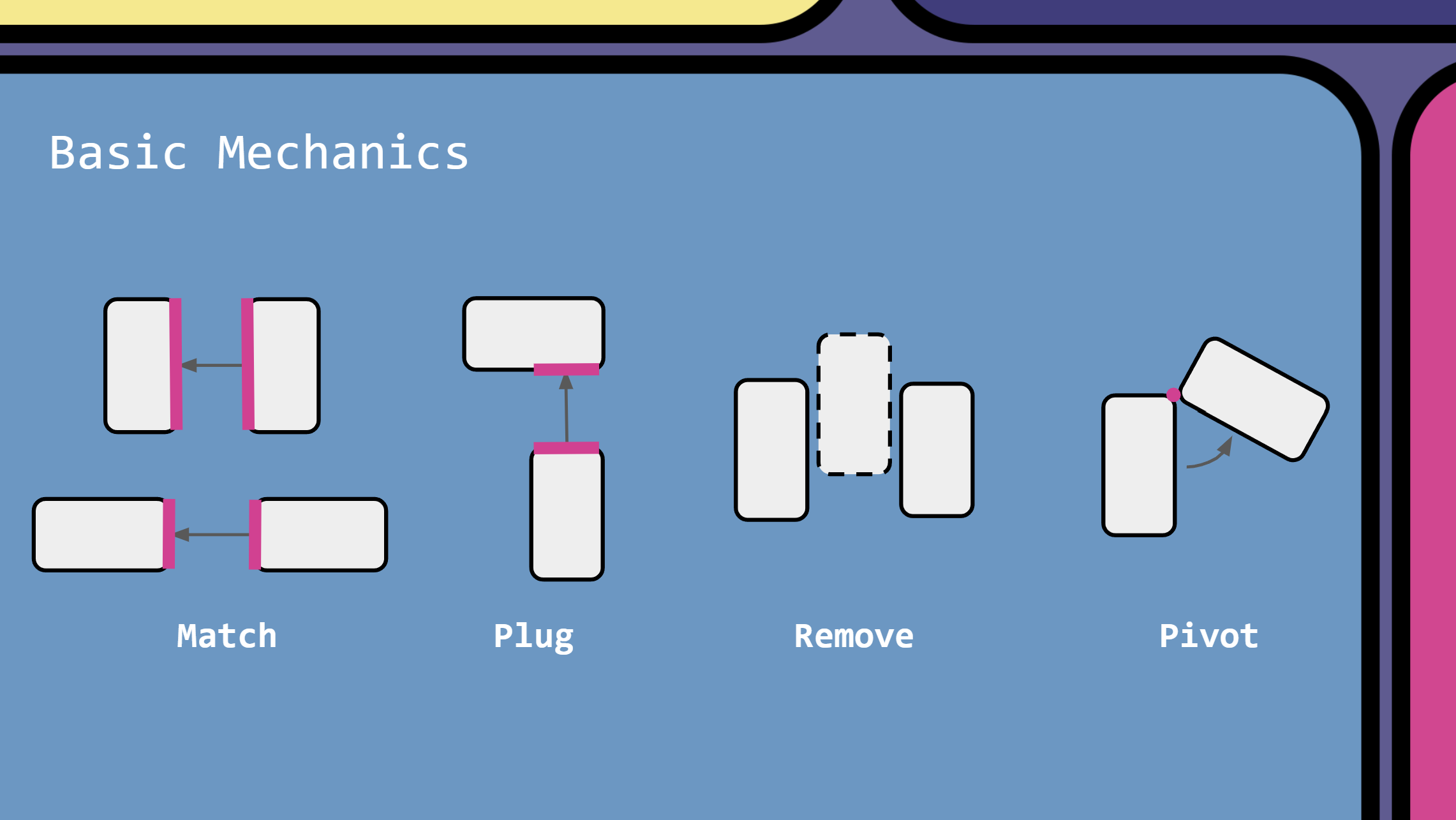
Then, we went on to adaptation! We described our script -> comic -> puzzle pipeline and crystalized it to our creation of the demo, and the 2D with 3D integration art style. Finally, innovation, a stage we have not fully moved into but have distilled certain insights, were presented.
Narrative Scheme
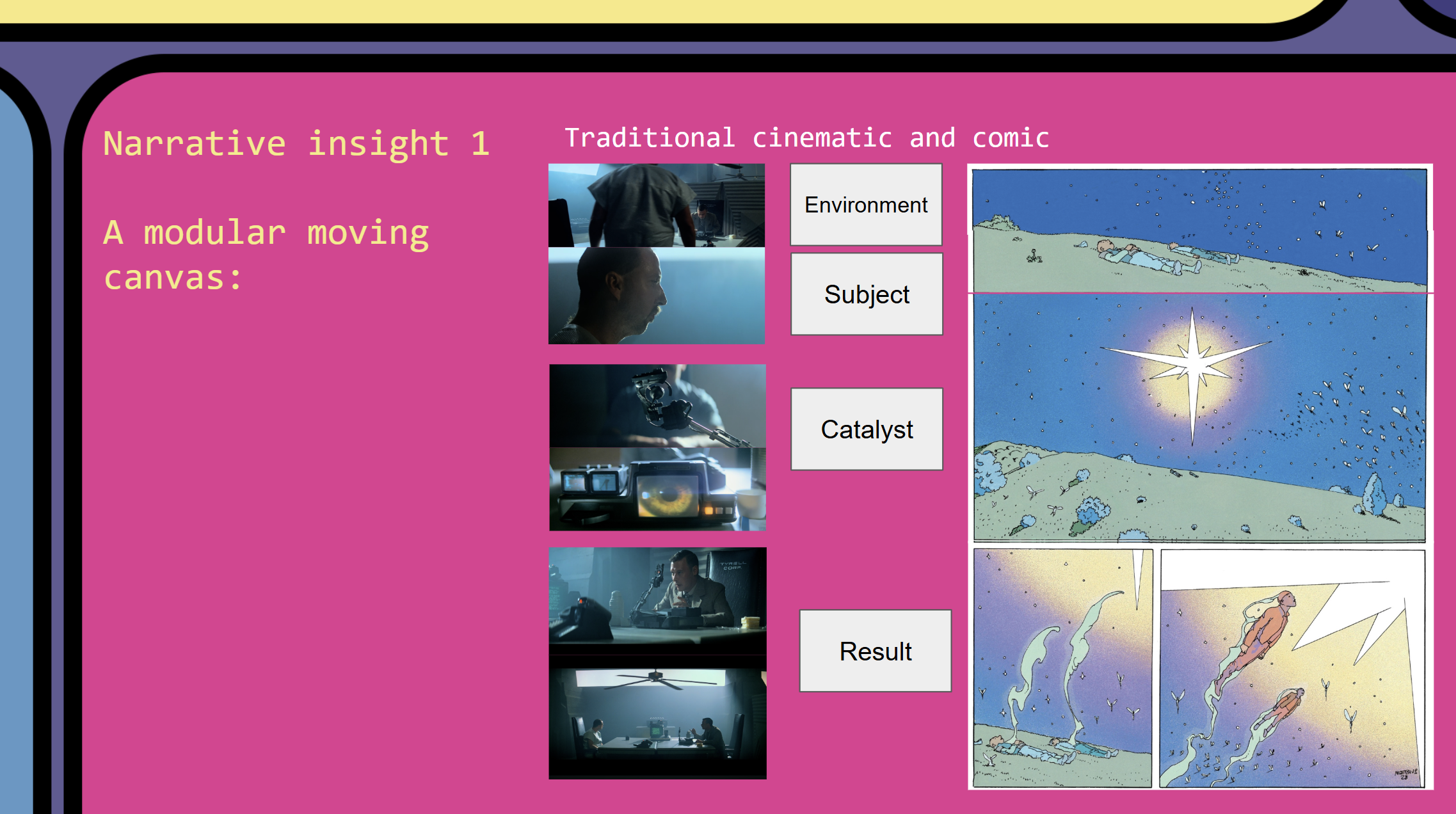
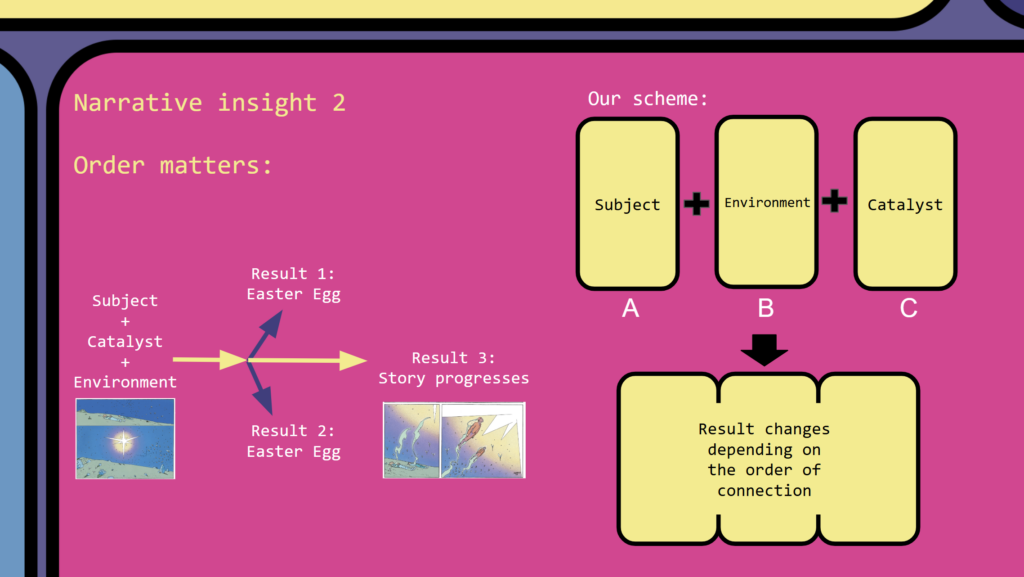
Subject, environment, catalyst is a framework adapted from traditional cinematic and comic art, describing that in our medium, how a narrative beat would progress is through the introduction of a subject (on the phone), contextualized in an environment (in another phone), encounters a catalyst (another phone), which combines into a result. In fact, the order of how the phone connects matters, with only 1 specific sequence leading to our intended linear story progression, and the others into Easter Egg or lore moments!
Puzzle as a controller or toy
We further discussed our decision of using phones as controllers to other phones or the contents on it, or toys that we can play around tactilely, instead of tapping ono screen content, as what we can already do in other mediums, thus pushing our interactions to be unique to our design space.
We ended the innovation section, a sneak peak to our final design guideline documentation, with a reflection of our need for a system and unified grammar, and the player perspective tested, which would be fulfilled with the many playtest opportunities in the second half of the semester.
Demo
Here is the demo we showed during halves, with lovely music composed by our sound designer.
Unwinding
All 6 of us are there, but we got too happy that we forgot to take photos!
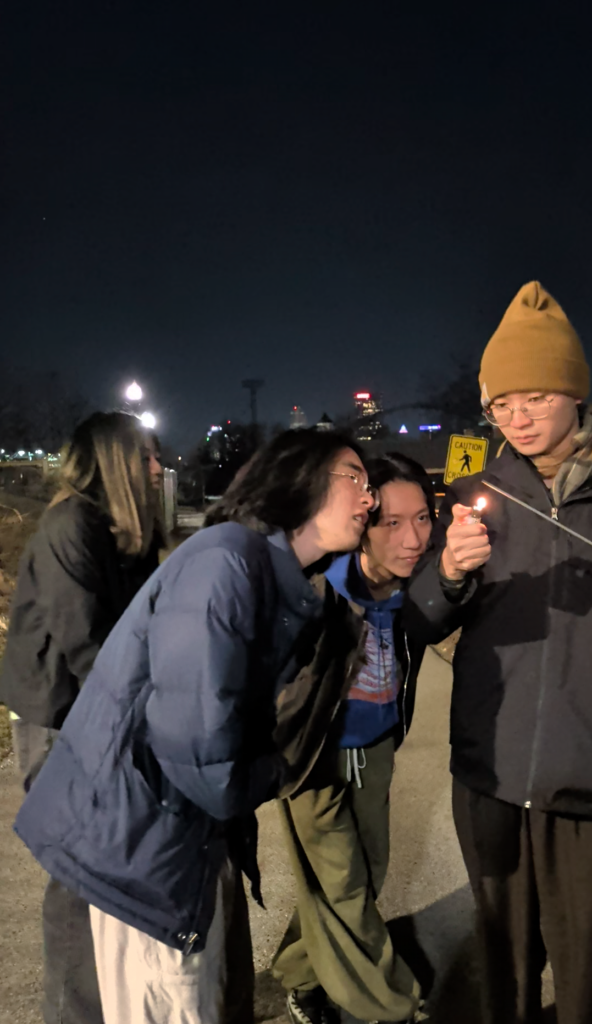
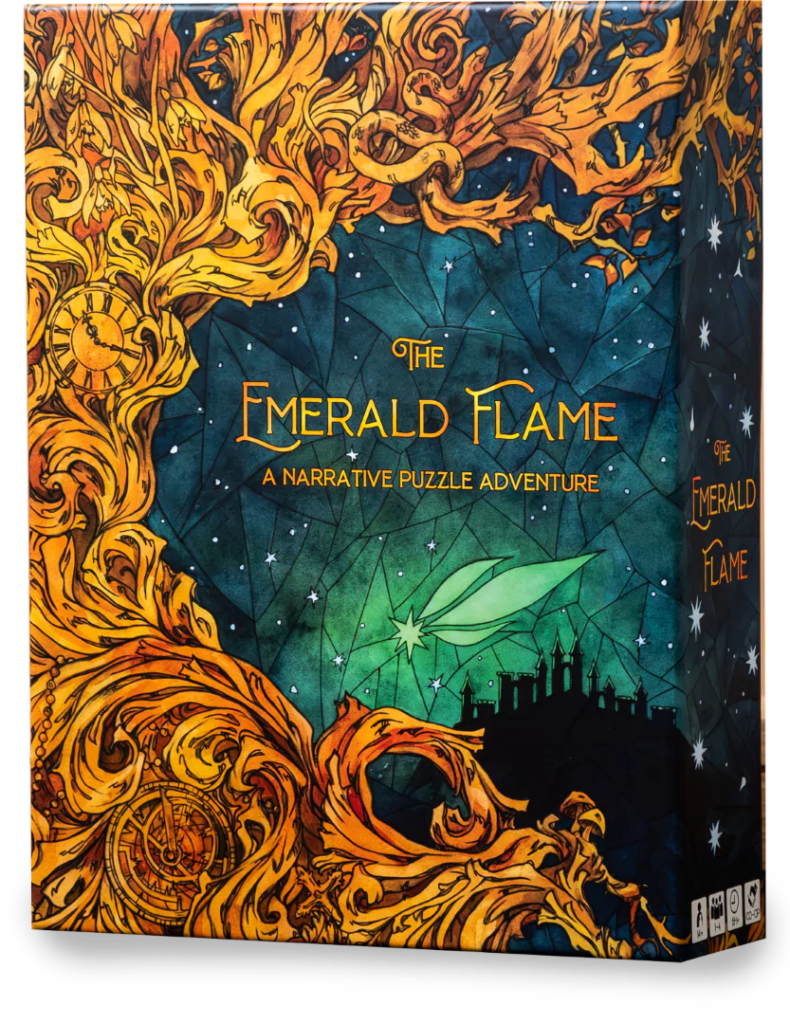
We also played the boardgame our instructor thought would be great inspiration: The Emerald Flame, which is both a narrative and puzzle game!
Next step
Our next steps prompt us to do good outreach at GDC. More on that as the week comes.