This week, the team made progress with both art and programming. We kept working on our concept, building our quarter’s slides around it. We decided that our demographic should be the same with Alice, which is around 10-15 yrs old.
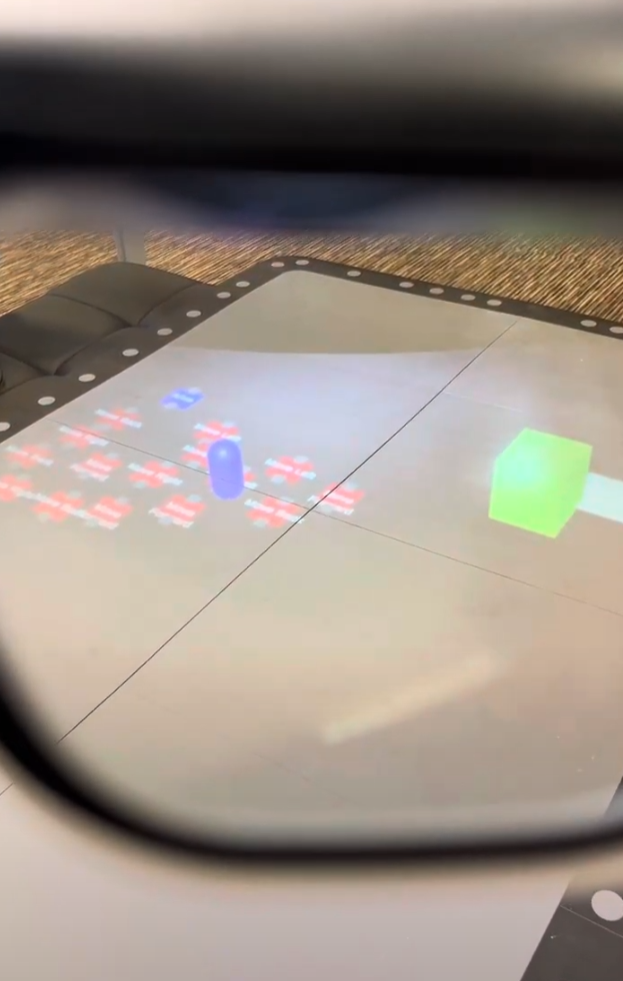
The programmers did a successful tech test, bringing the prototype from last week into the Tilt 5 glasses. Currently, we don’t know a way to record what’s happening in the Tilt 5 with clarity. Therefore we shot a video through the glasses. It definitely shows what’s happening correctly, but in the future we hope to find a more professional way to present this.
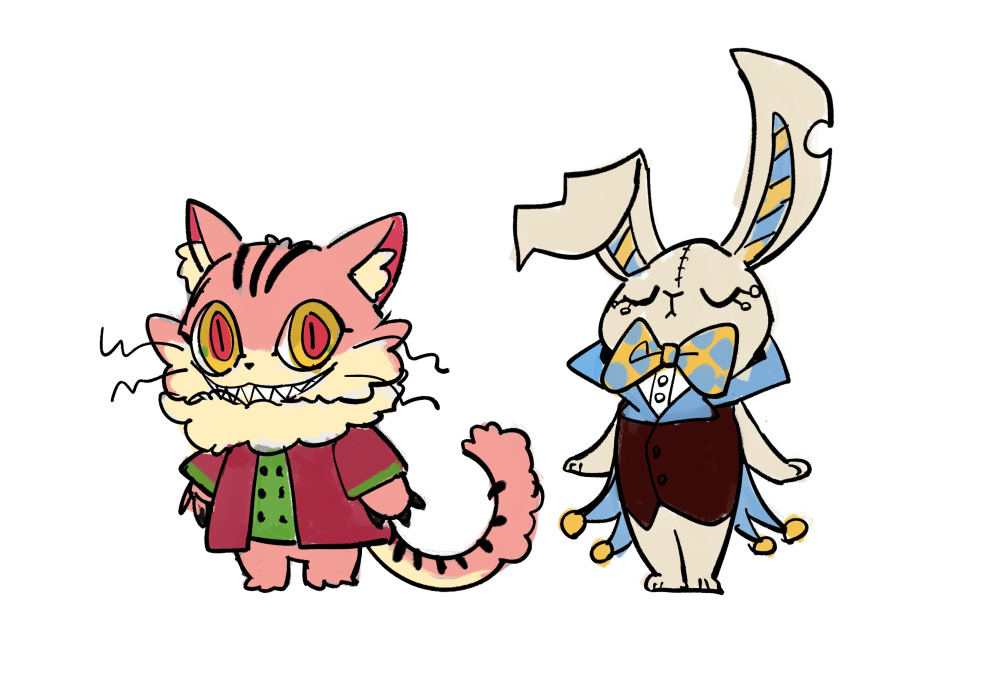
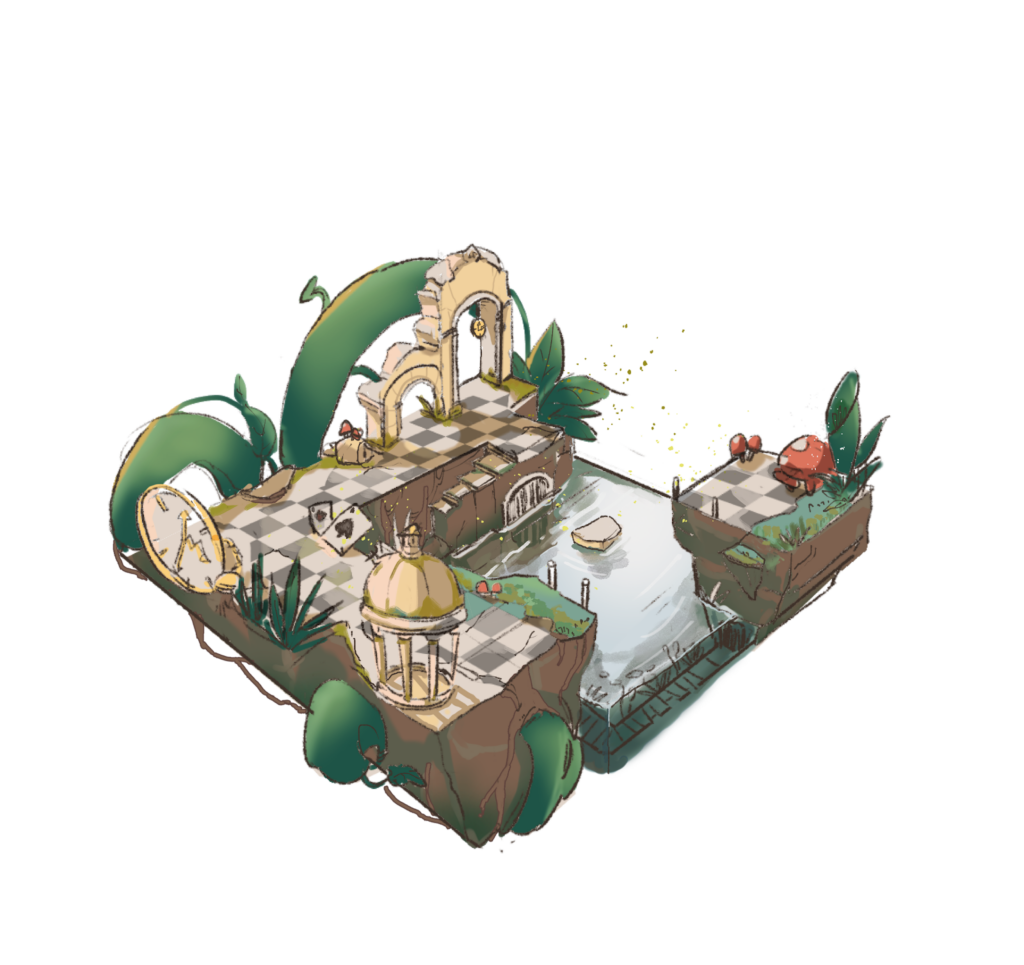
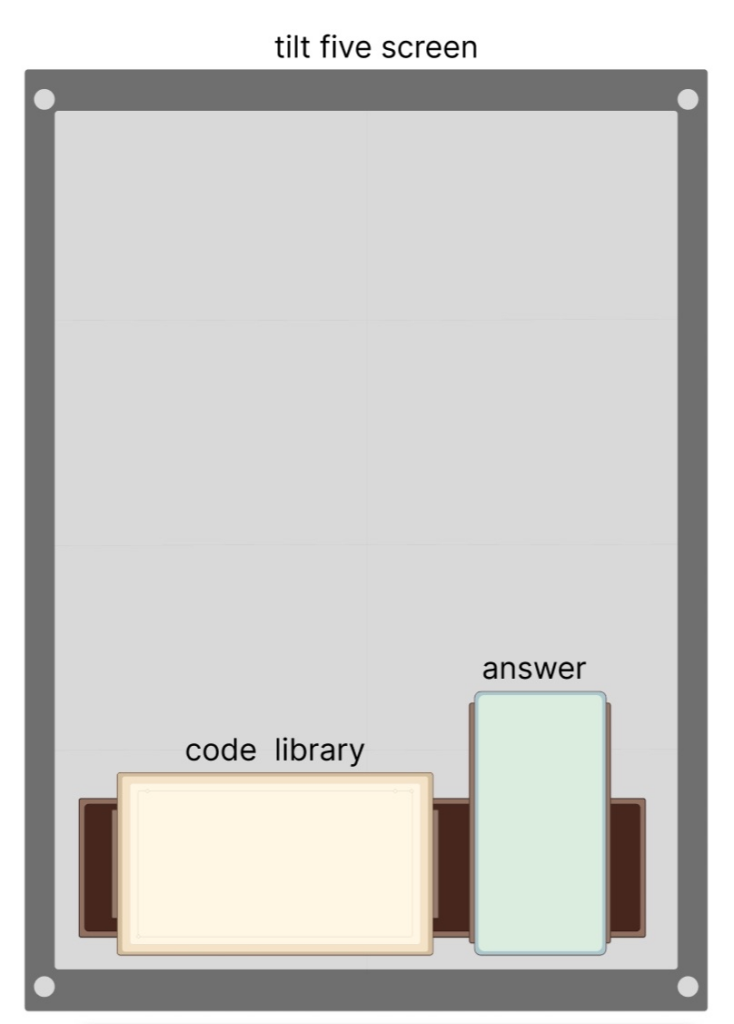
Our artists did wonderful work for the concept design and UI design, as well as poster sketches and logo design for our team branding.
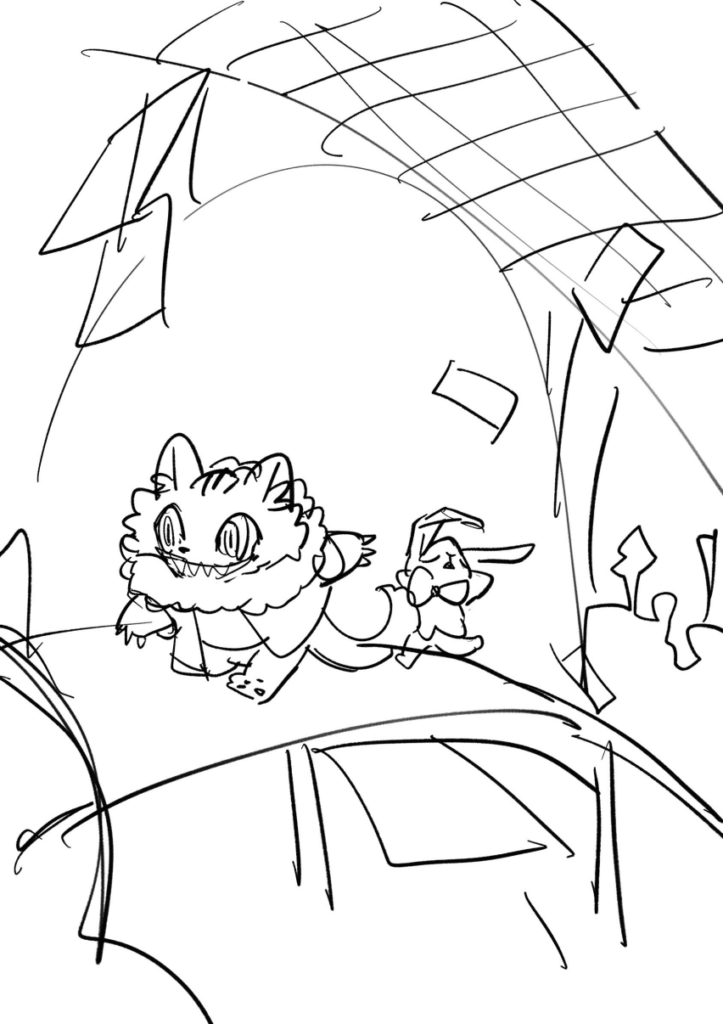
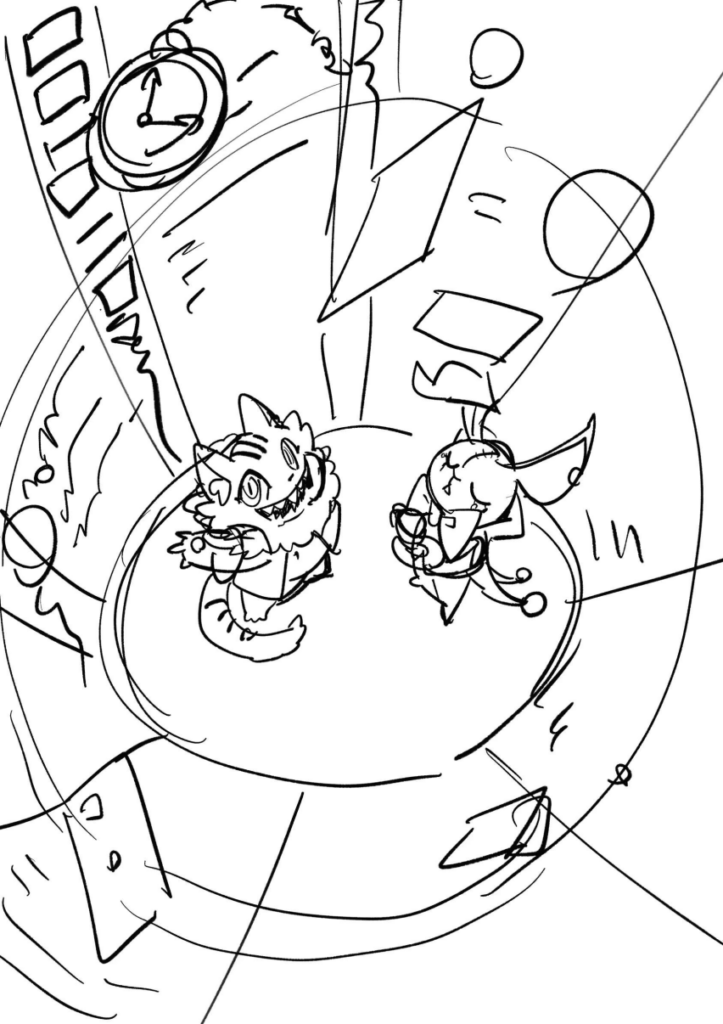
We further narrowed down our design goals in the slides, as well as recognizing the risks and challenges we might face in this design:
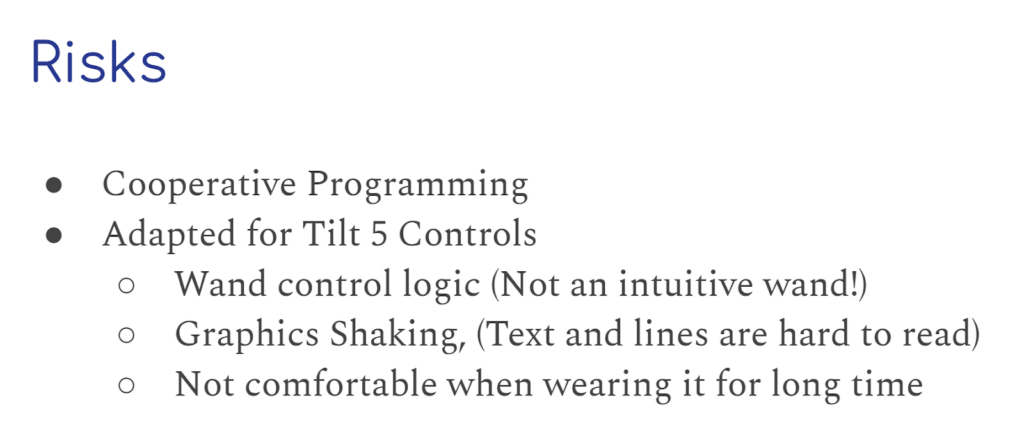
During our meeting with Dave, Melanie, and Daniel, Melanie suggested avoiding UI designs that feel like 2D apps ported to Tilt Five and instead embracing the platform’s spatial and tactile strengths. Based on the fact that visuals are often shaky in the Tilt 5, Melanie gave some valuable advice to reduce text and make the interface more like tangible toys or board game pieces, which fits Tilt Five’s unique immersive tabletop feel. Therefore, we plan to let players drag symbolic tiles representing commands instead of 2D UI with code similar to what Alice has.
Our clients also asked about how we envision kids working together in our levels. We answered that we plan to let each of the 2 players control their own character in the scene with code blocks. To help us get reference for our model, Melanie recommended Alice Together as an example that has already solved many two-player programming collaboration issues.
Dave expressed concerns about how our presentation doesn’t quite show the audience what a level might look like or how the kids can learn from it. In order to narrow this down and present a clearer design idea during quarters, we began to do brainstorming after the meeting. We have several ideas on what computer science concepts our game could be teaching. We came across lists, memory, object oriented programming, etc. While having some creative conflicts on deciding what we should be teaching (logic vs. hardware concepts) and how much learning we should aim for (a few simple concepts vs. multiple concepts that have potential for more advanced learning), we finally decided to first make a mock/intro level based on a simpler concept (lists) just to get started.