
Exciting week for us! Aside from the first playtest, one ETC faculty Heather Kelley got us in contact with a puzzle designer who worked on Sifteo Cubes years ago, Scott Kim. SIfteo Cubes has been our design inspiration since the start, and we discovered that we wanted to have puzzle solving as a moment in our experience, so this opportunity came at the right time!
Meeting Scott Kim, a puzzle designer
Scott Kim is a veteran puzzle designer who has also worked on the Sifteo Cubes in 2011. Because the cubes also needed modular physical reposition to progress the contents, they served as great reference for us when designing for our 4-phone medium.
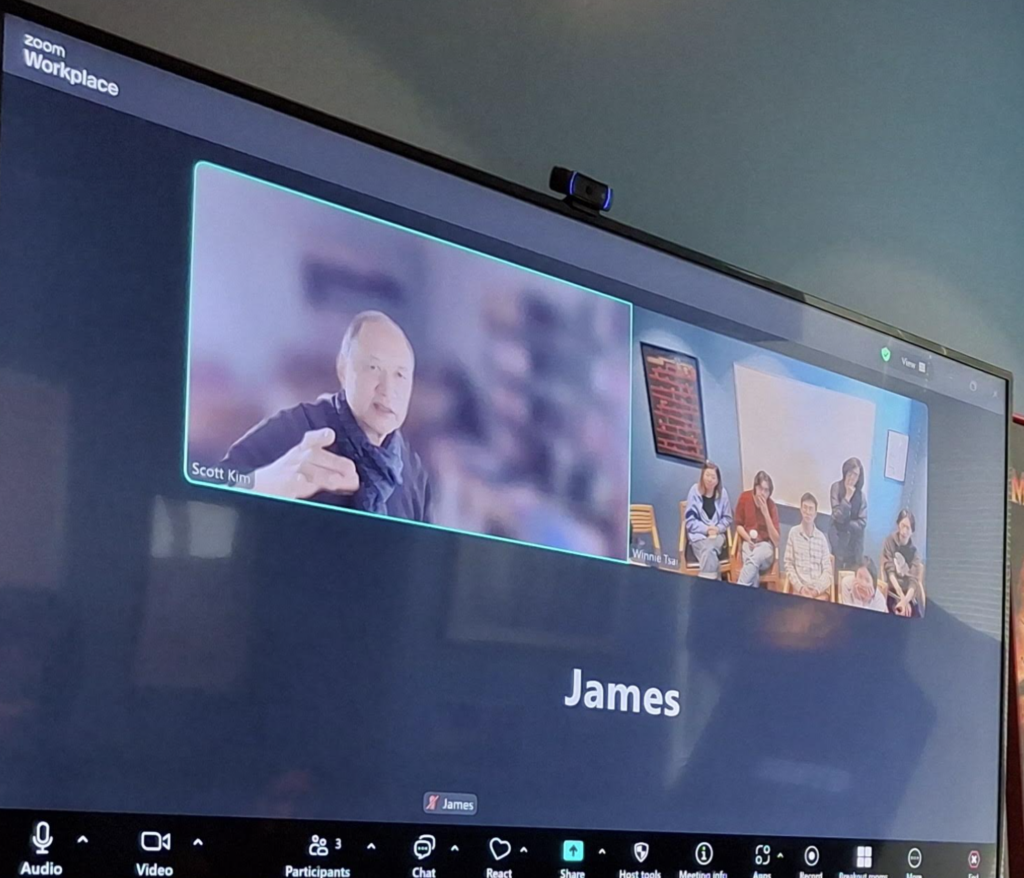
In the meeting, we described our current process and our goals for playtest, and he encouraged us to find the moment when puzzle, mechanics, and UX come together seamlessly, which has been what we’ve been striving for, so it was a great moment of validation that we were on the right track!
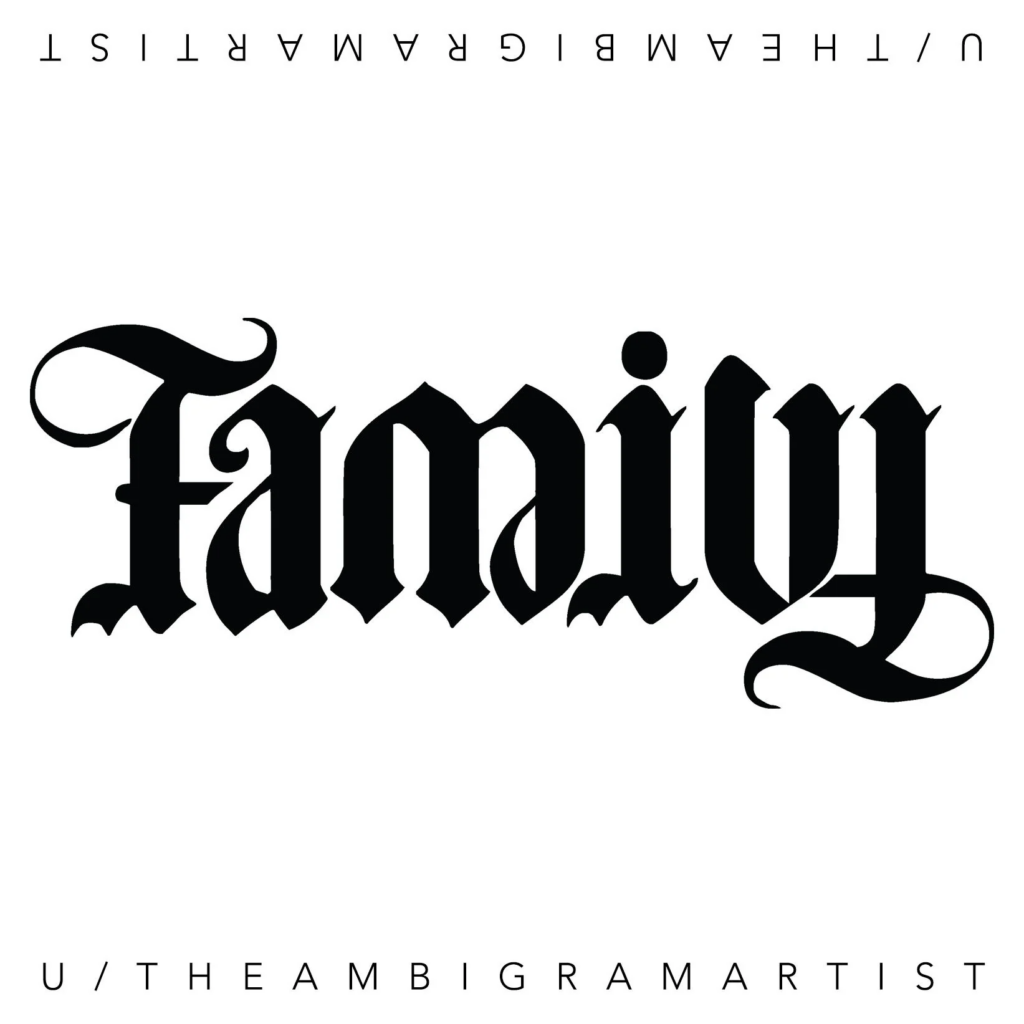
In addition, the team shared a moment with Scott on the fascination of ambigrams, often called “visual palindromes,” that retain meaning when viewed from different perspectives, such as being rotated (rotational), reflected (mirror), or inverted.
For our 4 phone medium most possibly played by 4 people around a table, having such visual elements is exciting, because that means that everyone can see the same thing.
For example on the left, it is family on one side, but forever on the other side. This visual design method allows us to design for asymmetric information even with the same visuals but different perspectives!
After the meeting, Scott was kind enough that he even compiled a detailed meeting notes, suggestions, and resources for puzzle design, including types of puzzles, for the team to do research on! Thank you Scott, and thank you Heather for making this happen!
Playtest Night
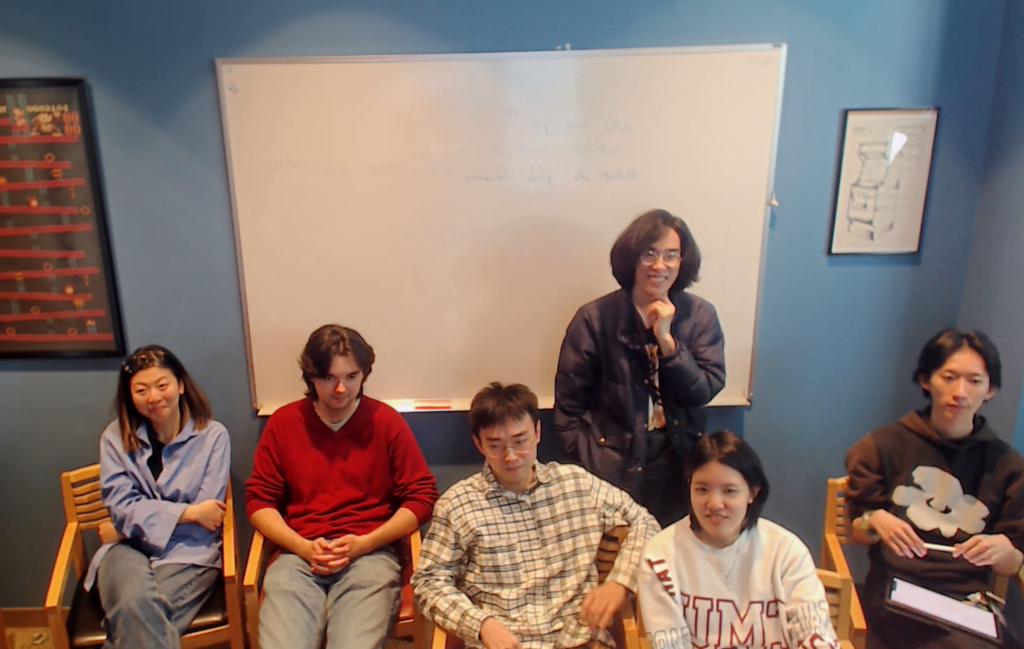
We planned to go to playtest night at Hunt Library, a organized playtesting opportunity hosted by our department, ETC, on the CMU main campus, but last week’s was cancelled due to snow. This week, we brought forth more prototypes, and a plan to test UX for finetuning phone movement detection threshold, puzzle information goal to see how naive guests puzzle solve modular pieces, and validating a specific puzzle, the beetle wing, which got built out on the phones this week!
In preparation for the playtest, we prepared 2 tech demos, one is a show color upon connection test for Test 1 UX test, and the other is the beetle puzzle, where adventurer Naiad will get into the spaceship after players have the two phones at the side, the wings of the spaceship, rotated out, blocking solar wind. This is the Test 3 build.
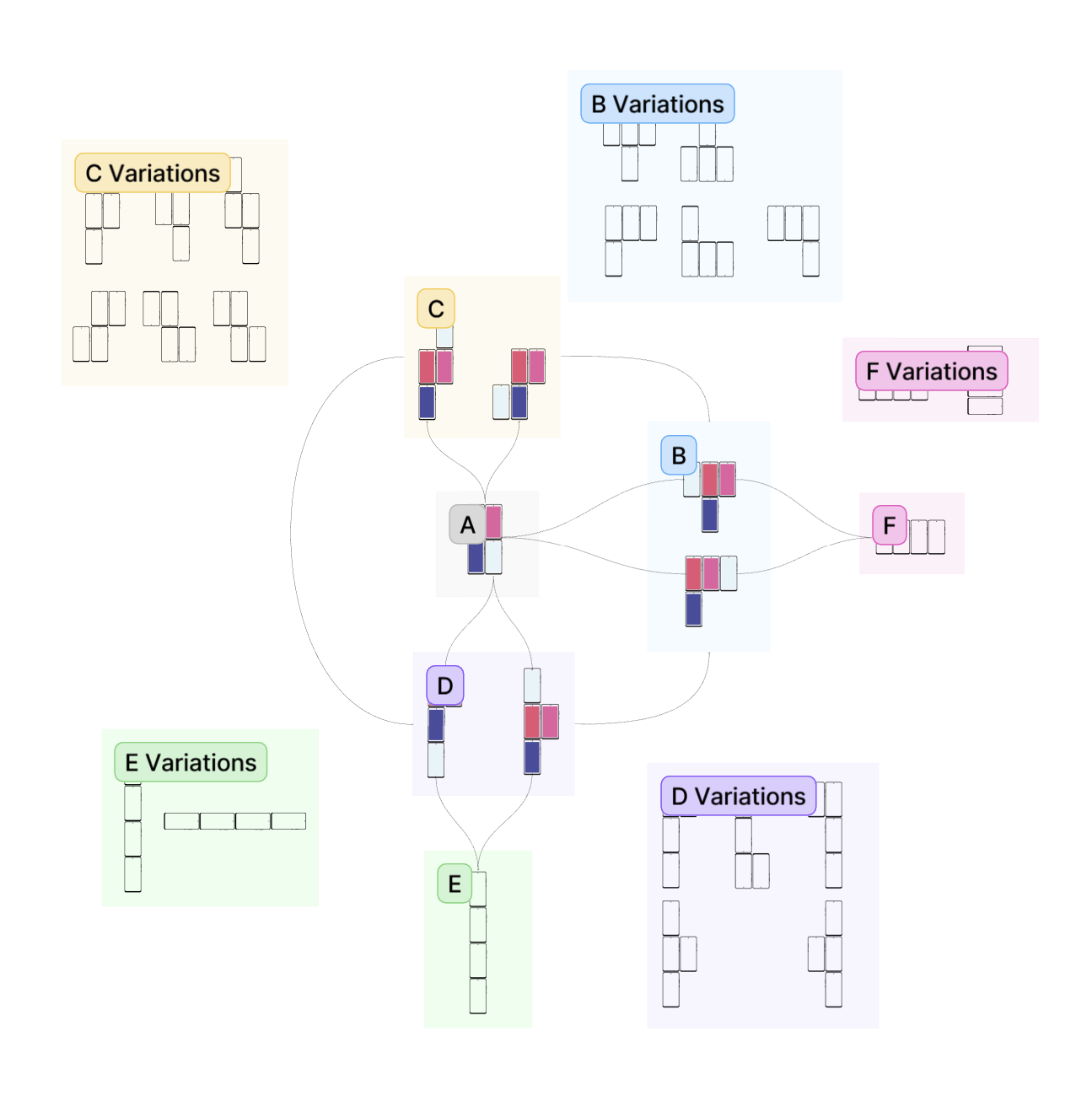
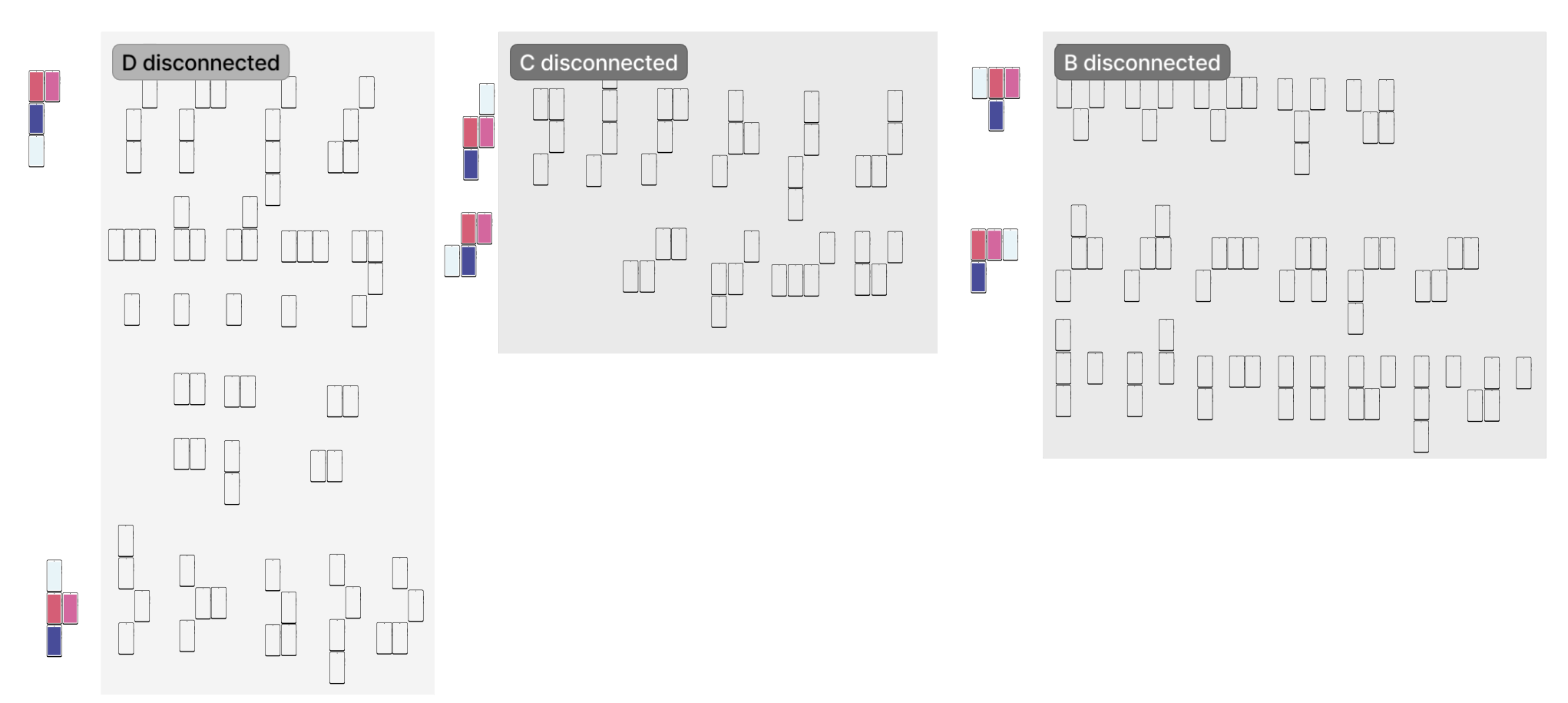
As an effort to test if paper prototype is effective for our medium, we also created a set of paper prototypes for Test 2, and while determining what to test, our system designer also created formation-as-states transition diagrams. While the diagram is not exhaustive (it is impossible to map out EVERY for phone movements in the limit-less 3D space), it still informed the team further on the possibility space that we can design as a starting point and a destination.
Test 1
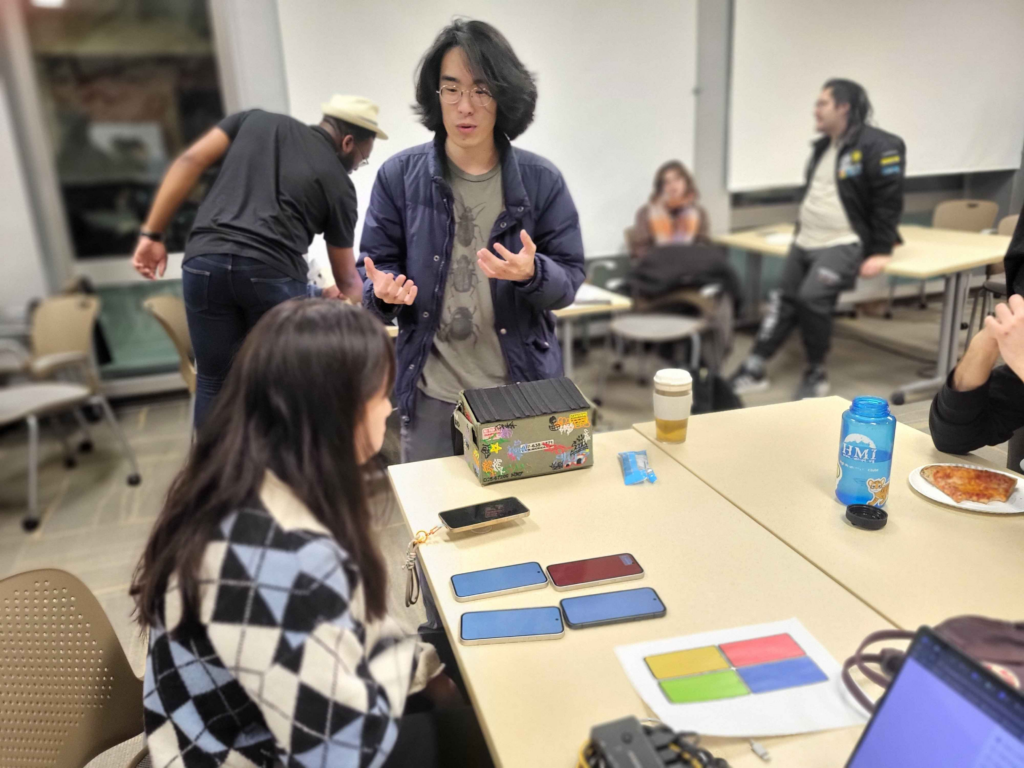
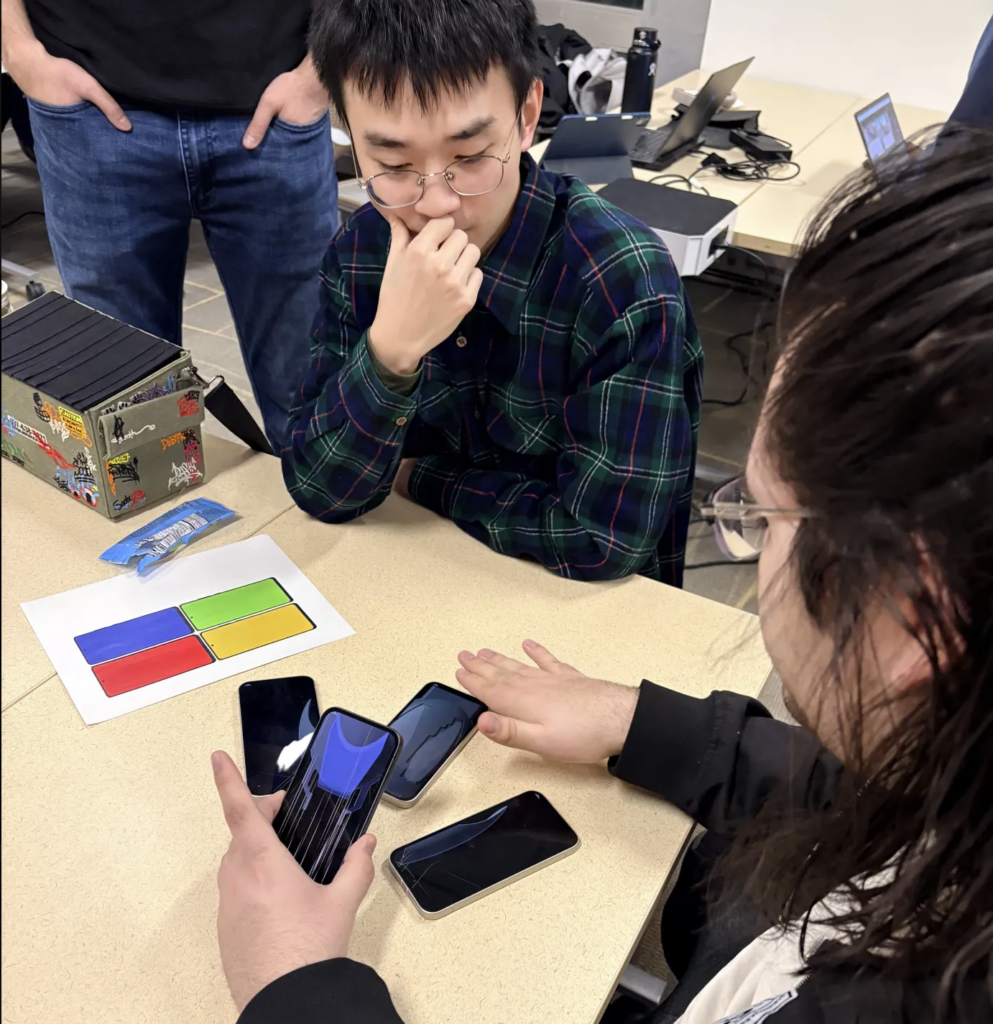
Goal: determine how to refine motion detection adjustments, and the basis of how naive guests interact with modular phones.
Procedure: given a color grid, instruct playtesters to get to that same picture via pinching and connecting phones.
What we learned: there are two main ways of pinching: via thumb and index, or between index and middle finger. This allow us to know what range of detection should be allowed by our tech.
Test 2-1
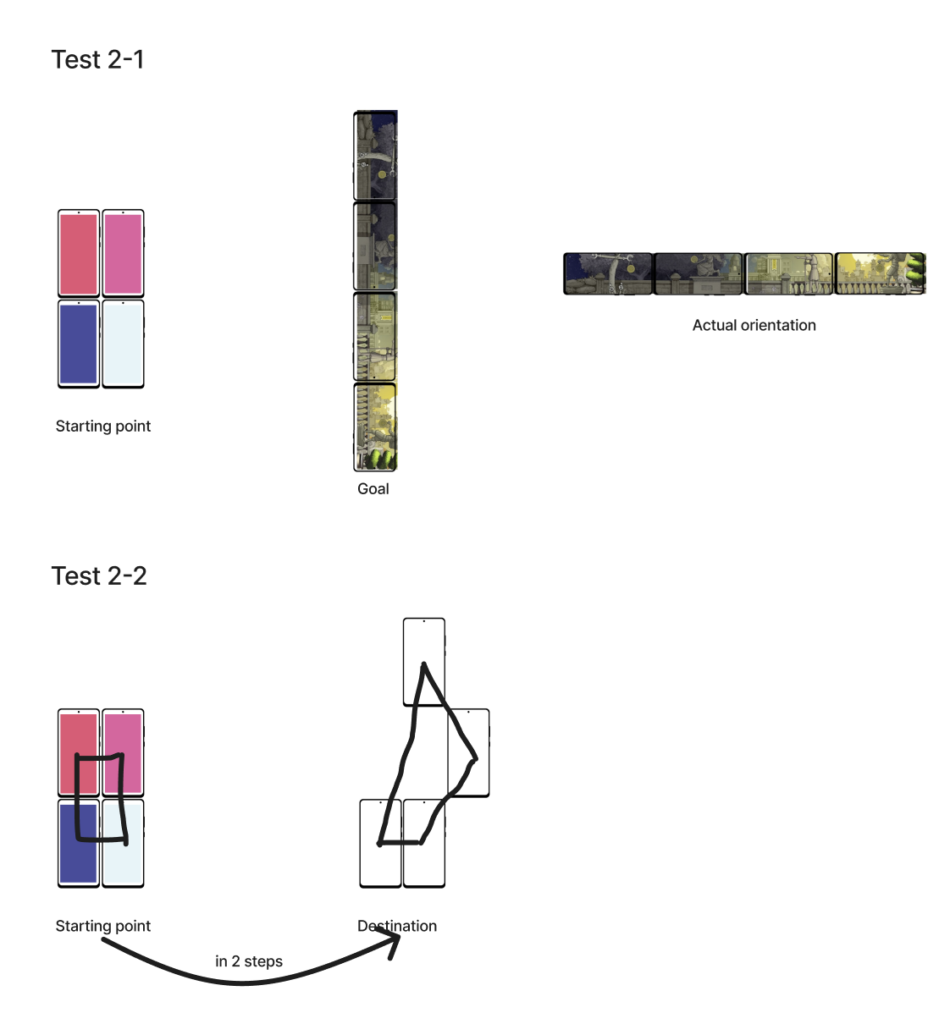
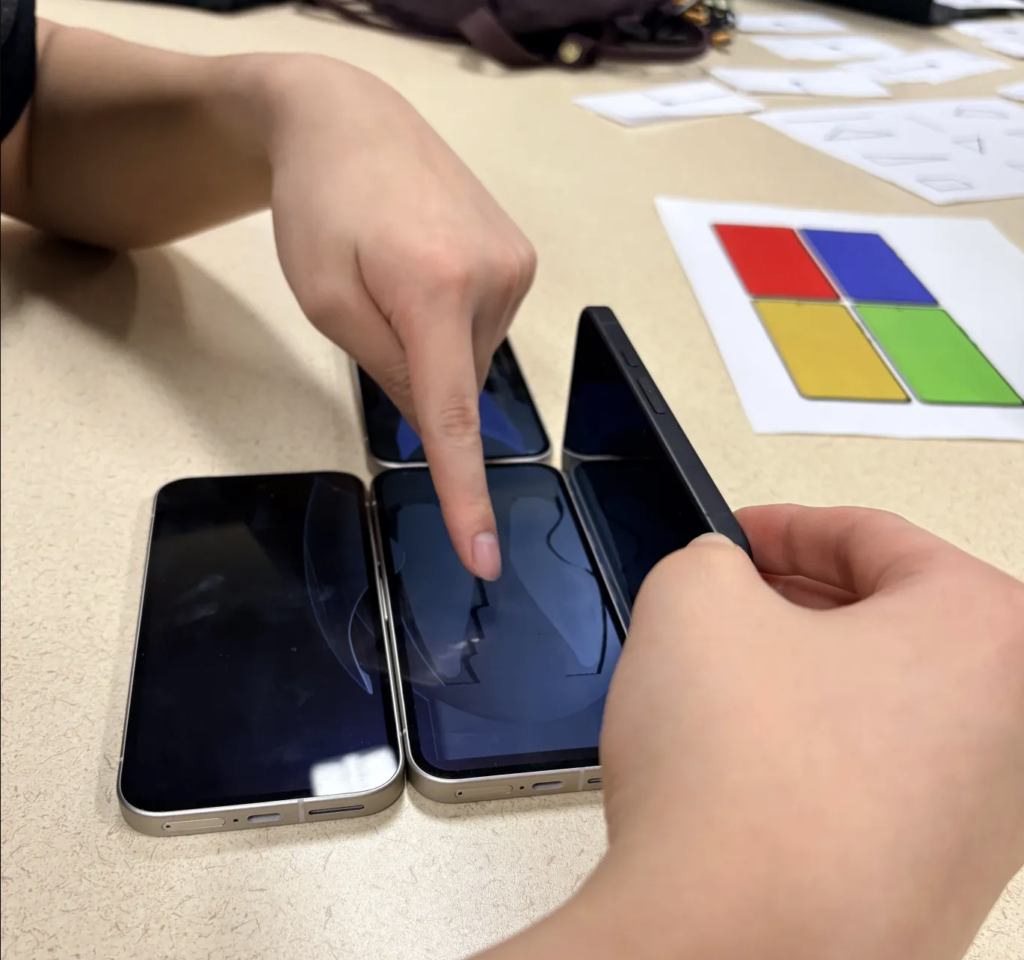
Goal: test if a dissonance between the formation and visual content will alter the players body movement or they will change the phone to match their orientation. This also builds upon the learned “pinch = connection” in the previous test.
Procedure: Given a window formation as a starting point, instruct the players to get to a tower formation, and when they succeed, change the visual picture to a continuous Gorogoa scene. See if the players change their perspectives or change the phones.
What we learned: First, the Gorogoa continuous picture was effective, as players to realized the pictures were meant for a different orientation, they will first tilt their heads and even bodies. Then, most of them will indeed change the phones to accommodate their orientations.
Test 2-2
Goal: test if given a puzzle goal, can players go from a starting formation to the objective formation, and how do they go there?
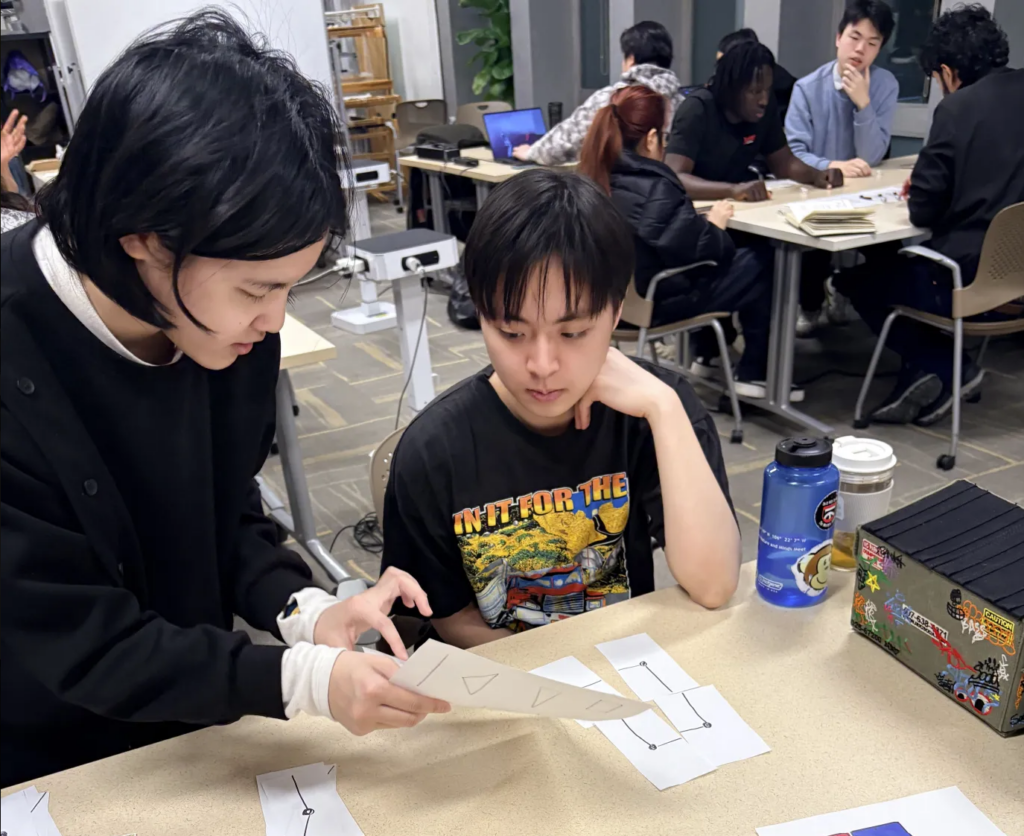
Procedure: Using the Polygon prototype from before, given a specific disconnected formation, instruct the players they only have 2 steps to get there, see how they try to solve this puzzle.
What we learned: Players are very up for the challenge, but most of them couldn’t solve it.
Summary: While pinch as connection was taught in the previous taught, the mental connection was not apparent, and players often struggle with swapping the phones around. However, we decided that this was actually a miscommunication from the paper prototypes, and would be solved by using an actual phone.
Test 3
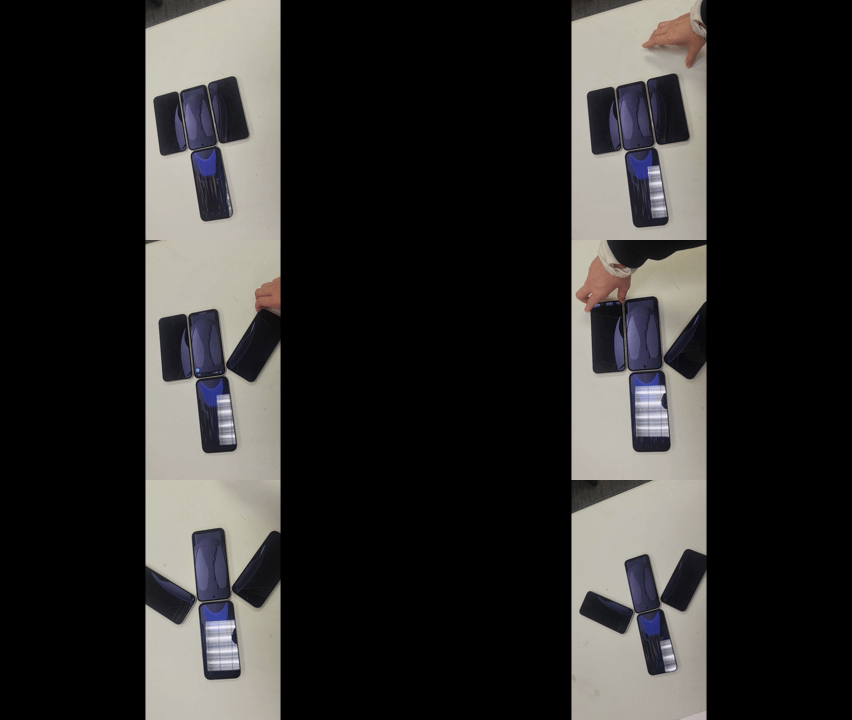
Goal: See how effective the spaceship (internally we call beetle, since the space ship looks like a beetle) puzzle is. Can players register it is okay to rotate the phones given they’ve gone through the previous two tests.
Procedure: Have players connect the phone together to show the spaceship, and see how they react to the solar wind. Tell them different prompts to test how they react.
What we Learned: Players have infinite creative to try to block the solar wind. Many of them directly “disconnect” the phones, some used their hands to block the movement. (Both seen from the two photos from the side)
More development this week
More flexible phone connection system
Simply, now not only short edge to short edge, long edge to long edge works. Regardless of the phone orientation and which edge it is connected to, more generalized connections are made possible. (Also, by this time, the UX refinements learned from playtest was also added)
The introduction of Easter Eggs
Also known as the narrative dead end, as the story does not branch to different endings, but when specific formations are discovered, they do not progress the linear story, and instead show lore / Easter Egg of the world. This was inspired by the formations transitions diagram, thinking about how new possible paths to different formations that allows for narrative to tell stories of the world without making the interaction too point-and-click-y, it was an immediate must-have in the further development of our experience.
Some further development came from UX, where an insight came from:
- If the function of an Easter Egg moment is giving the player a sense of “somewhere I can explore out of the main game”,
- Then, from the current three kinds of UX indications, there are three ways of activation of an Easter Egg moment:
- direct UI telling the players there’s an Easter Egg.
- diegetic UI (in the world of our characters) and players have to discover by themselves, and
- require very specific actions (e.g. shaking the phone) to activate. The team does not have an absolute answer now, but through subsequent explorations, the answer will emerge.
Current puzzle design progress
The golden triangle of script->comic->puzzle continued working on translation of the current storyline. We gotten passed the first part of our storyline. To recap, here is our current script outline:
- Opening: introduction of our main character Naiad, where her story is unfolded through narrative repositioning, and a spaceship wing puzzle that includes phone rotation gets her into the spaceship.
- Going to Earth: in the spaceship, Naiad solves a space device puzzle that looks like an Oort cloud, and this sends her to Earth.
- Landing on Earth and exploring the terrain to find ruins of the past
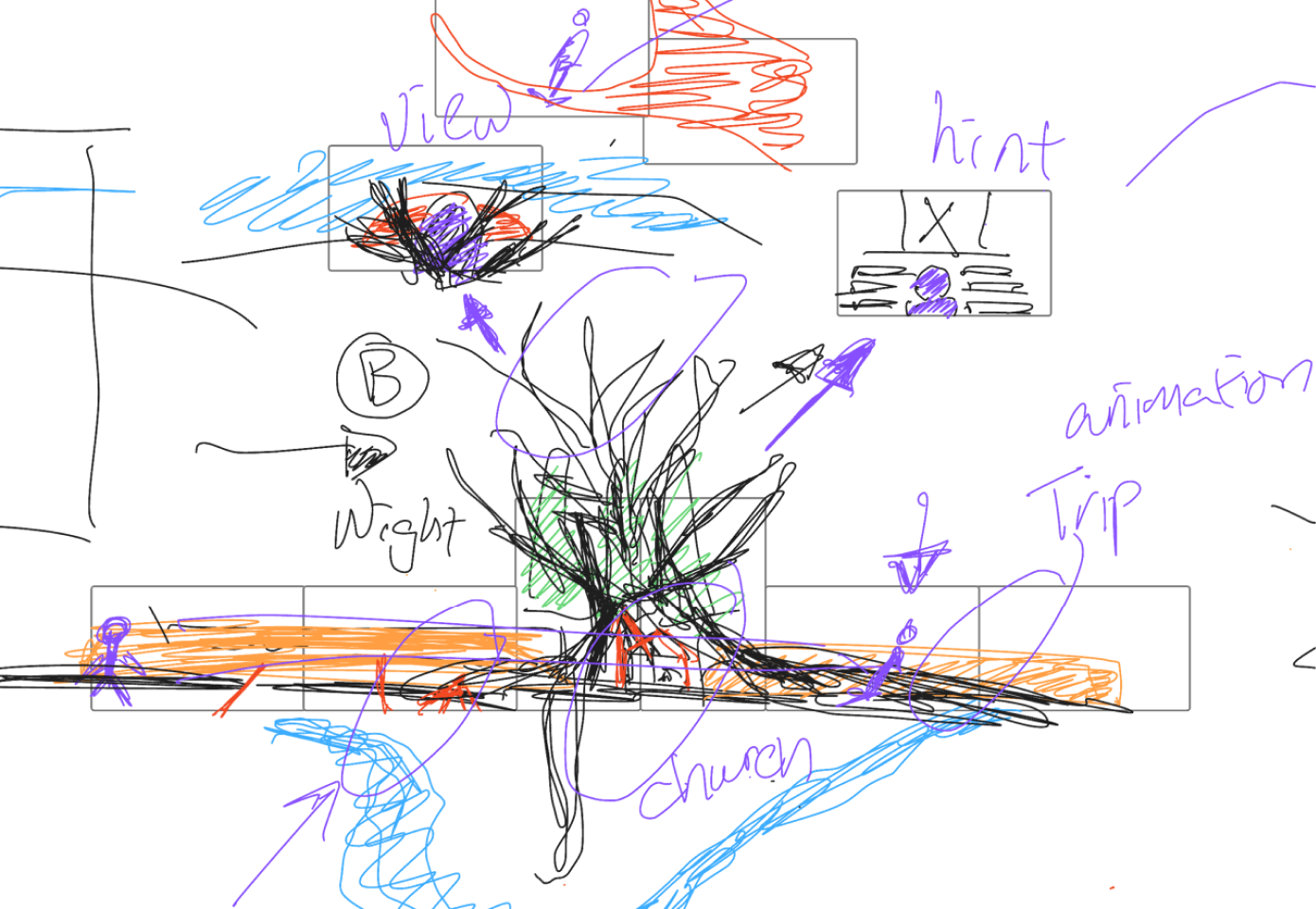
- Getting on a tree for an overview of the Earth, and discovering a sci-fi church.
- In the church, discover symbols that transitions the player to the past.
- Past New York: the ruins are alive and the player’s perspective is transported to the past to understand what happened.
- Ending..? Undecided sequence.
This week, the Oort Cloud puzzle, where a timing-based disconnection of phones became a main mechanic, is created. It was inspired by the Light and Shadow idea from a week ago, and evolved to match with the narrative setting.
Here’s how it works: one phone shows the space device, and when connecting any of the phones on the top, left, or right edge, an orb rotates on the device. It will only stop when you disconnect the phone. You solve the puzzle after the three orbs get to their correct spots!
In addition, landing on Earth sequence became more concrete! Upon landing, a mantis robot emerges to guide the players across this vast land. (The mantis has been a metaphorical creature we had since the inception of worldbuilding)
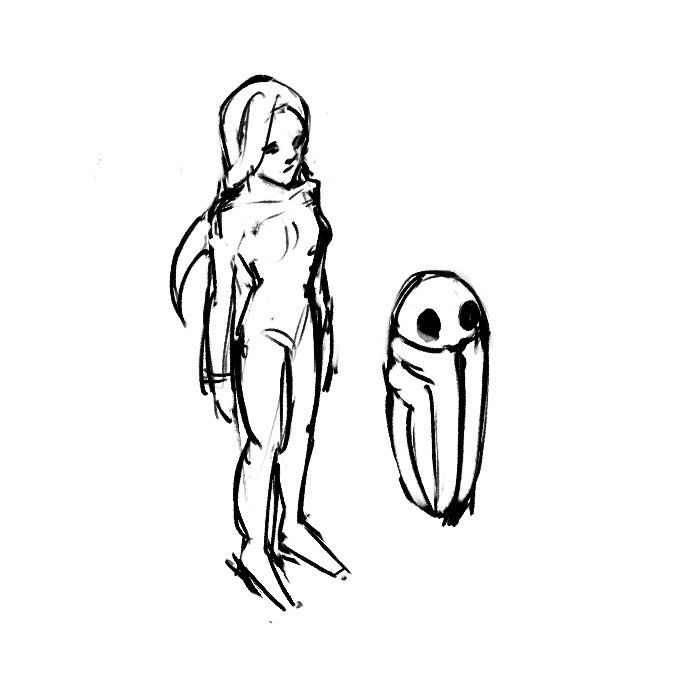
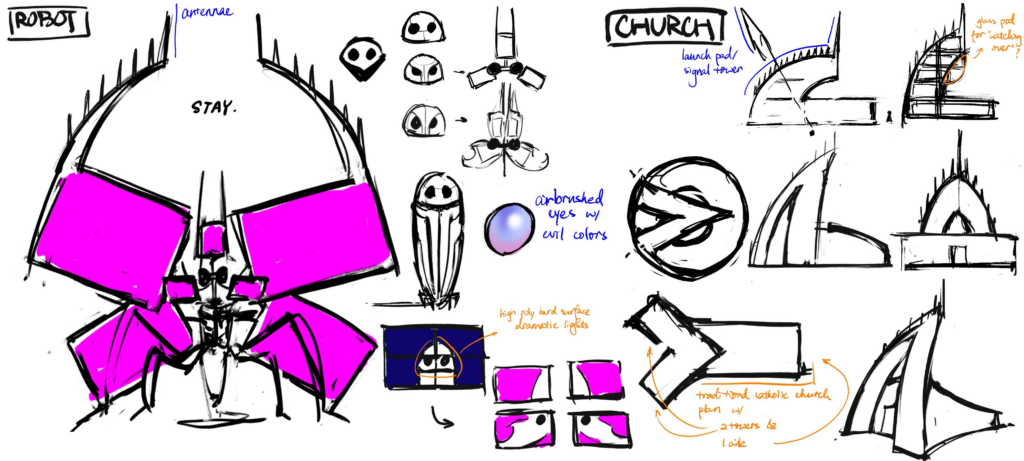
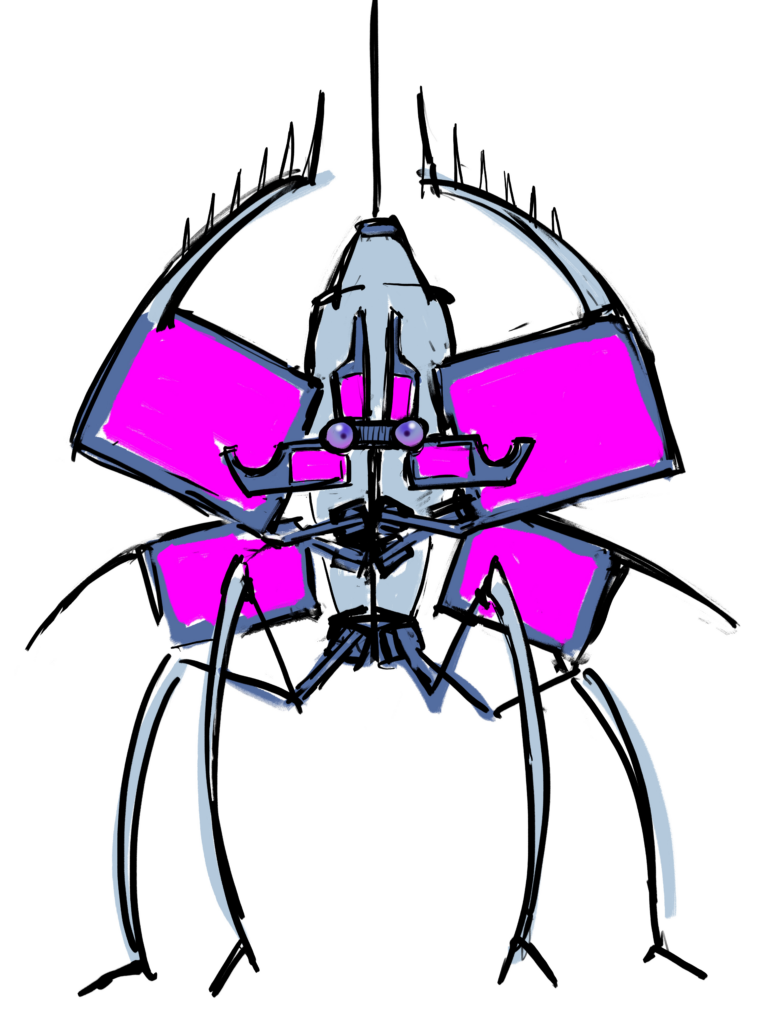
This was also the week where a tree that gives a vantage point arose in discussion, and led to the need for our main big puzzle being that + the sci-fi church which will lead to the final scenes.
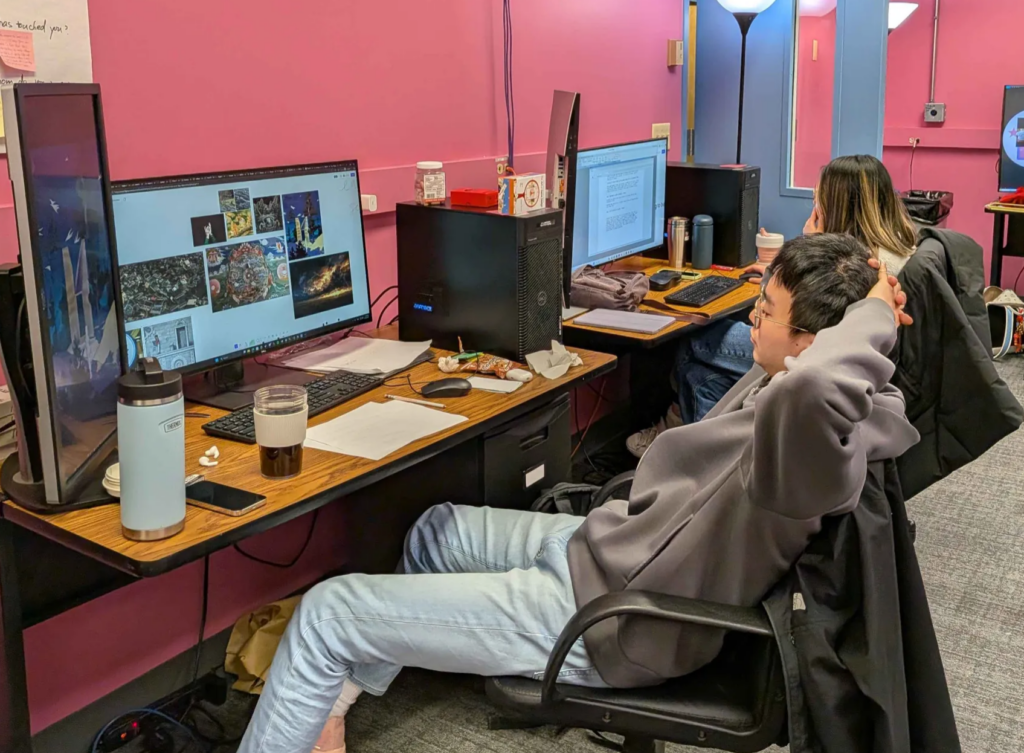
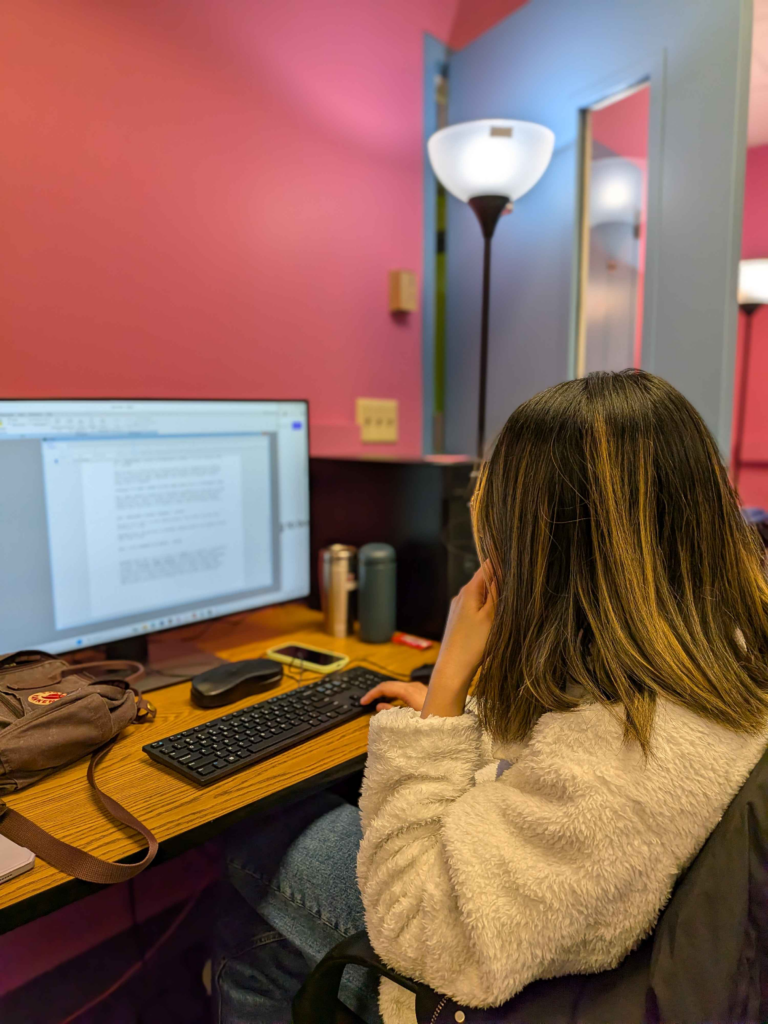
Back to Easter Egg!
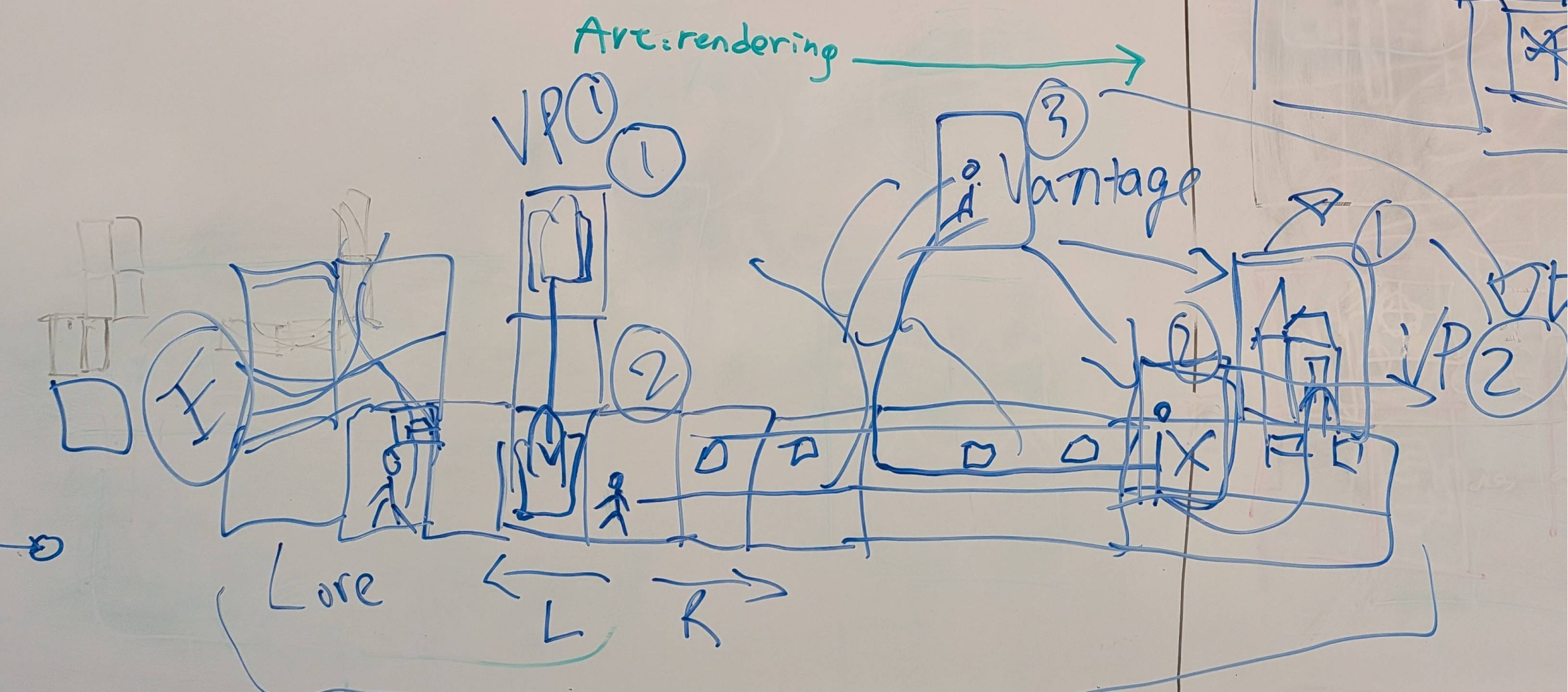
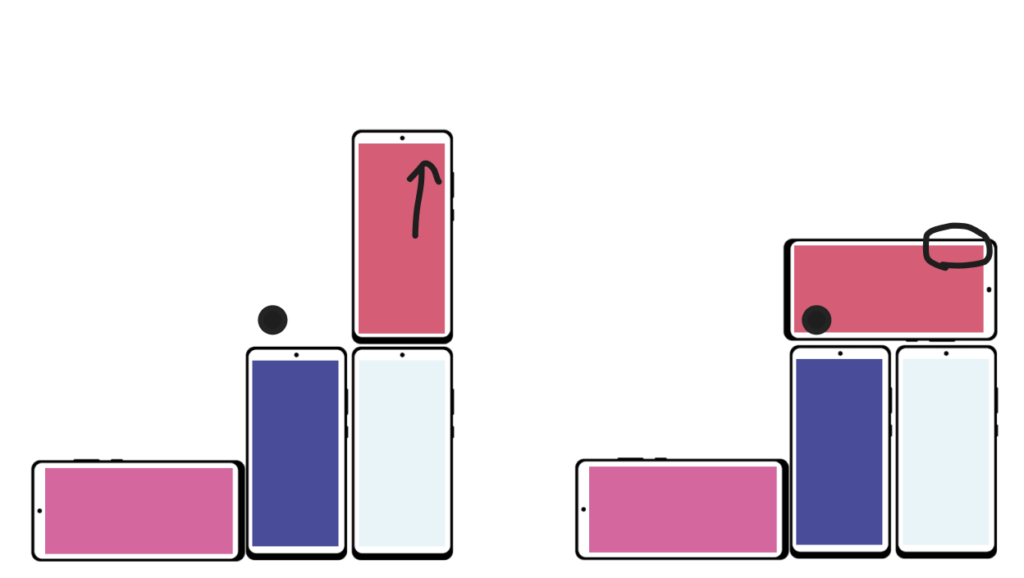
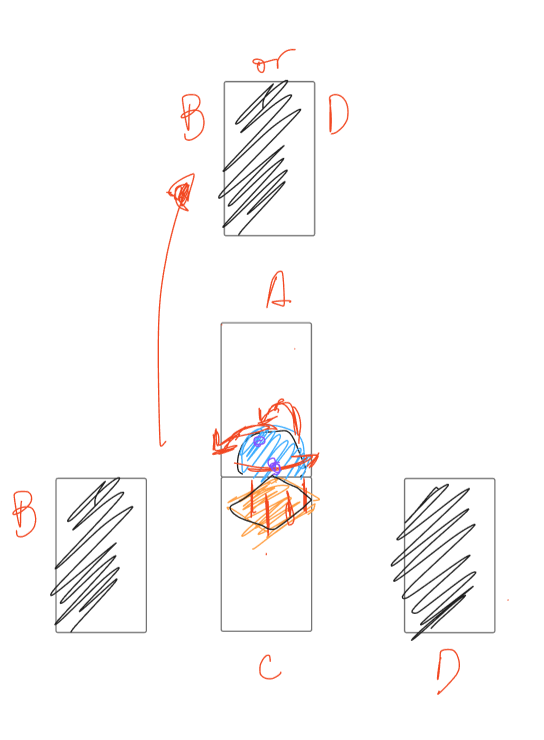
With the puzzle design going on, the introduction of Easter Eggs led to thinking about where content should be placed, and for example on the left diagram, after a spaceship landing at the number 1->2, Naiad can choose to go left (L) or right (R), where left brings Naiad to a seemingly dead-end, but through repositioning (through any UX method described above), they discover a sequence showcasing how the Earth got overtaken by AI, and how it is destroyed, and now they can return to the intended storyline to the right. If players directly go right, they discover a tree as a vantage point 3, and a church on the right. There had been discussions on whether there should be another Easter Egg moment on the tree as well.
Other tech and art
Huge decision: After exploring finding 2D symbols in 3D, even though it was very fun, we decided it would be out of scope and would take more time than we could afford to develop something good for it. We decided to place focus on 2D comic sequences, and have 3D’s role be the animation and interaction world scenes.
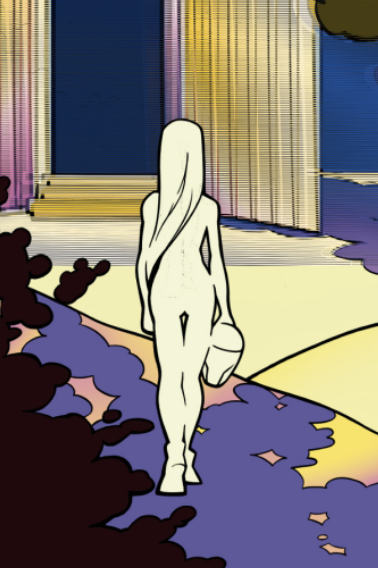
Therefore, our 3D artist starting making the 3D model for our main character Naiad! Fully sculping it from a blank humanoid, the first decision is that we should have thigh gaps, the same one we have on our poster, since it would be easier for rigging in the future!
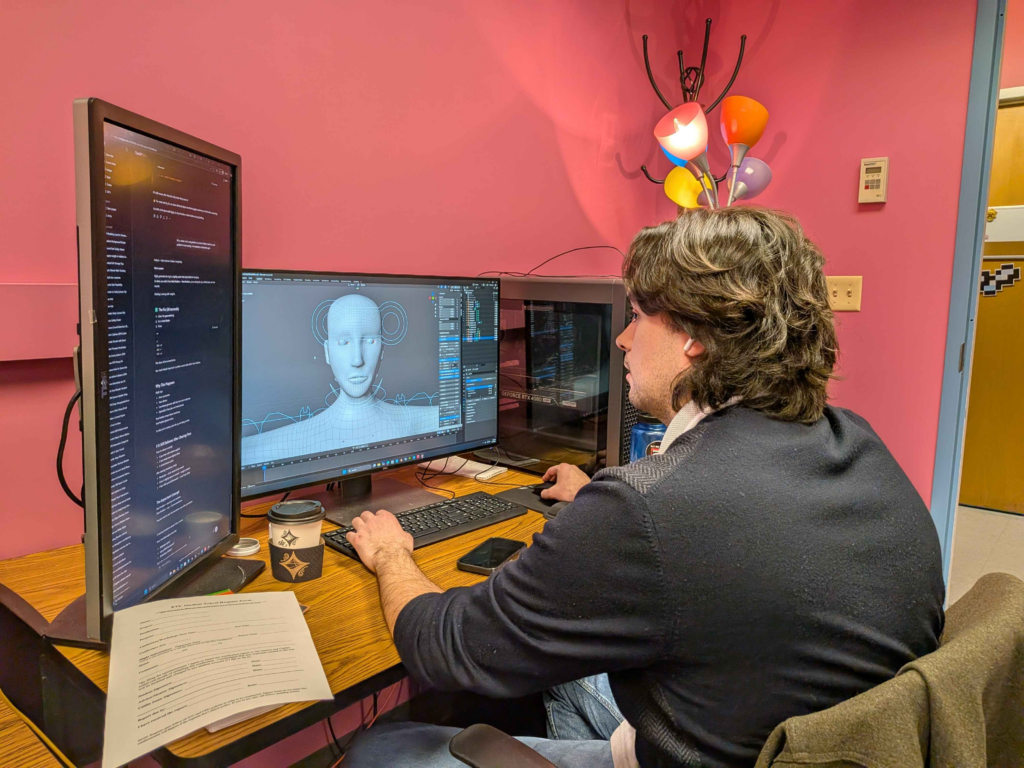
As for tech, aside from the more generalized system for navigation based on an implicit grid, there were also tech prototypes for the puzzles, such as using the phone as a camera into a world: moving it shows a part of the world, and another where flicking the phone around space, would show different things. Both are sort of related to looking into a world with phones as windows, but they did not work as well as imagined, so we ended up putting it into our storage space for now. (Also, unfortunately, we don’t have videos showcasing these actually visually cool prototypes)
Next steps
Week 5 was hectic, and a lot of things happened. Next week, our goal is to finish the translation of script to puzzle, and look back on how to make that into our minimum viable puzzle with narrative moment that showcases sufficient functionality of this medium!