October 19 – 23, 2026
This week, we put our designer hats on and dove deep into iterating the game mechanics for Stages 1 and 2.
We’ve been wrestling with a key issue: the core message behind our gamified experience just wasn’t coming through to the players. However, a meeting with Special Faculty Carl Rosendahl this Wednesday sparked a major breakthrough.
During the meeting, our teammate Gamma shared the deeply personal origin of our game’s narrative. Drawing from her own mental health journey, she described the experience of being trapped in a mindset where she could only see the negative. Her path to healing required the immense courage to be vulnerable: she reached out to loved ones, which is an often scary step that finally allowed the people who cared about her to help.
This powerful progression — from isolation to vulnerability to connection — was exactly what our gameplay was missing. Our challenge shifted: How do we make the gamified experience reflect this emotional arc?
Our first major change is creating a more unified journey by featuring a single dinosaur character across all three stages. We are also trying to redesign the dinosaur’s progression to ensure each level-up feels logically and emotionally tied to this core narrative of growth.
Amidst these design pivots, we stumbled upon an exciting technical surprise that has temporarily slowed our iteration pace — but for a good reason. During recent playtests, a recurring question arose: Why does this experience require two people? While it was designed to be collaborative, the players simply weren’t feeling it.
This led us to explore a bold idea: What if the two players saw completely different things?
It turns out this technology is actually available in our installation space, the Cavern, though no previous team has utilized it. This multi-view rendering tool was first deployed in the ETC’s Jam-O-Drum room, where four players can view distinct perspectives while wearing special glasses. The projector in the Cavern can handle up to two players, which is perfect for our experience.
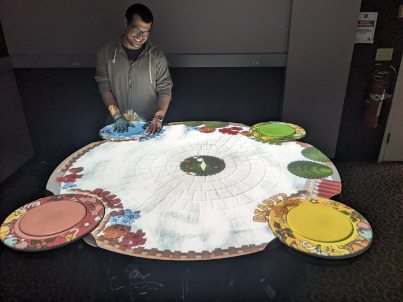
With some invaluable help from Steve, our teammate Aya successfully engineered the two-view rendering capability in the Cavern. This unlocks a whole new world of design possibilities. By giving Player 1 and Player 2 asymmetrical visual information, we can naturally compel them to talk to each other and truly collaborate in the experience.
Looking ahead, we are thrilled to be meeting with ETC Faculty Jessica Hammer, an expert in transformative play. Our ultimate hope is to elevate our game beyond a simple “solve-the-puzzle” mindset. We want our players to pause and experience a genuine moment of self-reflection on the themes of vulnerability, courage, and human connection.
After all, this project was born from a desire to promote wellness, and we remain fully committed to delivering an experience that accomplishes that.
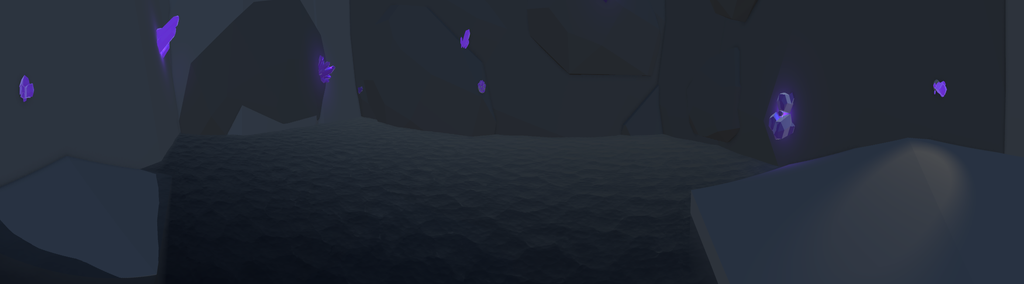
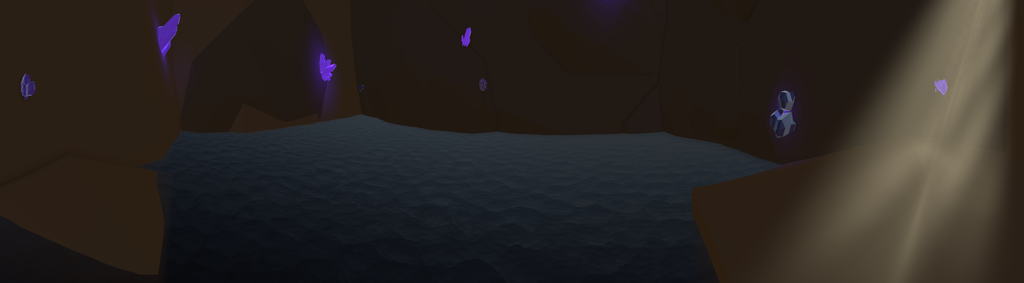
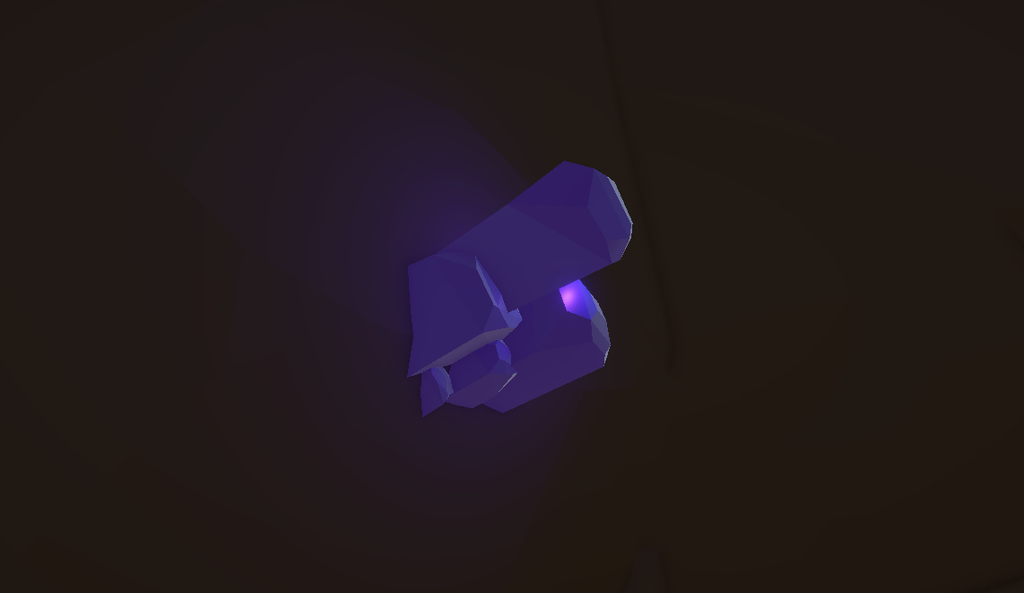
Armed with our newly iterated game mechanics for Stages 1 and 2, we spent this week building out a fresh, atmospheric environment for the first stage. Our dinosaur protagonist now begins their journey deep underground, navigating a subterranean river to reflect the initial feelings of being lost and isolated. To guide players forward and visually reinforce our narrative theme of finding hope, we added a striking beam of light piercing through the very end of the tunnel.